
Claude Terry: Stanford Star & NBA Player
From Stanford University to the ABA and NBA, from coaching to Christian ministry, Claude Terry's life is a story of faith, mentorship, and trusting God when the next step isn't clear.

Claude Terry has experienced the excitement of high-level basketball, the challenges of a professional playing career, and the satisfaction of coaching and mentoring others. A Stanford basketball standout, he went on to play for the Denver Nuggets, Buffalo Braves, and Atlanta Hawks.
But his story begins much earlier than his basketball achievements.
Listen right here, right now
Watch Right here, right now.
At around six years old, Claude began to recognize his own need for Jesus Christ. Growing up in a Christian home gave him a foundation, but his years at Stanford challenged him to understand and defend his faith for himself.
With help from Christian mentors, a campus Bible study, and a growing interest in Scripture, Claude developed a faith that would guide him throughout his playing career and beyond.
Faith in the locker room
In the early 1970s, Christian fellowship among professional basketball players was not as established as it is today. Claude and other believers took steps to encourage spiritual community in a culture where expressing faith could be misunderstood.
His story offers a glimpse into an important chapter in the development of Christian ministry within professional sports.
When the plan doesn't work out
After an injury complicated the end of his professional career, Claude explored an opportunity to play in Italy. When that opportunity fell apart, he wrestled with a difficult question: Had he misunderstood God's direction?
Studying Acts 16 helped him see that following God doesn't mean every door will open. Sometimes obedience includes being redirected.
Claude's conclusion is a lesson for all of us:
“Real success in life is obedience.”
A calling that continued beyond basketball
Claude later coached at Seattle Pacific University and served alongside his wife at CrossPoint Community Church in Modesto, California. Today, he continues mentoring younger leaders and supporting church-planting efforts in Slovenia.
Through every chapter, his desire has remained the same: to use his life and influence to serve the Lord and encourage others.

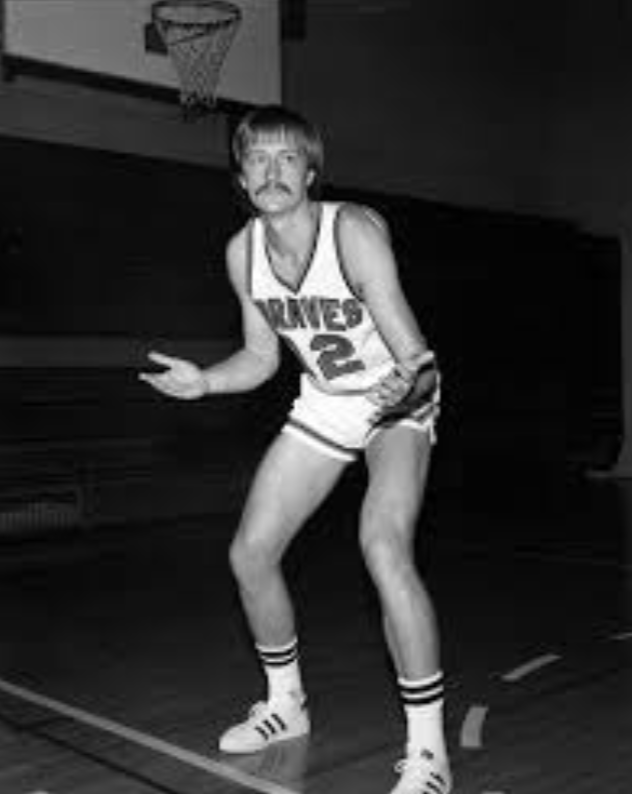
CLAUDE TERRY AT A GLANCE
Former Stanford Basketball Star • ABA/NBA Player • College Coach • Christian Ministry Leader
Topics
Christian faith • Professional basketball • Stanford basketball • NBA history • Christian athletes • Childhood conversion • Spiritual growth • Christian mentorship • Basketball ministry • Faith under pressure • God's will • Obedience • Scripture study • Journaling • Family • Coaching • Pastoral ministry • Slovenia • Church planting
His Faith Journey
Growing up in a Christian home → Recognizing his need for Jesus at age six → Accepting Christ at a small church in Salida, California → Facing challenges to his faith at Stanford → Finding Christian mentors and studying apologetics → Seeking to live out his faith in professional basketball → Learning to trust God through closed doors and disappointment → Serving through coaching and church ministry → Mentoring younger leaders and supporting church planting in Slovenia
This Episode Explores
Claude's childhood experience of recognizing his need for Jesus and accepting Christ
How his Christian upbringing and his father's example shaped his faith
His standout basketball career at Stanford, including scoring records and recognition in the Pac-8
Playing professionally for the Denver Nuggets, Buffalo Braves, and Atlanta Hawks
How Claude's faith was challenged at Stanford and how The Evidence That Demands a Verdict helped him study Christian apologetics
The campus Bible study that helped shape his faith and the remarkable number of fraternity brothers who entered full-time Christian ministry
His efforts to encourage Christian fellowship among professional basketball players in the 1970s
How a foot injury and a disrupted opportunity to play in Italy led to questions about God's direction
What studying Acts 16 taught him about closed doors and following God's will
Why Claude believes real success is obedience to the Lord, not accolades or money
His decision to leave coaching at Seattle Pacific University to devote more time to his family
His years serving in church ministry alongside his wife
His commitment to mentoring younger leaders and supporting church planting in Slovenia
How daily Scripture study, journaling, and applying God's Word help him navigate life's challenges
Questions Answered
Who is Claude Terry, and what professional basketball teams did he play for?
What was Claude Terry's basketball legacy at Stanford University?
How did Claude Terry come to know Jesus Christ as a young boy?
How did Claude's faith develop when he faced challenges at Stanford?
What role did Christian mentors and Bible study play in his life?
How did Claude Terry help encourage Christian fellowship in professional basketball?
Why did Claude Terry's professional basketball career come to an end?
What did Claude learn from Acts 16 about closed doors and God's will?
Why did Claude Terry leave coaching at Seattle Pacific University?
What spiritual disciplines help Claude grow in his faith?
How does Claude approach sharing the gospel with others?
What ministry work is Claude Terry involved in today?
What does Claude Terry believe is the true measure of success?
Podcast Transcript: Claude Terry on Basketball, Faith, Calling & Obedience
Amazing Greats with Ric Hansen
Guest: Claude Terry Claim to Fame: Former Stanford basketball standout and ABA/NBA player; played for the Denver Nuggets, Buffalo Braves and Atlanta Hawks. Later coached at Seattle Pacific University and served in Christian ministry.
Editorial note: This transcript has been formatted for readability. Timestamps have been removed, speaker labels standardized, and a small number of clear transcription artifacts corrected. Please verify uncertain names or phrases against the audio before publication.
INTRODUCTION
RIC HANSEN: Okay, we are live with Claude Terry, and this is what a great opportunity it is to have a chat with you today. Thank you for being a guest.
CLAUDE TERRY: It's great to be with you, Ric.
RIC HANSEN: For our listeners who are not familiar with you, I'm gonna I'm gonna bring them up to date a little bit here. Uh you you were a former player in the ABA and the NBA uh in the 70s. You were part of the Denver Nuggets, the Buffalo Braves, the Atlanta Hawks back in the 70s. And and I I think what's most remarkable, uh, and you know, the highlight of your basketball career was their time as a Stanford basketball star, right? You played in Stanford, and there's several awards, all Pac-8, all West Coast, all American honors, uh, and you set scoring records at that time too. What was that scoring record that lasted for a long time?
CLAUDE TERRY: Uh well, it's uh it's you know, because of the way basketball has changed back in our day. Uh first of all, you couldn't play as a freshman, you couldn't play varsity basketball as a freshman.
RIC HANSEN: Oh.
CLAUDE TERRY: And and second of all, we only played uh, you know, some college teams are only playing 23 to 26 games during those uh those days. And so I only had three years, but at the time, um I was a second leading scorer in the Pac-8 at that time, right behind Kareem Abdul-Jabbar, which was Lew Alcindor at that time. Yeah, and I did set all the season uh scoring records at Stanford, but as you know, um with you know, now they play 36 games, so uh, but I think I still hold the record for the career uh points per game average over a career, uh still at Stanford. So wow, that's um and that was back in the days of uh no three-pointers, I unfortunately. You made you made all those points the hard way. That's right. One of my friends uh took some old footage and and you know, did like three or four games and said, hey, instead of you know 22 points that game, if they would have been the three-point shot had been in, you would have 37 or 38.
RIC HANSEN: Due to inflation, let's mark it up.
CLAUDE TERRY: Yeah. There's not too many of those games left uh because of that eight, I think it was 18 millimeter film that's probably disintegrated by now.
RIC HANSEN: But I saw a stat that you're still among the top five scores in the Pac 12 today, right? Right. Yeah, yeah. So amazing stuff. And uh I got some questions about your your basketball career too. But let's first start out with um the young Claude Terry, uh who has been a Christian your entire life. And when I say entire life, I mean it started early. In fact, I think you hold the amazing greats record for the earliest recorded conversion uh at the age of seven. Is that correct?
CLAUDE TERRY: Uh right, six or seven. I can't, you know, there as we go back, I think it was actually 56. I can tell you a little bit of story about that. I I I was fortunate to grow up in a fine Christian home. I had a wonderful dad. You know, if you had an example, a model, an exemplar
CLAUDE TERRY: of a dad, uh, he would have been um, you know, he would have been that. Um he was a wonderful businessman, uh, loved the Lord, used his his position and his uh place in the community to have an influence and an impact. He was a great athlete himself. So I grew up playing baseball, football, and basketball. Uh, you know, I probably had him in my crib when I was young.
RIC HANSEN: And so as you matured, your uh your relationship with Jesus also must have matured. And was there a time along the way where you kind of uh made the adult decision or adolescent decision that uh you would be following him for life? Uh or was it was there a conversion moment, I guess is what I'm asking.
STANFORD BASKETBALL AND EARLY FAITH
CLAUDE TERRY: Well, my my real conversion moment was at that young age, and it's kind of unique. I uh used to go back for at least two weeks to um the Midwest, to Oklahoma, to visit my my uh paternal grandparents. And it was at that time my I had an older cousin, I had a lot uh a number of cousins that lived there, and uh one of my older cousins and I had spent uh most of the day playing baseball at uh this field near the cotton gin, which was close to my grandparents' house. And on our way back, uh we got into a little bit of trouble and decided that we would jump this fence with the lumber yard. It was a Saturday and it was closed. And because we were trying to find someplace, we had a little uh a little bit of ice cream, and uh, I don't even know how we manipulated getting the ice cream over the fence. I think my cousin held it while I went over, and then he handed it to me. And then we saw this spot that was really cool. It was up in this lumber yard, um, kind of uh where they they stored other things, but you could see um you know, it was just a covered shelter kind of thing. But we thought, well, we get up there and we get the wind blowing, and it'd be cool and we could finish our ice cream. And okay. You know, uh God God does God speaks to us all the time. People that are not believers, and I wasn't a believer, I'd never accepted Jesus into my into my life, and uh I I knew about him, but it was at that particular time when uh we got up there and we got settled, uh, and God began to speak to me, uh, not in an audible voice, but just knowing that I I could get in trouble for breaking into uh you know to this site. And my cousin and I were sitting there, and we in the distance we heard uh a police siren. And it was like the everything kind of flashed in front of my face, like I know that I'm a criminal and they're coming to arrest us, and I'm gonna be put in jail for the rest of my life. It was kind of like that thing. And my my young brain, uh, and then I knew that my my parents were gonna, you know, they they might give me the death penalty for for doing that. Uh not really.
RIC HANSEN: So how old were you about this time?
CLAUDE TERRY: Were you I was just six years old. Oh, okay, all right. Wow. So that happened in the summer of 56, and I think I either accepted the Lord that fall or uh it was the next year, but I know for a fact, and I still remember that that time, yeah that I knew that I was a sinner, and I renew um, and again, I remembered the scripture verse for the wages of sin is death, and I I knew that I was a sinner. It was one of those epiphanies that I knew that I needed help, that I couldn't pay the debt of sin um myself, and I needed to ask Christ into my life. Uh, it was like one of those uh again, I call it an epiphany for me. And then it was just not too long after that uh I had gone to church, and I was I I still, in fact, later on, a number of years later, I was able to I I've spoken a number of times in this church, but in this little church in um Salida, California. Um, my grandmother always sat on the second row on the right side, and I was sitting by her, and when she went down uh after the service, they always asked people if they wanted to come down and pray if you have, and she came down and I followed right behind her, and that was the time that I accepted Christ into my life, and I asked him to come in to forgive me of my sins and um just make me the person that um you know he created me to be.
RIC HANSEN: Wow, this is a that's an amazing great story, and it at at the age of six to a have that kind of um awareness, and then b to to really know at that point that this was it, that you were giving your life to Jesus.
CHALLENGES AT STANFORD
CLAUDE TERRY: And and you know, there were some other, you know, there were some conflicts, and I I think the biggest time of of conflict was that first year at uh Stanford University. You you know, you're on your own. I kind of had a a sheltered childhood.
RIC HANSEN: Ric Hansen with basketball powerhouse from the 70s and 80s, Claude Terry on Amazing Greats.
CLAUDE TERRY: I grew up in a small town, everybody knew us, uh, knew our family. My dad started the first bank in this little town. Uh, so he was well respected. Uh, we went to church, you know, Sunday, Sunday night, Wednesday night. Um uh and so um, but when I went away from school, it was like I I was all alone. I was gonna make the decisions. It wasn't that you know, I just hopped hopped in the car with mom and dad when they went to church. I had to make decisions. And there there was some conflict. Uh, and then as I was confronted with things that I'd never been confronted before, uh people uh not persecuting but but uh uh denying the you know, denying my faith and questioning things about the Bible. And so really beginning
CLAUDE TERRY: uh that that walk of of trying to figure out, okay, so what does that mean? No one's ever you know challenged my faith like I was beginning to be challenged at at Stanford. And I'll never forget, I purchased the book. I I don't think it'd been published very long. Uh it was called The Evidence That Demands a Verdict by Josh McDowell. And that book uh just helped me get through and began my uh study of apologetics and how to defend my faith and how to be ready in in season and out of season to share the hope that's within me. And then at that time in the early six, I mean the late 60s, early 70s, at in Palo Alto, there was a church uh called Peninsula Bible Church. Uh that Ray Steadman was a senior pastor, and there were a lot of influence that they had on campus at that time. I got connected with some of their Bible studies that they were doing on campus. And it just so happened, Ric, that my freshman basketball coach was a guy by the name of Paul Newman. Paul Newman played for the Golden State Warriors. Uh, was the Philadelphia Warriors, got traded uh to um, you know, uh to or moved to Golden State. Uh he was my freshman basketball coach, was a basketball star at Stanford uh earlier, and uh uh just a wonderful man, a strong believer. Started going to a Bible study that that Coach Newman had on campus. And so uh even though the time was kind of challenging, uh it just seemed like God put the right people around me to mentor me, to encourage me, and and show what a follower of Jesus Christ could do in the athletic world.
RIC HANSEN: Yeah, and you know that's a part of the story I wanted to kind of zero in on too, because at that point you were uh a big deal in Stanford. I mean, you were the the basketball star, uh you had all the credentials, you're getting awards, you were getting accolades. Um how does uh a young man with those kinds of accolades deal with ego? Was that an issue for you? You know, not really.
CLAUDE TERRY: Um you know, things have changed so much in the athletic world. I I I started playing basketball because it was a family thing. Uh and it's just something that I loved to do. I when it was football season, we were, you know, we were in the park playing football, flag football. Uh when it was baseball season, uh, we were playing baseball. Both my grandfathers were semi-pro baseball players. And uh I love baseball. I my one of my my maternal grandfather uh that lived nearby, uh, he was my first Little League coach. And so it was just something that I did, and and you know, there wasn't because of the the lack of media attention, uh the it just wasn't that big of a deal, you know. Uh during the my first couple of years, Stanford we didn't have a very good uh we had injuries, we had some big guys that got hurt, and so we we really did not have very good seasons. Even though I was getting these accolades, my main concern is, you know, how do we win basketball games? I I didn't like to lose. Yeah, and I I didn't put a lot of emphasis on even that. Um and again, I just wanted to uh glorify the Lord in uh how I played.
RIC HANSEN: And you're then influenced, being a strong Christian, even as a college basketball player. Did you have um an opportunity to disciple other players um to kind of share the gospel in a in a subtle way?
FAITH, FAMILY AND INFLUENCE
CLAUDE TERRY: Yes, I you know I I tried to do that in my life, in my lifestyle. I I think I might have mentioned this when we talked earlier, Ric. I I was in a fraternity that we had about 60 guys, and on Thursday nights we had a Bible study, and out of those 60 uh young men, uh, we would have between 25 and 30 guys at our at our Bible study. Well, I mean, the thought of that on a secular uh campus is now I look back on it and just say, you know, again, that was a God thing. And out of those 25 to 30 guys, uh at one time or another, 19 of us were in full-time Christian ministry. Wow. So it it's uh, you know, the Christian universities can't, you know, do not have that kind of uh of percentage when it comes to that. So yeah, I I was just really blessed to be around the the right kind of people. And um and and I also had a good example of my dad. My dad was a great athlete, uh still played in local leagues around uh uh around the area, and I
CLAUDE TERRY: I just saw how he used his platform to uh just have an influence on people. So that's that's what I tried to do.
RIC HANSEN: Tell me the the dad story you you promised you were gonna tell, Pierre.
CLAUDE TERRY: Well, uh my paternal grandfather, John, was his name. Uh they he had six children. Uh he was a farmer, what we would call a pacifist. He was a believer, but just didn't believe in war, didn't believe in violence. And the the American game of football he called uh evil. Uh he didn't want any and he had five sons and he didn't let any of his sons play football. They could play basketball uh and baseball, but that they they were not going to play football. Um my dad was the fourth of the five boys, and because he was always at the gym trying to play, you know, playing basketball, uh, he he knew a lot of the a lot of the football players, and so he became the manager of the football team. He would help with equipment and uh that sort of thing. And he did that for a couple of years. Well, his friends kept saying, My father's name was Leon, and he kept saying they kept saying, Leon, you gotta play football. You're the best player on our team, and you're not even playing, because they saw his speed, uh, his agility, his quickness. Uh, he would, you know, just you know, like kids do, run patterns, and he had great hands. And so um they kept saying, you know, you you gotta do this. And I don't know, I'm still trying to piece together. I I don't know if I'll ever piece together the whole story, but somehow um they they got him to play, and uh they changed his name so his dad wouldn't find out. So he he played, Ric, he played uh under an alias, uh senior year of high school, ended up breaking the touchdown record and being uh uh an all-state player under an alias, and I I have I have clippings from the newspaper uh with his, you know, I kept we we would kid my dad say, Oh no, that was not really you. You just picked that that name uh out of the paper and said that was you, but it was really him.
RIC HANSEN: What was his fake name? Did he have a did he at least come up with a cool fake name? No.
CLAUDE TERRY: That's what was really funny. He changed his name was Leon Terry, and he changed it to L. Perry. P-E-R-R-I. I said he was not very creative.
RIC HANSEN: Yeah, and so grandpa never found out?
CLAUDE TERRY: Not until he told him a couple of years later, after my dad became a believer. Uh, he knew that uh, you know, he wanted to honor his dad and and tell him the truth. But supposedly, I don't, you know, a lot of people think that my grandfather was uh uh ignorant for a reason that he let him do it and he wouldn't have to go against his values. But uh I I I don't think that happened. I don't think he really knew. He knew something was going on because he was spent so much time around the football program, but he never paid that much attention and he never read the sports page. So there you
CLAUDE TERRY: go.
RIC HANSEN: And L. Perry would probably not pop out at him anyway, right? Right. From the age of seven, this guy has had a firm foundation in faith. And we get to hear Claude Terry's story right here on Amazing Greats. Okay, so so basketball is a huge you you've got such an amazing story. We we uh let's leave the player um realm of your career uh to the coaching. So, how is it that you left as a player? Was it uh you were uh you were playing in the NBA at the time, uh, and what were the circumstances around your leaving?
FROM STANFORD TO THE PROFESSIONAL GAME
CLAUDE TERRY: I I was drafted in those days, of course, there's American Basketball Association and uh National, American and National Basketball Association. Uh and I was drafted in both leagues. Uh I was drafted by the Phoenix Suns in the NBA, and I was a first-round draft choice by the by the uh Denver Nuggets in the ABA. And at the time, as I looked at both leagues, of course, everybody, your dream is to play in the NBA, and my favorite players were Oscar Robertson and Jerry West and John Havlachek. And you know, of course I wanted to play against them, but when I looked at the two teams, uh Phoenix at that time had a number of veteran guards on the roster. And so um and Denver really had no one. Uh uh Larry Brown, who was a point guard, had had recently retired. Uh and they really only had one other guard that had been there and had any significant playing time the year before. So uh I I knew that that Denver really wanted me. Number one, and number two, that they needed me. And at the time, uh, Alex Hannem was a head coach there, who was a you know, he's a Hall of Fame coach, uh, was a coach of the Philadelphia Warriors when they won the NBA championship with with Wilt Chamberlain and that group. So, you know, a very well-respected coach. Uh, I when we met, I I loved his idea, and he he uh again I felt like I was wanted and needed there, and so I I signed my first contract with Denver. I played with him four years, and during the merger in 1976, between well, it wasn't really a merger, it was just four teams pulled mutiny and uh uh went to the went to the NBA. And uh during that time I was traded to the Buffalo Braves. Uh a lot of people uh most of the kids I talk to these days, they they never heard of the Buffalo Braves. And so it it it's a good uh a good trivia uh question. Who are the who are the Buffalo Braves today? Well, they're the LA Clippers. Um they were a team that uh I again I was traded to and I played for them about a half a season and then got traded to Atlanta because Atlanta had a lot of injuries, and the coach of the Atlanta Hawks at that time was a guy by the name of Hubie Brown, uh who's another Hall of Fame coach, not only Hall of Fame coach, but a Hall of Fame television announcer. Oh anyway, uh I went there and uh just had a wonderful time. He's he was a great coach, and our our team overperformed. Uh we weren't expected to make the playoffs, and and we did, and we we had a a really good year. But at right at the end of the year, uh I got hurt and they misdiagnosed my injury. And so I came back, I played in the summer league. Uh I was getting back uh you know from the injury, re-injured my foot again, and so when I came into training camp in the 77-78 season, I I certainly wasn't a hundred percent. Uh they and I kept meeting with uh you know doctors and getting rehab and all that sort of thing. So that last year I didn't play very many games. I I usually played 70 to 84 games during a season. Uh and I I didn't play that much that year uh because I was on and off the injured reserve list trying to figure out what was going on with uh this foot injury. And that's when I decided that uh you know I didn't know if I could come back and play anymore. Yeah. Um and so it was a long difficult rehab. And when I came back, I didn't know if you know if my foot could take, you know, uh six days a week of practice and uh you know four or five games a a week and all that sort of thing. So right when I was getting back uh to playing, I um one of my actually my roommate on the road for um with Atlanta Hawks had gone to Italy, and he had told uh some I I think his agent about me, and his agent had contact with another team in Italy, and they were looking for a shooting guard. And so they called me and said, Um, hey, they're looking for a shooting guard in in Naples. Uh, would you be interested? And I said, Well, I I tell you, I I would have to go and play because I don't want to present myself that I'm back, you know, uh the player that I was a year ago. But if I could come and play and basically show show my stuff, um I would do that. So uh uh I actually did that. I went uh we went to Italy and I actually played in a big tournament uh in Italy with this team against the Russian uh Olympic team, the Russians, the Cuban, and uh uh Yugoslav at that time uh team. And they they signed me to a contract. So uh it it was it was good in that way that we we were only uh the Italian teams were only playing one or two times a week. And so just the and the and a lot of the the guys that were on my the a lot of Italian players had other jobs, so uh there there wasn't that intensity of practice every day and all that sort of thing. So I could kind of go at my own pace, and so I ended up um coming back to the United States, and that's when the opportunity to um coach at Seattle Pacific had had come about. And so I I left and came to Seattle Pacific University.
RIC HANSEN: Was your Christian faith uh you know was there were there ways for you to impact uh those players and people that you were surrounded with while you were playing in the pros?
INFLUENCE IN PROFESSIONAL BASKETBALL
CLAUDE TERRY: I I really tried to. Um that's another interesting story, Ric, that that God's um moved uh in in many, many ways. Um when I first came to the Nuggets, uh there was not another believer on the team that I that I knew. And uh again, during that culture uh, you know, the early 70s, it you didn't hear a lot about Christian athletes, and there weren't that many testimonies out there about the Christian athletes. But I uh you know we I wanted to make a stand for the Lord, and we tried to get some things started. And in those early days, I ended up going to a Bible study with the Denver Broncos because they had their own uh team Bible study, and so um I I did that, and then we tried to do some things uh with uh in 1974, Bobby Jones was uh signed with the Nuggets, and Bobby was a believer, and so with Bobby and myself, we we did as as much as we could, but again, anybody that was trying to do a like a chapel, for example, uh with a protein, that was like those guys are weird, we don't want anything, anything to do with them.
RIC HANSEN: But but that's changed in sports, hasn't it?
CLAUDE TERRY: It it has, it has. Uh, you know, there was this idea that if you were uh a Christian that you weren't as tough and as competitive as um you know the other side.
RIC HANSEN: Yeah.
CLAUDE TERRY: But you know, things began to change, and then when I when I uh left the league in 78, um Bobby Jones was traded to the Philadelphia uh 76ers, and Pat Williams, who was a believer, was uh general manager of the 76ers, and through that whole relationship in in uh 1982 it became official. There was an organization started called Pro Basketball Fellowship, which was sort of the umbrella nonprofit over the NBA chapel program. So
CLAUDE TERRY: that started in 82. And uh, you know, it wasn't it wasn't well organized, but it was just an umbrella where some of the players, like in the offseason, would go uh make trips and share the gospel and that sort of thing. Uh and so, but it it it brought together a community that was there in the NBA in and you know in the future. I I I also want to say that in 1974, uh I attended a conference called Pro Athletes Outreach, and you're familiar with that because George Tolls was very connected with it, was on the board for many years.
RIC HANSEN: Norm Evans and yeah, yes, right.
CLAUDE TERRY: And so I went to a football conference, and we got six other MBA guys there, that was in 1974, to just try to see, okay, you know, this is happening in baseball, this is happening in football, what's the deal with basketball? Uh and I know you know there's less players, and uh, you know, I understand that, and we're um it's a lot different sport uh in in regards to uh you have games just about every night, it seems like. So, you know, what do you do as far as chapel? And we started just talking and and at least communicating, and then um, and then it took uh you know like six or seven years before we got something formal uh in the NBA to have a chapel program.
RIC HANSEN: Claude Terry is my guest as he weaves us through his life of following Jesus on Amazing Greats. So you you end up as a coach at Seattle Pacific, uh which is a Christian university. Uh so that opened up, I'm guessing, some doors to be able to share your uh faith uh with players. And was that pretty much then uh uh a welcome part of their sports program?
COACHING AND MINISTRY
CLAUDE TERRY: Uh yeah, so that was a uh a wonderful place, uh Seattle Pacific. Uh I I had wonderful, uh wonderful leadership, I had wonderful players that you know I still keep in contact with. Uh, and God God did some amazing things during those years. You know, I I love coaching. I love coaching the the players that I that I had there. And I I just felt like I I actually I had three children, and I got to the point where um I felt like that my coaching and the commitment to coaching was leaking too much into the family and the opportunities to raise my my children. I began to really pray about you know what I needed to do. And I felt like I, you know, I'd got the program at a point where I thought we were uh successful, we had a good program, we had a great culture, we had uh been in a big remodeling project at Rome Pavilion, uh our facility. And I I just felt like it was a good time to uh, you know, I had a son that was going to be a senior, and um another one that was going to be a sophomore, that I just needed to spend time and help them before they uh launched.
TRUSTING GOD THROUGH CLOSED DOORS
RIC HANSEN: So let me ask you some personal spiritual discipline questions, just because I think it's interesting for folks to find out how other people handle different things along the way, along their Christian journey. And uh one thing that everybody pretty much deals with somewhere along the road is wrestling with doubt, with fear, with maybe unanswered prayers. And everyone has their own way of dealing with that and uh getting through that. My question is are were there seasons, were there valleys where that was an issue with you? And if so, if you feel comfortable talking about it, how you walk through it?
CLAUDE TERRY: Of course, you know, we're we're human. There are mountains and valleys. I'm a big proponent in journaling. I'm a big proponent of getting in the word every day and and journaling what God's speaking to you uh through his word and applying that. Uh, that's one thing to read it and have it in your brain, but how do you apply it? And God's been so faithful to me through the years to um whatever I'm
CLAUDE TERRY: going through to provide the inspiration and the direction uh just through his word. And and many times I don't know what's coming. Well, we we don't know what's gonna come our way, what we have to confront. But God many times prepares our way. I once did a study, Ric, on on Joshua about what he learned from Moses, and before he took over the leadership of the Israelites as they were coming into the promised land, there were eight or nine different instances where m Joshua is is mentioned um when when Moses is leading. It was all preparation for what he was gonna do. And it's an interesting, it's an interesting study, and I really believe that that God does prepare us even for the most difficult, darkest times in our life. I'll just give you one example. I had done this study. Well, God had encouraged me to read the book of Acts. And so I've been reading the book of Acts right during the time where I signed this contract to go to Italy. And I I didn't know what was going to happen, and then the whole Italy thing kind of fell apart. And it was like, well, I believe that God wanted me to go to Italy, and then I follow his will, and then everything falls apart. How how did you know, did I miss his will? Um what happened? And as I was coming back from that trip the next week or you know, maybe two or three weeks after that, I I had been in the 16th chapter of Acts, and I couldn't write fast enough about the principles that were in that chapter that helped me recognize some things in my own life that I needed to take care of. And it was, for example, I I even though I I would say that I didn't believe this, I thought, well, if you were faithful and you didn't have sin in your life and all that, then everything was going to be, you know, things were gonna turn out wonderful. Sort of the the prosperity gospel kind of idea. And it was through that study that I recognized that was during Paul's that 16th chapter was Paul's second missionary journey, and God had led him to go to Bithynia, and when he got up to that area, uh something happened. We don't know exactly, but he got redirected twice after thinking he God was leading him.
CLAUDE TERRY: So following the Lord, getting closed door after closed door, the the direction was his his will. So closed doors insinuating that you you missed his will, you're still following his will. And so through this whole study, I I've tried to place this whole thing that real success in life is obedience. It's not your accolades, it's not how much money you make, it's how am I being obedient to the Lord.
RIC HANSEN: That's a great story. So and you you alluded to it, but just a quick uh recap of what your spiritual disciplines are. Like you do you do a devotional in the morning, do you pray in silence, um uh and then journal, or how does that work?
SPIRITUAL DISCIPLINES AND SHARING FAITH
CLAUDE TERRY: I try to spend time at the end of every year to say, okay, God, what do you want me to do this year? And uh it's been different things. Um last couple of years, I spent the whole time in the book of John. I've been doing blogs on the book of John, uh, but I read, um, I study it, I try to go to the original languages and then write what God's speaking to me and how I'm going to apply that. Um, so try to do that every day.
RIC HANSEN: And your preferred way to share the gospel, everybody's kind of uh uh uh we're directed to be uh evangelists to share the gospel. Um what do you find is the most effective way for you?
CLAUDE TERRY: I just try to be in people's lives. Everybody is going to face reality, and everybody's gonna face trouble and trial and just being there when they're there. Uh I I've my my most successful opportunities are in situations that I know people, uh, they've seen my life, and they they want what they see in in my wife and I's life. Um and of course, for 16 years I served on a church staff, so uh we were dealing with marriages and you know family problems and all that sort of thing. So that was kind of a natural thing, what we did.
RIC HANSEN: Yeah, uh we didn't have a chance to really jump into the pastoral part of your life, but you were a pastor as well. Uh is it Cross Point Church? Is that where you were at? Yes. Uh in Montana.
LIFE AFTER BASKETBALL
CLAUDE TERRY: No, uh in Modesto, California, at Cross Point Community Church. Both my wife and I were on staff there. Okay. I was a I was a mission pastor and my wife was a pastor to women. And um, you know, we we spent well, it was close to 20 years, but 16 on staff at the church. Okay. And so what are you doing these days? What are you up to? Uh I we adopted the country of Slovenia to see churches being planted. So I'm still really connected uh in the country of Slovenia. Uh we still have people there. Uh I still I'm mentoring a couple of young, young, uh, well, one's a young athlete and one's a young businessman that that love the Lord and want
CLAUDE TERRY: to have an influence and an impact in their nation. And so still doing those sorts of things.
RIC HANSEN: Well, God bless you and thank you so much for taking the time. I know you got some things you've got to take care of there at your house as well today, so I've got to let you go.
CLAUDE TERRY: Yeah, I I have a repairman uh uh fixing a refrigerator that we need, which we have this bad habit where we like to eat.
RIC HANSEN: Well, thank you, Claude, for taking the time. Thank you for you telling your story, and like I say, God bless you for doing all the stuff you've done and are doing. Uh, and uh appreciate you being here. Our podcast will be broadcast here pretty quick, and I'll let you know when.
CLAUDE TERRY: I appreciate it. Thanks. It's great being with you, Ric. I love what you're doing.
CLOSING
RIC HANSEN: What a great deep dive into the life of basketball star, coach, pastor, and mentor Claude Terry. Such a gift to spend some time with him and to hear about his long passion for Jesus. An amazing great. Enjoy and help us grow the show by sharing this with a friend.


Comments