
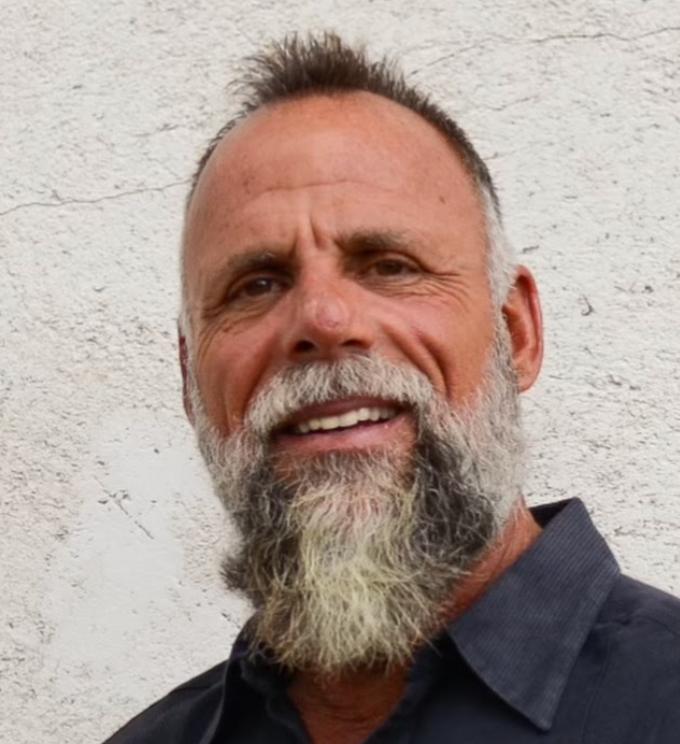
"Super" Dave Jones is 'all in" on Jesus!

I loved this guy! Meet Dr. Dave Jones, a guy who is passionate in everything he does: Hockey, military, Cross Fit, Marriage, Education, and yes.....he is all in on Jesus. His zeal is contagious.
Dave has lived a remarkably varied life, hockey as kid, professional hockey in Europe while in the U.S. Air Force, A doctor of sports and performance psychology, he's an elite-athlete coach for NFL and NHL players and top executives. He has a highly successful Christian marketing company and is the author of Plan to Win Along the way, he has learned that God's direction doesn't always look like a straight line.
In this fascinating conversation, Dave shares how a hockey injury at age 21 led him to his knees asking God, "What do You want to do with my life?" That prayer eventually led him into the Air Force, professional hockey in Germany, meeting his wife Laura, Christian marketing and eventually earning a doctorate in sport and performance psychology.
Dave also explains how he built his Christian marketing company, M Is Good, and why he believes businesses and ministries must continually adapt as technology changes—from television and radio to digital media and now artificial intelligence.
Listen Right Here, Right now:
Watch Right Here, Right now
His new book, Plan to Win, introduces the acronym FLAP: Fear, Lust, Anger and Pride—four toxic motivators that can quietly influence our decisions and behavior. Dave explains how recognizing those motivators can help us replace fear with faith, scarcity with generosity, control with surrender and the pursuit of approval with the security of knowing we are already loved by God.
This is a conversation about faith, performance, identity, leadership, resilience and learning to let Jesus define what winning really means.


DR. DAVE JONES AT A GLANCE
Professional Hockey Player • U.S. Air Force Veteran • Sport & Performance Psychologist • Christian Marketer • Author
Topics
Pro hockey • Air Force • Faith • Sports psychology • Christian marketing • AI • Leadership • Identity • Performance • Plan to Win
His Faith Journey
Hockey-focused childhood → Christian commitment at 16 → Four years of inconsistent faith → Hockey injury and prayer at 21 → Air Force → Professional hockey in Germany → Growing faith with Laura → Christian business → Sport psychology → Author and coach
This Episode Explores
Dave's journey from youth hockey to professional hockey
The hockey injury that led him to pray for God's direction
Joining the Air Force and unexpectedly returning to professional hockey
Meeting his wife Laura in Germany
Building a Christian marketing company from scratch
Why Marketing Ministries became M Is Good
Adapting from traditional media to digital marketing and AI
How 30 books and two mentors changed Dave's life
Becoming a sport and performance psychologist
Coaching elite athletes and executives
The four toxic motivators in Plan to Win
Why Dave defines winning as growing closer to Jesus
The FLAP Framework
F — FearL — LustA — AngerP — Pride
Dave describes these as four major toxic motivators that can influence behavior and explains how faith, courage, generosity, patience, surrender and identity in Christ provide a healthier response.
Questions Answered
Who is Dr. Dave Jones?
How did Dave Jones become a professional hockey player?
Why did Dave Jones join the Air Force?
How did Dave Jones meet his wife Laura?
What is M Is Good?
How did Dave Jones become a sport and performance psychologist?
What does FLAP stand for in Plan to Win?
What are the four toxic motivators?
How can fear be replaced with faith?
How can Christians overcome the need for approval?
What does Dave Jones believe it means to win?
How can athletes glorify God through performance?
Core Message
Winning is not primarily about performance, possessions, money or approval. For Dr. Dave Jones, winning means growing closer to Jesus today than you did yesterday.
Podcast Transcript: Dr. Dave Jones on Hockey, Faith, Performance & Plan to Win
Amazing Greats with Ric Hansen
Introduction
Ric Hansen: Good afternoon, morning—wherever you are, audience. And hello to my guest.
It's great to have Dr. Dave Jones on our website today and on our podcast. Dave, your career is spotted with all kinds of crazy things that somehow all come together and are held together by a thread from Jesus Christ.
That's what we're going to talk about today.
You started with youth hockey. You went into the military, played professional hockey, became a doctor of sport and performance psychology, built a highly successful Christian marketing company called M Is Good, and now you've written a new book called Plan to Win.
Somewhere along the line you got this nickname, "Super Dave," and now I'm starting to figure out why.
Where did Super Dave come from?
Dr. Dave Jones: Oh my gosh, Ric, you did your homework.
Super Dave really was born when I was chasing the CrossFit Games. I did really well there, and some of the guys at the CrossFit box gave me the name Super Dave because I was doing really well.
I think I finished 220th in the world out of, I don't know, 28,000 competitors for my age group.
I dedicated myself to that, and Super Dave was born.
And now there are so many Dave Joneses in the world that it's just fun to carry that through.
"Hey, there's Super Dave," you know, going to the hockey rink.
"Hey, Super Dave," at the golf club.
Ric Hansen: Really?
Dr. Dave Jones: Yeah.
Ric Hansen: Okay, good.
Well, it's stuck with you. That's great.
When was the CrossFit portion of your life?
Dr. Dave Jones: I'm 52 now. That was when I was 40 to 45.
Growing Up and Discovering Hockey
Ric Hansen: Okay. Let's jump way back. Let's go in the Wayback Machine and talk about Dave Jones the kid.
What were you like as a young guy? Did you come from a Christian home?
Dr. Dave Jones: Yeah, so not really.
I was the youngest of two older brothers.
My oldest brother, Rick, sought attention by getting in trouble. He thought it was cool to go across the street and open the door and punch the neighbor in the face.
He would get arrested, and he got into trouble with drugs.
I saw that and said, "I just don't want to do that. That's not how I want to get attention."
So somehow—and I tell the story with the background of, "Except for the grace of God, there go I"—I got involved in hockey.
I realized that if I scored goals, I would get attention. And it was different from my brother's attention.
So I just kept scoring goals and figuring out how to score, and practicing, practicing, practicing—shooting and skating.
At some point I got pretty good at hockey.
That was the way I was seeking attention.
The Night That Changed Everything
Ric Hansen: And that kind of shaped who you became for the rest of your life as an all-in guy, right?
When you do something, you're all in on it.
But after a championship game in hockey, as a teenager, there was a night of celebration that didn't turn out so great.
Tell us about that night.
Dr. Dave Jones: Yeah.
A buddy and I had this bridge in our hometown. We went onto the bridge and had some vodka and orange juice, and we got really drunk that night.
The next day, my middle brother—not my oldest brother—came home from Moody Bible Institute.
He said, "Hey, do you want to receive Jesus as your Lord and Savior?"
I was 16 at the time, and I said, "Yes."
I didn't want to do anything but this. This was awful.
So that began the seed, the journey of walking in relationship with Jesus.
Now, in full transparency, I really didn't pick that up until about 21.
So there were about four years there when I just wasn't following the Lord.
Ric Hansen: Calling yourself a Christian, but not necessarily walking that way, right?
Dr. Dave Jones: Yeah.
A Hockey Injury and a Prayer for Direction
Ric Hansen: Just a quick note about your brother. How did he end up at Moody Bible Institute? Was that a calling in some way for him?
Dr. Dave Jones: Yeah, it definitely was.
He's a fire-breathing Christian right now, and he's making an impact in his community and in his family.
It was a very good thing for him.
Ric Hansen: Is he still a part of your life?
Dr. Dave Jones: Absolutely.
Ric Hansen: Has he been a mentor through your Christian journey?
Dr. Dave Jones: Not really.
That was kind of the start—the proclamation.
Then time goes on, and you're playing hockey.
At one point you take a slap shot to the face.
For our non-hockey friends, what exactly is a slap shot?
Dr. Dave Jones: It's a really hard shot with a cold rubber puck. It's one of the hardest shots that a hockey player takes.
I was skating toward the defenseman. He was going across the blue line, his back was to me, and he was trying to ice the puck.
He turned around and just took a slap shot.
I had a visor on at the time, but I was trying to get out of the way. The visor kicked up and it hit me square in the nose.
I fell at the blue line and skidded all the way into the goal line with blood. Every time my heartbeat hit, blood was pumping out of my nose.
The trainer came over with a white towel, and by the time we got back to the bench, that towel was red.
It broke my nose in three different directions, deviated my septum, and kept the nerves in my teeth in my mouth.
It was at Kalamazoo K-Wings Stadium in January of 1993.
Ric Hansen: That was all pre-military and all of that, right?
Dr. Dave Jones: Oh yeah.
That was the first time that I really got on my knees and prayed, "Lord, what do You want to do with my life? Because this ain't working. I need something different."
And that's where the idea of joining the Air Force came.
Joining the Air Force—and Finding Professional Hockey Again
Ric Hansen: Was that like an answer to prayer? Did you have other ideas, or was it like, "This is pretty much what God's saying"?
Dr. Dave Jones: I just felt like the path I was on needed a really big adjustment.
I needed to do something radically different to get out of this because the trajectory I was going on just wasn't working.
Ric Hansen: So you joined the Air Force?
Dr. Dave Jones: Joined the Air Force.
I landed in Germany in October of '94.
I asked around, "Hey, is there a hockey team around here? Or is there a rink around here?"
Everybody said, "No, no, no."
Then I asked one person, "Hey, is there a rink around here?"
They said, "Oh yeah, I think over in Bitburg there's a rink."
So I went over there.
The timing of it was amazing.
The pro team was actually trying out. They were doing tryouts.
I just randomly walked into the rink.
"Is this tryouts? What is this?"
They said, "Oh, it's a trial."
I said, "Can I try out?"
They looked at me like, "Sure. Who are you?"
The next day I showed up and made the team.
They wanted me to sign a professional card, and I really didn't feel like I needed to do that at the time.
So I got my commander involved.
He came out in the next couple of days, watched me play and said, "Dude, you're pretty good. Go ahead and sign your pro card."
So I signed the pro card.
The Air Force put me in back-shop maintenance, which is called phase, where the airplanes get depaneled for a certain period of time to go through all these operational checks.
The plane is down for seven days in a hangar, so it's not on the flight line or anything like that.
I was in phase for my whole career in Spangdahlem, Germany, while I played professional hockey.
Meeting Laura
Ric Hansen: Wow.
Well, that was kind of a turnaround for your opinion about hockey. It had turned very sour after the slap shot to the face.
What did you feel—a calling to come back to it? Was it just, "This is something I know I'm good at"?
How did that enter your mind? You'd kind of given up on it totally.
Dr. Dave Jones: I think at the time I just needed a break.
I had several months in there. It was January '94, so I had January to October when I wasn't involved in the sport.
I needed that time to get away, and I did.
Ric Hansen: Author, sports coach, pro hockey player—Dr. Dave Jones is a man of passion. He goes all in on whatever he does.
And he came back and got a job as a pro.
Well, that's incredible.
You could do that and still be in the military.
Something else happened in Europe that was pretty exciting, as I understand it.
That's where you found your wife. Is that correct? Laura?
Dr. Dave Jones: Yeah.
This is where it's like it can only have been God.
She was from Pennsylvania. I'm from Pennsylvania originally.
She's the youngest of two other sisters. I'm the youngest of two other brothers.
She was south of Pittsburgh. I was north of Pittsburgh.
And we met in Germany.
It was just crazy.
Ric Hansen: And you're still married today—26 years.
How did that happen? Did you run into each other on the street?
Dr. Dave Jones: I was going to a party after the game.
The Germans invited me out to this festival, and I showed up at the guy's house. Schwabi was his name.
They had left without me.
So I just went back to my house, and one of my other buddies was there and said, "Hey, I'm having a couple people over. Why don't you come over?"
I came over, and she was there visiting a friend of a friend.
We just started talking there and hit it off.
Growing in Faith Together
Ric Hansen: At that point, where's your faith?
You'd come back to God based on your experience with the slap shot to the face. Was it maturing from that point on, or was it still stagnant?
Dr. Dave Jones: I had probably turned the corner where I knew I wanted to do something with a devotional of some sort, getting into the Word.
I was visiting the Air Force chaplain often, asking questions and just kind of reading the Bible.
When I met Laura, it was definitely, "Hey, let's commit to this together."
That was really the start of following Jesus.
And when I mean following Jesus, I mean reading the Bible with some consistency, praying with some consistency—not every day, but more than I was doing before.
Ric Hansen: And did she come from a Christian background?
Dr. Dave Jones: She had a similar walk where she was eager to get into the Word, but she wasn't a fire-breathing Christian her whole life or anything like that.
She needed a partner and an accountability partner as well.
Ric Hansen: So that whole episode in Europe turned out to be a God thing.
Everything from deciding to do it, to getting back into professional hockey, to finding your wife.
That sounds like a main pivotal point in your Christian walk.
Dr. Dave Jones: It really is.
It's a pivotal point in my walk with the Lord.
"Lord, What Do You Have for My Life?"
If we fast forward a little bit, when I started the agency, I said, because after I left hockey I got into corporate America, I prayed another prayer similar to the one when I got my nose broken:
"Lord, what do You have for my life? I want to be used by You."
And the answer came back:
"Are you usable?"
And I was like, "Oh no. Oh no, I'm not usable."
So it just became something radical for me.
That's kind of the way I look at things now.
If it's not working, what do we have to do to change?
The trajectory you're on isn't working. So what do you have to do?
That's why I think my career sounds crazy and random.
But not in God's eyes.
It's sort of like course-correcting, like your navigation.
If you make a wrong turn, your navigation automatically recalculates.
You don't have to make a hard turn here or a hard turn there.
That's what I feel like my walk with the Lord has been.
It's auto-correcting—not by my choice, but by an answered prayer:
"Okay, Lord, what are we doing now?"
Ric Hansen: It's funny how when He tells you and it works out, you start getting more and more trust and confidence in the Lord being the great guide of all.
Dr. Dave Jones: Yeah. That's faith, right?
Exercising that faith muscle.
"I don't have the answer. I don't know what it is, but I know what I'm doing isn't working, so I'll trust You, Lord."
Ric Hansen: Let's go. I love that.
From Hockey Coaching to Christian Marketing
You ended up going to Colorado for a period of time, coaching hockey, right?
Dr. Dave Jones: Coaching, yep.
Ric Hansen: That didn't last all that long, as I understand.
Dr. Dave Jones: No, it didn't last long at all.
That was another 180.
Laura had trained to be a perfusionist. They run the heart-lung machine during open-heart surgery.
She was making like five times what I was making.
I was a hockey coach in Colorado for a youth hockey program.
She got a job in Greenville, North Carolina, for like five times more than what I was making.
I said, "Okay, Lord. Here we go. Let's pack it up again. Let's move. This is the direction we're going."
Ric Hansen: We gotta move.
So you left your hockey world a bit, but you came back to that down the line with other folks and coaching.
We're going to talk about that in a minute.
But let's talk about the marketing things.
That was a miracle story in a cubicle at a TV station where you got a job, right?
Dr. Dave Jones: That's right.
I just said, "This is the story of—I don't know that I'm being used right now. Lord, what should I do with my life?"
I prayed right there in my cubicle.
I saw myself looking at this list of clients at the station.
The station happened to be Christian. I don't know why I didn't see it before. I just didn't.
I asked, "Lord, what do I do?"
And it just gave me "Marketing Ministries."
Immediately.
It wasn't an audible voice. It was just a thought:
"Marketing Ministries."
And I thought, "That's a really dumb name."
So I got a lawyer involved, and they did some research.
Sure enough, it was available.
I incorporated the company in November 2001.
I went back in January to those clients that were on the list.
First of all, I went to those clients and said, "Hey, I'm going to start an agency, and it's going to be a Christian agency."
They said, "We're with you."
That was in November.
I went back in January after I left my job.
Out of those 30 clients, 27 of them said, "What? We're not with you, man."
Ric Hansen: Oh no.
Dr. Dave Jones: Three of them are still with me today, praise God.
But that became a five-year journey of building a company.
Building M Is Good
Ric Hansen: That was kind of a random move.
You had no background in marketing, really.
How did you develop the tools to be a marketing agent—the time buying on radio and television, creative and all of the things that it takes to be a good marketing company?
Dr. Dave Jones: It was literally me building the bridge as I was walking across it.
One thing I wanted to instill in the clients then and now is that they can trust me.
That has always been the glue.
I'm in this to promote the gospel of Jesus.
The tools and the platforms are all going to move around.
We're in this together. We're collaborating together.
As long as I can understand the vision, we can pull together the right resources to make that happen.
That's where I've gravitated over the last 15 years—really understanding vision.
What is in your heart that you want to accomplish?
How do we put those pieces together so that we can hear the words, "Well done, good and faithful servant"?
Ric Hansen: And these companies aren't necessarily Christian ministries. These are secular companies that operate under the guidance of the Holy Spirit and belief in Jesus Christ. Is that correct?
Dr. Dave Jones: We have a mixture of both.
We have ministries and Christian-owned businesses that have secular businesses.
Ric Hansen: Were the first three ministry-based?
Dr. Dave Jones: Yeah. They were churches.
Ric Hansen: Of the stuff that you still do today, is a lot of it churches?
Dr. Dave Jones: In 2010 we really pivoted the platform of who we represent.
Not just churches, but we expanded that to ministries and Christian business owners that have secular businesses.
That was in 2010 or 2011.
That's when the name became M Is Good instead of Marketing Ministries.
I saw digital coming, and we needed to move in that direction.
Now what's interesting is the tsunami coming now is AI.
So now I'm pivoting the company again to really embrace AI.
Why M Is Good?
Ric Hansen: Christian marketer, sports toughness coach and author Dr. Dave Jones with me, Ric Hansen, on Amazing Greats.
One of the areas I wanted to jump into a little bit is the name change.
What was the reasoning for that, and how did you come up with M Is Good?
Dr. Dave Jones: It's all great questions, Ric. You're awesome, man.
Marketing Ministries said exactly what it was.
At the time, because we were changing to be more digital, we thought it was appropriate for a name change.
I wanted something that was fun, like Geico.
What is Geico? Government Employees Insurance Company.
But they use a gecko to say Geico.
Or Blackberry.
What's a Blackberry?
What's an Apple? It's a fruit.
No, it's not. It's one of the biggest companies in the world.
Verizon—what's a Verizon? Nobody knows what a Verizon is.
We were looking for that kind of juxtaposed name.
We were in the executive boardroom one day, and my VP at the time said, "What about God is good?"
You know, "God is good all the time."
And I said, "Well, aren't we great?"
And he said, "No. I think we just need to be good, man. Like, God is good."
So I liked the name. I liked the logo with the halo on it.
We kept the logo M Is Good and followed that.
I tell people it could be marketing, it could be ministries, it could be whatever you want it to be.
M Is Good.
Adapting to a Changing World
Ric Hansen: From buying radio and television to traditional advertising agency work, that has made a dramatic change over the 25 years you've been doing it.
How did you get through all of that?
Dr. Dave Jones: Again, except for the grace of God, there go I.
It used to be television was the heavyweight, undisputed heavyweight champion of the world for reaching the most people for the least amount of money.
TV was it.
I remember when there were just ABC, NBC and CBS.
Then Fox came in.
It was like, "Oh my gosh, cartoons at prime time. This will never work."
Ric Hansen: Yeah.
Dr. Dave Jones: Then cable.
Then satellite.
Now we're in a whole other space of programming where you can download it and watch it whenever you want.
VCRs—everything is moving.
When COVID hit, I got all my clients together—the ones that would listen—and said, "We're going to read this book, Who Moved My Cheese?"
I don't know if you remember that book.
Hem and Haw and Sniff and Scurry.
Hem and Haw went to this corner and had their cheese all the time.
One day the cheese is gone, and they just sat there.
They would go back to their family and couldn't feed their family because they were just sitting there.
Meanwhile, these other mice in the maze, Sniff and Scurry, just said, "There's no more cheese. We've got to go to these other corners. We've got to search around."
They kept moving.
There wasn't a whole lot of cheese, but they kept moving until they could get back to where they were before.
I feel like in the world we're in right now, technology is not settling.
It's a constant "Who Moved My Cheese?"
You've got to be Sniff and Scurry.
You can't be Hem and Haw.
The 30 Books That Changed Dave Jones
Ric Hansen: How did you learn all that? Did you just dig deep and try to figure it out?
Dr. Dave Jones: When I left hockey, before I started the company, I really didn't like myself.
I had this thought:
"If you met you, would you hang out with you?"
And I was like, "I wouldn't hang out with me."
Ric Hansen: Wow. That's a shocking realization.
Dr. Dave Jones: Yeah.
Would you hang out with you?
No, I don't think I would.
I thought that in order to get ahead, you had to put people down.
You had to be the show.
When you walk in the room, you had to be the show.
I met a guy named Derek, and he mentored me.
He said, "If you don't like who you are at this time, turn off the TV and read these books."
Ric Hansen: Oh my gosh.
Dr. Dave Jones: I did.
It took me two years.
I turned off the TV and read these books.
These books changed me, man.
They fundamentally changed me.
And I believe through reading these books, I broke a generational curse in my family.
Ric Hansen: Really?
Dr. Dave Jones: Yeah.
Ric Hansen: Were they mostly leadership, management and self-help books? They weren't really technology books, right?
Dr. Dave Jones: Yeah.
Motivation—or just a system.
Success has a process.
There are things you can do.
How to Win Friends and Influence People is a great book.
The Bible's a great book.
The Bible is one of those books I've never put down.
Inside Out Coaching by Joe Ehrmann—great book.
There are just these paths.
I was making up my own path or seeing what other people were doing and saying, "I'm going to duplicate that."
Then I had another mentor named Gene.
He said, "Hey Dave, if you don't like where you're at, you're really a culmination of—you take your five friends, and you're the average of your five friends."
He said, "Listen, if you don't like where you're at financially, mentally, emotionally or spiritually, get a new set of friends."
Ric Hansen: Wow.
Dr. Dave Jones: That's crazy.
I need to get a new set of friends.
Learning to Adapt and Test What Works
Ric Hansen: You learned how to learn, but then you had to dig in and figure out what social media was all about and how to use it and take advantage of it.
Dr. Dave Jones: Yeah.
The target has always been moving.
In the marketing world we call it A/B testing—which is code for, "We don't know."
If a client is upfront with you and says, "Listen, we have the same heart, we have the same spirit. This is what we want to do. We're promoting the gospel of Jesus. Here are some things we think will work, but we're not really sure. We're going to A/B test this before we spend a bunch of money."
You see that it works.
You look at the KPIs—key performance indicators.
"Okay, this is working. Let's put some money behind it."
Now you've got a track history of what works.
We've represented over a thousand ministries worldwide for 25 years.
I've got some big failures—things that don't work—and some really good successes.
But the process still remains the same.
I want to say to the client, and I do say to the client, "We love your vision because you're promoting the gospel of Jesus."
I believe that with my heart of hearts.
I couldn't run a secular company right now.
There's no way.
It's all about Jesus. It's all about promoting Him and getting the word out.
Becoming a Sport and Performance Psychologist
Ric Hansen: Before we jump into the book, I want to talk about another part of your career that intrigues me—the coaching of elite athletes and executives.
That's part of what you do even today.
We're talking about NFL players and NHL players.
How did you get into that? How did you get a reputation and clientele in that area?
Dr. Dave Jones: Back in 2013, I had this epiphany.
I got kind of bored with marketing, Ric.
I was like, "I've pretty much done everything here. Let's do something different."
Ric Hansen: I can't imagine you getting bored after all that.
You're all in, and then it comes to that point where, "Okay, I need something new now."
Dr. Dave Jones: Like the whole CrossFit thing.
I was like, "Okay, I did this. What's next?"
I was at that point with the marketing side.
But the Lord really showed me, "You don't have to go do something new. Go wide and do something different again. Let's go deep."
So I said, "Yeah, let's go deep."
I started the journey of understanding behavior.
I really wanted to understand behavior.
I went back to school.
I looked at academics to really teach me because I could have picked up random books and done that, but I really wanted to be on a track.
It wasn't about the doctorate for me.
It was about starting something and accomplishing something, getting a terminal degree.
But I really wanted to learn through the process.
I still do want to learn.
It was really about chasing everything I could academically about behavior.
Through that, I had been on some boards already with my agency.
I was on the Fellowship of Christian Athletes Hockey Board.
As I was going through my master's training in sport and performance psychology, I picked up some players there.
It just kept moving.
At the end of the day, I said, "I'm not going to stop at the master's. I'm going to keep going and get the doctorate."
Today, I have a doctorate in sport and performance psychology.
So it all wraps up.
Psychology at its basics is the study of human behavior.
Sport psychology is the study of human behavior inside sports.
And sport is really easy to see when there's ineffective or effective behavior.
It's easy.
When you see guys blow up, throwing things, in the corporate space you can hide it and mask it a little bit more.
It shows up in the results.
That's the genesis of how I got to sport and performance psychology.
Plan to Win and the FLAP Framework
Ric Hansen: The "doctor" at the beginning of your name certainly helps with credibility.
Did you ever have anything to do with Pro Athletes Outreach?
Dr. Dave Jones: Yes.
I've sat in many meetings with PAO—PAO Network, too.
It's been a while, but yes, I know of that organization.
Ric Hansen: It's phenomenal.
I have a good friend who's been part of that for years and has gotten me a lot of great sports guests for the podcast.
Anyway, that coupled with your past in marketing, your sports background and your Jesus walk—you wrote the book.
It's called Plan to Win.
I know the basis of it, and that is FLAP—F-L-A-P.
Can you explain what that's all about?
Dr. Dave Jones: FLAP is a fun acronym for Fear, Lust, Anger, Pride.
I've identified four of the toxic motivators that motivate us most of the time.
There are other motivators, but these are the big dogs.
Just like in any sport, whether it's football, hockey, basketball or baseball, when you go into a sporting event or you're playing a different team, you sort of know what the other team brings.
You study film.
You know if it's a fast team, slow team, older team, younger team.
I believe this book allows us to point out what the adversary is doing to us—what the other side spiritually could be happening.
We could be motivated by our pride, our fear, our lust or our anger.
When we identify those, we're able to put them aside and say, "No, Satan, you're not going to get me on this."
"I'm the head, not the tail."
"I have a vision."
"I want to hear the words, 'Well done, good and faithful servant.'"
I can't allow fear to motivate me.
I want faith to motivate me.
Or lust, anger or pride.
This book points that out in a fun way.
There are some really compelling stories in the beginning of each chapter.
I put everything I possibly could into this book.
I put all the chips in on it, Ric.
Ric Hansen: You're all in again.
Dr. Dave Jones: I'm all in again.
On the science, on the stories and on the experience.
Which Toxic Motivator Is the Biggest?
Ric Hansen: Of the big dogs, is there one that seems to be most prominent in the world or in the world of sports?
Dr. Dave Jones: I would say lust.
Lust is a big one.
It's very taboo. Most people don't like to talk about it.
Pornography is very big.
I'd be transparent with you and the audience and say that wasn't my struggle.
Praise God, I just never struggled with pornography.
But there are a lot of people who do.
We've looked at lust as pornography, but there are other sides of lust that motivate us.
People, power and possessions.
A lot of times we say, "I need a bigger house. I need a nicer car."
This is our motivator for lusting over possessions.
Politics is often motivated by the lust for power.
Ric Hansen: Interesting.
If lust wasn't your big one, which one would you say you struggle most with?
Dr. Dave Jones: I would say I struggled with lust for possessions.
Not sexual lust.
I wanted something bigger or bigger things to have approval from others.
I need to be approved by my Lord Jesus Christ.
I want to glorify Him.
It's not His approval—He's already approved us.
Which is interesting.
I wanted to bring this up for the audience.
In Matthew 3:17, Jesus gets baptized.
As soon as He comes out of the water, there is a voice that says, "This is my beloved Son in whom I am well pleased."
At that particular moment, the identity of Jesus is established.
Prior to that there was no sermon, no one was healed, no call to disciple, no miracles.
God says, "You are My beloved Son, and I am well pleased," before any of the works happened.
That's really cool.
We are born with that idea.
We are born in His image.
You don't have to seek approval from others through your performance.
Fear, Approval and Identity
Ric Hansen: Isn't that cool?
I would say, off the top of my head, fear would be one of my bigger ones.
It's mostly fear of being disapproved of or fear of not making somebody happy—a people pleaser.
I struggle with that because it's hard for me to get around that.
I should know that I'm already approved of and already loved.
Those things don't really matter.
I think it has to do with your background and your behavioral life prior to where you're at today.
Anyway, there's my little story.
Dr. Dave Jones: On the lust side, it's approval, control, instant wins, chasing more.
On the fear side, it's scarcity, hoarding, risk, adversity and failure.
Instead of failure, we have trust, which is faith.
Instead of risk, we have courage.
Instead of hoarding, we have generosity.
Like we were talking about earlier, my career has been the 180.
If I'm hoarding things, the fastest way to do that is give something away.
One of the things I used to do with our kids at Christmas is we'd open up gifts and they'd have a favorite toy.
I'd say, "Okay, now let's give it away."
Ric Hansen: Ooh, wow.
Dr. Dave Jones: They would cry forever before giving it away.
Ric Hansen: Yeah.
Dr. Dave Jones: So when you can identify, "Why do I always need an instant win?"
I can be patient.
"Why do I need control over this?"
I can surrender to leadership.
I can surrender to a God-fearing man or woman.
I can let go.
I can be accepted for who I am versus seeking approval for who I am.
That's a 180.
It's a black-and-white situation.
You can say, "You know what? I'm running out of this toxic motivator."
What Does It Mean to Win?
Ric Hansen: I love that you're not only identifying those four situations, but also giving a response to them and a way out—an opportunity to find the other side of that 180.
That's incredible.
One of the Proverbs I ran across the other day seemed like the guidebook for your book:
"Many are the plans in a person's heart, but it is the Lord's purpose that prevails."
That's Proverbs 19:21.
It seems like Plan to Win is built on that.
How does Jesus enter into somebody's plan to win?
Sometimes you think the plan to win is self-fulfilling.
Do you put your faith in God to fulfill that with you or for you?
Dr. Dave Jones: It's a great perspective, Ric.
I've defined winning as growing closer to Jesus today than you did yesterday.
That's winning.
Ric Hansen: That's something I hadn't heard before.
That's great. I love that.
Dr. Dave Jones: Because if you think about it, if you look at it in any other way, it's all about performance.
You're winning because you have so much money in your bank account.
You're winning because you have so many houses.
You have how many new cars?
These are all fleeting wins.
You're seeking approval.
Whereas if we're growing closer to the Lord more today than we did yesterday, then it's a relationship with Him.
Ric Hansen: Love that.
Getting Plan to Win
The book is available.
It came out a couple of weeks ago.
Is there an audio version available or Kindle?
Dr. Dave Jones: There's not an audio version yet.
But if you go to PlanToWinToday.com, there's a free assessment of the toxic motivators and a healthy identity.
It takes about four to six minutes and is totally free.
You can sign up for it.
And if you want to get the book, it's also there.
There's also a devotional.
Once you discover which toxic motivators are motivating you, I've built out a five-day devotional for each one of the toxic motivators that you can get for free as well.
Ric Hansen: Wow. That's incredible.
Give me the link address again.
Dr. Dave Jones: PlanToWinToday.com.
Jesus and Hockey
Ric Hansen: Final question.
This is just a fun hockey question, since you're my first and only hockey guest on the show.
Hockey seems to be a very violent and kind of a dark sport.
Is it tough for Jesus to find His way into that group?
What are you finding with that?
Dr. Dave Jones: The fun answer is, "It's better to give than it is to receive."
Ric Hansen: Yeah, there you go. I like that.
Dr. Dave Jones: But the more theological answer is that it is a dark sport.
I've looked at Ephesians 6 as saying that we put on the armor of God and the breastplate of righteousness, and we go out there and fight the good fight.
With anything we do, we want to be the best version of ourselves so we can glorify Him.
Like we were talking about with golf earlier, if we were to play golf, it's not about beating you or beating the people and playing around.
It's really about being the best version of myself and pushing the limits to say, "Okay, what can I really do at the best of my ability?"
Have I trained?
Have I read enough?
Have I eaten right?
Am I sleeping right?
What is the best version of me so I can glorify the Lord with my talents and abilities?
It's really not about beating somebody else.
When I work with players, we go in the corner and get a puck.
It's not really that I want to beat you and get out with a puck.
I just want to be prepared so I can say that I prepared for this moment and then glorify Him.
When people say, "Man, you're really good at this," the spotlight goes to Jesus.
That's right—to His strength.
Closing
Ric Hansen: I think we're going to end with that.
That is just a great thought and great inspiration for me and for all of our listeners.
I think I've taken up your time. I try to keep this to about 35 or 40 minutes, but this sure was an enlightening conversation.
Dr. Dave Jones: And you are just super.
Let's go!
Ric Hansen: Have a good one, Dave.
Let's do all this. Let's go!
Thank you, Dr. Dave Jones, for sharing your life and your story, and for giving us the bottom-line message of your great new book, Plan to Win.
Thanks for joining us on Amazing Greats.
Please help us spread the word by sharing this episode with someone who could use a little encouragement today.
God bless.


Comments