
Young Life’s Doug Burleigh: "Jesus Changes Everything"
Updated: Sep 12

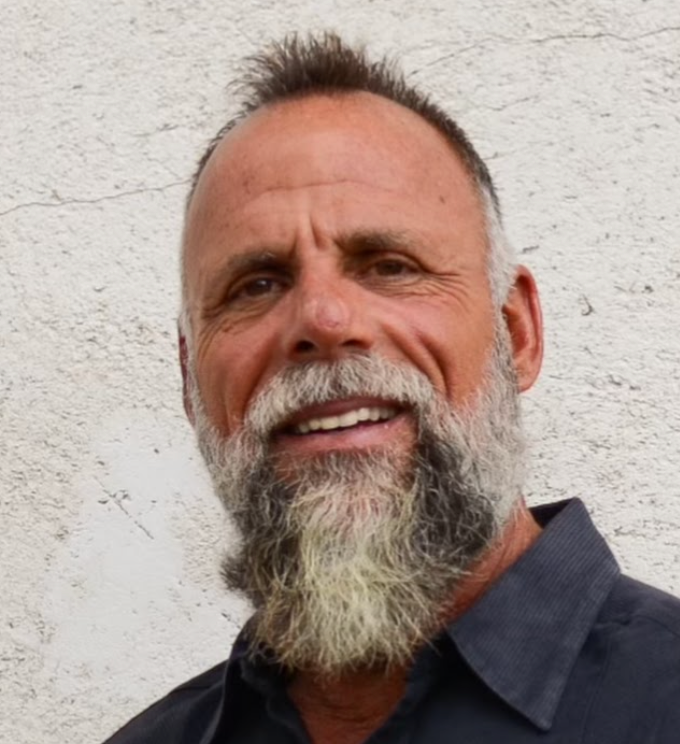
A $300 a month job, with very little status or perks, upended his career trajectory and shaped Doug Burleigh's next 50 years. As a "Young Life" summer camper in his teens he uncovered what a relationship with Jesus looked like. After excelling in academics in high school and college, it appeared he'd laid the ground work for a career to skyrocketing career with several lucrative and prestigious options. But the God inspired decision he made at that point changed everything, as he found his passion and success was found in helping to change and shape the lives of young people and later to share the Gospel in he most god forsaken parts of the world.
Listen right here:
Watch Right here:
This Amazing Greats episode traces a truly fascinating life of serving. Doug's Jesus-focused mission was not about promoting religion but rather was laser focused on building relationship. Relationship with Jesus and relationships with young people in Young Life and relationships with people around the world at Prayer Breakfasts, and other Jesus gatherings as far away as Russia, Ukraine and other countries from the former Soviet Union, South America, and right here at home in Washington DC. Through a Non-denominational, non-political group called "The Fellowship" Doug continues today reaching out and sharing the love, grace and good news of Jesus.
Inspiration, and wisdom are the hallmarks of this conversation with Doug Burleigh.. Enjoy!


DOUG BURLEIGH AT A GLANCE
Christian Leader • Former Young Life National President • Fellowship Leader • Author • Global Faith Advocate
Topics
Jesus • Young Life • Youth ministry • Fellowship • National Prayer Breakfast • Russia • Ukraine • Leadership • Identity • Faith • Cancer • Jesus Changes Everything
His Faith Journey
Religious upbringing → Young Life camp → Personal relationship with Jesus → Young Life ministry → Global ministry → Fellowship leadership → Faith through cancer and adversity → Writing about Jesus
This Episode Explores
Doug Burleigh’s dramatic encounter with Jesus at Young Life camp
Why he chose Young Life over law school and the CIA
More than 25 years of ministry with young people
Reconnecting with former Young Life students decades later
His work with political and religious leaders worldwide
The Fellowship and the National Prayer Breakfast
His experiences in Russia, Ukraine and the former Soviet Union
Identity, purpose and discovering who God created us to be
Prostate cancer and his belief that “God never wastes anything”
His book Jesus Changes Everything and his StoryWorth memoir
Questions Answered
Who is Doug Burleigh?
How did Doug Burleigh become a Christian?
What role did Young Life play in his faith?
Why did Doug Burleigh choose ministry over law school and the CIA?
What is the Fellowship?
What is Doug Burleigh’s connection to the National Prayer Breakfast?
Why has Doug Burleigh spent so much time in Russia and Ukraine?
What does Doug Burleigh believe about identity in Jesus?
How did cancer affect Doug Burleigh’s faith?
What is Jesus Changes Everything about?
What does Doug Burleigh believe is the purpose of following Jesus?
What can StoryWorth teach families about preserving their life stories?
Podcast Transcript: Doug Burleigh on Jesus, Young Life, Leadership, Politics & a Life of Faith
Amazing Greats with Ric Hansen
From Young Life to Washington, D.C.
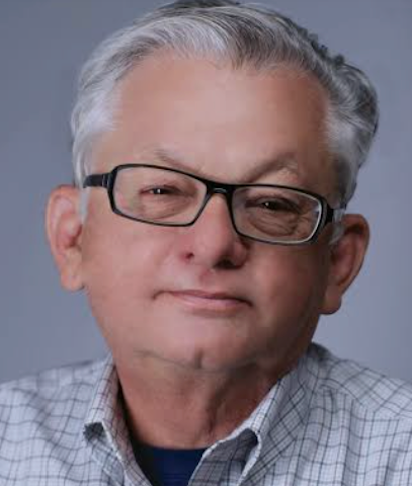
Ric Hansen:Hi, I'm Ric Hansen, and this is Amazing Greats, a podcast dedicated to talking with folks about their life journeys and their Jesus journeys. These are actors, authors, musicians, athletes, people we all know and love—and now we get to hear their stories on Amazing Greats.
Today we're talking with a gentleman by the name of Doug Burleigh. What a great story he has! You're going to love this one—a 50-year story of dealing with young people through Young Life and with politicians. Interesting.
We're live and direct from Washington State to Washington, D.C., here with a mutual friend. You've been recommended to me as a guest on our program for a long time. George, Bob, Janelle and Clem Daniels all say, "You've got to talk to this guy. He's got an amazing story."
So here's our good friend, new good friend, Doug Burleigh. Doug, how are you? And how's it going today in the beautiful capital city?
Doug Burleigh:Well, it's pouring down rain, so it reminds me of Seattle.
Ric Hansen:And we have sunshine out here. So what's up with that?
Doug Burleigh:Good for you. Good for you.
Ric Hansen:Doug, you've served as a Young Life leader for 25-plus years, including serving as national president of the organization for several years. You've most recently been with the Fellowship in Washington, D.C. You've led 65 Jesus conferences for young people in 15 nations in the former Soviet Union and every region of Russia. You've spent a lot of time there, including more than 150 visits to that part of the world.
I think we're going to start the conversation today with that because it's on the top of the news feed every single day. What's going on? From your perspective, as a guy who has spent a lot of time there and knows the people there, what's your overview of what's happening in Russia and Ukraine right now?
Doug Burleigh:Well, first of all, it's heartbreaking because these are two ethnic groups, the Russians and the Ukrainians, who have been intertwined for hundreds and hundreds of years.
I guess what I believe it's about is one man's ego—Vladimir Putin. By the way, the word Vladimir in Russian comes from the verb vladit, which means to make or to take, and mir means the world. So that's kind of the idea: he wants to redo the Soviet Union. I think you remember his statement that one of the tragic things of the 20th century was the downfall of the Soviet Union.
We have a president right now who's perceived on the international scene as somewhat weak. I think that's part of what is going on. I think Putin did it because he felt like he could.
The tragic part is the number of people who are hurt—not just in Ukraine. I just returned from five cities there speaking at prayer breakfasts, but also Russia. A lot of people don't realize the Russians can't get anything in the West now. If you had a job that had anything to do with the West, you don't have it anymore. They've suffered greatly. The sanctions have bitten hard.
So it's not just the Ukrainians; it's the Russians. Everybody's suffering from this. We're just praying it'll end soon.
Jesus in Russia and Ukraine
Ric Hansen:Yeah. And Jesus has a presence there, and you know that well, right? We in the West kind of think of that as a godless area, but God is doing work in Ukraine and in Russia.
Doug Burleigh:He is. I actually spoke at the Russian National Prayer Breakfast in November, and I had a chance to get up and talk about Jesus for 15 or 20 minutes there. There were 500 at the breakfast, including many from the leadership of the Orthodox Church, from the parliament there, and even people from Putin's office.
It's a nation that has embraced faith a lot through the Orthodox Church in recent years since communism fell. I believe a lot of them don't want this war either.
Ric Hansen:Is it a little intimidating to go to that part of the world when a war is actually in progress?
Doug Burleigh:Well, I operate by Psalm 91. If you remember part of that, it says that under His pinions, His wings, He will protect us.
I've been going there for 59 years. I had a Russian visa. I was asked to speak at the breakfast, and I just told the Lord, "Unless You close the door, I'm going to go." And He opened it.
I can't live out of fear. You know, at the last breakfast in Ukraine, in all four cities, the bombs fell the day that I spoke at the prayer breakfast.
But there's no fear in love. Perfect love casts out fear. I belong to Him. If it's my time to go, I'll go that way—not foolishly, but faithfully.
Growing Up in Seattle
Ric Hansen:Well, cool. I always hate to start with such a somber note, but let's jump back into little Doug Burleigh as a child.
Your parents became Christians at a Billy Graham Crusade, right? Is that how it all started?
Doug Burleigh:1951, Memorial Stadium. We had just moved into Hawthorne Hills in Seattle, opposite Laurelhurst, and built a home there.
The neighbors invited my parents to go to the Billy Graham Crusade. We didn't go to church. They invited my parents, and they're in the top row of Memorial Stadium. My dad gets up when they have the invitation to come down, and he says, "Lorreen, let's go."
We started going to University Presbyterian Church, which was a wonderful church to grow up in.
I just remember all of a sudden we were going to church. In fourth, fifth and sixth grade, they had a memory-work program. I couldn't go out and play on Saturday until I memorized my verses. It was probably four or five hundred verses.
It started with John 3:16, but by the third year it was Romans 8, 1 to 39.
Ric Hansen:Wow.
Doug Burleigh:Wow. That probably took me three or four hours, and it'd take me the rest of my life now! But I'm grateful for that.
I grew up, I would say it this way, a religious kid. I believed in God. I asked Him into my life. I believe I was saved, but I really didn't know Jesus.
Meeting Jesus at Young Life Camp
Doug Burleigh:I had an experience in high school.
My parents had gone up to Malibu, the Young Life property, as adult guests, and they loved it. They came home raving about it. I remember being in junior high and thinking, "That's the last place I'd want to go."
As you know, at junior high age, you think your parents really don't know that much. They get smarter later!
So they sent me to Malibu. I was just turned 16. I had my driver's license, a girlfriend, life was good, and they sent me up there.
There were 20 kids from Roosevelt High School who went—all girls except me. It was the last place I wanted to go.
And I love this: the Lord put me in a cabin with the wildest pagans in camp from Riverside, California.
These guys had no idea what this camp was about, but all they wanted to do was party—girls, party. We'd have cabin time at night after the message, and they'd be out on the golf course kissing girls. One by one, the head counselor would bring them in by the scruff of the neck.
So our cabin times were wild affairs. They didn't want to talk about Jesus at all.
Then I remember the night of the cross message, about day five. I'm walking up the stairs to the cabin, and the ringleader, a guy named Mike, is talking to our counselor. He's got tears in his eyes.
Our cabin time was a different story that night.
These guys were really engaging with the fact that Jesus Christ died for them. I never realized that. I think I'd heard it, but it didn't really affect me as much personally.
At the end of the time, the counselor said, "Well, anybody that wants to pray—we talk to God."
I remember Mike prayed, and it was the worst prayer I'd ever heard in my life. He didn't pray anything like the kids at church did.
Then they flipped the lights out, and I'm laying in bed thinking about his prayer. The more I thought about it, the best prayer I'd ever heard.
Number one, he was honest and vulnerable in front of all of his buddies. And I realized that Mike had something I didn't have. He had a relationship begun with Jesus.
The next day I went out and asked Jesus to come into my life.
Best decision of my life—August 21, 1961. Not that we're keeping track!
I remember at the say-so at the end of camp, you get up and they have a say-so, and I'm over in the corner of Big Squawka in the camp.
I said, "I'm Doug Burleigh from Roosevelt High School. This week I asked Jesus to come into my life. I'm going to stand tall for Him."
Everything changed after that.
I really think I understood then that it was more than a religious point of view—a ticket to heaven. It was a love relationship with a person.
And it's just grown from that time.
Goodbye, Religion. Hello, Jesus.
Ric Hansen:Ric Hansen here on Amazing Greats, talking with Doug Burleigh about his life and times and his love for Jesus.
I love the line from the book: "Goodbye, religion. Hello, Jesus."
Doug Burleigh:Yeah. Jesus never came to establish a religion called Christianity. If you can find that in your Bible, you'll be the first one I've ever met.
What He did is He came for the whole world—for everybody.
I just got home from Erbil, Iraq, this last week, and we're working with the Kurdish leadership, the prime minister of the Kurds.
This morning at the ambassador's breakfast in Washington, we had the Archbishop of the Catholic Church, whom I'd met with last week, who came from Erbil and is in Washington.
We're going to have a prayer breakfast later this year, and we'll have the Yazidis, the Muslims, the Christians and people say, "Oh, it's an interfaith breakfast."
No, no. It's a Jesus breakfast.
Jesus came for the whole world—everybody.
Ric Hansen:I love that distinction. Wow. That is powerful.
Achievement, Identity and Healing
Ric Hansen:As a student, a high school student and a college student, you excelled. You were a great student, academically very solid.
One place along the way where I did stalk you, I saw where you had said that you never heard your dad say he was proud of you. Do you think that was part of the incentive of being so dutiful in your academics?
Doug Burleigh:Yeah, I do. And by the way, I love my dad. He was a World War II pilot.
I was actually born in Auburn, Oklahoma, at a Naval Air Base, 12 days before Roosevelt died in 1945.
But my dad had a broken relationship with his father. He was the only one of seven kids who went to college. When he left the farm in Bend, Oregon, his dad stood on the porch and said, "You're a no-good so-and-so. You'll never amount to anything."
That tape replayed in his life.
So I don't fault my dad. I think he had a broken relationship with his father.
The Lord really healed me from that through an experience in the '80s called an intensive. It was an amazing experience of going off to a cabin for three weeks and meeting with a counselor who founded Fuller's School of Psychology.
What it did for me was help me love my dad from my heart.
I think I was probably a bit of a workaholic and a people pleaser.
I had a couple of sisters, both of whom were looking for love and looked for it in the wrong places. By college age, both of them had slept around. I kind of went the other direction.
We're not attacking fathers. What we're doing is realizing we want to turn it around.
I've got three sons and a daughter, and I tell them every day how proud I am of them, how much I love them, and so on.
Choosing Young Life
Ric Hansen:At this point in time, you're doing well in school. You're academically solid. But then some options came your way.
You could have been a lawyer. You could have gone to work for the CIA. But you didn't do either of those. What did you do, Doug?
Doug Burleigh:It was the summer of '67. I had graduated from Willamette University the year before in political science and Russian studies.
I had gotten a National Defense fellowship to go to the Soviet Union my sophomore year, and several times went to the Soviet Union in college.
Then I went to grad school at the University of Washington in political science. I was just finishing a master's degree, and they asked me to go on and get a doctorate.
I was also admitted to law school at the University of Washington in the class of the fall of '67.
I'd been flown out to Washington, D.C., during spring break and spent a week in Langley, and the CIA had offered me a career position where you get a Ph.D. as well.
And, oh, by the way, Young Life had asked me to work for them at the challenging salary of $300 a month—which, by the way, was more then than it is now, but still not the most prestigious thing.
I never even prayed about it.
I was driving a Seattle Transit bus early in the morning and during the afternoon rush hours, and in between writing a master's thesis. I couldn't get a passage out of my mind. It was Luke 9:23–25:
"If anyone wants to follow Me, he must deny himself, take up his cross, and keep close behind Me. He that seeks to save his own life will lose it. The one who loses his life for My sake will save it. What shall it profit a man if he gains the whole world and loses or forfeits his own very self?"
Again, I wanted to be somebody, and it was like the Lord was whispering to me, "Doug, are you willing to be nothing for Me?"
I honestly couldn't get it out of my mind.
I'm driving the bus, and at the end of the line we got a little break. I'm sitting there thinking about that passage.
I remember walking into the law school and resigning my position. The woman says, "Well, we've got 300 people on the wait list. If you changed your mind tomorrow, it'd be too late."
God told me to work with kids.
My professor—I was his A student—John Reschitar, a wonderful man, Ph.D. from Harvard at 24, looks at me and goes, "Social work?"
Because the Youth Corps had just started. And he said, "Don't do it for over two years."
Well, I did it for 25.
So October 1, 1967, I went on the Young Life staff. It's one of the best decisions I ever made—even at $300 a month.
The "Wet Cement" Years
Ric Hansen:Can you pinpoint one or maybe a couple of the spiritual highlights of that time—introducing young people to Jesus through Young Life?
Doug Burleigh:Let me mention this, and I mention it in my book.
Fifty years later, in 2017, I'm in Washington, D.C., working with the Fellowship. We closed the Cedars where I work. It's a seven-acre property ten minutes from the Capitol.
We have all kinds of breakfasts. This morning we had a whole bunch of ambassadors there. I have a couple of breakfasts a week with leaders of government, ambassadors and so on.
They close it in August because of the Senate and House recess, so I always go to the Northwest in August. Plus, it's hazy, hot and humid out here in August.
So I went out there and decided I wanted to look up 150 kids that I'd had 50 years ago.
It was one of the most gratifying experiences of my life. Person after person after person, you'd meet with them and they'd go, "Oh gosh," and they'd say things like, "You changed my life."
I didn't change anybody's life. Jesus did.
I'll give you one example. Dave Kristol was in my Young Life club in Tacoma, Washington. We had a little thing we called the Green Berets, and we'd meet at 6 a.m. at the Maverick Steakhouse. They'd memorize verses each week and so on.
He's a U.S. District Court judge now in Tacoma. He's pro-life, he loves the Lord, he married a believer, all his kids are walking with the Lord. He's surrounded by liberals all around him.
He just looked at me and said, "You know, I love Jesus. And I just want to say thank you for introducing me to Him."
Person after person after person.
What I realized is it was one of the most gratifying things of my life to see all these lives that were changed—not by me, but that I got to be involved with Jesus.
I can think of hundreds and hundreds of kids for whom that's true, and I got to be part of it.
We call it the "wet cement years"—where boys become men, where girls become women, and where decisions are made that affect the rest of their lives.
Finding Identity in Jesus
Ric Hansen:It's all about the love of Jesus and relationships. That's the story behind Doug Burleigh, our guest here on Amazing Greats.
Because of your background with young people over those years, and now when you look at young people today, what's your overall opinion? Where's this generation at right now? Are we a lost generation?
Doug Burleigh:I think the central word is identity.
We find our identity in Jesus Christ, Ric, and we realize that's where we get it, and that's the only place you're going to get it.
You're not going to get it in achievements. You think you do, but it's hollow.
I think that is the central issue: identity. All the rest of it are symptoms.
I was reading Colossians the other day, and 2:3 says, "In Him are hidden all the treasures of wisdom and knowledge."
A few verses later, in 2:10, it says our completeness is only realized in Jesus Christ.
Everybody's looking to be complete, and it's only realized in Christ.
There's a wonderful word in Scripture, teleios. It means perfect or fully mature.
It's used twice in Scripture, once in Matthew 5:48 in the Sermon on the Mount, where Jesus says, "Be perfect, even as your Father in heaven is perfect."
But the one I love is in Colossians 1, where it says the mystery hidden for ages and generations, but now revealed to the saints. To them God has chosen to make known among the Gentiles the glorious riches of this mystery, which is Christ in you, the hope of glory.
And then verse 28 of Colossians 1: "We proclaim Him, admonishing and teaching everyone in all wisdom that we might present everyone perfect—teleios—in Christ."
And then Paul says, "This is what I work at with all the energy God has given me."
What I think it means is the person that God had in mind when He created Ric Hansen or Doug Burleigh.
How are you going to discover that shimmering diamond? Because He never made another one exactly the same way.
Love God with all your heart, all your soul, all your mind, and your neighbor as yourself.
On that journey, you're going to discover what God had in mind when He created you.
I think that's the beautiful thing that we offer to kids: the Savior who will show them who they are.
A lot of kids are looking in all the wrong places.
What Is the Fellowship?
Ric Hansen:Let's jump into your next phase. Your history is kind of in a couple of chapters—the Young Life chapter and then the Fellowship chapter.
A lot of people are confused about what the Fellowship is, and so I thought you would be the guy that could explain to me and to our audience: What is the Fellowship?
Doug Burleigh:It's a worldwide family of friends whose leader is Jesus.
There are no titles. We don't have a president or a vice president and so on.
I think it pretty well copies what Jesus did with His disciples. He didn't come to create an organization; He came to create a family of friends, didn't He?
There are brothers and sisters and so on. That's really what the Fellowship is.
It was started by a fellow from Seattle, actually, a Norwegian named Abram Vereide, who came to Seattle in the '20s and started a group of city leaders in the '30s after the Great Depression.
Then he went on to Washington, D.C., and started the little groups in the Senate and the House that still meet on Wednesday and Thursday mornings.
And, by the way, they are the ones who really lead the prayer breakfast. We don't lead it. We're the ones who book the hotel and invite the guests and so on, but the leaders of government—the Senate and the House—really lead it.
It's not an organization. It's a family of friends that are all over the world.
Beyond Politics
Ric Hansen:And to make it clear, it's not politically motivated.
Doug Burleigh:There's no Democrats and Republicans, liberals and conservatives. It's all about Jesus, and He's the one who unites us together.
This morning, as I sat at the ambassador's breakfast, a former Democratic congressman was sitting at the head.
We may not agree on all the political things, but we do agree that Jesus is Lord, and we're trying to follow Him.
Ric Hansen:That's refreshing, because I think maybe it's got the stigma of being one way or the other, typically on the conservative side.
Some people have described it as being a very powerful secret organization.
Doug Burleigh:Yeah, and Netflix did a five-part hit job called The Family. Any relationship to the truth is purely coincidental.
I'm featured prominently in the third one on the Russian collusion thing. I was investigated for that because we invited a woman named Maria Butina and her boss, who was the head of the upper house of the Russian parliament, Alexander Torshin.
She was imprisoned as a Russian spy and was released 18 months later.
I didn't arrange any secret meetings for her and her boss, as I was accused of doing.
But it went away. I had to Google my name for a couple of years because of the number of articles and people on television. I found out all kinds of things that I did that I didn't do.
But you know what was good about that?
You read in the Sermon on the Mount, "Blessed are you when men shall revile you and persecute you and say all manner of evil against you falsely for My sake. Rejoice and be exceedingly glad."
What are the verbs there? Blessed, rejoice and be glad.
So I did my best.
I had to lawyer up, and I got investigated by the Senate Intelligence Committee, but there was nothing there. I knew that, and you walked through it.
It was an experience you'd just as soon not repeat, but it happens.
The National Prayer Breakfast
Ric Hansen:Your father-in-law and the National Prayer Breakfast—let's jump in there a little bit. Your father-in-law was the guy who kind of spearheaded the National Prayer Breakfast, and then when he passed, you kind of picked up the mantle there and are pretty much in charge to this day with the National Prayer Breakfast?
Doug Burleigh:We wouldn't say it that way, no.
Doug never had a title. I think he was sort of a patriarch, and we recognize that, but you'd never see him up front at any time ever. It was always behind the scenes.
That's how we do the prayer breakfast. We don't have a president or a leader of the breakfast. All of us just have different roles.
One of my roles is I invite a whole lot of friends from the former Soviet Union and some other nations that I'm involved with.
I was the keynote speaker at the Brazilian breakfast earlier this year. We work with a bunch of leaders down there. I work with the Kurds in Iraq.
Each of us has a role.
When you think organizationally or institutionally, you won't understand what we're doing.
And I don't mean that organizations are bad. Here's the irony: I spent 25 years with Young Life and now 29 with the Fellowship. I liked both of them.
The difference is that I don't have a title.
My business card has my name, address, telephone and so on. People look at it. And in Washington, where titles are big, they look at it again more closely.
But what was Jesus' title?
He didn't have one. He was a friend. He was surrounded by people that loved Him and so on.
It was all about relationship.
We're just trying to quietly model that.
So, no, I don't head up the prayer breakfast. I'm involved with it, with a number of others.
Cancer, Faith and "God Never Wastes Anything"
Ric Hansen:We're talking with Doug Burleigh on Amazing Greats. This is Ric Hansen.
You've also had some health challenges in your later years. You were diagnosed with prostate cancer. What kind of challenges, emotionally or spiritually, did you go through during that period of time?
Doug Burleigh:Well, it was one of the best experiences of my life.
I would say it this way: God never wastes anything.
It came along about three years ago, and I ended up doing proton radiation therapy ten minutes from the Cedars.
I didn't miss the breakfast or the lunch. I'd be there.
I didn't ask for this, but they gave me a 10:30 appointment every day.
You'd go in there, put your gown on, and somebody else would be sitting over there. I'd say, "Hi, I'm Doug. What's your name?"
"I'm Joe."
"Tell me your story."
And I did that umpteen times with people.
At the end of the proton radiation therapy, the next day I left for 28 days and seven countries.
I slid off the gurney, and the two nurses said, "Mr. Burleigh"—and I'd told them ten times to call me Doug—"you're the perfect patient. You're always on time, you're always happy, and you know all of our names."
By the way, that's Young Life. You learn.
Then you walk out in the hall and there's a bunch of doctors and nurses there, and they have you ring the bell. Everybody cheers because you finished the treatment.
I left the hospital that day and thought, "Gosh, what an amazing experience."
Would I want to repeat it? Not necessarily.
I'm not trying to say that people don't have heartbreaking experiences with cancer. Of course they do.
But I think the way I viewed it was, God never wastes anything.
Whatever comes along, if we take it in the right spirit, God uses it.
I connected with so many different people in the course of that experience. They became friends, soulmates that you were walking through it together with.
I learned a ton about Jesus and about myself.
I don't think I had any fear at all.
What's the worst thing that could happen to you? You go be with Heaven.
I don't think that's bad news.
That was a little earlier than I'd hoped for, but I love that passage in Psalm 90:12: "Lord, teach us to number our days aright and give us a heart of wisdom."
We don't know our expiration date. I'm so glad I don't know.
I'm going to be running full speed right up to the tape.
Writing Jesus Changes Everything
Ric Hansen:You certainly are living up to that right now. You are one active guy!
With all of the experiences you've had and all of the things you've done, especially with regard to your relationships with those countries in Eastern Europe, you'd never written a book until now.
Your book, Jesus Changes Everything, is a fantastic book. It's kind of a synthesis of who you are and what you believe. I was mesmerized by it.
Tell me what brought you to finally put that book together. And is there another book in your future?
Doug Burleigh:About 20 years ago, a friend in Gig Harbor, Washington, where I was working with the Fellowship and raising our kids, said, "Doug, you should write this stuff down. You've been teaching these principles for years, and you ought to write them down."
I just looked at her and said, "You know, I don't think I'm an author."
Then the pandemic came along.
My father-in-law had died a few years before, and we had lived together—he and I, Debbie and Mother. We had a seven-bedroom, seven-bath house that we really didn't need.
The lady said to me, "We're going to pack the boxes, and you're not qualified to pack the boxes, but you can take them down the stairs."
Which, by the way, I was thrilled about. I wasn't qualified to pack the boxes!
So I was going to the Cedars three days a week during the pandemic.
I came home on a Thursday night, and Friday I wrote The Purpose, the first chapter.
Saturday, I wrote The Work of God.
Sunday, I wrote What Is the Gospel?
Monday I wrote another chapter.
Then I went back to the Cedars for three days and came back and wrote four chapters in four days. It would take 10 or 12 hours, and I'd be in Doug's study. He had died a few years before.
Rick, an amazing thing happened over and over again.
I'd be in there and think of a story I hadn't thought of in 20 years that perfectly fit.
Because when you're talking about these principles, the best way to illustrate them is through stories.
I'd find myself weeping and saying to the Lord, "It's so much fun to write a book with You, not about You—with You."
And I felt His presence.
So I wrote the whole thing in less than four weeks.
Ric Hansen:Wow. Wow.
Doug Burleigh:Now I do have another book, by the way. And this is an interesting one. I actually like this one better.
Have you ever heard of StoryWorth?
Ric Hansen:No.
Doug Burleigh:It's all one word.
About three years ago, I got a Christmas present from two of my four kids, John, who's an attorney in Gig Harbor, and Katie, who's a housewife in Wilmington, North Carolina.
They gave me something called StoryWorth.
What you do is you get an email every Monday morning beginning January 1, and it's got a question.
"What was your relationship like with your mother?"
You've got a week to type that, and I'd write five or six pages on that. Then the next week you'd get another one.
"What's the riskiest thing you've ever done in your life?"
I wrote about taking 27 kids to the Soviet Union in 1973, driving through on three minibuses.
A Family Memoir
Ric Hansen:So StoryWorth was kind of the format for you to move forward?
Doug Burleigh:Yes. You type it, and at the end of the year they make a book.
It took an extra year because John needed to get pictures, and we had boxes we'd been packing from moving, so Debbie had to give him some pictures.
Last summer I got the book.
It's 295 pages, but Rick, it's your memoirs.
Ric Hansen:Wow.
Doug Burleigh:Here's the funny thing. We were on a family vacation—all 26 of us at a lake in Minnesota—and John brought it with him and gave it to me.
I'm embarrassed to tell you I stayed up until two o'clock in the morning the next two nights reading my own book.
Ric Hansen:Reading about yourself, right?
Doug Burleigh:Which I hadn't written. I'd written it three years before.
I love this book, and it really is your memoirs.
The only reason I mention it to you is every one of us can do this.
I'll find myself sitting down reading a chapter, thinking, "Yes, that's what I believe"—whether it's politics, integrity or whatever.
Ric Hansen:I just jotted that down. That's great. I put it in our show notes here, too.
Doug Burleigh:I gave it to all my kids and grandkids.
We've got 16 grandkids. All four of our kids have four—eight boys and eight girls.
James was out here on some kind of school thing. He lives in Gig Harbor, Washington.
Last time I was out there in Gig Harbor, I went up to tuck him in at night, and he's reading my book.
He goes, "Puppy, I just finished the book."
And I said, "Which chapters did you like the best?"
And he names two right away.
Here you are—your kids and your grandkids. They read about your life and about what you believe about so many things.
And they were great questions. John would pick the questions. He's the committee chairman for Young Life in Gig Harbor, he's an attorney, he knows everybody, he's very relational.
So I would tell you that's actually my favorite book.
Ric Hansen:Is that available to the public, or not really?
Doug Burleigh:I give it to individuals who ask for it.
It costs a little more because it's a limited edition. It's $40 a book, but I've probably given away 40 of them to friends who've just asked, "Can I read it?"
And then after they read it, they go, "Can I keep it?"
And I go, "Oh, okay."
Interestingly enough, I'll only mention it to you because I think it's one of the best things I've ever done.
And I didn't choose it—my kids did it.
They would get the emails each week, and I'd get a message back oftentimes: "Dad, I never knew that."
So they get to keep up with your writing.
The Purpose of Following Jesus
Doug Burleigh:Here's a key takeaway.
I've done this over and over and over again.
I'll sit with evangelical Christians and I'll say, "According to Jesus, what's the purpose of a follower of Jesus Christ?"
The most common answer is, "To win people to Christ" or "make disciples."
So I'll say to them, "Well, okay. Are you married?"
"Yes."
"What's your wife's name?"
"Susie."
"When you proposed to Susie, did you say, 'Susie, I love you. Will you have my children?'"
Well, of course not.
You said, "I love you. Will you spend your life with me?"
And, by the way, children came along. They weren't the goal; they were a byproduct of a love relationship.
According to Jesus, the answer is to love God with your heart, soul, mind and strength, and your neighbor as yourself.
And then He says, "All the law and the prophets hang on these two commands."
That's where we get the purpose. It's everything summed up in those two.
The same thing with chapter two: What is the work of God?
Most people will say to make disciples and so on.
Not according to Jesus.
The work of God is to believe.
Every issue in my life comes down to it.
Every time I worry, get angry or fearful, it's a symptom of unbelief.
The third chapter: What is the gospel?
Most people will give you six points or eight points and then argue about the information.
We believe the gospel is a person.
And, Rick, it changed my life when I realized that.
I get up and I talk about Jesus everywhere I go, all the time.
You know, our buddy George—I've probably done his deal 50 times.
About five years ago, a businessman came up to me at his event and said, "You know, every time you come here, all you talk about is Jesus."
And he thought it was an oddity.
And I'm thinking to myself, "You know, right on."
I wrote the book because I think most people couldn't tell you, for instance, the attributes of a disciple—the things Jesus said:
If you want to be My disciple, be a man of love. Be a man led and empowered by the Holy Spirit. Be a person who bears fruit. Be a person of prayer.
Most people couldn't name two or three of those things, and there are 10 of them.
And it's Jesus' list. It's not my list. It's the things He told His disciples.
Closing
Ric Hansen:You know, I could sit here and talk with you for probably another hour, but we are basically out of time.
We've talked as long as our podcast is supposed to be, and then some.
It has been amazing. It's been just awesome to get to know you.
Talking about one of the themes through your whole book, as you have just described moments ago, is all about relationships—relationships with Jesus, relationships with people.
And it feels like I have a relationship with Doug Burleigh right now, and that is a gift.
I appreciate your time, and I appreciate your story.
God bless you.
Doug Burleigh:Well, thank you, brother. It's a delight to visit with you.
Obviously, we're kindred spirits. We love Him, and that's called fellowship.
And you know what fellowship is?
A lot of fellows in the same ship!
Ric Hansen:Amazing Greats. Hey, it's Ric Hansen here.
That was an incredible few minutes spending time with Doug Burleigh.
What an interesting guy. I didn't know much about him until I started digging deep into his story, and then found out what an amazing man he is.
What he's done is incredible, and his love for Jesus is unparalleled.
Thank you for watching and listening to Amazing Greats. If you like it, click Like or share it with a friend.
Thank you, and God bless.

Comments