
Rabbi Hershberg: "Jesus changed everything"
Updated: Sep 10

What happens when an Orthodox Jewish businessman meets Jesus on a mountain in Israel... and decades later finds himself fighting for his life?
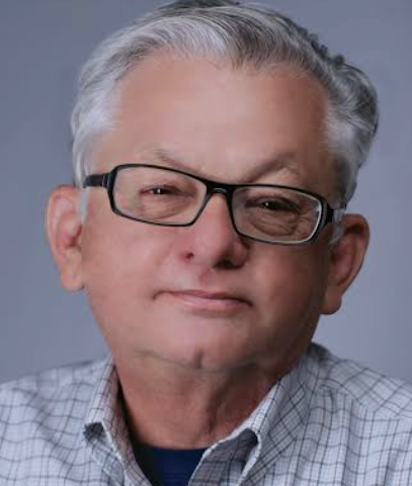
Rabbi Greg Hershberg shares one of the most remarkable stories we've featured on Amazing Greats.
Raised in Orthodox Judaism, Greg never expected to believe Jesus was Israel's Messiah. Yet a supernatural encounter during his honeymoon changed the course of his life forever.
Years later, a life-threatening medical crisis left him hovering between life and death for 50 days. Through unimaginable suffering, difficult questions, and moments of deep doubt, Greg discovered something even more powerful than physical healing—the unwavering presence of God.
This conversation is honest, deeply moving, and filled with hope for anyone facing pain, loss, or uncertainty.
His current book:

A deeper dive:
Greg is still lead pastor at Beth Yeshua in Macon Georgia and Beth Yeshua International.
Greg has written several books, including:


GREG HERSHBERG AT A GLANCE
Messianic Jewish Rabbi • Author • Christian Testimony • Founder of Beth Yeshua
Topics
Messianic Judaism • Jesus • Jewish faith • Conversion • Israel • Spiritual awakening • Suffering • Faith during illness • Prayer • Doubt • Hope • Redemption • Evangelism • Discipleship • Ministry
His Faith Journey
Orthodox Jewish upbringing → Secular life → Spiritual searching → Israel honeymoon → Encounter with Jesus on Mount Tabor → Faith in Jesus as Messiah → Messianic Jewish ministry → Beth Yeshua → Global evangelism → Life-threatening illness → 50 days between life and death → Deeper understanding of suffering, faith and God's presence
This Episode Explores
Greg's Orthodox Jewish upbringing in the Bronx
Why he walked away from Judaism after his father's death
His years of secular living, business success and spiritual searching
His unexpected decision to honeymoon in Israel
The extraordinary encounter with Jesus on the Mount of Transfiguration
Why Greg says Jesus told him, "I love you"
His realization that believing in Jesus did not mean abandoning his Jewish identity
His wife's own encounter with Jesus in Capernaum
The founding and growth of Beth Yeshua, a Messianic Jewish congregation
Greg's ministry and evangelism around the world
His catastrophic illness and the 50 days chronicled in At Death's Door
Facing multiple surgeries, dialysis, life support and the possibility of death
Calling his four children to say goodbye
The struggle between faith and doubt during extreme suffering
Why Greg says exhaustion and depletion can look like faithlessness
His prayer asking God not for healing, but for His presence
What Greg believes God taught him about suffering, hope and redemption
Why he believes it is okay for believers to cry out to God
The importance of evangelism and making disciples
Questions Answered
What is Greg Hershberg's Christian testimony?
Who is Rabbi Greg Hershberg?
How did Greg Hershberg become a believer in Jesus?
What happened to Greg Hershberg on Mount Tabor?
Did Greg Hershberg leave Judaism when he became a follower of Jesus?
What is Messianic Judaism?
What is Beth Yeshua?
What happened to Greg Hershberg during the 50 days described in At Death's Door?
How did Greg Hershberg survive his life-threatening illness?
How did Greg Hershberg's faith change through suffering?
What does Greg Hershberg say about doubt and questioning God?
What did Greg Hershberg learn about God's presence during his illness?
What is At Death's Door: 50 Days Between Life and Death about?
How does Greg Hershberg explain suffering, faith and redemption?
What does Greg Hershberg believe about evangelism and making disciples?
Related Stories
To be added as the Amazing Greats story map grows.
Podcast Transcript
At Death’s Door: Rabbi Greg Hershberg’s 50 Days Between Life and Death
Amazing Greats with Ric Hansen
Guest: Rabbi Greg HershbergAuthor of At Death’s Door: 50 Days Between Life and Death
Ric Hansen — 00:39
Well, what a great afternoon it is. We're miles and miles apart from one another, but here we are, by the incredible technology of Zoom, talking with Greg Hershberg, who is a Jewish rabbi—but you're a Messianic Jewish rabbi, and we want to make that very clear.
First off, Greg, you wrote a book, and that's what we're going to talk about here in a little bit. We're going to find out about you. What the Amazing Greats podcast is all about is learning people's amazing stories, and so that's what we're here to do today.
First of all, thank you for being here. Thank you for being an incredible representative of Jesus and of the whole faith, the Way. And thank you for being here with us today.
We're going to talk about the book, which is called At Death's Door, which I think will give us a kind of a way of where we're headed in this conversation.
So, Greg Hershberg, it is good to see you. Tell us about you. You were born into a Jewish family, you were raised in a Jewish environment. Tell us about that.
Greg Hershberg — 01:47
Well, you know, today it's almost in vogue. Ever since Madonna started studying Kabbalah, it was in vogue for a while to be Jewish. So people are like, "Well, my grandmother, you know, on my father's side—I was very Jewish."
And I'm not proud of that; I'm just stating a fact. My father was Jewish, his parents were Jewish. My mother was Jewish, her parents were Jewish. My three sisters were Jewish. They married three Jewish guys and raised their kids Jewish.
We're a very Jewish family—and not just culturally, because 80% of Jews today are culturally Jewish, which means they have some affiliation nationally with Judaism, but not religiously.
I was raised Orthodox, and it was austere. We were raised in the Bronx, in the projects. In the '70s, the Jews became very affluent, so they were moving to the suburbs. Why? Houses, land, better schools, better culture.
And so my father was poor. I don't know how I managed to be born in the only poor Jewish house.
Ric Hansen
Yeah.
Greg Hershberg
But I was.
So the only Jews that stayed in the Bronx were the octogenarians on fixed incomes. And I have to tell you—and I'm not pointing fingers—but I experienced a ton of anti-Semitism growing up.
A lot of times, it was—I was over a friend's house and they'd have a Jewish slur. And then my friend would say, "Oh, Mom, you know Greg's Jewish," and they'd go, "Well, he's not that kind of a Jew."
I guess I'm a good Jew.
So I experienced a lot of that.
I went to synagogue three days a week, and I never really connected, Ric. I'm not blaming the rabbi, and I'm not blaming Judaism. It was a lot of religiosity. It was a lot of external religious ritual.
Now, I know there are many Jews who love the Lord and revere God. I don't want to be disrespectful in any way. My experience was that it was external.
And so, after my bar mitzvah at 13, and after my father died when I was 15, I walked away and became very secular.
Ric Hansen — 03:58
Yeah. And I think that's a continuing story that I get, not just with Judaism, but also with Christianity.
You know, when we're young, we're kind of forced into this mold where this is what we do and this is who we are, but it doesn't mean anything for us. And that's exactly what you're talking about.
But it did come to mean something for you at one point down the road.
So you were living a secular life. Life was good. You fell in love with Bernadette, your wife, and then you decided to get married. And tell us about that honeymoon experience.
You were both secular.
Greg Hershberg — 04:39
She was raised very strictly Catholic.
You know, in New York City, there were no Baptists, there were no Pentecostals when I was young. It was the little synagogue and the big Catholic Church. And you were either Roman Catholic or Irish Catholic, or you were Jewish. That's it—nothing else.
And Jesus was their guy, and Moses was our guy.
And I didn't have anything against them. My parents never—nobody disparaged them in the Jewish community. They just said that he's not part of us.
And again, like you said earlier, I just accepted that. I was being influenced by my parents. I was a little boy, and I said, "Okay, he has nothing to do with me."
At least that's what I thought.
And I was called "Christ killer" and all this, and it was—you know, it's been going on for a long time.
So when I became secular, I was just trying to make a good living and make my father proud. My father—I was the youngest of four, three older sisters. I really just wanted to make him proud. I wanted to do well so I could look up and go, "I did it, Dad."
That's all. I was really doing it for him.
And I did. I was accomplished. I had an executive search firm in the city, placing people in banking and finance. It was very lucrative. I was making money.
Bernadette was a swimsuit model because I fell in lust at first sight. I was very external. I was very lustful, and, you know, she was very, very attractive. And I didn't look within. It wasn't part of my persona.
Yeah.
And I think there's something in all of us. Ecclesiastes speaks about this—that eternal life is planted in our heart.
I think even people that believe in aliens and extraterrestrials and these apocalyptic movies that are so popular, they deep down inside know there's something more than just this. They can't buy into the fact that this is it—you die and it's over.
They don't know what it is, but they have a sense.
And I had that sense.
And as a Jew, I think a Jew is a Yehuda. You know, we're a people that were created. Nobody was born Jewish until Abraham was called out. He wasn't Jewish. He was from Mesopotamia.
And then he had Isaac, the son of promise, and then he had Jacob, and Jacob had a son called Judah. And Yehuda in Hebrew means "a praiser of God."
And the Jewish people were created by God to be model citizens of His kingdom. It was supposed to show what it looked like to have a relationship with Almighty God.
And so Jews are always searching. And that's why it's notorious that Jews find their way into occult practices because they're looking for something.
And I found my way into an occult, and I really did.
It was an occult—a lot of transcendental meditation, a lot of ethereal planes, a lot of wacky stuff. But it feeds your ego, and it shallowly fills that need that you instinctively have.
You think, "All of a sudden, I'm spiritual."
You say, "I'm not religious, I'm spiritual." Whatever that means.
And so I was spiritual, and I was deeply spiritual and committed.
And this guru—he was a guru—and he happened to be a doctor, too, so he had credentials. He said to us—he loved Bernadette—he said, "You guys have to go to Israel on your honeymoon."
And inside my head, Ric, I just heard, "Wah, wah, wah, wah, wah."
There was no way I was going to Israel.
Honestly, we were going to the Caribbean every three months. I was making money. We were partying. We were drinking. We were doing some recreational drugging. We were dancing.
I'm not proud, but that's who we were.
So I'm thinking Jamaica. I'm thinking Blue Mountain Coffee. I'm thinking, you know, they have the best marijuana in the world, pretty much, at the time, anyway.
And I'm thinking Israel? No.
But something happened the next day when I got on the train to go to work. I sat next to somebody who said, "Have you ever thought about going to Israel?"
And I'm not the sharpest tool in the shed, but I thought, "You went back."
I went back. I was like, "Oh, whoa."
Because I had just committed: I'm not going there.
And they said, "My father-in-law has a travel agency in Manhattan, and he specialized in Israel travel. If you ever want to go, here's his card."
I was like, "I guess we're going to Israel."
But I was so confident that it was going to be lousy that I put a week in the Greek Isles on the back end.
There you go.
Yeah.
Went to Eilat. I don't know if you're familiar, but, you know, I take tours there. I take people there. So I've been there about 21 times.
Eilat is in the southern Sinai Peninsula—gorgeous. You see three countries. It's on the Red Sea. Beautiful hotels, bars, restaurants.
I kid, tongue in cheek, but I say when I got there, I liked Eilat a lot.
It was perfect for me. And we're partying, we're having a good time, and I'm saying, "This is great."
We're sunning and funning, and I'm thinking Israel's okay.
I'm water skiing. I'm scuba diving in the Red Sea. It's one of the greatest places to scuba dive.
And then we went to Jerusalem, and I hated it.
Hated it.
I didn't know about spiritual warfare, but I was visibly bothered by what was in the air. It was palpable.
You have Jerusalem in quarters. You have an Armenian Quarter, a Christian Quarter, a Muslim Quarter, and a Jewish Quarter, and none of the quarters got together.
And I was like, "I don't like this."
And again, I also thought that the old Jews—you know, when I went to Spain, there's Spanish people. And in Greece, there's Greek people. And Israel has people from all over the world.
It's one of the most international cities.
I just didn't feel it.
We went out, we did [various things], and it was the last day.
And I said to Bernadette, "Let's see if we can get a car and go up north."
I was so far removed from my Jewish roots, I didn't even realize it was the High Holy Days.
It was Yom Kippur.
And yeah, I managed to get a car because there was a secular person in the agency. Everything shuts down in Israel on Yom Kippur. It's the holiest day of the year, the Day of Atonement.
And she realized my last name was Hershberg. I must be secular too. So she gave me a car.
Drove up north.
It's very easy to get up there. Kings Highway goes straight up. It's a small area, 23 miles around the Galilee. That's it.
And I was looking for the Mount of Transfiguration because this guru told us this story about the Mount of Transfiguration.
Ric Hansen — 10:57
You're listening to Amazing Greats. I'm Ric Hansen, and today I'm talking with Rabbi Greg Hershberg about his incredible journey through 50 days between life and death, and the God who never left him.
Greg Hershberg — 11:09
And he said—he said Jesus appears. You know, he believed in Jesus, not as the Messiah, as the Son of God, the only way to the Father, but as a great teacher, like a guru himself.
And Moses appeared, and Elijah appeared.
And he told us the story, and I remembered it.
So I said, "Let's go there. That's kind of special."
Those are my guys—not Jesus, but Elijah and Moses are my guys. They're pillars.
And we couldn't find it because nobody knows up there. The Jewish people don't know the Mount of Transfiguration. They know it as Mount Tabor. That's its geographical name.
The Mount of Transfiguration was what Bible scholars deemed it so they could find it in Matthew 17.
So we go. I drop Bernadette off. She says she's going to Tabor.
I drop her off, I look to the left, and there's a very beautiful, round mountain.
And I don't know how to explain this to you except to say it was absolutely calling my name.
I felt like somebody cast a rod off the top, the hook went in my heart, and they were reeling me in very, very fast.
And I drove up.
Bernadette said a couple of choice words, you know, because I was driving like a maniac.
I jumped out of the car. I saw a plaque. It said, "The Mount of the Transfiguration."
I heard a voice.
I know this sounds crazy. I'm sorry, but I can't deny it.
The voice said, "Come away and pray with me."
I'm embarrassed to say, Ric, I didn't know how to pray.
So I only knew some rote Jewish prayers, like the Shema, the V'ahavta, and others.
I found a three-tiered rock. I closed my eyes. I figured I'd do some transcendental meditation.
And all of a sudden, I see the eastern sky open up, and I see a figure come out of it.
And his face shone like the sun, and his clothes were white as light.
And he came down. He descended, and he pressed his chest against me.
And the first words he said to me were, "I love you."
Greg Hershberg
And I was loved by my mom. I was loved by my dad. I was loved by my three sisters.
I had good friends.
But this was otherworldly.
I never heard it like this, ever.
And he said, "I'm the one that you're reading about in the Old Testament."
He said, "All you have to do, Greg, is believe. Nothing more."
I don't know why I did, but I did.
And then he ascended.
I opened up my eyes, and I started weeping.
Bernadette would tell you—I went for about 20 minutes. I couldn't stop. And I couldn't get my composure.
Finally, she said, "What the heck happened?"
And I said, "I think I met Jesus, and I don't know what to do with it, Bern."
She said, "Well, okay. What we do have to do is we have to leave because we have to pack because we're going to Greece in the morning."
And I said, "I know this sounds nuts, but I promise you—I can't go. I can't leave here."
Because, see, I thought God was on the mountain. And if you leave the mountain, you leave the Lord. I would leave that feeling.
And, you know, once I read the narrative, I realized that's what the disciples thought.
James, John, and Peter said, "Let's build tabernacles."
So I said, "Okay, give me a little time."
And I said to the Lord, "I don't want to go. But I guess I can't just camp up here, right? I'm married now, and I have a job. So I promise I'll come back to see you."
And then I said, "I only have one question."
Because Judaism is—it's not just a religion; it's a nationality.
When I was around my friends in the Bronx, and somebody said, "I'm Puerto Rican," or "I'm Italian," I'd say, "I'm Jewish."
But it's supposed to be a religion.
How did it become a nationality?
It is.
And so I said—and I was—I just knew about the Holocaust and the pogroms, and my father was a proud Jew, and I just thought, "Oh, my God. I guess I'm not Jewish anymore."
And so I said, "Jesus, do I have to stop being Jewish?"
And I heard Him say, "I didn't."
And I shelled it.
I didn't know what that meant.
"You didn't? Of course you did. You're the head of the Catholic Church. What do you mean?"
I left it alone.
And then I figured it out when I started to read the Gospels when I got home.
I turned over the page and started reading Matthew 1:1.
I was like, "Wow. This genealogy is incredibly Jewish."
Ric Hansen
Yeah.
Greg Hershberg
And so I came home, Ric, 180 degrees different.
I stopped listening to the music. I stopped partying.
I went to my friends and said, "I'm sorry, I can't. I can't hang out anymore."
It's not that I'm better than you. I'm worse than you, really. But I'm trying to do something here, and I don't want to be pulled back.
I've got to go forward with this.
I have to.
And that started my journey with the Lord.
Ric Hansen — 16:04
Yeah. And time passes.
I'll just throw in also that Bernadette had a conversion story as well. And the both of you are—and hers was as interesting as yours, you know—is this in Capernaum?
Greg Hershberg — 16:20
We went to it. We saw this. We were going down, we were leaving, and there was a sign that said, "The Town of Jesus."
And of course, that's where His ministry hub was.
He was born in Nazareth, but Capernaum was where His ministry was stationed.
And in these towns, Ric, if you've ever been there, there's one synagogue to a town. So if you don't get along with the people in your synagogue, you have nowhere else to go.
It's not like the church in America. You can go down the street.
Yeah, you have to learn how to get along.
So we know that there's a synagogue there they uncovered. We know what it says in the Bible, and Jesus taught at the synagogue in Capernaum.
We're there.
So I'm standing there with her. We went in. I'm standing there with her, and I have my back to her.
And I said, "This is crazy. Like, we're on holy ground. This is where the Messiah ministered and taught."
And I hear knees hit the ground.
And I hear weeping.
And I turn around, and I'm trying to communicate with her, and she said, "I saw Him, Greg."
Bernadette
We were in garb. He was teaching, and He walked over to me, and He put His hand on my hair and said, "Be healed."
Greg Hershberg
And, you know, I thought that when we would get home, everything would be great.
I thought, okay, I was pretty much not a great guy, and I was living the life of Riley. So now that I've given my life to the Lord, it's going to be even better.
And it didn't happen that way.
It didn't.
It was hard. It was difficult.
The enemy came after us like nobody's business. Still does.
And I think what happened was I had built this house, like the Tower of Babel.
The Lion of Judah had to come along and tear it down.
It did need a renovation. It needed to be demolished.
And then He had to become my foundation.
And little by little, He's been building my tabernacle back up.
Ric Hansen — 18:24
So time passes. You start a very successful Messianic Jewish congregation, Beth Yeshua.
Greg Hershberg — 18:37
Yeah. It's a house—House of Jesus.
Beth Yeshua, you know, House of Jesus.
Ric Hansen
That's what a secular—our Christians would call it.
Greg Hershberg
Yes.
Well, Bethlehem is Hebrew. It's Bethlehem—House of Bread.
So it makes sense for the Bread of Life to be born in the House of Bread.
Ric Hansen — 18:56
So, and that's—and things are going good at that point, right?
Greg Hershberg — 19:00
Well, Messianic synagogues are small, Ric.
I mean, you know, first of all, Saturday's the day that kids play baseball and soccer. It's not the day people worship. It's a big inconvenience.
And we're just looked upon as strange just because we worship on Saturday.
I think if somebody worshipped on Tuesday in a coal-mining town because that was the only day available, nobody would look at them weird.
But because I'm trying to honor the Sabbath, no big deal. I don't push it on anybody.
So they're small.
They're 30, 40, 50, 60 people.
But this grew.
This kept growing and growing.
You know, 50, 100, 300, 500.
And then people started watching online.
They begged me to get a camera.
I said, "Who will watch? My mother doesn't want to watch. Who's going to watch?"
And then thousands of people started live-streaming with us.
I didn't understand what was happening.
Then the next thing I know, we're planting congregations.
We have 200 congregations in India.
And I don't say this to brag, because anybody who knows God has no business bragging, right?
It's not possible.
Every now and then we feel like we're doing well, but it has no place with the Lord.
You know, He won't share His glory with another, right?
It's just taboo.
But it kept on going crazy.
And I think part of the reason was—there's probably a lot of reasons. I don't know. There's a lot I don't know. A lot I don't know.
But one thing was, I was very real and transparent.
I didn't give three-point sermons.
I didn't say, "If you do this and you don't do this, you're going to get that."
Because it's not true.
Life is messy. Life is ugly. Life is dirty.
And when you try to sanitize the faith, I think in the pulpit, you're doing people a great disservice.
You're not helping them. You're not seeing them.
It's like Job's friends.
You know, they didn't want a God who could allow suffering.
They didn't, right?
"No, no, that wouldn't happen. So you have to be in sin."
I mean, this is insanity.
We've got a whole book of Job on suffering.
Yeah, we've got a whole book of Lamentations, half the Psalms. They're crying out, "How long? I'm going to sleep the sleep of death if you don't deliver me."
Yeah.
And then you have Jesus Himself saying, "Father, why have You forsaken me?"
That sounds Shakespearean, but what He was saying is, "We've never been apart. I'm in the most pain I've ever been in. I need You right now more than ever, and You're nowhere to be found."
So if Jesus could feel that, you're telling me Greg Hershberg and Ric Hansen can't?
Ric Hansen — 21:31
This is Amazing Greats with Ric Hansen.
My guest is Rabbi Greg Hershberg, author of At Death's Door, sharing the remarkable story of how Jesus met him in the darkest days of his life.
Now, I'm totally on board with that.
That is so amazing.
And He showed you in real life, with your life, how suffering can take its toll.
And that started with a trip to St. Louis—with you and Bernadette going. Your kids are grown. You have four great kids. The church is doing well.
And you head off to a weekend to see Jerry Seinfeld and Jim Gaffigan.
Greg Hershberg — 22:14
She surprised me.
You know, Jerry Seinfeld is a contemporary of mine. He's from Queens. I'm from the Bronx. He was raised by the same parents, the same culture.
I find his comedy clean. You know, you could bring your grandkid with you.
Jim Gaffigan's changing, but at the time we saw him, he's super-duper clean.
And we were thinking about, you know, I'm turning 65. Maybe I should step away a little bit from pulpit ministry and just stick with evangelism and helping the poor, the widow, and the orphan, which is what I love to do.
But my illness started in 2005.
I didn't know it until recently, until this last illness, but I have a connective tissue disorder, which means that I'm missing a collagen marker in my DNA, which means that my connective tissue doesn't work.
So I would play sports like a maniac when I was young, and I constantly got hurt—tendon strains and sprains, constantly.
I thought, "Okay, you're weak. You just got to go at it harder."
And I'd go at it harder and get hurt and get hurt.
So my connective tissue and my arteries are weak, so I get what's called aneurysms, where it's a bulge—a little weakness in the wall of the artery.
And, you know, when that bursts, 90 seconds.
Ninety seconds.
It's the silent killer because nobody knows. Nobody knows they have an aneurysm.
There's no symptoms. It's totally asymptomatic.
Ric Hansen
Yeah.
Greg Hershberg
So when you hear about hundreds of thousands of people dying of aneurysms every year in our country, it's the silent killer.
"Oh, she died of a brain aneurysm."
"Oh, a heart aneurysm."
They don't know.
Unless you go in for something else and they do a CT scan, and by the grace of God, they find it, it goes totally undetected.
So it started in 2005.
I had the largest aneurysm—the Guinness Book. I could have been in the Guinness Book.
I chose not to because I didn't want Ric saying, "Hey, I have this friend of mine who's in the Guinness Book for the largest aneurysm."
Not anything to be proud of, right?
So, yeah, I wasn't interested.
So it started, and I started getting more aneurysms.
I had major surgery in 2005—ICU 18 days, life support.
Major surgery in 2009.
Major surgery in 2019.
Major surgery in 2020.
And then we're in St. Louis, and we're just like, "Hey, we've worked really hard."
Bernadette sacrificed. I sacrificed. I really did.
It was a labor of love, but our life was not our own.
No shot, no-how.
We've got congregations in Ethiopia, in Kenya, in Australia, in Germany, and India.
Your life's not your own.
And so much going on in Israel.
And we were just thinking, "Hey, we've made it. High five. We're not divorced, you know. Our kids are well. And let's just celebrate."
Let's think about freeing up.
Let's think about maybe taking a walk together.
That would be nice.
And we're—you know, it's the last day we're in St. Louis, and I was very sick.
I never felt like this before.
I couldn't explain it.
And we got to the airport, and I didn't feel right.
And I said to Bernadette, "I'm going to go sit down."
And as I was going toward the chairs, I couldn't make it.
And I fainted.
And the EMTs were over me, and they said, "Look, it's protocol. We have to take you to the hospital."
I said, "Please let me go back to Macon. My two best friends are doctors there. Please. They know my situation. I've had so many surgeries. Please."
And they said, "You know, we can't do that because if something happens to you on the plane, it will come back on us. I'm sorry. It's protocol."
I begged them.
And for some reason, he let me go.
Got in a wheelchair.
I'm like, "This is insane."
You know, we went for a weekend. It was supposed to be special, finally.
Ric Hansen
And you actually didn't go to the concert.
Greg Hershberg
No. Yeah. Terrible.
So I get home, still sick.
Call up my friend who's a doctor. He's there. He says, "Come on by."
He tests me for all kinds of things, and he says, "You have a blood staph infection."
I said, "Infection? I thought that's minor. What are we talking here? Z-Pak?"
And he said, "Greg, you don't understand. Twenty percent of people die from blood staph."
And I'm pretty good with numbers.
So I said, "That's one out of five. That's big."
And he said, "Yeah. You better take it seriously."
And I said, "I am."
So he gave me vancomycin until the cultures came back.
And my kidneys didn't like vancomycin, so they decided to shut down.
So now I have blood staph, and now I'm on dialysis.
And my body's swelling, and I'm turning yellow.
And I'm thinking, this is—you know, it hits you.
And it's not like you scream. You just sit there in a daze. You're like numb.
You're like, "Hmm. This is happening to me. This is happening."
And then it got out of hand.
And that's when they had to shove me off to Emory because that's where I had all my vascular surgeries, and they just had to, you know, really wash their hands of me.
It was beyond their skill set in the local regional hospital.
Thanksgiving Day, I'm in an ambulance, and I'm thinking, you know, there's so many people in traffic on I-75 at bumper-to-bumper, and they're probably cursing and carrying on because of the traffic.
I'd give anything to be in their car.
Yeah. I'd give anything right now.
Got to the hospital, and, you know, the surgeon came to see me.
And he says, you know, after about a week, he said, "Greg, we don't know what it is. All the CT scans are inconclusive. We're just going to have to open you up."
And they open you up from your sternum to your symphysis pubis. They move apart your—[the surgical area]—to get your arteries. You got to take out your intestines.
And when I finally came to after three days, he told me that he had to remove my aorta and my iliac arteries.
He said, "I'm 66 years old. I'm Harvard trained."
He's excellent at what he does. He's one of the best surgeons in the nation.
And he said, "I never did what I had to do on you."
Those stents got infected, and they became part of your arteries, so I had to remove your arteries.
He said, "I've never done it."
I said, "How did you know how to do it?"
He goes, "I didn't. I just depended on some of my training."
They had to reroute everything.
I was in there for 12 and a half hours.
And he said, "But I want you to know something."
He likes me because he doesn't have a lot of respect for preachers, but I'm not the guy in the pulpit.
I'm trying to be like Jesus.
He's out in the streets. He's helping the poor, the widow, and the orphan. He's building schools.
That's what I do.
Ric Hansen
Yeah.
Greg Hershberg
Preaching to the choir is boring.
I mean, it's boring.
Ric Hansen — 28:32
So even going into that surgery, if I—so I read the book in like a day.
It's not a big book, but it's very captivating right from the very get-go.
You did an amazing job of capturing the story.
Greg Hershberg
Thank you.
Ric Hansen
And sharing your wisdom along the way.
But, as I understand it, this is—we're talking 50 days total that we're dealing with, but the surgery itself had like a one-in-five chance of surviving.
Greg Hershberg — 29:02
Not even one in five.
I wish it was 20 percent.
He told me when he came in the night before—he likes me because of what I do.
He's fairly agnostic, and I've worked on him, but kindly and lovingly.
You know, I'm not a thumper. I mean, that's not the good way to be.
Yeah, I am who I am. I can't deny it, and I care about a soul. It's that simple.
And I said, tongue in cheek, I said, "Dr. Dobler, do you think I should say goodbye to your kids—my kids?"
I was kidding.
And I thought he was going to go, "No, Greg will be fine."
He goes, "Absolutely."
He said, "Greg, you have a very little chance to survive."
Now, Ric, I'm not gifted.
I can't hold a note. Artistically, I'm more autistically.
I don't have any mechanical expertise.
And I don't say that to make you think I'm humble. I'm telling you facts.
I don't have any gifting.
The one gift I had was to be a father.
I was determined to be an excellent father and to leave my kids with a great memory of me because I lost my dad when I was young.
So calling my kids and saying goodbye was the most excruciating torture I've ever experienced and will ever experience.
My first son I called was super close.
I said, "Jeremy, I was just told by Dr. Dobler—he knows him well—that it doesn't look good for me. There's a very little chance I'm going to come out in the recovery room. I'm probably going to come out in the resurrection room."
And I want you to know I had to give him my last words.
These are my last words to you.
"You never made me sad."
I'm not saying this to make you feel good.
I'm telling you, you never made me sad.
Every time I looked at you or thought of you, I was happy.
When I was with you, I was 10 feet tall.
And I said, "I'm going to miss you. But we'll see each other again."
He said, "Dad, I really tried to never lie to you."
I said, "I know."
He said, "So I'm going to tell you something. I'm not going to go to your funeral."
And I said, "Why wouldn't you go to my funeral?"
And he said, "Because a world without you is a world I don't want to live in. So I'm just going to make believe you went away."
And that's the way it went with the other three.
Same thing.
And my final one, Lily—she goes, "But you can't die."
And I said, "Well, I don't have much of a choice, Lily."
She goes, "But you're my best friend. How am I supposed to have a life without my best friend?"
That's why life is messy, Ric.
It's not neat.
I'm sorry.
There's too many people hurting.
And when God told me to write it down last year, I thought it was going to be a memoir for my kids.
I never knew it was going to be read by so many.
And I'm already getting emails.
"I have stage four metastatic breast cancer. It's in my lymph nodes. I have no chance of survival. You gave me hope."
And people are writing to me and saying, "You know, I thought it was taboo to question God, but I was questioning Him in my heart, and I felt so guilty. So I had the pain of my illness plus the pain of the guilt."
And when you shared—you being such a spiritual giant—and you shared that you were struggling in your faith, it gave me the ability to struggle, and I didn't feel guilty anymore.
So if the book has redemptive value, then praise the Lord.
I'm happy I went through it.
But if there's no redemption, then it's for naught.
It was just suffering.
Jesus suffered, but look at the redemption.
Yeah.
It has to be.
That's what it's all about.
Redemption—redeeming what was lost.
Ric Hansen — 33:02
So these 50 days—and, you know, when you think about it, that's a short amount of time, but for you it was a tremendously long period of time of being in that position of suffering, not knowing or wondering where this is all going to end.
So how was your relationship with God during all that?
How did you pray?
What did you say?
Greg Hershberg — 33:28
Well, I think it got really bad at the end.
I had gotten out of the hospital for a short time and I went home.
I begged the doctors to sign me out, and they said, in good conscience, "We can't, Greg."
Nephrologist, cardiologist, vascular surgeon goes, "We can't. You're not ready to go home."
I said, "Listen, guys, it looks like I'm going to die, right? You know that. I know that. I know you're not allowed to say that, but come on. Let's call a spade a spade."
"I don't want to die here. I want to die on my couch. I'm begging you."
So they finally signed me out.
I went home, and within a couple of days, I'm throwing up blood.
Bernadette calls the ER doctor.
He says, "Bernadette, Greg's dying. He's in congestive heart failure. His lungs are filled with fluid and blood. He has minutes to live. I don't care what you're wearing. Get him here. I'll have life support waiting."
And they put me on life support.
I came off life support after a week.
I couldn't move—not a finger.
I could barely blink.
And I said to Bernadette, "Has this been a farce? Am I—have I been duped? Did I believe in something that's not real? Did I give my whole life to spreading the gospel all over the world? Did I sacrifice for nothing?"
I think I was losing my mind.
And I wasn't really crying out at the beginning in faithlessness.
I was crying out in exhaustion and depletion.
And there is a huge difference, Ric.
Huge.
And on day 47, I said to Bernadette, I said, "Was I a good husband?"
Bernadette
She goes, "You know you are."
Greg Hershberg
I said, "Was I a good father?"
Bernadette
She said, "The best."
Greg Hershberg
I said, "Did I wince when God told me to go places? When He told me to go to India or Africa, did I even question? Did I sit there and pray? Did I fast or did I go?"
I said, "Do you love me?"
She goes, "Don't ask me that."
I said, "I need to."
I said, "I'm 65 today, and I need you to do something for me."
"I need you to take that pillow."
I said, "Just please help me. And I can't take the pain no more. I can't. I can't take 20-year-old kids coming in here and wiping my bottom."
I can't, Bern.
I can't.
I'm not getting any better.
I'm only getting worse.
This is not the way I want to live.
Let me go.
I really want to go.
And she, of course, did oblige.
And I feel—I'll tell you how I felt.
I remember my son Jeremy when he was about three years old at the end of our block in Florida.
There was like a little underground forest that was about five feet below sea level.
And I would take him in there and we'd explore and have fun.
And one day I hid behind the tree because I wanted to see his reaction.
And Jeremy turned around.
And he said, "Daddy, where are you?"
And that's what I felt.
"Daddy, where are you?"
And sometimes the most faithful prayer a person can utter is simply:
"Father, I have nothing left."
"The world's caving in."
"It's hellacious."
"I don't know what to do."
"I don't know where to turn."
"But if I give up on You, then I give up on the only hope I have."
It's such a quandary.
It's such a miserable place to be as a believer.
I don't have to teach Ric Hansen how to praise the Lord when everything's going well for Ric Hansen.
But when somebody says it's inoperable, that's where the rubber meets the road.
Ric Hansen — 37:18
You've got Amazing Greats with Ric Hansen.
And I'm talking with Rabbi Greg Hershberg as he shares what suffering taught him about the faithfulness of God and the hope that's available for every one of us.
I know you're here today.
So you came through that and are on the other side, and you have the amazing opportunity for redemptive help for our audience.
You know, somebody else is going through this right now—not the exact same thing, but there are people who are struggling and at that point where, you know, "Is it all worth it?"
What do you say to them?
Greg Hershberg — 38:13
I tell them that it's very normal to cry out and to be confused and have doubts because we are frail, and God knows that.
If my son has doubts, I wouldn't chastise him.
And if me, who am basically evil, wouldn't give my son a stone if he asked for a piece of bread, how much more would our Father in Heaven give good gifts?
So that's first and foremost they have to know.
God's not disappointed.
He understands.
He's a man of sorrows, acquainted with illness.
People say Jesus must have laughed.
Well, if He did, it's not recorded.
Do I think He had some laughter?
Yeah.
But death was crouching in His crib.
He had a horrible life.
He was born to die, mocked, ridiculed by His own.
It wasn't fun.
It wasn't a party for Him.
It was a hard life.
And I think it's a hard life for believers.
You know, Ric, I'm a big fan of believing in the enemy.
I believe in Satan very much, as much as I believe in God.
I believe in the reality of the enemy and the demons and the principalities very much.
And I don't think Satan has a problem with Ric Hansen going to church.
"Go to church. Listen to a ceremony. Sing a few songs. Sing them in the car on the way there."
He doesn't care.
If Ric goes to a Bible study, he doesn't care.
Get more educated on theology. Knock yourself out.
You're already saved. You're redeemed.
But if Ric shares the gospel, now you went over the line.
Because now you're trying to take something that's his.
They're his children, and he doesn't want to give them up.
So if you are evangelistic, he's coming after you, buddy.
Guns blazing.
And I'm just evangelistic.
That's all I care about.
I wrote a book called Don't Die in Your Sins.
Never sold it.
It's given away—715,000 copies out so far today in 14 languages.
And think about that number.
I'm not big on, you know, nickels and noses.
But if 5% of those people who read it get saved, that's 35,000 souls.
Yeah, it's a big number.
Yeah.
So he hates me.
But I would tell these people that it's okay to say, "God, I don't know what to do."
And, "God, I don't know where to turn."
"But my eyes are on You."
Don't buy into what I did—divine betrayal.
That's Satan's greatest weapon.
"Look at all you did for the Lord, and He's nowhere to be found."
Well, finally, on that day after Bernadette left after my birthday, and I was alone, I said:
"Lord, please let me know this wasn't for nothing."
"Please let me know You're here."
"I'm not asking for healing."
"I'm asking for presence."
"Knock my bedpan off the bed."
"Flick the lights on and off."
"Something."
And that's when I heard Him say:
"Greg. Every procedure. Every scan. Every surgery. I never left you."
What I want to tell those people out there is: Leave it with Him.
And we might not get our reward in this life.
And we might not get our healing in this life.
But it's all about the afterlife.
Eternity is a long time.
That's when you hear, "Enter the joy of your salvation. Enter the joy of your rest."
That's when the work is over.
That's when it's joy personified.
Nothing but joy.
In this life, somebody said, "You'll have tribulation. But take heart. I've overcome."
Because you're in Me, you'll overcome as well.
Ric Hansen — 42:05
Amen. Amen.
Thank you. Thank you. Thank you.
We've exhausted our time here, and it's been such a great opportunity to get to the heart of Greg Hershberg and to find the story so redemptive.
You're still not out of the woods.
I saw online where you'd just gotten—an issue happened in June.
Rushed to the hospital.
Greg Hershberg
Yeah. Rushed to the hospital.
Ric Hansen
So it's not over.
Greg Hershberg — 42:34
It's not over.
But I'm limping.
But Jacob limped, right?
So it's my reminder.
It's my reminder that, you know, God is good.
Ric Hansen — 42:44
God bless you.
The name of the book is At Death's Door: 50 Days, if you will.
And it is, I can say, just a wonderful book, an eye-opener, and a blessing for me.
And I know it'll be for the audience as well.
So thank you so much for telling your story and telling this story and being so wonderful and open.
Greg Hershberg — 43:14
Seems like a super great guy, to be honest with you.
Really, just a lover of God.
And I can tell you, a lover of people.
So it's been my pleasure to be with you today.
Thank you.
Ric Hansen — 43:28
God bless you.
Greg Hershberg
God bless you too.
Ric Hansen
Whatever you're facing today, a great story reminds you that God is present even in life's darkest moments.
Great.
Thank you for joining us on Amazing Greats.
And thank you, our audience, for spreading the word and sharing with friends.
God bless.


Comments