
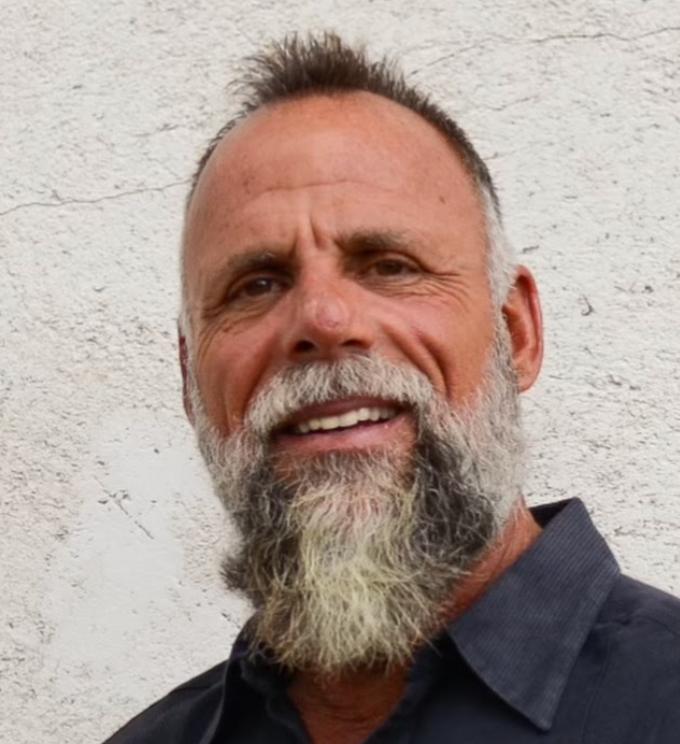
Author Brandon Bakke: Impact Where You Are!
Updated: Sep 10

Lead from Where You Are: Lessons from the Bench with Brandon Bakke
Not everyone gets the spotlight—but everyone has a role that matters.
In this inspiring episode, Brandon Bakke—educator, coach, and author of Lessons from the Bench—shares how his experience as a non-star athlete shaped his understanding of leadership, identity, and faith. From playing under legendary coach Jerry Tarkanian to mentoring young athletes today, Brandon reveals how embracing your role—no matter how small it seems—can have a lasting impact.
This conversation explores powerful themes like overcoming “me-ism,” finding purpose in adversity, and focusing on process over recognition. With stories that connect sports, faith, and everyday life, Brandon offers a refreshing perspective on what it really means to contribute to a winning team.
Whether you're leading a team, raising a child, or simply trying to find your place, this episode will challenge and encourage you to embrace the value of where you are right now.
Listen Right here right now!
Watch Right here right now!


BRANDON BAKKE AT A GLANCE
Author of Lessons from the Bench • Educator • Coach • Former College Basketball Player • Christian Testimony
Topics: Christian faith • Basketball • Leadership • Purpose • Teamwork • Self-worth • Adversity • “Me-ism” • Relationships • Coaching • Youth • Athletes • Spiritual growth • Faith in everyday life
His Faith Journey:Christian upbringing → Came to know Jesus at age five → Steady faith through childhood and adulthood → Learning to live out faith through purpose, service and relationships → Using his experiences in athletics and education to encourage others
This Episode Explores:
How being a college basketball bench player shaped Brandon's understanding of purpose and self-worth
The influence of legendary coach Jerry Tarkanian and his belief in Brandon
Why overcoming “me-ism” is essential to becoming a better teammate, leader and Christian
The wake-up call that changed Brandon's attitude toward his role on the team
His friendship with Trent Dilfer and their efforts to reach athletes with the Christian faith
Why adversity and the “bench” can become gifts that prepare us for life
Applying the lessons of sports to faith, relationships, leadership and everyday life
Questions Answered:
What is Brandon Bakke's Christian testimony?
What is Lessons from the Bench about?
What does Brandon Bakke mean by “me-ism”?
What did Brandon learn from Jerry Tarkanian?
How did Brandon Bakke and Trent Dilfer work together to reach college athletes?
Why does Brandon believe the bench is a gift?
How can athletes, coaches and parents find purpose beyond being the star?
How do the lessons from the bench apply to Christian life?
Podcast transcript:
Lessons from the Bench: Brandon Bakke on Purpose, Teamwork, & Finding Your Role.
Amazing Greats with Ric Hansen Guest: Brandon Bakke Author of Lessons from the Bench. Educator, Coach and Former College Basketball Player
Jerry Tarkanian: The Coach Who Believed in a Bench Player
Ric Hansen:Well, okay, here we are on a sunny Northwest afternoon. Me being in the Northwest, and my guest today happens to be from the Northwest as well.
Brandon Bakke is our guest, and he is a tremendous guy, but on top of that, a tremendous author.
Let me tell you, Brandon, your book was so good. It was like one story after another story, and every story kind of told the lessons of the book.
The book is called Lessons from the Bench. And you spent much of your playing career as a bench player. That's where this whole journey begins, where the book begins, and where we're going to begin our story here.
But first, I've got a couple of warm-up questions for you.
Number one is, you played for this guy named Jerry Tarkanian. Coach—he's legendary, he's controversial in some ways. Most people who know basketball know that name and know his legend.
And so I want your inside scoop on what kind of guy this guy was. Was he intense? Was he humorous? Fill us in on that man, Jerry Tarkanian.
Brandon Bakke:Yeah. Well, first, Rick, thank you so much for having me on. I've enjoyed listening to the podcast, and so it means a lot to have the opportunity to speak to you and anyone who happens to be listening.
Yeah, I was very blessed my senior year in college. I was at Fresno State University, and all of a sudden Jerry Tarkanian gets hired to be my coach in my senior year.
And at the time—before we go back in time—Jerry Tarkanian was the biggest name in basketball. He was featured in Hollywood movies and famous for sucking on his towel and "Tark the Shark" and all that.
With him came a whole crazy environment that he brought with him. He was famous for being the coach at UNLV, and we kind of felt like he brought Las Vegas to Fresno—the glitz and glamour.
He was not what I expected, which is a lot of what I write about in the book.
I think Coach Tarkanian really showed this average bench guy that I was that he believed in me. He gave me some opportunities that I had to work really hard for, and he put me into some pretty incredible spots and key moments in games, with a few seconds to go, where I hadn't played at all, and believed in me.
And, you know, that says a lot about who he was. He's a very loyal man who really set up some opportunities for me after I graduated.
So I can't speak highly enough about Coach Tarkanian.
I know we all have flaws, and we all have the things we struggle with. And sometimes those are celebrated a little bit more when you're in the spotlight like he is.
But he believed in me, and I'm eternally grateful.
Thirty Years in Education—and Lessons from the Bench
Ric Hansen:Perfect.
Well, that's kind of what I wanted to know. And you highlighted a lot of that in the book, but to just hear it from your mouth and some of those inside stories is great.
So, a little bit about you.
You've been an administrator, a teacher, a coach for over 30 years, and yet you don't even hardly look 30 years old.
Brandon Bakke:So, yeah, it's gonna catch up to me at some point. I hear you.
Yeah, 30 years—I mean, 29 years in education this year, which really gives me a really interesting and unique perspective.
Writing, I see athletes and parents struggle with this idea that they're a bench player, that they're not the starter or the star.
I've watched it, and as a bench player myself, that was a struggle. A lot of my story in the book is about my journey to find purpose and understanding what the importance of that role is—and self-worth, to be honest with you.
And I just felt like perhaps I had something to offer in that space.
I've been very lucky to be surrounded by some pretty incredible guys who have gone on to do some amazing things in sports and at the professional level who also were bench players.
And I got to kind of share a little bit about those guys as well in the story.
So, yeah, I'm really thankful to be working with kids every day and hoping I can help in some way.
A Faith Story Without a Dramatic Conversion
Ric Hansen:Absolutely.
That's great.
And let's jump back to get a little context on you—on Brandon Bakke.
Your faith story started at a very young age. Like—and you were an intense guy. I mean, I saw in the book where you said, I think it was the book that you said you started journaling at three years old or something like that.
It's like, crazy.
But tell us your faith journey as a kid. Where was all of that at for you?
Brandon Bakke:Yeah, thank you.
My testimony, I've always felt, is not strong. I've always been kind of ashamed of my testimony in a way because I came to know the Lord as a five-year-old.
My dad is a pastor. I'm a PK, and my mom and dad just were able to spark a love for Christ, and I was an early adopter, if you will.
And I stayed faithful.
I didn't have that story of the miraculous—the Paul-to-Saul, miraculous conversion, if you will. I've been fairly steady in my faith, thankfully.
And I say I've kind of been ashamed by it because it's not real glamorous.
I envied sometimes people that could tell those really incredible conversion stories, if you will, where their life was so dramatically changed, and mine has not been that.
I've learned, and I get encouraged by some of those people, that my testimony is an important one, especially for parents who are trying to raise their kids in the faith.
And I'm hoping that maybe I can encourage some of those folks.
Ric Hansen:Yeah, and I love those stories too, because I get them on this podcast all the time—those amazing moments and people where they made the flip, and it's incredible.
That's not my story either, but my story's not yours either, because I really came to faith about 10 or 12 years ago, but it wasn't in any miraculous opening of the sky and this amazing thing.
So I kind of have the same story. It's just kind of like I got the bug, started digging a little deeper.
I'm kind of a skeptic kind of guy and needed proof. So I was looking for a home, right?
But anyway, let's get jumping into the book.
The Problem with "Me-ism"
Ric Hansen:I mean, that was such a great read.
And, you know, I'm honestly not a sports guy, okay?
I was kind of expecting to be a little bored by it, but every little step along the way, it showed in sports how those sports stories resonated in all kinds of ways, in all kinds of career goals and all of that.
So I was not a basketball player. I was a wrestler in high school.
And so the only thing that I know about basketball is they got bigger crowds in the gym than we can. And that was a little disturbing.
So tell us about the first and probably the most important thing, and maybe the theme throughout the book: this whole concept of "me-ism."
Explain to us what me-ism is and how a person gets past it.
Let's start with just what is it?
Brandon Bakke:Well, and especially with our Christian context here, I think it's an important, important topic.
I think in our society especially—and it's interesting because the Bible is littered with this idea that we're about ourselves and that we need to break through that to truly appreciate others and life and, ultimately, to be able to have a relationship with Christ.
And I think it's even harder now, though.
We live in a society that is all about me, and that makes it very hard to be a part of a team in any context—whether it's a sports team or in a business or organization.
To be a part, to submit to other people and in an organization, is tough.
I joke with people that YouTube should be called "MeTube," because that's what we're shown—that's the way to go about this thing in life.
So what I talk about in the book is, I was no different as a 19- or 20-year-old on a Division I basketball scholarship, trying to find my way in college basketball.
I was about myself.
And it wasn't until—and yet I was coming off the bench, which was the struggle—it wasn't until I was able to break through that where I could... You know, they talk about the "we before the me."
That's an old trope in athletics, but it's true.
Until I was able to understand that this was really about the team, and I needed to find a way that I could help us be successful, because that's really what the book's about, Rick.
It's about how bench players help teams win.
And I needed to know that because I wanted to be important. I wanted to feel like I had value.
And so, yeah, you can't find it—my contention is you really can't find your role in helping the team be successful until you overcome me-ism.
The Wake-Up Call from an Athletic Trainer
Ric Hansen:Brandon Bakke is the author of the book Lessons from the Bench, and he shares his stories and his ideas from the book on Amazing Greats.
And as a young man and a Christian young man, were there prayers like, "Make me a starter. Dear God, why—why am I on the bench?"
Brandon Bakke:No, not—not, I can honestly tell you, no, Rick.
I think my dad—I shared he's a pastor—and he really ingrained in me that I needed to play with purpose, that I had a purpose, and he had me identify that.
And my purpose was to make a positive impact on the community and the people in the athletic department, but most importantly, my teammates.
When I was initially struggling, not getting the playing time I wanted, or not hearing my name, you know, announced for making the big shots or whatever in those early years, I had to get grounded back to my purpose.
Like, why was I there?
And I had kind of an awakening, to be honest with you.
I was confronted by our athletic trainer, of all people, who was like, "Your attitude is terrible. We thought you were going to be about the team, and you're not."
And it was his challenge—his name was Ed Ferreira—that really opened my eyes to who I really was at the time.
And it's not who I wanted to be.
Ric Hansen:Yeah. And I love that story when I read it in the book about him.
He's a trainer, but he made the impact on you.
And there's maybe your bit of an aha moment—to kind of come around and remove that me-ism about yourself.
NIL and the Challenge of Building a Team
Ric Hansen:But me-ism has not been helped at all by the change in the rules of the NCAA in July of 2021, when they changed the rules that the players could use their name and their image and their likeness for personal gain and for financial gain, quite frankly.
And that kind of took a spin, maybe for the worst, in athletics.
Do you think that's the case?
Brandon Bakke:Yeah. You know, I'm not—I certainly don't like college athletics right now, to be honest with you, which hurts me to say.
I also think that athletes should be allowed to benefit from their name, image and likeness.
I remember, you know, when I was in college, Rick, I would go around. I was speaking a lot at churches and FCA huddles and trying to do some good.
And any other student at Fresno State could have gotten paid to do that. I could not because I was an athlete.
And that kind of double standard sometimes is what I think has led to where we're at now.
That said, where I do think it has caused a whole heck of a problem is it throws that spotlight back on: This is all about me.
Yeah.
So, how hard is it to build a team where everybody can embrace their role, bench players alike, if the next year I'm moving on to another school where I can get paid or I can be the star, if you will?
So that makes it really hard.
Coach Drew at Baylor, who I write about quite a bit in the book, a really strong man of faith, he talks about how it's different when you're coaching now in a dating relationship than in a marriage.
And, you know, when you just don't have that long-term commitment.
So, yeah, it's a real challenge.
Trent Dilfer and a Ministry on a College Campus
Ric Hansen:So you had an interesting interaction with Trent Dilfer in the early days.
You're talking about your—you just mentioned the FCA. That's the Fellowship of Christian Athletes.
And I have a good friend of mine who is really involved in that, George Tollefsen. I don't know if you ever remember him, but he's been around forever.
Anyway, tell me the Trent Dilfer story and your relationship with him back. This was in Fresno.
Brandon Bakke:The way I got to Fresno, to be quite honest with you, I went on my recruiting trip to Fresno State. Didn't know anybody down there.
And on the visit, I remember calling my father and saying, "Dad, I haven't met anybody on my trip who I think is a Christian, at least as far as I know."
And my dad says, "Oh, you know, I'm sorry, Brandon, to hear that," because that was an important part of my life.
And then I said, "I actually think this is exactly where I need to be."
And so when I got down there, that was my mindset.
When I was at my best, that was my mindset—that I was there for a purpose: to encourage others, serve others, perhaps be a light for others.
And it was in that time that Trent Dilfer, who, for those who don't know, Trent was a star quarterback, the sixth pick in the NFL draft, Super Bowl-winning quarterback.
And he had just become a Christian at Fresno State. He had one of those miraculous conversions that we talked about earlier.
And I happened to—I mean, we had a class together, and we knew of each other but hadn't met.
And I got inserted into his life at that time to just be a solid friend, somebody who had been a quote-unquote strong Christian for a while.
And he didn't really know what that looked like.
And I was just there to be a model of consistency for him and help him kind of find a new community where he could really grow in his faith.
So Trent and I at that point decided that we wanted to try to increase our reach at the university.
And so we kind of raised some money and got some churches involved, and we started these outreach dinners across from the university where we would invite hundreds of athletes to come once a month, get fed—which was a big part of the draw—and then hear a message.
And it was really an incredible time in Fresno where there were hundreds of athletes who came to follow the Lord as a result of those seeds that we were planting back then together, Trent and I.
So, yeah, really incredible to see what he's done in his life, no doubt.
Ric Hansen:Yeah, and I want to connect with you a little later in the conversation about how Trent had a great relationship with Matt Hasselbeck, his competitor for the quarterback position of the Seahawks at one point.
But let's jump first into the lessons themselves.
Relationships That Last a Lifetime
Ric Hansen:There are nine of them in the book, and I don't know if we would need to ramble off every one of them because when they buy the book, they will have an opportunity to find all of that.
But one of them was about relationships and the relationships that you had even as far back as Puyallup High School, a high school here in Washington state.
You had friends then that you still have today, and it was largely because of these relationships that developed back in the day.
Some of those people were Damon Huard, Brock Huard, Ryan Carr, and others.
Were there others that we might know? Because Ryan was also a guest on the show. I don't know if you knew that.
Brandon Bakke:Yeah, yeah. And you had RJ Barsh not too long ago, and he's a Puyallup guy, a friend of mine.
Puyallup—we say all roads lead to Puyallup, I guess, in some ways, right?
We do say it's the largest city in the nation. It starts and ends with a P, Rick. So there you go.
Chris Egan—a lot of people in the Northwest know Chris Egan, one of the many faces of KING 5 Sports who brings joy into everybody's lives that he touches.
Dane Looker, I wrote about in the book, who was an NFL wide receiver. He hails from Puyallup as well.
And all of these guys have in common the same premise behind the book: they all were bench players.
In fact, I kind of start the book, Rick, with all of us having been bench players in some context in our life.
And those guys, you know, were very visibly bench players.
And I get to share kind of those behind-the-scenes stories of how they navigated that and just made a big difference in the teams and organizations they were serving.
Ric Hansen:And you still see them and communicate with them on a regular basis, even today, right?
Brandon Bakke:Yeah.
Well, Brock, as you know, Brock wrote the foreword for the book.
And I was telling you, Rick, before we went live here that Brock's episode on your show really is a companion piece to this one.
Because my senior year I actually moved to Puyallup.
Bethany Baptist Church was the local church here in Puyallup, and they had been courting my dad, Wolbach, to come be their pastor.
And he said no, like, multiple times, and they wouldn't give up.
And he finally was like, "I need to maybe listen to where they feel God's leading them."
So he came out and, sure enough, he decides to move our family out our senior year.
And when we moved out, I got inserted into the life of Damon Huard.
Brock was Damon's younger brother, and he was my brother's age.
And the youth pastor at my dad's church, where he was pastor, actually led Brock to the Lord in the small group that, in your podcast with Brock, he shared how he had an accountability group with two other boys and their youth pastor for four years all through high school.
One of those other boys, Eric, was my younger brother.
And so Brock and I have just been connected ever since through my family moving to Puyallup and the blessings that they bestowed on me and, vice versa, into their family.
And Brock's the kind of guy—and Damon as well—they never forget where they came from. They never forget the people that they have been with and battled with.
So Brock's an incredible guy, and, yeah, very grateful he's in my life.
Fred Crowell, NBC Camps and Trevor Moawad
Ric Hansen:Fighting me-ism and other important life lessons from author Brandon Bakke.
There was another connection with the Northwest in basketball, and this was just mentioned briefly in your book, but I picked up on it because he was another guest on our show here.
And that was Fred Crowell and the NBC basketball camps.
Brandon Bakke:Yeah.
Ric Hansen:Who were the coach under at that time, right? In Spokane.
Brandon Bakke:Yeah, yeah.
NBC is a Christian basketball camp that started out here in the Washington area, kind of blew up all over, you know, from California to the Northwest.
And Fred mentored a lot of young Christian coaches and those who were still kind of trying to figure life out.
And he—there's a whole generation of people my age that kind of were challenged by Fred and NBC to really grow in their faith and in time understand how basketball and our athletic world can kind of get... They can become the same thing.
Like we can, you know...
And by the way, Fred was one of the toughest people I've ever met.
And that was another aspect of what I came to believe: being a Christian doesn't mean that we're not tough and that we're not battling and competing hard.
And, yeah, Fred made a big impact on so many of us. Really thankful for him.
Ric Hansen:And that's where you met Trevor Moawad, right?
Brandon Bakke:Yeah, yeah.
Trevor Moawad and I crossed paths.
Trevor was most famously Russell Wilson's mental coach.
And Trevor wrote a book called Neutral Thinking, which has really had a powerful impact on a lot of people.
And, yeah, I met him there.
He happened to name-drop me a little bit in his book, which I was really humbled by.
But he really has had a big impact on me and how I approached mentally navigating the adversity that comes and the challenge that comes from not being the star.
Ric Hansen:Yeah, and that's what he became, really, is a mental coach for other athletes as well as Russell Wilson, as you'd mentioned.
But now he had cancer and passed away a few years ago, right? Two or three years ago?
Brandon Bakke:Yeah, yeah.
Ric Hansen:And that had to be hard for you and all of the people that he touched in life.
For sure.
You didn't write about this guy, but I'm interested in your take on him—Sam Darnold, who is not exactly a bench player, but he had bench-play seasons in his life, and he still kind of carries himself as a bench player.
What's your thoughts about Sam?
Brandon Bakke:You know, in the book, one of the bench lessons that I refer to—nine lessons from the bench—and one of them is "The Bench Is a Gift."
And I say that because I think life—and this is something that I see every day working with high school students—life is about adversity.
It is about overcoming adversity.
And athletics is kind of this sandbox, this training ground, where you can fail and screw up and hit really hard challenges, but it's not life and death.
It's not, you know...
And where in life do you get that? To be able to screw up to that degree and not have it ruin your life, if you will?
And I do think that's one of the challenges that parents sometimes face.
We want to naturally remove those challenges.
I say in the book, like, we want to teach our kids to climb the mountain, not remove the mountain.
And athletics does that. It allows us that chance to overcome hard things.
Sam is a great example of that.
Sam went through a really tough... He was a star, gets to the NFL, gets humbled tremendously, failure after failure, people famously just doubting him.
And it just seemed—he just seemed to handle that the right way.
I've never met Sam, but I marvel at him this year and how well—how humble—he has stayed through that.
Which I think is one of the gifts of the bench, is that it humbles you and allows you to handle success in perhaps a different way than maybe some who haven't.
Ric Hansen:For sure.
And that's my take on it, too, and that's what I wanted to kind of get you is he's really quite the humbled Super Bowl champion.
Brandon Bakke:Yeah, yeah. He was great. A real inspiration, no doubt.
Destination Goals vs. Journey Goals
Ric Hansen:Let's talk about goals.
There's a couple of different kinds of goals that you identify, and both of them are important: the destination goals and the journey goals.
Kind of tell us your story behind each of those and the value of each of those for the athlete.
Brandon Bakke:In the book, there are a few chapters where I really lean in on coaches.
I think coaches, me being one of them, struggle sometimes with the bench.
It's one of the more complex and more challenging things as a head coach—to keep everybody engaged and involved and finding their value and their importance.
I talk just about the importance of process.
That's another thing the Seattle Seahawks—you mentioned Sam Darnold—their coach, Coach Macdonald, did such a great job of this year.
He really focuses on the process of getting better—those daily habits, routines—not necessarily the end goal in mind.
It's more about what we do each and every day.
That's what I refer to as the process goal.
I think people and organizations should have a process-focused goal to help us zero in on the behaviors that we want to see, those routines, those systems that really help us find success and hopefully meet the end target.
That said, I also think we should have that audacious, really ambitious goal.
And, you know, in football terms, since we're talking about the Seahawks, their goals certainly are to win the Super Bowl.
I think all of us, in our roles and our teams, should have that big goal we're chasing.
But more importantly, again back to the bench concept, is I need to know how I can help our team in my role meet that big—that big challenge, that big destination-focused goal.
And I think that's where we fall short sometimes.
It's the bench player especially, like, "What do I do? What do I do that's helping us?"
I'm not the one who's outscoring all the points here, but I need to know explicitly: How am I helping us reach that goal?
And once you know that, my experience is, it really gave me the purpose that I was searching for as a player wanting to find value.
Ric Hansen:Yeah.
And how can that translate to spiritual goals, faith goals?
Brandon Bakke:A hundred percent.
Yeah.
I actually think our daily walk as a Christian... I think sometimes—you know, have you ever... Let me ask you, Rick: Have you ever set a New Year's resolution?
Are you a resolution guy?
Ric Hansen:Kind of, yes.
Brandon Bakke:Yes. I think a lot of us are, right?
And what happens? We set a goal, and then most of us eventually fail. We don't hit the goal, and then we go, "Oh, you know, we didn't make the goal," and we start over with something—a new goal.
Yeah.
Well, what if instead—like a great example that I use with teachers a lot—is we talk about maybe the goal that we want to set is to do a better job with relationships with our students this year.
That's my goal.
Great. I put it up on the board. I write it down that I want to be better relationally.
But what if instead of focusing that much on the goal, we focus more on the process?
What am I going to do each day to help me improve my relationships with my students?
And in our faith, it's the same way.
What am I doing each day to work on my relationship with Christ?
I think focusing more on the process has a direct connection to what it means to be walking with the Lord.
And I think when I've struggled in my life, I think that's why I've lost sight of the process and need to get re-grounded back into those daily behaviors.
Is Spiritual Growth a Formula?
Ric Hansen:Ric Hansen with Brandon Bakke and his book of life lessons to be a strong leader even from the bench.
Is there a way to calculate the daily progress?
I mean, is there a way to say, "If I do this, this and this today, then I've made progress"?
Or is it more vague than that?
Brandon Bakke:I'm guessing so.
If I say my prayers this morning and then do blessings over each meal, is that a process goal?
Ric Hansen:Or is that...?
Brandon Bakke:Yeah, no. I don't think Christianity is a formula.
I think sometimes as parents we struggle with that.
We're kind of taught sometimes in Christian circles that if A plus B equals C—if I do this with my child, then they're going to end up like this.
And, you know, unfortunately, that's not how it works.
The Bible is filled with stories of failure and struggle, and it's not perfect.
My dad always says that God works in the chaos. And I think that...
But I do think, you know, the more that we are interfacing with God each day, sure, we're going to see fruit of that, no doubt.
But I don't think it's a formula.
I don't think, you know, if you miss a prayer at a meal, like, I think we're okay.
But I do think daily habits and routines, time with the Lord...
I have a thing in my life. Every day I cross the Narrows Bridge.
I've made a point: when I hit that bridge every day, I'm going to pray for whoever's on my mind.
So I try to put, you know, those "if this happens, then I'm going to do this" triggers in my mind so that it's always on the front of my mind.
And that's hard to do when, you know, the rest of life starts to overwhelm us.
Ric Hansen:Well, and I've got to ask: Are you still journaling after being an early journaler? Is that part of your routine?
Brandon Bakke:You know, I think that's another process for sure that we talked about.
Yeah, I've had great seasons of life where I've journaled.
Admittedly, right now I am not in one of them.
But all through college, yeah, certainly. For much of my youth, like I had a pretty great teacher who kind of had us journaling every day.
And what a gift to be able to go back and look at some of those things and be reminded of who you were.
And sometimes be confronted with, you know, "Did who I want to be—is that who I am right now?"
So, yeah. Super healthy. Super healthy process.
Ric Hansen:Yeah.
There's a pastor that I kind of follow. He does a lot of YouTube stuff, and he—John Mark Comer. I don't know if you've heard of him.
But he has, you know, his book is called Practicing the Way, and then as a part of that he calls it spiritual disciplines.
And those are the disciplines that you kind of track, if you will, on a daily basis.
And they might be, you know—and they're not, like you say, it's not as regimented as how many times I'm going to run laps or some kind of more calculable endeavor.
But it is, you know, it's helped me because I can lose sight too.
I can go days without... Unless I kind of just bring myself to: What are my disciplines? What am I doing today?
So, that's cool, and thank you for tracking that in terms of spirituality. That's great.
What Brandon Sees in Young People Today
Ric Hansen:So you've been working with young people for decades, and I'm really curious—and I ask people who have had that opportunity and that challenge—what their thoughts about young people today are.
Are you sensing that with Gen Z there is spirituality that's growing, or not necessarily?
Or do you see that floating away and not being a good and decent part of somebody's life these days?
Brandon Bakke:You know, I think it's a really difficult time to be growing up.
I think this generation gets a bad rap sometimes.
I've seen some of the most incredible, selfless acts by young people over the last 10 years that are truly inspiring to me.
I also think students now—when you and I were growing up, we did not have social media.
I've got a chance to speak to educators all over the country the last three years, and I've asked every one of them who are in kind of our age group, who didn't have social media:
"How many of you wished you would have had social media when you were growing up?"
And I have yet to find one single person who says yes.
And that's what our kids are dealing with, and all that comes with that, which is directly related to the mental health crisis that so many kids are dealing with.
So I do think that across the country more and more kids are kind of turning to find a solution to that in their lives.
So, yeah, I do think that there's a kind of a spiritual awakening happening with that generation right now.
Ric Hansen:Yeah.
Do you have an opportunity to—I know that given the role that you have, you're not supposed to bring your religion into the school—but do you have a sense for Young Life's impact on your students or any of the youth organizations?
Brandon Bakke:You know, Rick, my grandfather, when I was a kid, he told me once, he said, "Brandon, the greatest thing that you could ever say to anybody about God is to not have to say anything at all."
Ric Hansen:And, yeah, I work in the public schools. I don't talk about my faith.
In fact, my book is not a quote-unquote Christian book because I've always wanted my faith to be just lived out in my actions and how I treat people.
Hopefully they feel loved and cared about, and that my actions can be my testimony, if you will.
So that's been my approach in the public school.
I do see just great community work happening, and there's just a lot of incredible organizations, adults and churches and peers.
They just seem to be very open to, you know, what's going on in each other's lives, which is fun to watch.
Ric Hansen:Yeah.
I've had an opportunity to connect with Dan Brown, who at your school heads up a thing called Interact, which is students who go out in the community and do good things, basically.
And I walked into his class one time—I do a thing called Night to Shine here in Gig Harbor—and I walked into his class to tell them about this.
It's an early morning class. It's before class. It's a, I guess, more of a club.
But I was amazed. This big art room is filled to standing-room-only with these kids who are there ready to do something for their community and rather to be a part of, involved in, good things that are going on there.
Brandon Bakke:So I was impressed with that, and that was my sense too.
But I'm not around them like you are. That's why I wanted to—
Yeah, there's a lot of kids that have a lot of challenges, and we've... That's no different, really, than it's been for the last 30 years that I've been doing this.
That said, I've seen so many feats of brilliance and selflessness, as I said a second ago, where kids are going out and helping others.
A heart for helping others.
I think that a lot of kids—more kids, in my humble opinion—are motivated by trying to do something that helps others in their life.
Like, they want to find a greater value in their vocation and in their future job.
And I think that's a really good sign for the future.
And we need this generation. The world needs this generation.
So that's why I do what I do.
Athletes, Faith and the Power of a Public Platform
Ric Hansen:No doubt.
And now it seems to me these days more college and professional athletes are speaking out boldly about their faith—on public microphones, on national television and in newspaper articles.
I don't know if that's more than ever, but to me it seems like it.
Maybe it's because I'd become a Christian recently and it stands out to me.
But I'm wondering if you sense that too, and if that affects or has some power with the youth of today—the students of today.
Brandon Bakke:Yeah, I mean, you know, that's a good question, Rick.
I don't know if it's any different than it's been.
I think there's more—there's more vehicles to share.
There's social media. There's just... For you to get your voice heard is much easier than it used to be.
That said, I hope you're right.
I hope that there's just more people wanting to share about what's going on in their life and the impact that their faith is having.
I think, you know, we see so much negative in front of us.
With the click of a button, we see the worst thing happening all over the world, which is what helps lead to the mental health crisis that so many people are going through.
I feel like we need that other... We need the positive.
We need the stories of how people are finding peace in their life.
So I sure hope so.
I think athletes have a platform.
I think just as easily they can ruin it by their actions.
We need people who are walking their talk and, you know, are modeling the right things.
Who Is Lessons from the Bench For?
Ric Hansen:Well, the book is great.
Brandon Bakke:Thank you.
Ric Hansen:I want you to tell me a little—who is it directed toward?
Who would you like to have this in their hands, and what kind of impact are you hoping for?
Brandon Bakke:Yeah, thank you, and thanks for the platform, certainly.
I wrote the book to help people. That's where my heart's at.
And like I said, people have struggled with this idea of being a bench player, not being the star, how to navigate that.
You know, in First Peter we're reminded of how we're all given gifts, and with those gifts we're asked to serve others.
And I think I wrote this to try to help people figure out what that could look like very tangibly in a team context.
So the audience is anybody that's in on a team in any context, certainly with a heavy leaning toward athletics.
If you're somebody that is struggling, coming off the bench right now, it's for you.
If you're a coach or a leader who is trying to cultivate a team and trying to find how to empower those non-star players of yours, it's for you.
If you're a parent and you have a child, and we see parents lose their minds because of playing time and not being a star—I think we've all been guilty of that.
And we're all missing it because what we're doing is, again, we're removing the mountain and not teaching our kids to climb it.
And there is such a gift that comes from adversity and from getting rid of the me and embracing the we.
The book is for anybody who can relate to that, which I think is most of us.
Closing Thoughts
Ric Hansen:Well, thank you so much for spending some time with us and just sharing your book and your life with us.
It's been a pleasure.
You know, even from the moment that Bob Marsh—I was going to say Matthews, and I don't know why—but Bob... I knew that this was going to be a great conversation.
And then you're a great guy.
So thank you so much for spending time with us. I really appreciate it.
Praying for the success of the book, for the success of your work there at Gig Harbor High School, and gosh, God bless you.
Brandon Bakke:All right. Thanks, Rick. Take care.
Ric Hansen:That was an inspiring look into the power of bench players to help shape the culture of a winning team.
We just touched on the highlights of his book, Lessons from the Bench, from Brandon Bakke.
It's a real treat to read great stories and real-life examples of how the nine lessons from the bench can help out in leading whatever you're thinking today.
Buy it, read it, you'll love it.
Thanks for your time, and God bless.


Comments