
Scientist Steve Osborne: Big Bang to Belief
Updated: 3 days ago

What happens when a lifelong scientist takes an honest, evidence-based look at Christianity?
In this episode of Amazing Greats, we sit down with Dr. Steve Osborne, a PhD experimental psychologist whose life was built on research, logic, and measurable truth. With no faith background and a deep commitment to science, Steve had no reason to believe in God—until a series of unexpected moments began to challenge everything he thought he knew.
From examining the origins of the universe to wrestling with the historical evidence for the resurrection, Steve shares how his pursuit of truth led him to a conclusion he never saw coming. This isn’t a story of blind faith—it’s a story of intellectual honesty, tough questions, and a life transformed.
Whether you’re a skeptic, a believer, or somewhere in between, this conversation will push you to think deeper about the connection between science and faith.
In this episode, you’ll discover:
Why science and Christianity may not be at odds after all
The moment evidence began to shift a lifelong skeptic
How one book challenged everything he believed
Why the resurrection stands up to historical scrutiny
What it really means to “follow the evidence” wherever it leads
Listen right here, right now:
Watch right here, right now:
Want to explore the evidence for yourself? Beyond Chance lays it out clearly—from the origins of the universe to the case for the resurrection.
👉 Get your copy: https://www.amazon.com/Beyond-Chance-Bang-Empty-Tomb/dp/B0GQ5BX8GL
STEVE OSBORNE AT A GLANCE
Experimental Psychologist & Scientist • Author of Beyond Chance • Christian Apologist • Christian Testimony
Topics: Science and Christianity • Christian faith • Atheism • Skepticism • Conversion • Evidence for God • Creation • Big Bang • Origins of life • Resurrection • Empty tomb • Christian apologetics • Faith and reason • Bible
His Faith Journey:Non-religious upbringing → Atheism → Scientist and skeptic → Wife encounters Jesus → Begins investigating Christianity → Challenges his own assumptions → Evidence for Christianity changes his thinking → Accepts Christ → Nearly 50 years as a Bible-believing Christian
This Episode Explores:
How a lifelong atheist and scientist came to believe in Jesus
The role his wife's conversion played in opening him to Christianity
Why Evidence That Demands a Verdict challenged his assumptions about Christianity
How Steve reconciles scientific thinking with Christian faith
The scientific and historical evidence explored in Beyond Chance
The evidence for the resurrection and the empty tomb
Why Steve believes Christianity can withstand honest scientific and intellectual examination
Questions Answered:
What is Steve Osborne's Christian testimony?
How did a scientist and atheist become a Christian?
What changed Steve Osborne's mind about Christianity?
Does science support or contradict Christianity?
What is Beyond Chance: From the Big Bang to the Empty Tomb about?
What evidence does Steve Osborne present for the existence of God?
What does he believe the evidence says about the resurrection?
Can Christianity and science work together?
Podcast Transcript:
Dr. Steve Osborne on Science, Christianity and the Evidence for God
Amazing Greats with Ric Hansen
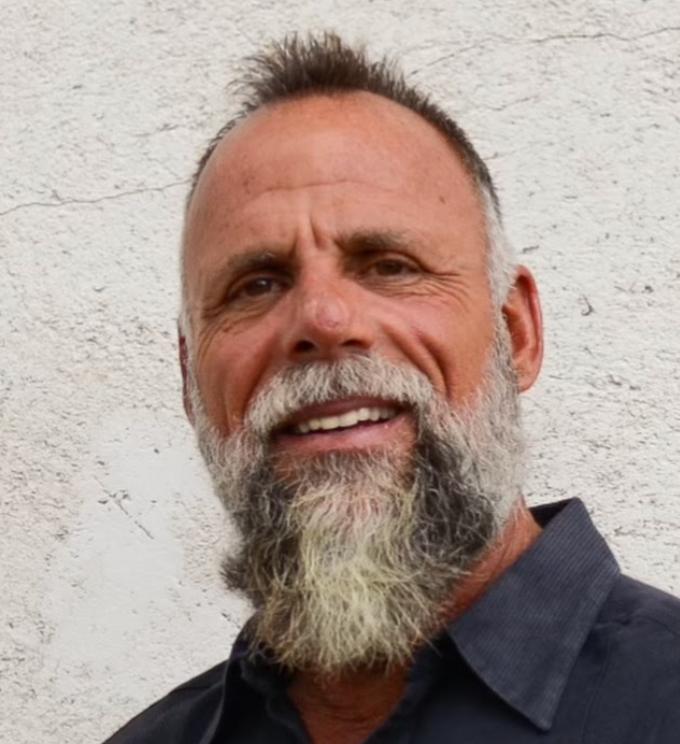
Guest: Dr. Steve Osborne, PhD Author of Beyond Chance: From the Big Bang to the Empty Tomb Experimental Psychologist and Scientist
A Scientist Who Found Jesus
Ric Hansen:Today, our guest is Dr. Steve Osborne, PhD, who is a scientist and has his identity based in science over his many, many years of doing just that. Welcome, Steve. How are you?
Dr. Steve Osborne:I'm fine. Thank you. Glad to be here.
Ric Hansen:Good to have you. I'm going to start right out with what kind of—just give us a brief indication of what kind of scientist you are.
Dr. Steve Osborne:I'm an experimental psychologist. And like I tell everybody, that's not the psychiatrist that you go to when you're having behavioral problems.
Experimental psychology does the science part of the field. We look at things like how organisms learn, how they acquire and store information and use it, the relationship between brain and behavior, and that kind of stuff.
So my degree is really in learning, which sounds very subspecialized—and that's because it is, just like medicine.
Growing Up Without Faith
Ric Hansen:Okay. So that is the basis of where we're going to go with your science story.
Let's just jump back quickly. Was there any kind of faith story in your life, even in your earlier life? Did your parents take you to church? Did you have any kind of exposure to Christianity or any religion?
Dr. Steve Osborne:The closest I came to Christianity is when I was in grade school. We lived behind the Methodist church. That was as close as I got.
I think I may have gone to a couple of services at the Methodist Church because the pastor and his family lived on the grounds. And I think for a while they had a kid about my age. So I probably went to some Vacation Bible School once or twice there. But that was it.
I lived with my grandparents until I was 10. They were not anything. They weren't necessarily hostile to the faith; they just worked. My grandfather was very unhappy with Catholics in general.
And then my mom and stepfather—the religion, we just never talked about it. It's not that people were anti-anything; they just were nothing.
And so the whole issue of religion, I have to tell you, I don't ever remember that being a topic the entire time that I grew up.
From a Dysfunctional Family to a PhD
Ric Hansen:So science was your thing, right, from the get-go? Is that what you were interested in in school along the way? And that's kind of where you were directed?
Dr. Steve Osborne:It's a complicated story.
I come from a long history of super-dysfunctional humans. Really, mostly illiterate. Nobody in my family graduated from high school. That included my mother, my stepfather, my brothers, my sister, my grandparents.
So education wasn't a big deal in my family. It just wasn't. Nobody—I’m not even sure anybody could spell the word “college.”
Ric Hansen:Yeah. So here you are, a doctor with a PhD, making a living teaching and learning, basically. Talking about a flip-flop.
Dr. Steve Osborne:You know, I think everybody's allowed to have a couple of things that they brag about.
So let me share with you.
I grew up with—by the way, not that being illiterate is wrong. It's just the way it is. My grandfather had a fourth-grade education. He could barely read and write. He was terrible with math.
At any rate, so I come out of this family.
By the way, I left home when I was 17 and made my own way in life.
So my brag is I got a PhD, which is pretty good from a hick from Boomer, West Virginia, which is where I kind of grew up.
And I have three sons. Two are physicians. They're all college graduates.
They've all been married now—I think this year they've all been married 25 years.
I have eight amazing grandchildren and recently a great-grandchild.
But out of nothing, out of dysfunction—and my wife has a similar dysfunctional background—we've been able to kind of be normal and produce bright kids who are good citizens and functional.
Like I said, two of my sons are physicians. They're all college graduates, and they're all Christians.
And I believe all that.
Ric Hansen:That's a success story right there, huh?
Dr. Steve Osborne:Yeah. No, I think that's worth bragging about. Not about me, but about what God can do if you're just paying halfway attention to what He's telling you.
You know, I never dreamed of getting a PhD.
In fact, I got out of the service and went back to junior college. I actually spent six months in a hospital. I was wounded in combat and lost the sight of an eye.
So I got a little bit of disability money, and I went back to school. I went to a junior college for a couple of years.
Part of my disability was the VA would pay for my tuition and books. So I thought, “Where should I go to college?”
And I thought, “Well, San Diego is a great place, and they have a university there.”
So I applied to the University of California, San Diego, not knowing that it was this insanely academic school.
And I only applied one place. It never occurred to me that I wouldn't get in. You know, I thought you applied to college and that was it—you got in.
So I go down there as an undergraduate, which is a really, really tough school, and decided to major in psychology.
And I realized that a bachelor's degree in psychology would probably help you sell insurance or, you know, maybe be a barista at Starbucks.
The “Godless Pagan” Years
Ric Hansen:But just to be clear now, back in those days, God had nothing to do with it as far as you were concerned.
He probably did have a whole lot to do with it as we look back on it. But at that time, you weren't relying on prayer or even recognizing that there is a God.
Dr. Steve Osborne:No. Remember, this is my godless, pagan portion of my life.
I just knew I wanted an education, only because I'd spent most of my life doing the lousiest, crappiest jobs imaginable on earth—hoeing lettuce, being a janitor, you know.
Not that there's anything wrong with that, by the way, but I didn't see myself doing that for life. And I knew I needed an education.
So I get to San Diego, and they say, “Well, you know, you've got to go to graduate school.”
And I start thinking, “PhD? Are you kidding me? Me get a PhD?”
It was like, “Hey, you can either get a PhD or go to the moon and fly around the moon about seven times and come back.”
I mean, it was that far removed.
And I ended up going to Arizona State.
That sort of, in some sense, started me on the path to science, but it also put me on the path headed toward Christianity.
Ric Hansen:Really?
Dr. Steve Osborne:Okay. And the two sort of run along parallel. And then about my third year in graduate school, out of a four-year doctoral program, is where the lines crossed.
When Science and Christianity Collided
Ric Hansen:Really, okay. And so that's where we want to go here.
I want to know what brought your attention to that in the first place. I mean, here you are, your identity is in science, and you really had no regard at all for anything divine.
There must have been some spark there that said, “Well, wait a minute. I haven't even considered this,” right?
Dr. Steve Osborne:Right. So let's pick up the story.
I'm a third-year graduate student. I have a wife I love. I've got a couple of young kids that I adore, and I'm being successful.
I'm getting my research published. I have the respect of peers and colleagues.
In fact, life was going swimmingly good for me.
Ric Hansen:I mean, I was doing everything I wanted to do.
The downside? Who needs God when you've got all that? When you've got all that, who needs God, right?
I mean, it's all good.
We're talking with a lifelong scientist who found his way to Jesus. This is Dr. Steve Osborne.
Dr. Steve Osborne:So, you know, other than being desperately poor—and we were, I mean, imagine being a graduate student with two kids and trying to live on a stipend from the school and the little bit of money I got from the VA.
At any rate, I was doing great. I was about as happy as you could be at that point in my life.
The problem was my wife was paying a big price for my success.
She was stuck at home with two kids. I always had the car.
And, by the way, I was at school seven days a week doing research. And when I wasn't doing research, I was dreaming about it.
I was not—even when I was off, I was not particularly good company.
Ric Hansen:Oh my gosh.
Dr. Steve Osborne:So my wife returned to the church of her youth. She had gone to church as a kid.
She wasn't a Christian, but she went back to the church.
And at the church, she was invited to join a home Bible study, and she came to me and said, “Hey, what do you think about this?”
And, by the way, I viewed Christians as people that couldn't handle life without the crutch of faith.
I mean, strong people didn't need God.
But bless her heart, I didn't think my wife was that strong. Sorry, sorry, dear.
So I said—by the way, I've never been hostile to religion. I was just an atheist.
Anyway, I encouraged my wife. In fact, I think I talked her into joining the Bible study because I knew it would be good for her.
And it was.
Ric Hansen:If nothing else, if nothing else, just for the social outlet, right? Just to be with other people.
Dr. Steve Osborne:Exactly.
So something really unexpected happened, and she accepted Christ.
And I'm like, “Wow. What? What are you doing?”
And I saw this incredible transformation in a human, quite frankly, that was as close to a living miracle as you can come.
It really was.
So that really got my attention.
But the thing that really kind of—
Oh, let me, I'm sorry, let me kind of back up.
She hosted—and, by the way, eventually the Bible study came to our house, and she said, “Can we have it here?”
And I said, “Sure.”
And she thought I should leave, but I decided to hang around and see what this was all about.
And I did.
And I was only obnoxious a few times.
Ric Hansen:Okay, there's the first entry of Jesus right there, saying, “You just need to stick around at this meeting,” even though it doesn't seem like you.
And I liked—I like, listen, I like the people. The people were really nice.
Dr. Steve Osborne:So they started having these Friday potlucks, and that was nice because we didn't eat very well on our income.
So when they had the potluck, I was able to chow down, and the people were super nice.
And I actually thought initially, “These people are being nice so they can spring the gospel on me. I know this is coming. Put up your guard.”
Ric Hansen:Right.
Dr. Steve Osborne:Yes, I'm ready.
But it never came.
The people were nice. We enjoyed each other's company, ate a lot of good food, and that was it.
And that really surprised me.
But let me go back to the story.
“I'm a Man of Science, Not of Faith”
Dr. Steve Osborne:So the Bible study ended, and the Bible study leader asked me on the way out, he said, “So where do you stand with God?”
And I said, “I'm a man of science, not of faith.”
And he said, “Hey, I understand that.”
He said, “But listen, would you do me a favor? Would you have breakfast with me this week?”
And I said, “Sure.”
So we meet and we're eating pancakes, and he gave me—he said, “Listen, I want to give you this book. It's called Evidence That Demands a Verdict by Josh McDowell.”
I don't know if you're familiar with the book. It goes way back.
And he said, “I'd like you to review this book and tell me what you think from a scientific perspective.”
Now, of course, that was a ruse.
He was appealing to the only way that could appeal to me at the time, and that was my ego.
So I get a copy of this book and I start reading it.
And I think I shared with you beforehand, before the show, is I start reading this book, and I'm both stunned and embarrassed.
I'm stunned because everything I thought I knew about Christianity was false.
I mean, complete—I mean, it wasn't like six out of ten. I mean, it was a hundred out of a hundred.
The other thing—it was embarrassing because here I am, I define myself as a scientist. I teach classes in experimental psychology.
I tell my students, “Hey, listen, know what you believe, know why you believe it and why you know it for sure and what evidence it's based on.”
And I realized that I was like the world's biggest hypocrite.
I mean, I hadn't done what I was telling people to do.
And it's hard to explain to people what a shock that was to me.
I mean, true. Really, really, really a big shock.
So that really got my attention.
And, by the way, this time people had invited me to Bible studies.
Then a friend of mine named Damien said, “Hey, listen, I'm going to lead a Bible study, and I'm really, really nervous. You know, I haven't done this before.”
He said, “You know, you're a pretty smart guy, so would you just come to the Bible study to give me moral support?”
I said, “Sure. You know, I'll do that.”
And, of course, it was, once again, just a ruse.
By the way, there was a whole group of Christians that were praying like crazy for my salvation.
Ric Hansen:Unbeknownst to you. You were not aware of that?
Dr. Steve Osborne:Unaware of it.
And, by the way, it's not a fair fight.
Ric Hansen:You're right there. Yes.
Dr. Steve Osborne:Okay.
So I'm going to Bible studies, and then a fellow named Bill invited me to the Saturday morning men's breakfast for Christians, and I started going to that.
And, you know, I would go to church with my wife for support.
So the next thing I know, I'm going to church twice a week. I'm in two Bible studies. I'm in a men's Christian breakfast.
And I'm still a pagan.
Ric Hansen:Yeah. So at that point, you're still—is this kind of a social thing more than it is anything? Is that right?
Dr. Steve Osborne:Yeah, but they're starting to get my attention.
And I went from being really, really happy with my life to being miserable a lot.
Because there was this incredible—you know, I didn't even know the word “spiritual warfare,” but there's this incredible spiritual battle that I was going through.
And I mean, it was really—it's hard to explain how emotional that was.
You know, it's sort of the good and the bad.
I mean, I'd wake up at two o'clock in the morning, wide awake, put on a pair of shorts, go outside, sit on a railing fence, have a cigarette and just look at the sky.
And, you know, it would be like, “You know, this Christianity really looks pretty good. I mean, you really like the people and it kind of makes sense, right?”
And then, you know, then I would say, “No, no, no, no. That's just stupid. That's crazy. I don't want anything to do with this.”
So there was this tug back and forth.
So what I decided is I figured, “Look, I'm a pretty smart guy. I'm a scientist, so I'm just going to read through and review the Bible.”
And if it's false, if this is made up, if this is a myth, I'm smart enough to see that, right?
So I start reading the Bible, and I'm really shocked because it doesn't read like a myth.
It doesn't read like somebody made it up.
It reads like it's really honest.
And you see people saying things that somebody would never make up.
I mean, who would make up a story that makes them look like an idiot?
I mean, who makes up a story and says, “Hey, you know what? The evening Christ was arrested, you know what? I denied Him three times. How do you like that?”
I mean, you know.
And then they said, “Hey, I've got a really great idea. Let's have women discover the empty tomb.”
This is the first century. Women couldn't testify in court. They were deemed as unreliable witnesses.
So I'm saying, “You know, what fool makes up a story where women discover the empty tomb?”
From the Big Bang to the Empty Tomb
Ric Hansen:The title of the book—we haven't even mentioned that yet—is Beyond Chance. And then the subtitle is From the Big Bang to the Empty Tomb.
So what about the Big Bang? How did you, in your own mind, start justifying the Bible's version of Genesis and the Big Bang Theory—one being seven days, and the other saying the Big Bang Theory is like a million years of evolution?
Okay, your scientific mind—how did that sort it all out?
Dr. Steve Osborne:So, by the way, let me just finish my story really quick because it's just a couple of lines.
Okay, I'm going to—just a couple of seconds.
I've been to the men's breakfast, and my friend Damien said, “Hey, listen, I'm in this evangelism class and I need to share this thing called the Four Spiritual Laws.”
And I said, “Sure.”
And when he got to the end and said, “Would you like to pray?”
Ric Hansen:It would like—Ric Hansen with the amazing conversion story from a guy who didn't really want to believe. Steve Osborne, but then did.
Dr. Steve Osborne:Everything that made me reluctant was gone.
Every question was answered.
I knew I was ready, and I accepted Christ at that point.
And became—and became—well, actually, I gave God a 40-day trial, sort of like, “Seriously.”
And I said, “Okay, God, here's the deal. I'm going to give You 40 days, and if I feel this way in 40 days, I'm all in. And if not, I'll just go back to being a pagan.”
Now, of course, I never looked back, and I've been a Bible-believing Christian for about—getting close to 50 years.
Why Science and Christianity Don't Have to Be Enemies
Dr. Steve Osborne:So one of the things that has bothered me really since that point was the misperception that there is an incompatibility between science and Christianity, or science and the Bible.
In fact, I read a poll recently that even up to 49% of Christians think the two are compatible.
You know, I know the statistics. We send young Christians away to college, and a lot of them end up abandoning their faith.
And 50% of those do so because they think science has disproven the Bible.
So the gist of Beyond Chance—it begins with the creation of the universe, but the gist of Beyond Chance is to provide scientific evidence.
Not, “Here's some faith, just believe this,” but scientific evidence that clearly demonstrates the existence and the majesty of God.
And I believe not just there, but the whole book walks from the beginning of the universe to first life on Earth, to the diversity of life—what we call evolution—through human evolution and the creation of Adam and Eve, and why people are so remarkably unique.
As we walk through, if you will, creation from front to back, the handiwork of God is clear from beginning to end.
And that's what the book is all about.
Ric Hansen:Okay.
Dr. Steve Osborne:And not, “Believe me. Here's some great—just trust me, have faith.”
Here is the evidence, and you, the reader, evaluate the evidence.
And I'm going to tell you what I think it says, but you decide for yourself.
Ric Hansen:So is that so—the person that wants to jump in with the scientific mind wants to jump in and find out what that evidence is. That's going to be found in the book?
And is it written in such a way that it's digestible by virtually anyone, right? It doesn't take a scientific mind to figure out what you're talking about.
Dr. Steve Osborne:Absolutely not.
The published version of the book is the 22nd version of the book.
I probably spent the last eight or nine versions trying to simplify the science in the book to the point where anybody could read the book.
I've edited it to a ninth-grade reading level, and literally I think anybody 12 or 13 years old or older can pick the book up and read it.
I've had some of my grandchildren, when they were teenagers, read the book, and I think people will find that it's very readable.
So that's a really important point because this is a book about science, but it's a book for the average believer.
You don't need a lab coat to read this book.
And incidentally, there's a phrase that I just came across a couple of days ago, and it started in the 1600s with the Royal Society of London, and it's their motto.
I'll probably mispronounce this, but it's Nullius in verba, which is Latin for “Take nobody's word for it.”
So I kind of want that to be the motto for my book.
Don't take my word for it.
I don't want you to believe what I say. I don't want you to believe this because you think it's consistent with the Bible—which it is, incidentally.
I want people to look at this and discover for themselves.
And what they will find is the evidence is really overwhelming.
It really is.
I mean, I'm not—I don't think I'm exaggerating.
Incidentally, if people go to my website, steveosbornebooks.com, first of all, they can watch about a 75-second trailer, but you can also download the first chapter and read it for free.
Does Science Point Toward God?
Ric Hansen:One of the things I think you said—I read one of your lines—is that you ultimately concluded that it required more faith to remain an atheist in the face of science than to become and believe a Christian in Christ and become a Christian.
Dr. Steve Osborne:Both ways.
By a magnitude of ten times harder to be—
The problem with atheists is they don't believe anything.
I mean, okay, support your position of an atheist.
“Well, I don't believe anything.”
Well, that's hard to believe.
The atheists can try to tear down the evidence for Christianity.
And, by the way, I have to say, they've done a pretty good job of that. I think they've been very dishonest in that, okay, but they've done a pretty good job.
But let me give you—by the way, I'm going to tell you two facts, and I think these are astonishing.
The two most significant things that have happened in the history of time are the birth of the cosmos and the beginning of life on Earth, right?
Okay, now science cannot explain either one of those.
And if you don't believe me, then you're going to have to belly up and read my book because it will show you.
And, by the way, it's not close. It's not close.
And, by the way, the universe does have a beginning. We call that the Big Bang.
Incidentally, science believed adamantly for 150 to 200 years that the universe had existed forever, and now we know that's not true.
And that—in the beginning, God didn't create the heavens and the Earth? At least somebody did.
And if the universe had a beginning, then we have to say, “Well, what it calls the beginning.”
Okay, and I can say, “Well, it was God,” which is true, but frankly, that's not particularly scientific. That's more faith.
So what, by the way, you'll find in the first chapter is there are five criteria that are needed to create the physical universe that we enjoy today.
And if you look at the Bible, you'll find out that God meets all five of those criteria perfectly.
The Evidence for the Resurrection
Ric Hansen:And now let's talk quickly about the resurrection.
You say that historically, the resurrection makes nothing but great sense.
And some people think, “Well, really? He rose from the dead? Come on now.”
Dr. Steve Osborne:I know.
All right. So the last two chapters are about the empty tomb.
The first of those chapters goes through all of the evidence for the resurrection.
There are five areas:
The crucifixion and death of Christ. The empty tomb.
The fact that the disciples truly believed they had seen a resurrected Christ. Now, we can argue whether they did or didn't, but they clearly believed they did.
Then we have the conversion of Paul and his ministry, and the conversion of James, Jesus' half-brother, and his ministry.
So if you're going to explain the empty tomb, or if you're going to explain the resurrection, you have to accommodate all five of those areas of evidence.
Right?
So naturalists have tried to come up with different theories to explain all of that evidence.
And there are a bunch of theories.
And, by the way, in chapter 13, we go through all of those theories and say, “Okay, can any of these alternatives explain all five of these areas of evidence?”
And the answer is not even close.
Not even close.
In fact, some of the evidence is so overwhelming.
If you know the story of the transformation of the disciples, it's crazy.
So anyway, when you go back, there are myth theories, and we stole the creation account from other pagan things.
There's the swoon theory that says Christ didn't die on the cross. He was just unconscious, and then He was revived in the cave, and that's how we do it.
So there are all of these theories that try to explain that data, and I walk through all of them.
And the sad truth for atheists and skeptics is you cannot account for all of the data with the different theories.
And, in fact, the resurrection of Christ comes as close to being a historical fact as you can come without being a historical fact.
And I think it would be a historical fact, except we know we can't please God without faith.
So there has to be a little bit of faith at the end.
But I'm going to tell you that the evidence for the resurrection of Christ, as with the scientific evidence for His existence, is overwhelming.
The Scientist Who Became an Apologist
Ric Hansen:It really, I mean, it truly is overwhelming.
Well, if you need solid proof that supports the Christian story, you've got it.
Dr. Steve Osborne has it for you today on Amazing Greats.
So your book could be considered an apologetic. That's what kind of this is—the kind of book that is trying to make sense of the case for Christ.
And, in fact, one of the books by an apologist is Lee Strobel, who wrote that book, The Case for Christ.
He was a journalist, so he took it from that angle.
And then there was C.S. Lewis, who wrote the book The Most Reluctant Convert, and he was one of the greatest thinkers of his time to try to make sense of it all.
And those are maybe two standouts.
And now we've got the scientist, Steve Osborne, who is telling us that science also justifies everything that we know about Christianity.
Dr. Steve Osborne:Incidentally, the landscape of people, including a lot of scientists who set out to disprove the Gospels, are now Bible-believing Christians, and many of them dedicated the rest of their life to ministry.
Francis Collins, who he and I probably disagree on some things, but he was an atheist, became a Christian.
He was very much involved in the Human Genome Project, was the director of health for about—I don't know—10 years or so.
Incidentally, I actually have another book that's written.
I set out to write two books. I decided to publish this first because I think it's the more interesting of the two.
But part of the other book is—I summarize the life story of people who set out to disprove the Gospel.
What Does Steve Hope Readers Take Away?
Ric Hansen:I want to know, so for—in your mind, what would be the best hope that you would have for these kinds of readers to take from your book, Beyond Chance?
Thank you. My mind went for a minute.
Okay, so reader number one, who is the cynic—the person who not only doesn't believe in God, but what would you hope that they would get from the book or take from it?
Dr. Steve Osborne:I would hope that I could demonstrate to the cynic that there's enough evidence there to lead him to take a second look at Christianity.
No one's going to read this book and be converted.
This is an intellectual book.
And, by the way, part of accepting Christ is intellectual, but it really comes from the heart.
So, you know, I don't think the heart will go where the head won't lead it.
For me, by the way, personally, Christianity had to make sense to me.
You know, I wasn't willing to commit intellectual suicide to become a Christian or to give up 10 IQ points.
So what I found instead was becoming a Christian made me a stronger scientist, not a weaker scientist.
And if an author can have a favorite quote since they wrote it, my favorite quote of the book is:
“True science doesn't erase God. It reveals Him.”
What About the Skeptic?
Ric Hansen:Perfect.
What about just the skeptic, the guy that's kind of interested and maybe has had a background in spirituality?
What would they pull from the book? How would you take them on that journey?
Dr. Steve Osborne:I think, once again, to—to force is a wrong word—but expose them to evidence.
And I tried to write the book kind of in an engaging style.
In other words, “Could this happen? Could this happen? What do you think about this?”
I think the intelligent force was God, but you can make up your own mind.
So it clearly has a Christian apologetic bias.
I mean, the whole point of the book is to support Christianity.
But I think it's objective enough and engaging enough to get people's attention.
I try to go back in my own life and say, “You know, I was a skeptic. I didn't believe in God. What would I think if I read this book?”
I think it would get my attention.
Now, like I say, nobody's going to read this book and run down and fall at the altar and accept Christ.
Well, it would be nice if that happened, but I'm not shooting for that.
For the skeptic, I want to get their attention and say, “Hey, look, there's enough evidence here. Take a good, serious, honest look.”
What About Believers?
Ric Hansen:What about believers? How about believers?
Do we need to—does anybody need to read that book if they're already a believer?
Dr. Steve Osborne:By the way, I would hope that every believer would read it.
And I think there are a couple of reasons why I feel that way.
First of all, I honestly wrote the book to try to honor and glorify God.
And, by the way, that only happens if people read the book.
I think they will be uplifted to see that the book does, in fact, honor and glorify God.
But the other thing, I believe it will strengthen people's faith.
One of the things that it shows is that Christianity and the Bible are compatible, that Christianity and science actually are—I want to say this—are sort of not co-equal, but work together to reveal the truth.
Science and Christianity actually reinforce one another.
So I think that believers will find their faith strengthened.
And I'll make a recommendation.
If any of your listeners have high school or college kids, please buy or steal or whatever—get a copy of this book and have them read it.
If you have to pay them to read this, because, you know, they're eventually—especially if they're going to go away to college—college is a really dangerous place in today's world.
And they're going to go into a godless college where being a Christian is not cool at all.
Preparing Young Christians for the Questions They'll Face
Ric Hansen:Yeah.
And we live in a much more secular world today than we ever have before, especially in America anyway.
So having ammunition—being fortified with the ammunition that what you explain in the book is usable as you kind of tell the Gospel story.
Dr. Steve Osborne:For sure.
Yes.
And I think, once again, the evidence is so compelling.
So if you go away to college and somebody's giving you a bedtime in biology, you'll say, “Okay, Mr. Smart Guy, so explain to me in 50 words or less how first life arrived on Earth.”
By the way, ask the biology teacher with the PhD in biology.
He'll hem and haw, and he might talk about the RNA world hypothesis, and he'll have a bunch of what I call “humma humma humma.”
The truth is they cannot explain it.
That particular event still remains the greatest unsolved mystery in all of science.
And, incidentally, science will never solve that because you can't get from non-life to life without intelligent help.
And, by the way, that's not an exaggeration.
I bet my house on that one.
Ric Hansen:Okay. All right.
Where to Find Beyond Chance
Ric Hansen:So, you know, we're out of time.
I mean, I just absolutely love this conversation.
We try to keep these to a reasonable amount of time so that somebody could listen to it on the way to work or as they're jogging or whatever.
So we've given them the nuts and bolts of what you're all about, what the book's all about.
The next step for our listeners is to just go get the book and take a look at it.
It's out now or it's going to be out shortly.
Dr. Steve Osborne:So it's out now.
And I would direct people to my website, steveosbornebooks.com.
There's a lot of information about the book.
You can download the first chapter.
There's information about me.
So if you really want to know about the book, and if you care about my background, there's a ton of information on the website.
There's a link on the website that'll take you to Amazon if you choose to buy the book.
Like I say, you can read the first chapter for free.
So let's make it a top-selling book.
Ric Hansen:Let's do that for sure.
Dr. Steve Osborne:By the way, it's my prayer that the book will sell well—not because of me.
I mean, I've sort of had my hurrahs in life, and I'm happy with that.
But if people buy the book and read it, then I come a little bit closer to honoring and glorifying God, which has been my original and continuing purpose.
Ric Hansen:Thank you, Dr. Steve Osborne.
What a great time we've had together.
Thank you so much, and God bless you.
Dr. Steve Osborne:By the way, there's hardly anything that I like better than talking about science and Christianity and faith and how science and Christianity—
Interesting. I mean, I could talk way longer than you could listen.
Ric Hansen:Thank you, Steve. Take care. Have a great afternoon.
Dr. Steve Osborne:My privilege. Thank you.
Ric Hansen:Hey, if today's conversation stirred something in you, don't ignore it. Lean into it. Chase the truth.
Thanks for joining us on Amazing Greats and our heartfelt conversation with Dr. Steve Osborne.
His book is called Beyond Chance: From the Big Bang to the Empty Tomb.
Share this episode with your doubting friends, and we'll see you next time.


Comments