
CEO Bill Yeargin: Faith at the Heart of Business
Updated: Sep 12

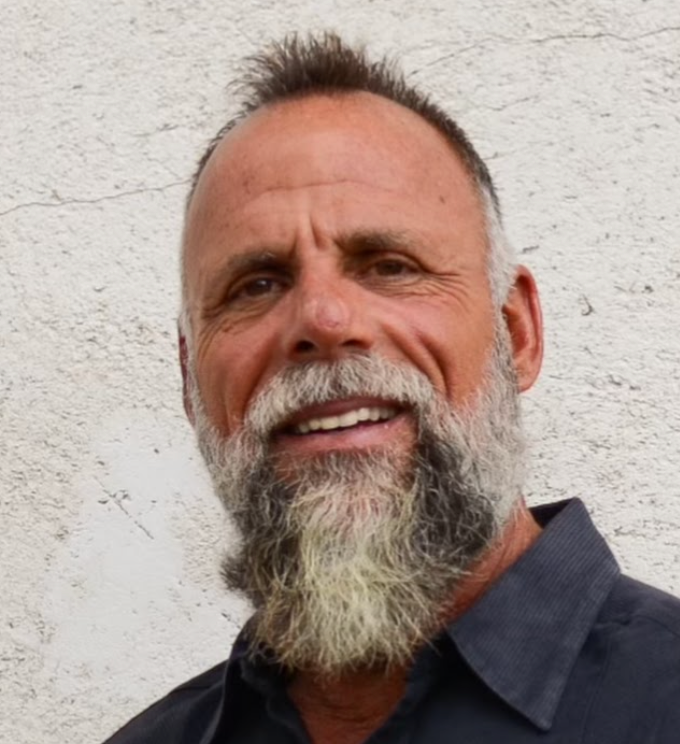
Bill Yeargin leads a billion dollar boat and marine supply super company on a culture of service. Service to the industry, yes, but just as important is the service to his 2000 employees as well as serving humanity through dozens of mission trips to underprivileged communities in countries around the world.
Correct Craft was established a century ago with the purpose of "constructing boats to honor God." This mission continues to guide the company today, led by our guest, who, in the past 15 years, transformed a company in crisis into a thriving and highly profitable industry leader in the marine sector. The company now boasts over 21 brands and manufacturing facilities across the United States.
In this episode you'll hear how his decision to take on this challenge, leave his dream home and move his family came in the form of a couple of clear signs from God. He also shares his three P's for creating a positive, and winning company culture as well as his commitment to modeling Christian values in the workplace without pressuring anyone.
Listen right here, right now:
Watch right here, right now:
In his latest book, "Faith Leap" Bill explains in a clear and easy-to-understand manner why he is a Christian. Throughout the book he shares what he believes to be the layers of evidence that lay an intellectual foundation for belief in Jesus. Bill Yeargin is a wise leader, speaker, and author who I know you will find inspiring. Take a listen, share this conversation with a friend...and grab a copy of his book (s).


BILL YEARGIN AT A GLANCE
Business Leader • Former Correct Craft CEO • Author • Christian • Faith-Based Leadership Advocate
Topics
Christian faith • Correct Craft • Business leadership • Faith Leap • Apologetics • Workplace culture • Philanthropy • Service • Leadership • Faith and business
His Faith Journey
Christian upbringing → Father's illness and death → Questions about suffering → Studying Christian apologetics → Growing confidence in the evidence for Christianity → Using business platform to share faith → Leading with faith, integrity and service
This Episode Explores
Bill Yeargin's rise as a business leader
Taking over struggling Correct Craft in 2006
Turning Correct Craft from a $40 million company into a billion-dollar enterprise
The Christian heritage behind Correct Craft
How service trips transformed the company's culture
Why Bill Yeargin believes faith and business belong together
The three Correct Craft pillars: People, Performance and Philanthropy
How Bill approaches difficult decisions as a Christian CEO
The evidence for Christianity explored in Faith Leap
Why Bill believes Christians should share their stories and love others
Questions Answered
Who is Bill Yeargin?
What is Correct Craft?
How did Bill Yeargin turn around Correct Craft?
What is the mission of Correct Craft?
How does Bill Yeargin combine faith and business?
What role does philanthropy play at Correct Craft?
What is Faith Leap about?
Why does Bill Yeargin believe in Christian apologetics?
What does Bill Yeargin say about the evidence for Jesus' resurrection?
How should Christians share their faith?
Podcast Transcript: Bill Yeargin on Faith, Leadership, Business & Making Life Better
Amazing Greats with Ric Hansen
Ric Hansen, an Amazing Greats podcast. Thanks for joining us today.
We are talking with a huge business guy and a huge follower of Jesus, who shares how the two are not only compatible, but critical to one another.
In this success story of turning around a failed company in just 15 years, based on his love of God and of people, he shares his wisdom and his inspiration on this episode of Amazing Greats.
Well, thank you so much for being here today and for sharing your story with us. In just a few minutes, we're going to find out who you are, what you're all about, and about this amazing company that you've had an opportunity to build over the last couple of decades.
Let me do a brief introduction so that those who are not familiar with who you are will be.
Bill Yeargin is the CEO of a company called Correct Craft. That is the overall umbrella company for something like 21 brands of boat-manufacturing companies, and we're going to talk about that in a little bit.
But not only that, you're the author of multiple books, including one that's just come out here a couple of months ago called Faith Leap, and we're going to talk about that.
You had a book called Education of a CEO, which was a bestseller.
But not only that, you've done mission work in 120 countries, something like that. You're an outspoken follower of Jesus, which we love. And you actually served on the Obama and Trump administrations' cabinet-level advisory boards, which makes you kind of a national figure in terms of politics.
So you've got it all.
It's great to have you here today.
Let's start with where did all of this begin? You know, Bill, as little Billy, as a young boy, tell us your Christian foundation.
A Christian Foundation
Bill Yeargin: Well, I was very fortunate to grow up in a Christian family. I had a great mom and dad, and they were very engaged in our lives. They were very active in our church, and so really, really very blessed and very fortunate.
My dad, unfortunately, when I was in my 20s and he was in his 40s—actually, I was in my early 20s—he got Parkinson's disease.
He had a really rough time of it for 15 years, and he passed away from the disease.
It was very tough on our family, Ric.
And for me personally, I never questioned my faith, but to be honest with you, I wondered why.
Why the best guy that I ever knew? Great husband, father, give-the-shirt-off-his-back-for-anybody, deacon in the church. I mean, just really engaged.
Why did this happen to him?
Such a good guy.
So it really got me digging into what is called apologetics, which, as you know, is really how—what's the evidence behind our faith?
I spent a lot of years doing that, studying it and reading books about it.
And then a couple of years ago, I thought, you know, I need to share this. I need to share what I've learned.
And I've got a unique platform through the business world. There are people who will listen to what I say who would never listen to a pastor.
They'll listen to a CEO, but they never go into church or listen to a pastor.
So I wanted to use that platform to share the story, and that's really how we ended up with Faith Leap.
Ric Hansen: What was the period of time that that evaluation period lasted? Was that multiple years in your 20s?
Bill Yeargin: Yeah. Well, actually, Dad got sick in my 20s. He was in his 30s when he passed away.
So it was really late 30s, and it continues to this day. I'm still reading. I still enjoy reading books about apologetics.
And what I've come to learn, Ric, is that our Christian faith—we can have rock-solid confidence in our faith, and there's just so much supporting it.
Now, the book's named Faith Leap. At the end of the day, we know what pleases God is faith.
So it's not about the fact that it's great that we have evidence. He still wants us to have faith in Him, and that's where we came up with the Faith Leap name.
But there's just so much evidence that we can hang on to as Christians.
What I'm hoping to do with the book Faith Leap is just encourage people who may be questioning their faith, maybe doubting their faith, or people who think, "Well, I could never be a Christian," or "I don't know why somebody would be a Christian."
If they pick it up, they're going to see lots of reasons why they should be.
Evidence and the "Faith Leap"
Ric Hansen: So you go through all of this evidence, but the final chapter is the faith leap.
I mean, there is that leap at the end. You can have all this evidence you want, but like you said, it requires faith. And that's what God asks for.
Bill Yeargin: Yeah.
Hebrews 11 tells us that it's impossible to please God without faith.
So I believe we get enough evidence that we can feel very comfortable in our faith, but still, at the end of the day, He wants us to have faith.
Sometimes people say, "Why doesn't God just come up here in the sky and tell us that He's God?"
Well, that wouldn't require faith, right?
We know faith is what pleases Him.
So I think He's given us plenty of evidence, but left just enough out that it requires that faith leap.
Ric Hansen: Yeah, absolutely. That's incredible.
The Correct Craft Story
So let's jump back and talk about Correct Craft a bit, because I think that's such an amazing story.
First of all, the story started well before you, with a family of believers who started this business.
I think one of their original mottos was "Building Boats to the Glory of God," or something close to that.
That was the Meloon family, right? Walter Meloon and his son Ralph.
And this all started almost a hundred years ago.
Can you tell us a little bit about what you know about that story from before your time at Correct Craft?
Bill Yeargin: It's an amazing story.
Actually, I wrote a book about it called Making Life Better: The Correct Craft Story.
I go through the whole hundred years, and we use that book a lot to help tell our story.
A family lived in New Hampshire, decided to start fresh in Florida. They moved down, they were Christians, so they started a boat company in the '20s—1925.
So we're just a few months away from being a hundred-year-old company.
Ric Hansen: Yeah.
Bill Yeargin: And they had some real challenging times during the '30s, during the '40s, World War II.
They were asked to build the boats that the U.S. military used to cross the Rhine River in World War II.
In fact, in the military records it's called the "Miracle of Boats."
I tell the whole story in the book.
They had a real problem with the military because they wouldn't work Sundays.
The military wanted them to work Sundays, and they wouldn't do it.
So the military eventually said, "Okay, well, you better get the boats done that we've given you, that we've contracted you to build."
They got them done a few days early and actually ended up building an extra hundred.
They went through a bankruptcy. They had a government auditor who was requiring them to pay a bribe.
They wouldn't pay the bribe, and so the government auditor failed a bunch of boats.
This was about 1960. It put the company into bankruptcy, but then the company spent 20 years paying back every penny that was discharged during the bankruptcy.
Lots of stories like that.
It's really amazing.
The company, by the time I came on board, though, had a lot of problems.
I came on board at the end of 2006, and I was the fifth CEO in five years, Ric.
So the company was really struggling.
The family had gotten down to the fourth generation, and it was a wonderful family. There was just a lot of disagreement about what should be done with the company.
Fortunately, we were able to turn it around.
We were a $40 million company in 2009, and last year we bumped up over a billion.
So we've grown 25 times in the last 15 years.
It's really an unheard-of story, really amazing.
We've got a great team, great culture, and "Building Boats to the Glory of God" is still our mission statement.
Ric Hansen: Okay, that's cool.
And right in your logo, it says "Making Life Better" as part of who you are, which I love.
So where did they find you, and what possessed you to take on what appeared to be a huge headache? And did you have a vision for that?
The Call to Lead Correct Craft
Bill Yeargin: Well, no, I didn't.
I was running a company down in South Florida where I'd grown up. I loved it. I'd been in South Florida my entire life.
My family was there. I was active in my church. I was a chairman of the local hospice. I was on the university board—the university there.
Just everything was good.
And they tried to hire me to be the fourth CEO, and I walked away.
I said, "No, I'm not interested."
So that guy lasted about a year, and then they came back to me again and said, "We really believe you're the guy."
And a couple things happened, Ric, that were just really God things—meaning, like, really God writing it in the sky kind of things.
I had no intention, no real desire to move to Orlando and run the company, but I felt like that's what I was supposed to do.
And I went up there and it was extremely difficult.
It was a mess.
The first nine months I worked from seven in the morning till nine at night.
But interestingly, what really turned it around—the turning point—about eight or nine months after I started there, I took 25 employees to Mexico on a service trip to build a house for a homeless family.
Everybody, Ric, thought I was crazy.
I mean, they thought I was crazy.
But we needed a culture turnaround.
And that was the turning point for our company.
Because at that point everybody realized, "Hey, we've got a bigger purpose than just building boats."
We're going to make life better. We're going to use our platform for good. We're going to serve people.
I've taken people to Cambodia, Ethiopia, Uganda, Kenya, all across the Caribbean and Central America on service trips.
We just go and we serve.
We'll work there several days, serve people, and they can never pay us back.
We're not doing this because we think they're going to buy a boat or something.
There are people that can never pay us back, but we're happy to serve.
And that's become a big part of our culture.
Recognizing God's Direction
Ric Hansen: I'm talking with Correct Craft CEO Bill Yeargin on Amazing Greats.
This is Ric Hansen.
Can we go back and just touch on those two things?
You said you had a couple of God-ish visions, if you will, or God speaks.
Can you speak specifically to what those were?
Bill Yeargin: Yeah, no, I'd be happy to.
There were two things.
One was we had just built our dream house.
My wife and I—my kids were into horses. We had gone to an area called Wellington in South Florida that's horse country.
We built a beautiful house on multiple acres. We built this beautiful barn. We had four horses.
That's where we thought we were going to be for the rest of our life.
Well, when they came to me the fifth time—they were on their fifth CEO—I talked to a realtor friend of mine, and she said, "Bill, this is really bad timing. Houses like this aren't selling right now. I don't think I could sell it for you quickly."
And so I thought, actually, that was a sign that we were not supposed to go to Orlando.
A few days later, Ric—and you're going to think I'm making this up, but it's an honest-to-goodness truth—a guy calls out of the blue.
He says he's moving to the area, he's looking at a house down the street, he loves our house.
"Might it be for sale?"
And I said, "Well, possibly. I don't think so, but it might be."
My wife and I had built the house. We knew how much we had in it. We wanted to make a little money on it.
So we picked a price in our mind. We said, "Wow, wouldn't it be great if we could get this amount?"
The guy came, looked at the house out of the blue—never heard of anything like this. No for-sale sign out front, nothing.
He comes and looks at the house, Ric, and he offers us to the penny the amount of money that we wanted.
Ric Hansen: Whoa. Wow.
Bill Yeargin: So I'd never heard anything like that happening before.
The second one was similar.
My girls were homeschooled, and we had a full-time tutor that worked for our family. Her name was Pam.
She was working for us, helping my wife tutor the girls, and we had committed to her for the next school year.
This was like June. We committed to her for the next school year.
And I told my wife, "Listen, if we move to Orlando, I feel an obligation to pay this tutor because she's given up other opportunities."
So I said, "We're just going to have to pay her."
And it was a big number.
The next day she called me and asked to be released from her commitment. Something else had come up.
So we started thinking, "I think we're supposed to go. I think this is God talking to us."
I mean, two things that are just unheard of.
I've never had anything like that happen to me, never even heard of anything like that.
And both those things fell under—there were a bunch of other little things—but yeah, that's where I just thought, "Man, maybe I'm supposed to go to Orlando."
Ric Hansen: I love it.
And the fact that you were open to seeing that and realizing that this is really God speaking in a lot of ways.
That's so cool.
Service as a Business Culture
So you get there, you start these mission trips.
You said it was kind of unheard of to just, out of the blue, six or eight months later, at a troubled company, start sending your crew and you on missions.
How did you select those people?
Were they all already Christians, or not so much?
Bill Yeargin: It was voluntary.
We've done a lot of service trips, and we don't do evangelistic service trips.
We do service in the sense of we're building a house, working in an orphanage.
I want everybody to feel comfortable going, whether or not you share a faith.
If you want to serve, come with us.
Now, they're often faith-related organizations. We may go work in an orphanage that may be a faith-related orphanage, but we're not asking anybody to do anything that's going to make them uncomfortable.
And it's had such a huge impact on us, Ric.
I really just can't overstate this.
We go and we serve, and it has a huge impact on the people we're serving.
When we bring a crew of 25—we've brought up to 100 people on some of these service trips—these are boat builders, engineers, designers.
They can go into a school or an orphanage or a community center and have a big impact.
They know what they're doing.
But the thing that's great about it is sometimes people will be a little critical of me and they'll say, "Why are you spending all this money to fly all these people to Africa or Haiti or wherever you're going? Why don't you just send the money down there and let them pay to do it?"
Well, that's great, and that might be more efficient.
But I want to serve people in these places where we're going to serve, but I also want to have an impact on our own people.
That first trip to Mexico was a horrible situation.
It was 110 degrees all week.
We're working building this house. The house is over next to the city sewage collection area. We can hardly breathe.
We're taking showers, Ric, by taking lake water, pouring it over our head, soaping up and taking lake water and rinsing off.
But you know what, Ric?
At the end of those few days, those 25 employees gathered to regroup after the trip.
They said things like, "Best few days of my life."
"I can't wait to do something so impactful."
So the service trips have helped a lot of people all over the world, but they're having a huge impact on our team too.
People are seeing the benefit of service, and they're going home and sitting at their kitchen tables and telling their kids the story about the trip.
And it's inspiring the kids to say, "I want to do something like that someday."
That's why we do it the way we do it.
We're philanthropic. Almost every day somebody asks me for money because they know we're philanthropic.
But we focus all of our philanthropy on projects where employees can participate.
And it's had a big impact on our culture.
People, Performance and Philanthropy
Ric Hansen: Our Amazing Greats guest is business leader, author and humble follower of Jesus, Bill Yeargin.
So amazing.
When you serve, it's not just investing in that community and investing in that family that you're serving. As you say, it's investing in your own company and your own people.
It serves a dual purpose.
So the culture at Correct Craft is paramount to this turnaround that happened in 15 years—making this company completely turned around and blossoming.
Can you just identify—I know there's a whole lot of things. You wrote a book about it, Education of a CEO—but can you just give us a thumbnail of what the culture at Correct Craft is all about?
Bill Yeargin: Sure.
The short version is we start off with a mission of "Building Boats to the Glory of God."
Out of that flows our why—what we call our why.
Why do we exist?
We exist to "Make Life Better."
So we want to make life better for all kinds of people—our employees, our customers, of course—but we want to make life better for people that will never be able to pay us back.
Some of these service trips.
Basically, everybody we come in contact with, we want to make their life better because they've been in contact with us.
And then below that become three pillars of People, Performance and Philanthropy.
We want to invest in people—our people and other people.
We want to invest in philanthropy, and we want to be a very high-performing company.
Sometimes people get confused on this because they think, well, if you're a philanthropic organization and you want to help people, you shouldn't be worried about having the best business results.
But I tell people—in fact, I told a group of employees just a couple hours ago in a meeting—we can't do the things we want to do philanthropically. We can't invest in our people without being very high performing.
So it's a false choice to say that you either have to be philanthropically minded or performance-minded.
In fact, you can't have the philanthropy without the performance.
That's a short version for you.
Ric Hansen: That's perfect. Thank you so much.
I would recommend that folks, if they want some more in-depth information about all of that, check out that book for sure. The one you wrote a few years ago, Education of a CEO.
Bill Yeargin: Yeah.
Education of a CEO was about three years ago.
It was about what we've learned as a company through going through the horrible mess we were in at first, then going through the Great Recession, and then growing so quickly—from $40 million to over a billion.
All that growth, just the things that we've learned.
Education of a CEO dives deep into some of these cultural issues that we're talking about.
Faith in the Workplace
Ric Hansen: So you have, in the neighborhood, maybe the figure I saw was around 2,000-plus employees overall in all of the various companies that Correct Craft owns.
Of those 2,000 employees, is there a high percentage of them who are Christian, or do we even know?
Bill Yeargin: There's no faith requirement to work here.
There's no requirement other than you'd be qualified to do the job.
But I tell you, we have a lot of employees who really embrace the learning that we offer, really embrace the opportunity to serve.
Because once they do it, they say things like, "Best few days of my life."
They can't wait to do it again because they realize just how satisfying it is.
All the studies that have been done on what makes us happy, Ric, tell us that it's not about being selfish. It's not about trying to make ourselves happy.
It's about being selfless and serving others and helping others.
Ric Hansen: Another interesting piece of the culture, again, I'm sure it doesn't involve everybody, but you do a Bible study—a regular Bible study. Does it happen at the workplace?
Bill Yeargin: Yeah.
Every one of our companies has a voluntary Bible study.
They're spread out across the country, but they have somebody locally who teaches it.
It's purely voluntary.
We just want to offer people an opportunity. If they want to do this, they can do it.
We don't twist anybody's arms. We don't force anybody. We don't even pressure anybody.
People just know it's available.
Ric Hansen: If you want to join us, you can do it.
Do you sense that in the midst of all of that there is a certain amount of conversion? Have you heard stories of people who have—
Bill Yeargin: And we're not, again—I really can't overemphasize this because for anybody who's listening and is thinking, "Wow, I need to do that at my company."
We want people to be enticed by what we do because we operate with integrity, we treat people fairly, we love on people who need to be loved on—not because we're trying to pressure anybody.
We're not trying to use our platform to pressure anybody to believe or think anything.
But we do want to demonstrate that we love people, that we're going to operate with integrity, and that we're going to make good decisions based on our values.
And then hopefully they'll think, "Wow, I'd love to learn a little bit more about that."
Ric Hansen: Just modeling who you are creates the opening of the door to find out more.
I think that's what Jesus was telling us to do, right?
Bill Yeargin: Yeah.
I've done a zillion interviews over the last 15 years, and people often ask, "How do you separate you as a Christian and you as a CEO?"
I say, "I can't."
That's just who I am.
I'm a Christian and I am a CEO. I don't even try to separate the two.
Now, I understand there are times I need to be focused on business, and there are times that I can be focused on faith.
I also very strongly believe that people have a right to choose.
Jesus never pressured anybody.
He told the story. He gave them an opportunity. If they wanted to walk away, they could walk away.
You don't hear Jesus saying, "Hey, come back," and pressuring people.
So we're going to do what we're told to do.
We're going to share a story and we're going to love on people and care about them and try to make their life better.
And if we're a good example and they want to learn more about our faith, we're happy to tell them that too.
Making Tough Decisions as a Christian Leader
Ric Hansen: Well, in the world of the whirly-swirly, profit-oriented world of business, there also has got to be—especially in a turnaround situation where you really have to make some tough choices—how do you go about doing the tough stuff?
The firings, the reorganizing, all of those things.
How does a Christian leader handle those situations?
Bill Yeargin: That's a great question, Ric.
We hopefully do it with care and love.
It creates some confusion sometimes because, you know, if we have to terminate an employee, I've had wives call me.
And I say wives because the calls I've gotten are from wives.
They call me and say, "Well, you can't be a good company. You fired my husband."
But it comes back to without performance, we can't do any philanthropy.
I've got 2,000 families that I feel a sense of responsibility for, Ric.
And if I let people come in and not do their job, or I just let them get away with stuff because I care about them and I love them—and I do—but I'm hurting 2,000 families.
The best thing I can do for our employees is make sure for the next 25 years, if they want to be with us, they've got a great company that cares about them, is going to take care of them, and is going to try to make the right choices.
So we do have to make tough choices.
It's excruciatingly hard.
But if we're not willing to do that, we can't do all the good things.
Faith Through Difficult Seasons
Ric Hansen: Beyond the traumatic period in your 20s when your father passed away and you were questioning what that's all about, were there other kind of faith challenges for you along the way where you said, "Where's God now?"
Bill Yeargin: I mean, there have been tough moments where I've gone through different things, different challenges.
But what I went through with Dad was exponentially larger than any of those.
As I said, I was very fortunate. I've always had a lot of Christian support.
My mom's 88. I talk to her every day. I know she's praying for me.
I've always had that support there.
I've had challenges just like we all do—with family and health and professional challenges—but nothing even close to my dad's story, which really was a catalyst.
The Case for the Resurrection
Ric Hansen: Hey, Ric Hansen here on Amazing Greats with a billion-dollar CEO who shares the power of a Christian culture in the workplace.
Let's leap into Faith Leap and talk a little bit more specifically about that.
Of the various evidences that you uncovered that validate your belief in Christianity, is there one that stands out as being more impactful on you than others?
Bill Yeargin: Yes.
In the book there are several chapters, and every chapter is really a different evidence.
I start out with proving why I believe there's a God, why there's proof of God, and then why it's Jesus.
The overall huge evidence, of course, is the resurrection.
The question that people come up with is, "Okay, well, how do you prove the resurrection? How do you prove that really happened?"
When you dig into it, I believe there's more proof of the resurrection than almost anything from distant history that we believe.
You look at the 500 witnesses that saw Jesus after He was crucified—500 eyewitnesses.
You look at conversion stories like the Apostle Paul.
He was killing people and putting Christians in prison. He saw Jesus alive after He was crucified, and then became arguably the second or third most influential Christian ever.
You look at the disciples becoming apostles.
When Jesus was crucified, they were all in hiding. They were scared to death.
The boldest of the disciples, Peter, denied Jesus three times.
They were scared. They thought they were going to be next.
But after the resurrection, they're boldly preaching on the streets.
If you look back through secular history, nobody disagrees that Jesus was a person who grew up in Nazareth, had a ministry in Galilee and was crucified.
And everybody agrees something big happened a few days after Jesus was crucified.
Nobody disagrees on anything up to the crucifixion.
Some people say the disciples stole the body.
Well, that couldn't have happened because it was guarded.
Some people say He woke up after being asleep or sick.
Well, He was crucified.
You're not going to just wake up and push a stone away, fight off Roman guards and go have this impact.
Something big happened that changed the disciples.
Then the other thing is you've got to remember the disciples who became apostles—all but one of them died for their faith.
People don't die for a lie.
If you and I decided we were going to come up with some hoax and tell somebody some story that didn't happen, and it took off and people started believing it, and you and I agreed we're not going to tell anybody.
Well, if I get arrested and they tell me, "Hey, Bill, we're going to give you a lethal injection and kill you if you don't deny this story," no offense, Ric, but I'm confessing.
But they didn't.
They died for it.
They could have confessed and saved their lives, but they were willing to die for it because they had seen Jesus.
And once you've seen a resurrected Jesus, you're going to be bold. You're going to be willing to die for it.
And then even the secular Roman historian Josephus, who lived in the household of the emperor, had no motivation to promote Christianity.
Even he writes—and you can look in his book The Antiquities—that Jesus was a wonder worker, in other words, that He did miracles, and he writes that the disciples claimed to have seen Him alive three days after He was resurrected.
Then it changed their lives and started a faith that we know as Christianity.
He's writing this 60 years after Jesus rose.
So there's plenty of eyewitnesses, changed lives, martyrdom, secular writers who wrote about this.
Once you get over, "Did Jesus rise from the dead?" then it all gets sort of easier from there.
Because if you can acknowledge that, then there are other things—the good that's been done, the philosophy, the consistency of the Bible, prophecy that's fulfilled.
You start looking at all this stuff, and there's no question in my mind that Jesus was God, He was resurrected, and what is written in the Bible is true.
There's a lot of evidence.
Faith Leap and the Amazing Greats Mission
Ric Hansen: You're familiar with Lee Strobel, The Case for Christ?
Bill Yeargin: Yeah, of course. The Case for Christ. I've read his book.
Ric Hansen: He did The Case for Christ, The Case for Heaven, The Case for Faith, The Case for Miracles.
He's all about apologetics, right?
Bill Yeargin: Yeah. And there are a number of really good books.
Josh McDowell's stuff, Evidence That Demands a Verdict.
There's a great new book that came out a year or two ago, I Don't Have Enough Faith to Be an Atheist, that covers a lot of these same things.
Ric Hansen: You know, our whole premise for the Amazing Greats podcast is just that.
We don't talk with pastors about things. We're not looking for a teacher or a preacher on our podcast.
We're looking for people who've got great career stories, whether it be acting or authors or musicians or athletes, and also happen to have a strong faith in God and in Jesus Christ as their Savior.
So exactly—I mean, you're the perfect guest to have on.
Bill Yeargin: Oh wow, you made my day. Thank you.
A Friendship with Brant Hansen
Ric Hansen: I did notice—I couldn't help but notice—that the foreword was written by Brant Hansen, who was also a guest on this podcast a while back, and his producer on another episode was Sherry Lynn.
How is it that you know Brant Hansen, the radio guy?
Bill Yeargin: Brant and I are good friends.
We met 20 years ago when he was working at a radio station in West Palm Beach, and we became friends.
Actually, it started when my daughter interned on his morning show.
We just hit it off and started becoming friends, started doing things with our families.
He and his wife and my wife and I get together from time to time.
He's a really good friend, and we've been friends now for 20-plus years.
He's obviously very successful as an author and radio personality.
I felt, to be honest with you, that my friendship was more important to me with Brant than being able to use his fame or the people who know him to promote the book.
So I almost didn't ask him.
But he read the book, gave me some comments on a pre-publication version, and those comments made some changes.
Serving Alongside Brant Hansen
Ric Hansen: Do any of your missions coincide with what his missions are?
I know he goes all around the world as well.
Visiting Compassion International?
CURE?
Bill Yeargin: CURE, yes.
He's with CURE, and I think he's their storyteller.
He shares the CURE story.
I've not had the opportunity to go with him to one of the CURE hospitals, but I'd love to do that someday.
I'm sure we'll get the opportunity at some point.
He's got some amazing stories of kids that have no hope.
These are people that CURE is taking care of who honestly just have no hope.
CURE goes in and does some great things for them and helps those kids and adults.
So it's really great work they're doing.
What Bill Yeargin Hopes Faith Leap Will Accomplish
Ric Hansen: Yes, indeed.
So let's jump right back to the end of the book.
The final question would be: What would you hope either non-Christians—and I know you mentioned this at the end of the book—or Christians might take away from Faith Leap?
Bill Yeargin: Thank you, Ric. That's a great question.
I'll start with Christians.
I want to help solidify their faith.
I want to help encourage them in their faith.
My hope is that they'll read the book and think, "Wow, I'm really solid in my faith."
And then what do I do? What should I do?
I want to really encourage them to be more engaged with their faith.
My recommendation at the end of the book is that, as Christians, we need to do two things.
One is we need to just share our story.
A lot of people get nervous about that, Ric, because they say, "Well, I haven't been trained in evangelism," or "I don't know what to do."
But for almost the first 2,000 years of Christianity, there was no evangelism training.
You just told your story.
That's what I encourage people to do.
Just tell your story.
And part of that is inviting.
There's a guy named Ryan Burge, who is probably the chief data researcher, trend forecaster and trend analyzer for Christian faith topics in the world.
He lives in the Midwest and works at a university there.
He studied how many people go to church, how many don't, why they don't go to church.
It's really amazing.
I was with him a few weeks ago in New York City, and he said that most people who are not in church would be receptive to being part of a faith community if they're invited by a friend or somebody they trust.
So I tell people: Just invite somebody.
Even if you're not going to say, "Hey, I've got this church I really like. Would you mind going with me one Sunday?"
Just invite somebody.
So the first thing is share the story.
And second, just love others.
I love the story in the Gospels where the Pharisees were trying to trick Jesus.
They took the Old Testament law, which was obviously very important to the Jews, and said, "Okay, which one of these is more important?"
And Jesus said—you want to get it right, and I'm paraphrasing a little—if you want to get it right, you do two things:
Love God.
Love others.
But what's interesting when I started digging into this a few years ago is that we all know how to love others, right?
Be kind. Help people who need help.
But when you think, "How do I love God?" it's really interesting.
We know the story of Peter, where Jesus kept asking Peter if he loved Him.
And Jesus said, "If you love me, feed my sheep."
Take care of people—the sheep, people.
And the other verse, right before Jesus was crucified, He's talking to the disciples.
He said, "When I was hungry, you fed me. When I was naked, you clothed me. When I was in prison, you visited me."
And the disciples were confused because they said, "We never did any of those things. What are you talking about?"
And Jesus said, "When you do any of these things for someone else, you're doing it for me."
So how do we love God?
We love God by loving others.
So I tell people: Share your story. Love others.
If you're not a Christian, it's more than that.
The Bible teaches us that we're saved by faith.
In Ephesians chapter 2, Paul writing to the church at Ephesus is really clear.
It's not about our good works.
If you ask most people, "Why are you a Christian?" they'll say, "Well, I'm a good person. I've never killed anybody. My grandpappy was a Christian."
But what makes you a Christian is having faith.
It's not anything we do.
It's having faith.
And that's the faith leap.
Taking all this information, realizing there's lots of evidence that Christianity exists, but you've got to take that faith.
It's more than getting it out of your head.
You've got to take that faith leap.
So those would be my advice.
Closing
Ric Hansen: Thank you so much for your time. I really appreciate it.
God bless you, and have a great rest of your day.
Bill Yeargin: Thank you, Ric. It's an honor to be with you.
Ric Hansen: Incredible.
A truly humble, powerful leader who uses his faith foundation to build the culture of a billion-dollar company that operates in 21 brands and has an impact in 70 countries around the world.
Bill Yeargin, thank you so much for your time on Amazing Greats.
God bless.


Comments