
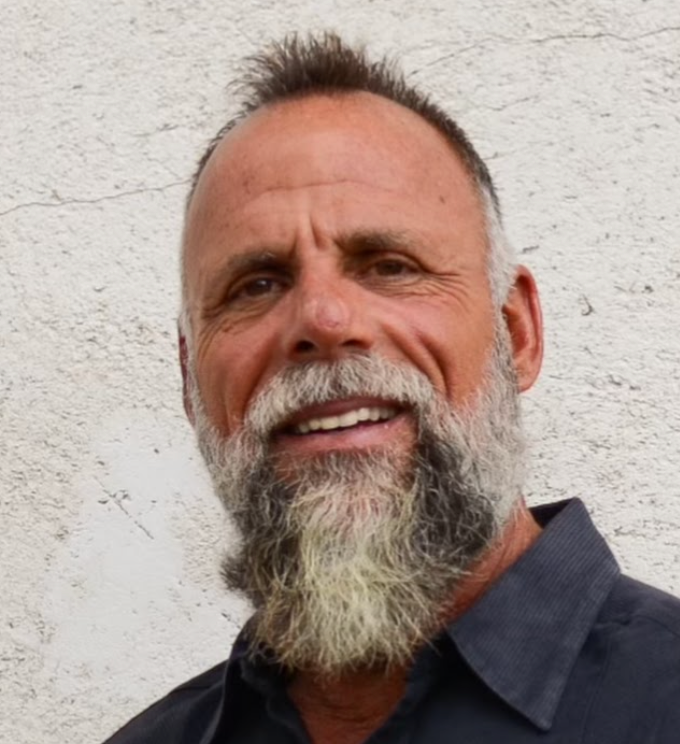
Pastor Doug Hankins on the 2023 Asbury Revival
Updated: Sep 16
Listen to the podcast here.
Watch the podcast here.

God is up to something among Generation Z. Young people at Asbury University and dozens of other college campuses across the country are experiencing a movement of love and connection with Jesus that has grabbed the attention of people around the world. Not unlike the Jesus movement of the 60s and 70s a youth revival seems to have taken shape. On this episode of Amazing Greats, Pastor Doug Hankins a theological revival historian, shares his unique perspective on this awakening by taking us on a day trip to Asbury in the midst of the recent revival. An event that grew organically out of a typical Chapel service on the Morning of February 8th 2023. An event that lasted over 300 hours and 16 days. It wasn't programmed or planned, it was not well produced and slick, there were no celebrity singers or guest speakers. It was a raw outpouring of God's grace where the X Factor was clearly the presence of Jesus. If you are as intrigued by what's going on, as I am, you will find this conversation really powerful and hopeful. A quick 8 minute Asbury video recap The Jesus Revolution movie trailer. “The time has come,” he said. “The kingdom of God has come near. Repent and believe the good news!” Mark 1:15 NIV
"Amazing Greats" is a library of interviews with highly successful people who have amazing career and life stories and who share how God has impacted their journey. Hosted by broadcaster Ric Hansen & produced by Klem Daniels. Available on Apple, Spotify, iHeart, Google and our YouTube Channel. Please help us grow our audience by "liking", "subscribing and "Sharing". Thanks so much.

DOUG HANKINS AT A GLANCE
Pastor • Theologian • Revival Historian • First Baptist Church of Orlando
Topics
Asbury • Revival • Awakening • Jesus Revolution • Evangelism • Theology • Great Awakenings • Holy Spirit • Faith • Great Commission
His Faith Journey
Atheist upbringing → Questions about meaning and existence → Study of world religions → Christianity as compelling worldview → Faith in God and Jesus → Theologian → Pastor → Revival historian
This Episode Explores
Doug Hankins' journey from atheism to Christianity
Why he became interested in revival history
His experience at Asbury University
The atmosphere inside Hughes Auditorium
Prayer, worship and spontaneous testimonies
How Doug distinguishes awakening from revival
The history of America's Great Awakenings
The Jesus People movement of the 1960s and '70s
The historical accuracy of Jesus Revolution
The Great Commission and loving God and people
Questions Answered
Who is Doug Hankins?
How did Doug Hankins become a Christian?
Why was Doug Hankins an atheist?
What happened at Asbury University?
What did Doug experience at Hughes Auditorium?
What is the difference between an awakening and a revival?
What were America's Great Awakenings?
What was the Jesus People movement?
How accurate is Jesus Revolution?
What does Doug Hankins say about the Great Commission?
Podcast Transcript: Doug Hankins on Asbury, Revival, Awakening & the Jesus Revolution
Amazing Greats with Ric Hansen
An Inside Look at the Asbury Awakening
Ric Hansen:Hi there! There's something pretty crazy going on in America. And honestly, it's pretty exciting too.
If you've been following the news, you've likely heard about the Christian revival movement that has been going on at Asbury University, as well as other universities across the country.
Today we're going to get a glimpse of what went on in Wilmore, Kentucky, through the eyes and ears of our new friend, Pastor Doug Hankins from First Baptist Church of Orlando. He was there, and he helps us appreciate in detail what this awakening looked like from the inside.
Plus, there's a bonus conversation about the movie Jesus Revolution.
So let's jump in.
Doug, you're a pastor at First Baptist Church of Orlando. You hold a PhD in historical theology from Trinity Evangelical Divinity School, with an interest in revivals and revivalism. That's kind of where we're going to head today.
But let's start with your story. I heard that you were an atheist and now you're a pastor. There must have been something going on between this and that. Tell me the story.
Doug Hankins:Yes, you heard correctly.
I was an atheist growing up in the sense that I was raised in a home where my mom was interested in church, but my dad was not interested in church. He was as far away from Jesus as one could be.
We subsequently didn't go to church except for funerals and weddings, and we didn't go to that many funerals or weddings.
My mom took me to a Methodist church during my middle-school years to go to confirmation. I went to the confirmation class, and they might have talked to me about Christianity and the gospel, but I don't remember it. My eyes weren't interested in that. My mind wasn't open to it.
As an eighth grader, I discovered the term "atheism," and I said, "Yeah, that's pretty much what describes me."
I didn't believe there was a God. I didn't need a God for my life to function or to find meaning.
There were even some breakups with Christian girls because they wanted me to be a Christian, and I just wasn't going to be that.
That's how I started in life.
Now, how did I get to be a pastor — or even a Christian and then a pastor?
I think I'm the trifecta here. I'm a Christian, a theologian and a pastor. That's about as professional a Christian as you could be!
The quick version is that I had a best friend growing up who was a Christian. We both loved music. We were from the Houston, Texas area and moved to a smaller town in northeast Texas called Palestine.
That friend would invite me to church all the time, and I would say no all the time.
My parents went through a divorce when I was in eighth grade, and my world got really rocky. There were a number of things going on in my life that I didn't have answers for.
There were questions I just couldn't figure out.
Some would call them the four great philosophical questions:
Who are you?Where did you come from?Where are you going when you die?What's the meaning of life?
As a 13-, 14- or 15-year-old, I didn't have great answers for those questions.
And those things bothered me. If I'm curious about a question and I don't have an answer, I try to find the best, most compelling answer. I don't care where it comes from. I just want a compelling answer.
I came to realize that atheism didn't have great answers for me.
Who are you? You're this human being who just exists.
Where did you come from? You're a product of chance over time. You won the genetic lottery.
Where do you go when you die? You cease to exist.
What's the meaning of life? It's whatever you make it to be.
Those were okay answers, but I suspected there were better answers out there in the universe.
So I got an Encyclopaedia Britannica and pulled the religion section off the shelf. I started reading about different religions.
I tried to read every religious tradition other than Christianity because I had a bad taste in my mouth about Christianity for no particular reason.
The other religious traditions were compelling — Buddhism, Eastern religions, Islam and Judaism.
But then I got to Christianity, and doggone it, it was really compelling.
So I kind of put a pen in it there as an eighth or ninth grader.
Then, between my ninth- and tenth-grade years, I was assigned the Bible as summer reading for my advanced English class.
We were reading The Grapes of Wrath, and if you didn't understand certain Old Testament passages, you wouldn't pick up on the allusions Steinbeck was making.
I was a cross-country long-distance runner, so I was pretty disciplined. I would wake up at five in the morning, read the Bible, journal about it and think about what I was reading. Then I'd go for a run, come back, take a shower and read the newspaper.
I was having what Christians now refer to as a quiet time or devotional time, but I didn't know what that was because nobody had orchestrated it.
Except I came to realize maybe God had orchestrated it.
I would read the Bible, and then I would read the newspaper.
I started to see that the way the Bible described humanity and the world and the way the newspaper described humanity and the world were the same.
When that started happening, I realized Christianity was the most compelling worldview out there.
I began thinking about those four questions in light of Christianity.
When I came to realize that Christianity had the most compelling answers, I first came to realize there must be a God.
Then, number two, that Jesus must be that God.
That was about a six-month process from start to finish.
Arriving at Asbury
Ric Hansen:Wow.
Let's wind up to today because there's something compelling going on in America that started with a youth Christian awakening in a little town called Wilmore, at a university called Asbury.
You had an opportunity to be there, and I want to jump into that experience.
Everybody is talking about it. It's being written about. There are YouTube videos about it.
It's an amazing awakening of Christianity among this group in Kentucky.
I saw your article, "The Ordinary and the Extraordinary: A Day at Asbury," and I thought, "This is pretty compelling. Let me read this."
You were kind enough to come on and share that piece with us and hopefully dig a little deeper into the guts, emotions and spirituality that existed on your day at Asbury.
First of all, your church asked if you wanted to go, and you said yes. So here you are on a plane headed to Asbury. Tell us what happened from that moment forward.
Doug Hankins:I landed in Louisville because that was the best airport to fly direct from Orlando.
I wasn't sure whether I'd get into the airport and discover that everybody there was somehow praying and singing worship songs. I didn't know.
But I got into Louisville and it was just normal.
It was early in the morning. I rented a car and drove immediately. In about an hour and 20 or 30 minutes, I was in Wilmore.
I parked and got out. I'd never been on Asbury's campus.
I knew about Asbury because of Robert Coleman, a famous pastor of evangelism and missions who wrote The Master Plan of Evangelism. He taught at Trinity, but he also taught at Asbury.
So I knew of Asbury in relationship to that.
I got on campus and was trying to orient myself.
I'm one of those people who's always looking around.
It's not like there were people everywhere. Again, this was not a coordinated effort.
If you go to a megachurch, they've got people in the parking lot saying, "Come this way."
There was nobody in the parking lot.
In fact, cars were parked askew, and it looked like maybe the rapture had happened and I didn't know.
I thought, "Oh no, maybe I'm not a Christian. I'm still here!"
But I finally got into the heart of campus and realized I was on the seminary side, and everybody was walking the other way.
So I crossed Lexington Avenue, which roughly divides the campus between the seminary and college.
I could see the giant Gothic structure that is Hughes Auditorium, and there were about a thousand people lined up outside.
I'd heard the reports that you were going to have to wait in line.
I'm from Orlando, so I'm used to lines at Disney. I got in line.
There was no FastPass. I couldn't show my pastor card or my theologian card.
Nobody was really asking or concerned about that.
It was just, "We're in line, and we're all wondering what the Holy Spirit is up to, if the Holy Spirit is up to something."
A lady was walking by offering water. She said, "There'll be four times as many tonight."
And I thought, "Oh my goodness. What is this experience?"
Those were my first impressions.
The People in Line
Ric Hansen:At this point, are you having conversations with other people around you? Are they as questioning as you are about exactly what's going on?
Are there conversations about the Holy Spirit? About Jesus? What's happening in line?
Doug Hankins:Yes.
If you know the journalist George Plimpton, he would embed himself on an NFL sideline and participate because he wanted to experience it. He was a participant-observer.
I kind of thought that's what I would be.
"Okay, Lord, I'm here, but I'm also trying to observe. I want to participate, but I want to observe."
I was wrestling with what posture to take.
The people in front of me turned around and said, "So where are you from?"
My extroversion kicked in.
"I'm from Orlando."
We started talking.
It turned out the group in front of me was from Cincinnati. They were part of a Nazarene church.
The woman who led the trip was a leader in a Nazarene church in the Cincinnati area.
She'd heard about Asbury from the young-adult small group she led. They had seen it on TikTok.
This was a week into the awakening.
Her pastor had already gone down once or twice and talked about it on Sunday, so they decided to make the two-hour drive to check it out.
She didn't have anyone to go with, so she called one of her prayer partners, and the woman said, "I'll go with you."
The woman I was speaking with would tell me about what was going on and what she expected — and then she'd just start crying.
It wasn't sadness.
She was so excited and anticipating something positive happening that it overwhelmed her.
This is where the "ordinary and extraordinary" comes in.
She'd cry, then start praying for God to break the hearts of the young adults she knew.
She'd pray for people.
Then she'd open her eyes, dry them and ask me where I was from.
That was totally normal in line.
People in front of me and behind me were doing the same thing.
People were looking at their calendars and making plans.
"I can be here, the Holy Spirit can move for three hours, but then I have to get back and take the dog for a walk."
That was the ordinary stuff.
And yet everybody was at peace and hopeful and curious and expectant in a way that you'd normally associate with going to see your favorite band or a movie everyone has been talking about.
There was just a sense that something was happening.
Entering Hughes Auditorium
Ric Hansen:Did you find yourself becoming not only a spectator but a participant? Were you feeling the Holy Spirit yourself, or were you more detached and trying to observe?
Doug Hankins:I wouldn't say I was detached.
I'm pretty charismatic theologically. I've had enough experiences with God to know that I should expect the unexpected.
So when unexpected things happen, I don't immediately say, "What is this?"
I've tried to take the posture that the Lord moves in mysterious ways.
I know Him, but I don't know everything about Him because everything about Him cannot be known.
But what I know of Him, I can trust.
I've learned that He's going to do things from time to time that are kind of miraculous — things I might chalk up to coincidence if I didn't know better.
For example, the couple in front of us was from a particular neighborhood in Cincinnati that some of our best friends are from.
I don't know anybody else in the world from this neighborhood.
So I asked where they were from, and they named the neighborhood.
I said, "One of my best friends is from there."
So I called her. Her name is Britney Nelson.
She used to be on my staff. She's my wife's best friend, and her husband and I are also best friends.
Now we're all on the phone talking about friends they all know.
Britney has this phrase she uses: "Creepy Jesus."
She doesn't mean it negatively.
What she means is, "If I didn't believe in Jesus, this would be creepy — how coincidental this is."
This was one of those "Creepy Jesus" moments.
Something was happening that went beyond explanation.
If I could put it into cinematic terms, it's like a John Williams score that slowly builds.
At some point you realize, "Oh, I've been listening to music for the last three minutes."
It's just been quiet, getting louder and louder.
That's what it felt like walking toward the columns of Hughes Auditorium.
Inside Hughes Auditorium
Ric Hansen:Do you finally make it into Hughes Auditorium?
Is it magnificent inside? What's the scene?
I'm sure it's packed, but what's it feel like inside the building?
Doug Hankins:Have you ever been in any of the cathedrals in Europe?
Ric Hansen:Yeah.
Doug Hankins:You know how you go through the narthex and then see this marble, Gothic, spired cathedral with high ceilings?
It's a huge room designed for an older generation of Christians that can't fill it up now.
Everyone is sitting politely. It's quiet. People sit there long enough to do the relational calculus in their heads and realize it's time to leave, but they don't want to make a scene.
The space itself has its own feel and energy.
It's a space designed for reflection.
Hughes Auditorium is a hundred-year-old building. It's designed to be the Protestant equivalent of a reflective space.
It's probably around 1,500 seats — I think 1,489 — with about 800 on the floor and the rest in a horseshoe balcony.
There's a standard stage.
There's no elaborate technology. No LED panels. No lighting rig.
You don't have people in black shirts with headsets walking around making sure everything is working.
None of that is going on.
It's an older worship space designed for reflection, and it has that energy in its architecture.
Except it's packed.
People are completely dialed in, and you can feel it.
It's a calm energy.
It's like watching Michael Jordan in 1992 when the Bulls were playing the Portland Trail Blazers.
I'm sorry if I just triggered all your Pacific Northwest fans with that memory.
Jordan comes onto the court and he's calm, and you just know he's going to dominate.
That was the vibe collectively.
"God is up to something."
We're relaxed, but watching and praying as best we can to discern what the Lord is doing.
Another way of putting it is Mark 1:15, where Jesus comes onto the scene and says, "Repent and believe, for the kingdom of God is at hand."
That's the summary.
There's this pronouncement experienced by everyone in this old building where you would expect reflection, but nobody is merely reflective.
People are dialed in.
The goosebumps are there.
The hair is standing on the back of your neck.
Everybody is calm with one another.
Someone gets on stage and says, "Let's sing a song."
People stand up and start singing.
None of it is programmed or produced.
It seems spontaneous, but there is coordination happening.
You realize it's not just humans coordinating it.
There's an X factor.
That's Jesus.
And all of us concluded that it was Jesus.
Worship, Prayer and Testimony
Ric Hansen:I understand there was a kind of sequence in how things went. Whether it was designed or simply happened, there seemed to be a pattern: someone would give a testimony, then there would be repentance, prayer and worship.
Was that what you saw?
Doug Hankins:There was an ebb and flow of people coming in and exiting at different moments.
There were about a thousand people outside and 1,500 inside.
At some point, a hundred people would get up. Ushers would immediately start finding seats and letting another hundred people in.
They did it kindly.
People came in during songs and during prayer.
Nobody was saying, "Hold on. There's a sequence of events."
There was a real sense of trust from the leaders that God was at work.
People would sing the songs that were on their hearts and proclaim them as prayers set to music.
Songs like Way Maker, Maverick City Music songs, Promises, Firm Foundation by Cody Carnes and Graves into Gardens by Brandon Lake.
There was heavy dependence on choruses because choruses can be sung repeatedly.
There was very little instruction.
Nobody was saying, "Sing with me."
They were simply singing.
By singing something twice, people start getting two data points in their minds and forming a trend.
People just followed.
The Testimonies
Ric Hansen:What about stories and testimonials?
Did you hear some powerful, from-the-gut, from-the-heart stories on stage that you can recall?
Doug Hankins:I did.
But I think sometimes we associate powerful or emotional testimonies with what happened, when sometimes they're powerful because of the production value behind the telling.
Someone has been coached on how to tell the story:
"Before I met Jesus..."
Then:
"I met Jesus in this powerful way..."
And:
"Since I met Jesus, here's the fruit."
It fits a common narrative.
When it's slick and produced, we really like that.
There wasn't any of that.
I would describe most of the testimonies as raw and brief rather than long.
Typically, they were introduced almost like announcements.
Someone might get up and say, "Hey, we have a brother here who just prayed to receive Christ. Let's celebrate."
The brother comes on stage, everybody cheers, they pray for him, and then he and a friend walk off stage and people start singing again.
Those were more common.
It was an ad hoc, spontaneous gathering.
It wasn't someone saying, "We really need a powerful 15-minute testimony."
Instead, there might be 20 people praying down front.
Someone sees a person crying and goes over to care for them.
The prayer counselor says, "This person just prayed and received Christ."
The person might say, "Can I address the audience? I want to tell them about my confidence in Jesus."
The staff member has to make an editorial decision: How do we do this? How much do we coach him?
More often than not, they would simply say, "Sounds great."
The musicians would get a signal, and the person would get on stage.
He might say, "I just prayed to receive Christ."
And everyone would cheer like they were at a soccer match and had just scored a goal.
Then someone would say, "This is the way the Lord normally works. If you're someone who wants to believe in Jesus, we'd love to talk with you about that. We have counselors down front."
An Awakening, a Revival or Something More?
Ric Hansen:This went on for roughly 300 hours over 15 or 16 days, essentially around the clock.
I've heard people trying to determine whether this is a revival or not.
You're a revival historian.
What's the definition of revival, and is this legitimately one?
Doug Hankins:What's the thing we call it now?
Awakening.
There's a renewal moment. There's an awakening that seems to be happening there.
Some people seem to be spiritually awakened.
We'll see whether it bears fruit.
If it does, it's a revival.
But right now we can say there's an awakening taking place and some renewal is happening there.
Ric Hansen:What about the 1970 event at Asbury? That was more than 50 years ago. Can that now be called a revival?
Doug Hankins:As I think about Methodist and Wesleyan historians, I'm almost confident that they call that a revival.
Enough time has passed, and they saw fruit come from it.
In the late 1960s and early 1970s, there are historians who call that the Fourth Great Awakening in America.
The First Great Awakening was in the 1730s in Northampton, Massachusetts, with Jonathan Edwards, and then George Whitefield came over from England preaching.
There were similar awakenings happening in England and Europe.
The Second Great Awakening was from the late 1700s into the early to mid-1800s, with Charles Finney being a figure of interest and activity in New York, Pennsylvania and Ohio.
Historians typically describe those as Great Awakening moments.
Then there are people who identify a Third Great Awakening from the late 1800s into the early 20th century, involving people such as Billy Sunday, Billy Graham and Dwight Moody.
The Fourth Great Awakening would be the 1960s and 1970s in America, particularly the Jesus People.
That's the crowd represented by the movie Jesus Revolution.
Asbury is certainly caught up in what seems to be happening broadly in America.
It seems to originate out of the countercultural hippie movements in California and then spread culturally and ideologically into other parts of the United States.
So yes, I think it's fair to call the earlier movement a revival.
We definitely see fruit from that.
Jesus Revolution
Ric Hansen:We've got the terms awakening, revival and revolution — which is what they've tagged the movie Jesus Revolution.
I don't think it's exactly a coincidence that the awakening happened at Asbury and then, within days, Jesus Revolution became a box-office success.
You saw the movie.
Can you give us your quick review for those who haven't seen it?
What are your thoughts about the depiction of that era?
Doug Hankins:Conspiracy theorists might say the Asbury revival was somehow stirred up to promote Jesus Revolution.
I'd call bunk on that if you hear it on the internet.
But I think the historical basis of the movie is valid.
Greg Laurie was in the center of that movement, and he's at the center of the movie.
The three principal figures are Chuck Smith, who started Calvary Chapel; Lonnie Frisbee, who, along with Chuck Smith and later John Wimber, was instrumental in the Vineyard movement; and Greg Laurie and his wife, whose love story is part of the film.
Those three people were at the beginning of the revival that happened in America in the 1960s and 1970s.
The sequence of events, I think, reflects the way they've been documented in Greg's book and elsewhere.
The film's depiction of the 1960s and early 1970s is also pretty accurate.
There are a few songs that came later — for example, Fleetwood Mac's Don't Stop — but for the most part the music, clothing, politics and cultural setting are accurate.
I would say it conveys the story well and is true to the birth of Calvary Chapel and Greg Laurie's church, which became Harvest in Riverside.
For me, it's probably one of the best faith films I've ever seen, just in terms of its ability to tell a story, give you some laughs and powerful sentimental moments, and also have a message that I think everyone needs to hear.
It also tells a compelling love story about two young people trying to figure out life and whether they love each other.
It's worth your time.
A Prayer for Florida
Ric Hansen:I really want to thank you for being with me today.
This has been so enlightening, and I've been fascinated by the whole story of Asbury.
You've really shed some light on it and given us insight.
What can we do to support you? Is there something you're involved in that we can pray for?
Doug Hankins:The best thing is to pray for Florida Baptists.
I'm part of First Baptist Church of Orlando, and we're part of the Southern Baptist Convention, but in particular the Baptist Convention in the state of Florida.
I'm aware that God is trying to care for Florida through all of His churches, but especially through His Baptist churches in Florida.
If you could pray for anything, pray that we will catch a vision for the Great Commission and put everything aside to really love God well and love people well.
If you could pray for that, that would be awesome.
Ric Hansen:Pastor Doug, thank you so much for being here and sharing your story.
I know our listeners are going to get a lot out of this, and I appreciate your help and your time today.
Doug Hankins:Glad to be with you.
Ric Hansen:Well, there you have it: an amazingly great insider's look at the awakening, the revival and/or the revolution going on in America.
As always, please give us the benefit of a like or a subscribe, or send it along to a friend.
Thanks for doing that, and have a blessed day.


Comments