
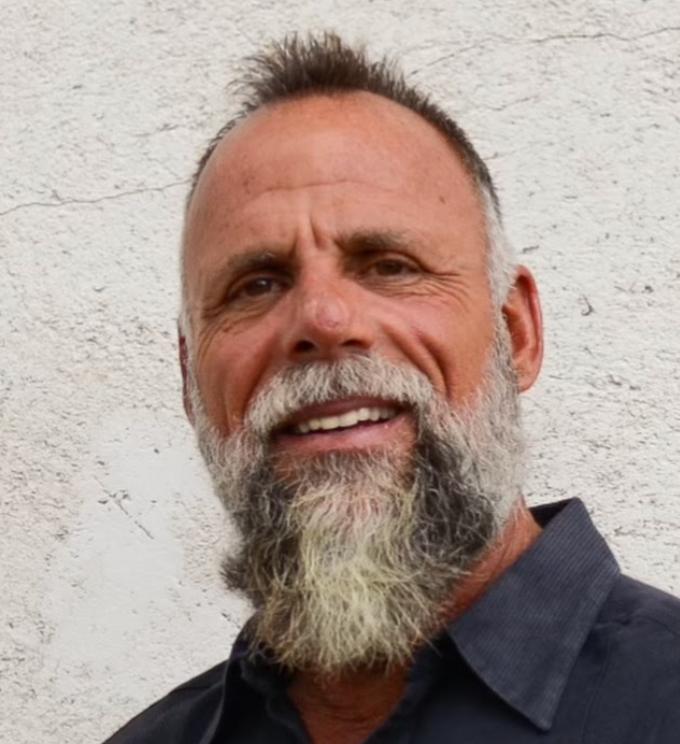
Author Doug Hankins on Singleness & Faith
Updated: Sep 10

In this powerful episode of Amazing Greats, I sit down with pastor, professor, and now author Doug Hankins to unpack a topic that impacts nearly half of America—but is often misunderstood in the church: singleness. Drawing from his new book Still Single, Still Called, Doug challenges cultural and church narratives that treat singleness as a problem to be solved rather than a calling to be embraced.
From his own journey—from teenage atheist to devoted follower of Christ—to decades of ministry alongside single adults, Doug offers a refreshing and deeply biblical perspective: the real issue isn’t singleness, it’s loneliness—and the solution is authentic community. Together, Doug and I explore how churches can better welcome and empower singles, why Jesus and Paul modeled a full life without marriage, and how shifting our focus from matrimony to meaningful community changes everything.
Listen right here, right now:
Watch right here, right now:
If you want to listen to my original conversation with Doug Hankins where we delve into his personal story, and his great recounting and observations from the revival at Asbury University, check out Episode #45 of Amazing Greats.
To order his book:
DOUG HANKINS AT A GLANCE
Pastor • Professor • Theologian • Author of Still Single, Still Called • Christian Testimony
Topics: Christian faith • Singleness • Marriage • Community • Loneliness • Dating • Relationships • Church • Calling • Discipleship • Revival • Young adults • Gen Z • Spiritual growth
His Faith Journey:Atheist upbringing → Questioning his worldview as a teenager → Reading philosophy, religion and the Bible → Discovering Jesus → Concluding that Jesus is God → Choosing to follow Christ at age 15 → Pastor, professor and theologian
This Episode Explores:
Doug's journey from atheist teenager to Christian believer
Why he believes singleness is not a problem that needs to be fixed
The importance of prioritizing community rather than marriage
How churches can better welcome and include single adults
Why single people should be released into leadership and ministry
His five C's for navigating dating and choosing a potential spouse
Why he sees a growing spiritual hunger and search for authenticity among younger people
Questions Answered:
What is Doug Hankins' Christian testimony?
How did Doug Hankins become a Christian?
What is Still Single, Still Called about?
Why does Doug say singleness is not brokenness?
Why should Christians prioritize community over matrimony?
How can churches better serve and include single people?
What are Doug Hankins' five C's of dating?
Is there a spiritual awakening happening among younger generations?
Podcast Transcript:
Still Single, Still Called: Doug Hankins on Singleness, Community and Finding Your Calling
Amazing Greats with Ric Hansen
Guest: Doug Hankins Author of Still Single, Still Called Pastor, Professor and Theologian
Three Years After Asbury
Ric Hansen:Hey, Ric Hansen here on Amazing Greats with author Doug Hankins on Christian singles, faith, and turning the next page.
Well, here we are, face to face once again—a friend of mine from three years ago.
We did Episode 46 back in 2023, and at that point, you were kind of the eyes and ears of our listeners at a thing called the revival at Asbury, which was huge, and everybody in the country was talking about it.
Now we're three years post-Asbury.
Any reflections?
First of all, let me say this is Doug Hankins, who is pastor of First Baptist Church in Winter Park.
Doug Hankins:That's okay. There is Winter Garden, which I used to live in. So, okay, they're both in the area?
Ric Hansen:Yeah, one's northeast, which is where I am, one's northwest.
Doug Hankins:Yeah.
Ric Hansen:Oh, interesting. Okay. So no wonder I got messed up.
So, the reflections. It's been three years now since that revival. Have you had thoughts, reflections back to those days?
Doug Hankins:I do, in part because—I don't know if you heard about this—but there was a similar revival that took place at Southeastern University in Lakeland, Florida, just southwest of here.
About a month ago, Jenny Allen came and spoke in chapel, and then there was just an extended worship time, and it sort of broke out for about a week or so. They had to shut down campus and shut down classes and all that.
And it fit the pattern of what happened in Asbury.
So I've been thinking about it deeply over the past month or so.
Yeah, I think one of the lasting effects of a true revival, if you read anything about true revivals—Edwards certainly talks about this—is you see faithfulness extend beyond the event.
And I think when you see the students who were impacted in Asbury three years ago, they tend to report that this has had a marked effect on their lives.
You've seen several of them speak at different events. Books are starting to come out. Articles are starting to come out.
And there have been some lasting effects there.
So I think Asbury was a really positive thing, and I'm really curious about what's happened to Southeastern.
Ric Hansen:Yeah, wow. That's incredible. I had no idea that this was kind of recreating itself, much closer to where you're at, for sure.
From Atheist to Christian
Ric Hansen:For context, in our last episode, we talked briefly—or we actually talked pretty extensively—about you and your childhood and your religious growth.
But I just want to, for context, for people who have not listened to that episode, to get that story just briefly again.
So tell us, you were an atheist as a kid, right?
Doug Hankins:Yeah, and it needs context.
The context on that is my dad was an atheist. My mom was probably—I think she would say she was sort of a nominal cultural Christian. She believed in God.
We didn't really go to church, but there was no talk of God.
My mom would occasionally bring it up when she could, but my dad just kind of shut all that down and was pretty argumentative about all things religion.
He believed that religion was a crutch for unreasonable people, and he wanted to be a rational person.
And so that wasn't really part of my childhood.
My parents went through a divorce in middle school.
I remember being in eighth grade and dating a girl at the time—you know, an eighth-grade girlfriend.
And I remember declaring to her that—because I think she said she was going to pray for me because of the divorce—and I told her, “Don't bring God into this. We don't—I don't believe in God. This isn't part of what I am.”
So I remember identifying as an atheist as an eighth grader.
And my best friend was a Christian, and so he was always inviting me to go to church.
In the middle of the divorce taking place and just everything hitting me as a 14-year-old, I started to realize, “You know, I don't think my worldview is going to help me thrive well as a young person.”
And so I needed to kind of explore maybe some other options to put on.
I went to the Encyclopedia Britannica on our shelves, and I got out the P and the R book for philosophy and religion and just started reading everything I could, trying to understand and make sense of the world.
And in my ninth-grade year, I was dating a different girl who was the daughter of a Baptist minister.
She got me a Bible for Christmas and told me to read it.
And I found that our relationship was better if I read the Bible, because then I could talk to her about it.
So I started reading the Bible.
Then, in between freshman year and sophomore year of high school, I had to read the Bible as literature because we were reading Steinbeck in American literature, and there were a lot of biblical allusions.
So just through the process of reading the Bible and thinking about it for school—and reading the newspaper and seeing the O.J. trial and everything going on in the world, Kurt Cobain's death, the Chicago Bulls winning their first of what would be the second part of the three-peat, and just all the highs and lows of American life—I was trying to make sense of it all.
And I found that the Bible was the best book I'd read in helping capture the human experience.
And I found it to be compelling.
So I moved, as a 15-year-old, from being an atheist to being a theist and thinking, “Okay, there is a God that makes better sense of my experience in the world.”
And then, in reading the New Testament in particular, I started to become aware that I think Jesus is God.
I think that's what He claimed to have done.
What He says about Himself, the resurrection—the balance of probability is high that Jesus is God.
And so I decided to follow Jesus on September 10th of 1997, somewhere around 8 p.m. Central Standard Time, as I became a Christian.
Ric Hansen:Wow.
So, well, that's great.
And now here we are, a few years later, and you are a senior pastor at First Baptist Church in Winter Park.
You're also an associate professor at the Baptist University of Florida. You have a PhD in theological studies from Trinity Evangelical Divinity, and over 20 years of pastoring right there in the Orlando area.
Very cool.
Still Single, Still Called
Ric Hansen:But what brings us together here on Amazing Greats today is something more recent and exciting.
You've written a kind of—it's really your first book, right?
Doug Hankins:Yeah, my first solo book that's for a popular audience.
Ric Hansen:Yeah, and it's called Still Single, Still Called.
And there it is, by golly, live and on screen.
And so that is—you are writing a book on singleness, and yet you're married for 20 years and have two kids.
What brings you to talking about this in a book?
Doug Hankins:Yeah. So my wife and I have basically been involved, more or less, with college and young adult ministry for the last 25, 26 years.
We work with a lot of single people—a lot of single young adults, a lot of single 30-, 40- and 50-year-olds, a lot of widows, a lot of people who've gone through divorces.
So we have a lot of single people in our lives.
And when we were at First Baptist Orlando for many years, I would give a regular talk on love, sex and dating.
And I would always begin the talk on singleness, just because we have—in Orlando, it's probably 40%, or Central Florida is probably 40% single adults between the ages of 18 and 40.
And a lot of them work in the parks and work in food services, work in the hospitality industry.
But we have a ton of single adults here.
And so our church was full of these single adults.
And there are a lot of really wonky cultural narratives that float around about what it means to be single in America, and especially in the church.
A lot of misunderstandings about what it means to be single and what the expectations should be.
And so I would give a talk each year on being single, and I would try to help people understand that Jesus was single all of His life and He thrived.
And so, therefore, if God's put you in circumstances or called you to be single all of your life, then you're going to be okay because Jesus was okay.
And furthermore, the apostle Paul was single and he was okay.
So just trying to help everybody have that baseline of understanding of what singleness is biblically was important, especially if we're going to talk about dating and love and sex and marriage.
Well, I gave this talk at First Orlando during a First Corinthians series a couple of years ago when I was still there.
And I had someone walk up to me after the service and said, “That's the best talk I've ever heard on singleness. You should write a book.”
And I said, “You know, people are being nice.” And you're like, “Oh, thank you so much. So kind.”
And this guy was like, “No, no, no, I'm serious. You should really go do this.”
And this guy was a vice president at Wycliffe Bible Translators.
And he's like, “I'm seriously, I'm going to connect you.”
And I was like, “Oh, you're so kind. That's so nice.”
Again, I'm, you know, okay.
Well, sure enough, within a six-month period, he said, “Here is my friend at a publishing company. I've already mentioned you to her. Go talk to her.”
And so that started this process.
I put a book proposal together and sent it off to this publisher, who ended up not going with me.
But I made it to the finals, and they said, “We think it's a good book. We just don't think it's right for our publishing company. You should go to somebody else.”
And so I went down the street to Broadman and Holman, which is the one that has published this book, and they loved it and sort of greenlit it and fast-tracked it.
I think in fall 2024 I signed the contract, and they said, “Can you have us a manuscript by February?”
So I started writing in September, and I turned in my final manuscript in February, which is pretty quick for publishing.
And, by the way, I was teaching a full load and I was dean of one of our campuses at the Baptist University of Florida, and I was stepping into being a full-time senior pastor, and I have two kids, and my wife's a professor.
And it was a little crazy.
It was a little crazy.
But I wrote it in this office where I am right now, staring at that wall.
I wrote the book every morning, Monday through Friday, from 7:30 a.m. until probably 11 a.m.
I wrote and just wrote, wrote, wrote, wrote, and it just poured out of me because I just have all this stuff to say about singleness.
“Singleness Is Not Brokenness That Needs to Be Fixed”
Ric Hansen:“Singleness is not brokenness that needs to be fixed.”
Author Doug Hankins jumps in with some really valuable perspective on Amazing Greats.
The story I understand about your writing this book, and I think it came right from your mouth, is that you sat with a bowl of snacks and you listened to Eddie Vedder from Pearl Jam playing ukulele.
Is that true?
Doug Hankins:Well, I'll say this. That was in my dissertation.
That's what I did.
I sat down and I listened to Eddie Vedder's ukulele, and I listened to Death Cab for Cutie's Code and Keys.
That was in 2016.
And that's how I wrote my dissertation.
I did something similar this time.
I drank hot tea and I listened to Miles Davis and Thelonious Monk and John Coltrane and Dave Brubeck and all the great jazz artists.
So I just have a little Amazon deal, and I would say, “Play jazz,” because I would play classic jazz and I would write, and it would just inspire me to keep going.
So, yeah, that's true.
A Calling to Pastor, Teach and Write
Ric Hansen:True story.
So there were difficulties along the way, I'm guessing, in writing a book, especially the first time around.
You made it sound like it was almost divinely inspired as the thoughts were coming to you and you're putting it into print.
Doug Hankins:Yeah, I mean, I feel a certain calling.
I think it seemed to me that God told me a number of years ago there are three things He wants me to focus on in my adult years, my adult career.
He wants me to be a pastor, He wants me to be a teacher, and He wants me to be a writer.
And so I'm trying to pursue those buckets to the best of my ability in whatever doors He opens.
And so this door opened.
And you probably know this—I think any entrepreneurial endeavor is sort of this way.
You kind of go, “Is this good? I don't know. It's something, and I think I'm going to kind of bring it to the world.”
And then you send it off to an editor or somebody, and you don't hear any notes back or any feedback, and you're like, “I guess that was good. I'll do the next chapter.”
And it was sort of chapter by chapter, paragraph by paragraph.
Like, I would think to myself, “How would I want to hear this?”
Or, “How do my single friends want to hear this?”
Or, “How do my single friends want to talk about this?”
I really felt like, in many respects, writing this book was an exercise in being a voice for all my single friends—trying to help the world understand what it's like to be uniquely single in this moment in America, especially as a believer.
Because the book represents my attempt to be a broker between singles on the one hand who want to find churches, and on the other hand, churches who really want to include singles in their fellowship.
And oftentimes they talk past each other.
And I think churches are a good stand-in for the parents of these 30- and 40-year-old singles who I'm writing about.
They just got married, and now their kids are not getting married, and they're just like, “I don't understand. How are you not getting married? Why are you staying single? I don't understand.”
And so I'm trying to help these parents and grandparents talk to their single kids and grandkids and just have a baseline understanding of where everybody's coming from to help us come together.
So I kind of operate from the assumption—and I talk about it in the book a little bit—that the best thing for single adults, and I would say all adults, is to find community.
Because community is where you're going to be the healthiest version of yourself.
And that's going to open you up to all possible relationships, including marriage, if that's what God leads to.
But the end goal here is to help singles find the community they need and to help churches include singles.
Because I'll tell you, our single friends bring some of the best gifts possible into our world.
And churches are going to benefit from them being part of their church and their fellowship.
“Prioritize Community, Not Matrimony”
Ric Hansen:Yeah, and different scenarios bring people to their singleness, as you kind of alluded to.
So you've got widowers. You have people who have just—I’ve got a friend who lost his wife in the last two years and kind of is struggling a little bit with all that.
I have another friend that got a divorce at a later time in his age, and that's been the struggle.
Then you have people who I also know that have lived a full and productive and fun-filled life as a single and seem to have adopted that as being very good for them.
And then I have a 22-year-old nephew who says, “I'm 22, I can't seem to find a wife.”
So there's that too.
How is there a different approach in each of those scenarios?
Doug Hankins:Most certainly there are different approaches because all of building relationships is contextual and circumstantial.
But I would say there are some general principles that are true across age spans.
You know, one of them is, I think, if you're going to live a happy life, you've got to prioritize community, not matrimony.
Does that make sense?
Ric Hansen:Uh-huh.
Doug Hankins:That's not to say that marriage isn't good, but it is to say that over and over again in Scripture, what you see is Paul and Jesus, I think, emphasizing community as the larger umbrella term.
You go back to Genesis 2:18: It is not good for humans to be alone.
In fact, the Hebrew term there for alone is bad.
It is not good to be bad.
Okay.
And so the writers are really clear about this.
It's not good to be alone.
It's not good to be isolated.
It's not good to be on your own.
So what God does for humans is He creates a helper. He creates community, right?
And the particular kind of community God creates up front is marriage.
It's very efficient, right?
But nonetheless, the principle is there.
Community is the solution for the problem of isolation, right?
It's not that marriage is a solution for the problem of singleness.
Singleness is not a problem to be solved. Loneliness is the problem.
And so singles tend to disproportionately experience isolation and loneliness relative to their married peers, just by virtue of the people around them or not around them.
And so it becomes extra important for singles, no matter what phase they're in, to make sure that they're part of community.
Okay?
And I think I can stand up before any singles—widows, divorced, whatever—and tell them this, and all of them will say, “Sign us up. We're on board.”
What I have a much more difficult time with is the churches who are not ready to receive single people because they have unique loneliness and community needs that churches are sometimes not ready for.
There is no place that is more lonely for single people than in American churches, right?
Because American churches, like most legacy institutions, are built up from married couples and families.
And so if you build churches for families and singles show up, you don't know what to do as a pastor.
And so I'm trying—this is why that's part of the book also—to put the burdens on churches to go create room, make space for single friends when they come in.
Don't create a singles ministry. Help integrate singles into the life of your church.
Put them on staff. Put them in the boardroom. Put them on stage. Put them in your Sunday school classes. Put them in your small groups.
Because singles bring great gifts.
But we've got to know how singles operate and help them come in, and not just assume that the solution is for them to just find somebody, get married, and then we can start building around them once they're a couple.
No. We've got to build around them when they're singles.
When a Married Person Can Still Feel Single
Ric Hansen:Yeah, and then there's the situation where there is the single churchgoer with a spouse that's a non-believer.
And so that is a singleness problem too, because they end up being in this scenario where everybody's a couple and they're not at church.
So you could be married and in the church and still be single, in a lot of other stigmas too.
Yeah, yeah.
So what are some of the other stigmas about besides loneliness?
What are the other stigmas about single people?
Is there other things that you cringe at when you see or hear?
Doug Hankins:Yeah.
Well, okay, so again, the most common theme—and this is just a legacy of both the Greatest Generation and the Silent Generation and the Boomers who sort of have come before all of us.
At the time, so just by comparison, if you look at the population data, at the Census, at the decennial Census, if you look at the number of married people in America—
So the population of the U.S. in 1960, who's married? It's more than two-thirds of the population.
I think 27% are single; the rest are married.
Okay.
So if you're a human being existing in 1960, two out of every three people you meet are married.
It seems like everybody's married, right?
And so there are tax incentives, there are other strategic social incentives to get married.
So everybody gets married.
And marriage is so prevalent and such a common concept that everyone just steps into it almost effortlessly.
Like you're at the airport and you step onto that one pathway that moves for itself.
It just seems like if you just do one or two things, you get married.
In the 2020 Census, almost 50% of the U.S. is single.
Wow.
So only one out of every two people you know is married.
And it just seems like there are as many married as there are single, which is true.
And many of the pathways that were available and afforded to people in 1960 are no longer there.
And so you've got to try twice as hard, three times as hard to get married these days for a lot of different reasons.
And so what that produces is a lot of people who are disenfranchised and single.
They're single, but they want to get married.
So not only are they lonely, but they also feel disenfranchised.
And they've got their parents saying, “It was so easy for us.”
So they've got all this extra guilt and all this extra shame that they bring with them to every conversation.
And so I want to try to stress compassion for churches on single people.
They're going to have a chip on their shoulder—some of them.
They're going to be rough around the edges. They're going to be a little angry and upset and sad and disillusioned.
And that's just how you're going to receive them.
And that's not an excuse to kick them out or practice church discipline or kind of just peg them over here as people that are problematic.
It's an opportunity to practice love and compassion and bring them in and bring them into the community.
I think that's one side of that.
But I would say another thing to just be aware of with our single friends is that aggregate belonging is sort of a—there's sort of a capital with that.
So, you know what I mean?
Like when you sit at a Thanksgiving dinner and you eat a meal together, and at the very end of it, there's just like the table glow, the glow of table fellowship.
You know what I'm talking about?
You take everyone's—untucking their shirt because they're so stuffed—and it's just such a good meal.
We could call that an invisible belonging capital or social capital.
And community is the place where you build that kind of belonging capital.
And because a lot of our single friends don't regularly track in consistent community, they sort of show up to our churches and to our parties in a kind of belonging debt.
Okay?
And everyone can tell because there's this gregarious belonging capital in this fellowship, and the single person comes up and it almost feels like it sucks the energy out of the room.
And the tendency is to go, as people who are in community, “Let's exclude them so that we can preserve our capital here.”
And I think the power of the Gospel is such that if you have Jesus, you have access to the greatest source of belonging capital in the world.
Okay?
And so if you have Jesus and you're gathering as the church, you have infinite social capital and community in Jesus.
And so by that logic, I would say bring as many single people into your community as you can, especially if they have a belonging deficit, and watch Jesus fill you all up.
And then watch those single people go and get you more single people and more married couples and be the best evangelists for your church and watch Jesus fill all that up.
So I want to try to help churches understand the rich resources they have in Christ so that they don't instinctively operate off of what I think is a really healthy thing—trying to guard their belonging capital and think that it's something that they only create.
You've got to remember that in Christ and in the resurrection, we have all that power to create great community there.
And therefore it puts us in position to welcome in the stranger and the foreigner and the single person and people we normally wouldn't include in our fellowship.
Stop Trying to “Fix” Single People
Ric Hansen:Ric Hansen here, probing for specific ways to welcome and nurture the singles in our lives with author Doug Hankins.
And then there's the scenario where everybody thinks because they have a single friend, they should be finding them dates.
You know, they should be hooking them up with folks.
And so the poor single person is besieged with all of these requests for dating, and they get blown away by all that.
And that's church also a perpetrator of that.
Doug Hankins:Oh, disproportionately so in our culture today.
You know, you show up in the lobby as a single person and they find out you're single, some well-meaning church lady is going to go, “I have a grandson and he's single, and let me give you his number.”
Right?
So we all have that scenario in mind.
The single person shows up, well-meaning church people are trying to connect them.
I want you to imagine Jesus showing up in a lobby of a church somewhere.
And they ask Jesus, “What's your name?”
“Jesus.”
“Where are you from?”
“Nazareth.”
“Okay, I don't know where that is.”
“Okay, are you married or are you single?”
“Oh, you're single? Well, Jesus, I have this granddaughter over here…”
We would never treat Jesus the way that we treat a lot of single people, and yet He was a single man in His 30s.
Yeah.
And so I think I would just encourage Christians to think about how they would treat Jesus if He showed up and then to treat everybody, including single people, that way.
Bring them into community.
Release them in their giftings.
Watch them brighten your church with their gifts.
And do that for every single person.
What Can Churches Actually Do?
Ric Hansen:And yet they think they're doing favors. They're doing it in goodwill, right? To try to fix them up and make them—you know.
No doubt.
But yes, when you're single for 15 years, maybe they'll finally get the message that that's just fine with you, I guess.
So, what are some of the specific things that your church has done, tried, that you feel really helps or works to bring singles into the group?
Doug Hankins:That's a great question.
I've only been at First Baptist Winter Park for 18 months, and we are just dipping our toe in the water of trying to help this.
One of the ways we've done it here is we include everybody, regardless of their marital status, in our volunteer leadership, in the teaching rotations.
You know, we don't make marital status a hurdle people have to jump over to serve here.
And so my wife and I lead a core discipleship group on Wednesday nights, in fact.
And it is, I think, probably 50% male, 50% female, and it is probably 50% married, 50% single.
Yeah, or maybe if anything, it's 60% married, 40% single.
But we were intentional about making sure we include our single friends into that group because, again, they're some of our best, smartest, brightest leaders.
And we want to benefit from their giftings and spend time with them, think with them.
So that's one of the ways we're trying to do that.
We have regular testimony nights where I don't preach, but we have different church members get up and just share the Gospel of how Jesus has worked in their lives.
And oftentimes we have single adults who get up and lead in those testimony nights.
So we look for ways to release all of our people, including our single friends, into ministry leadership.
That's about the best we've been able to accomplish in 18 months.
In the book, I talk about three—well, four churches who do singleness well.
I talk about First Orlando.
I talk about Tim and Kathy Keller at Redeemer Presbyterian Church in New York.
I talk about David Poitiers, who is at a church called La Chapelle, which is one of the fastest-growing churches in America, and it's in Montreal.
And then I talk about a church that no one's ever heard of, but they should, which is called Northeast Church in Garland, Texas.
And the senior minister has for many years been Ronnie Worsham, who's a good friend of mine.
And they are just the best at making disciples of all people, including singles and young adults.
They just do a great job.
And so in the book, I sort of talk about how each of them have their different philosophies and some of the things that they do that really include singles well.
The Younger Generation and a Hunger for Authenticity
Ric Hansen:Do you have any pushback from your couples when—or do you sense that they're open to the idea but just don't know how to implement it?
Doug Hankins:That's a great question.
I think if any couples push back, it's going to be under the following circumstances.
It's a young married small group, or it's a group that's predominantly young married, and there are some young singles, all in the same age in their 20s or 30s.
And the tension there is, “Hey, is this single person going to be trying to hook up with my husband or my wife?”
Or, “Is there any of that dating residue going to linger?”
And there are just those questions out there.
And I think what I have to do is coach people to go, “Yeah, no, that's not going to happen,” or it's only going to happen as it would happen in society.
So there's going to be nothing atypical about putting a single person in your small group or your Sunday school class that's going to cause anybody to stumble.
You're not going to cause them to stumble.
There's a lot of fear of those kinds of things.
And I think, for good measure, we have a history of just affairs taking place in churches and these kinds of environments, especially when people are young married.
So, you know, we may need to think through with our young married couples, trying to disproportionately put them around either similar young married couples or even some married couple mentors in that forming season of their family.
But that's rarer and rarer these days.
You know, by God's grace, Gen Z and Millennials who are coming up are much more relationally savvy at times than sometimes I think our older Millennials, Gen X and Boomers were, who kind of lived in sort of siloed worlds.
And they're really helping us as the church to see what a more healthy community could be like that's really diverse and full of a lot of perspectives.
And so that's less and less.
I would say, if anything, the number one sticking point I find in churches is that married couples tend to be richer than their single counterparts because they have two incomes and they split the cost of life.
And so the married couple—marriage is a great strategy for getting ahead financially.
And so we have a lot of married couples who save up the money faster and can buy the house quicker and can go on the vacation sooner and can go on a more expensive vacation.
And so with our mission trips, with our fun things we do, with our conferences, we've got to keep the price point in a way that honors our single friends.
Because what you don't want to say is, “Okay, we're going to go on this trip and it's going to be $1,000 for a single. Oh, and it's going to be $2,000 for the married couple,” or something like that.
You don't want to dishonor the single person.
You've got to say, “Hey, it's going to be this rate per person,” or something like that.
So we've just got to think about that with our single friends to make sure we're inclusive and not exclusive in the way that we do things.
A Surprising Spiritual Hunger Among Young People
Ric Hansen:Yeah, I'd like to circle back just a quick moment because I was intrigued by what you said a little earlier.
And that is that you're sensing that there is more relational activity amongst the younger Gen Z and Gen X.
I've been kind of exploring that with other guests because I'm curious which direction we're going with younger people, especially in terms of social media.
And this is the only generation that's really born with an iPhone in their hand.
And some people seem to think that that's making them more separated from community, not less.
Doug Hankins:I think it's probably true that the population that is currently between 35 and 25 years of age is probably the most connected digitally and least connected physically to places.
I think that's probably true.
And, again, that's just a random section.
But I think what you're finding is people under 25 right now—the increase in Bible sales is among that population, and the increase in church participation is among that population, and the increase in prayer meetings on college campuses and college baptisms and revivals are taking place among people 25 and under.
And what social scientists are starting to try to articulate at the early stages is this group of people currently 25 and younger, maybe 25 to 15—they're different.
And they're different in a way we haven't seen in a while.
They are more curious about spirituality, specifically Christianity.
They're more apt to go to churches. They're more apt to read their Bibles.
They are less apt to be digital in all of their lives.
They've grown up in such an inauthentic digital world that they're trying to chase authenticity.
And so the churches that create space for these kinds of saints who are on their own spiritual pilgrimage are going to be the churches that really grow and find health.
And so I don't know what their marital/singleness dispositions are, and we're going to have to find that out in time.
But that's at least what I think across the West we're starting to see, both in Europe and in America—that there is this hunger for the things of God.
And people are coming to church for the first time.
And it's really that age.
The 25 to 35—that was the last generation, I think, that kind of was enamored with social media and with digital stuff and may live mostly digital.
But even then, that group is starting to get to the age where the last holdouts are getting married and starting to have kids and getting into their careers and going, “You know what? I probably need meaning in life.”
And they're starting to come to church too.
So it's a great time to be leading in church life because I think people are hungry and they're looking for something authentic.
For us, what it's allowing us to do—we're a pretty traditional church.
We're a hallmark church, we're an old building, but we're an old building filled with new people.
And they specifically don't like fads.
They like tradition. They like liturgy. They like call and response. They like hymns. They like bells and smells.
And so our worship pastor, Caleb, is getting to toy with all of these different things, bring back liturgy and things like that.
And people love it.
And we're like, when we do our testimony nights, we show art.
So we're like, “This is a 17th-century painting of the prodigal son.”
And then when we talk about the things going on, people love it.
We did Ash Wednesday. People loved it.
College students at Rollins College were showing up and getting crosses on their forehead, and we got to preach the Gospel and they take it with them where they go.
And so this is a really fun, innovative time to be in church ministry.
“It's a Great Time to Be Leading in Church Life”
Ric Hansen:I'm glad to hear all the optimism because you hear a lot of gloom regarding church growth these days.
You know, almost 50% of Americans are single, yet are treated socially many times like minorities.
There's a better way.
And Doug Hankins helps us on Amazing Greats.
So young people who are just at the point where they're seriously dating and they're kind of out there looking—is there a prayer or guidance in terms of prayer for them to seek God's help in finding the perfect mate, if you will?
The Five C's of Dating
Doug Hankins:Yeah, that's a great question.
And I don't know if I have the answer for you, but I can give you the advice that my wife and I have given to young people for 25 years.
And, you know, because I'm a Baptist minister, it all starts with the letter C.
So there's sort of five things—we think you should check these boxes.
When you're dating, you're looking for character, chemistry and competency.
Okay.
Do they have consistent character in public and in private?
Is it character that's modeled after Jesus, to the best of your awareness of how Jesus models character?
And it's yes or no.
Are they competent?
Are you guys on the same level?
Are y'all equally yoked?
You know, if you're in college, are you studying to be a brain surgeon and he's studying to be, you know, a basket weaver, and y'all are just on different levels?
If you're in college, you're probably on the same level.
But nonetheless, you want to think through those things.
Are you guys running in the same direction and the same kind of competency?
We want to make sure there's not a competency gap.
And then, to the best of our abilities, character, competency and chemistry.
Do you like each other?
Do you like hanging out?
Or is this just a social thing you're doing because you're keeping up with the Joneses?
It's part of conspicuous consumption in the dating world.
So if you can check character, chemistry and competency in dating, then the next two are really about engagement and marriage.
And that is, is there a career plan?
Is there some kind of plan for you to make enough money to survive in this world where inflation is rampant and houses are expensive and groceries are expensive and gas is expensive?
Is there some kind of career plan?
And the final piece is community buy-in.
Do your parents like him or her?
Do your friends like him or her?
Do they see y'all together?
Even if you have non-Christian parents and you're a Christian, your parents know you well enough to know if that person is a good fit.
They might say, “We don't like Jesus, but you know what? We like her, and so we think you guys will do well together.”
And I think those five questions have been the most helpful for us as we've helped young people navigate love, sex and dating.
If you can check those five C's, you're in the best possible position to make a wise and informed decision on marriage.
Marriage Is Not the Finish Line
Ric Hansen:Yeah, and I think in some cases, young people—not even young people, but people in general—get so locked into the comfort zone of a particular person, a mate, that they almost feel compelled to follow that line and end up getting married because that's probably what they should be doing.
Not necessarily that it's the greatest match in the world, but because it's convenient, it's comfortable, and it's time that we get married.
You know, it's time to—all this.
Is that what you see a lot as well?
Doug Hankins:I think so.
And, you know, I've now been married for 22, going on 23 years.
My wife and I have been together 25, going on 26 years.
I think my OG friends tell me this—who are married, the original godly people, the OGs.
They tell me that when you've been married 60, 70 years in some cases, that you're really married to five or six different people because each of you change every so often.
And so you'll have seasons where you're clicking, and then you have seasons where you have to kind of learn to love each other again.
And then you have seasons where you click, and then both of you grow and you're having to learn to love each other again.
And it's just—that's just going to be part of the deal.
So as long as you're committed to love them however they are today, you're going to be fine.
And I think that's really helpful advice for young people who live under the misnomer or the misconception that you kind of just get married and you step onto that path and it just moves you forward.
Once you get married to the right person, it's just perfect after that.
No, it's not.
You're two selfish human beings who are at some point going to sit in the sinks and brush your teeth and spit all that stuff into the sink, and it's gross.
And you're going to argue about which way the toilet paper goes in, and you're going to argue about the proper way to make the bed or not make the bed.
It's inevitable.
So you've got to have some kind of commitment to just see this thing through and be committed to each other, which is why you take vows, right?
And I think most importantly, you've got to have Jesus.
Because if you have Jesus, He has infinite spiritual resources at His disposal.
So you're going to be okay.
And so I caution any couple that wants to get married: don't get married apart from Jesus.
Get married in Christ.
That's going to be the best thing for you.
Where to Find Still Single, Still Called
Ric Hansen:Perfect.
Okay, well, we are getting close to where we need to wrap this up, but I want to talk about when the book's coming out, how it can be purchased.
And is there anything else that we should know about the book that we haven't talked about?
Doug Hankins:I mean, yeah, I think you should know it's the greatest book that's ever been written on the planet.
It supersedes even the Bible.
So once you have this, you don't need to read Scripture anymore.
No. Okay. Yeah.
It's available wherever books are sold.
Just Google search Doug Hankins or Still Single, Still Called.
You can also follow us on Instagram at Still Single Still Called, where I post content and things about the book.
I'll post this interview, cross-post it.
You can go to Amazon, buy it there, Lifeway, certainly go there.
You can go to Barnes & Noble, Target.
I was in England recently, and it's available for presale in England.
So anywhere where books are sold, you can find it.
It's available in paperback, digital and audiobook.
I spent eight hours in the studio with the dulcet tones of Doug Hankins coming forth onto the—
So you can listen to me read my book and tear up at different points and laugh at myself.
You should also know there are copious amounts of footnotes because I have all these little asides I want to make and all this context.
And so I have unnecessary, completely unnecessary footnotes in this book.
Hopefully, I will also just say, here's my elevator pitch:
You can read it on a plane flight from Orlando to Los Angeles.
Three, four hours, you're done.
Guaranteed three laughs.
It's a three-laugh minimum guarantee.
Ric Hansen:So I can—I'm going to fly to see my son in Orlando from Seattle.
There's my chance to read the whole deal, right?
Doug Hankins:Probably one and a half times, man.
Ric Hansen:If it's out by then, I'm leaving in—well, you said it's May 17th-ish, right?
Doug Hankins:May 19th.
It will be delivered to your door if you preorder on Amazon.
Ric Hansen:Oh, okay.
All right.
Scripture verse for all of our single friends.
“It Is Good to Be Single”
Doug Hankins:The one that I talk about in the book the most is in 1 Corinthians 7.
This is Paul.
I think it's the clearest teaching in Scripture.
He says—now, this is a concession, not a command:
“I say this: I wish that all were as I myself am, but each has his own gift from God, one of one kind and one of another.”
To the unmarried and the widows, I say, it is good for them to remain single as I am.
I just want to encourage you with that.
It's a good thing to be single. It's very good. Jesus loved it. He recommends it.
There you go.
Ric Hansen:All right.
And if He does, we better abide by that for sure.
That's right. That's right.
Pastor Doug Hankins, thank you so much for your time and for writing this book.
And I'm excited to actually read it because of all of this preliminary information.
So thank you again for being with us today, and God bless.
Doug Hankins:Thank you so much. Appreciate you. Appreciate Amazing Greats Podcast.
Closing
Ric Hansen:Hey, Doug Hankins, thanks for joining us on Amazing Greats.
Your upcoming Still Single, Still Called book reminds us that God's purpose for our lives isn't about our relationships; it's about our calling.
We tend to overlook the value of singleness, and this book brings clarity, encouragement and biblical perspective to singleness in America.
Go buy the book, for gosh sakes, and tell your friends—your single friends and their loved ones—to check out this episode of Amazing Greats.
Hit like, subscribe, and thank you very much.
God bless.


Comments