
Card Shark Brian Arnold’s Mob-to-God Story
Updated: Sep 16

Listen to it here.
Watch it here.
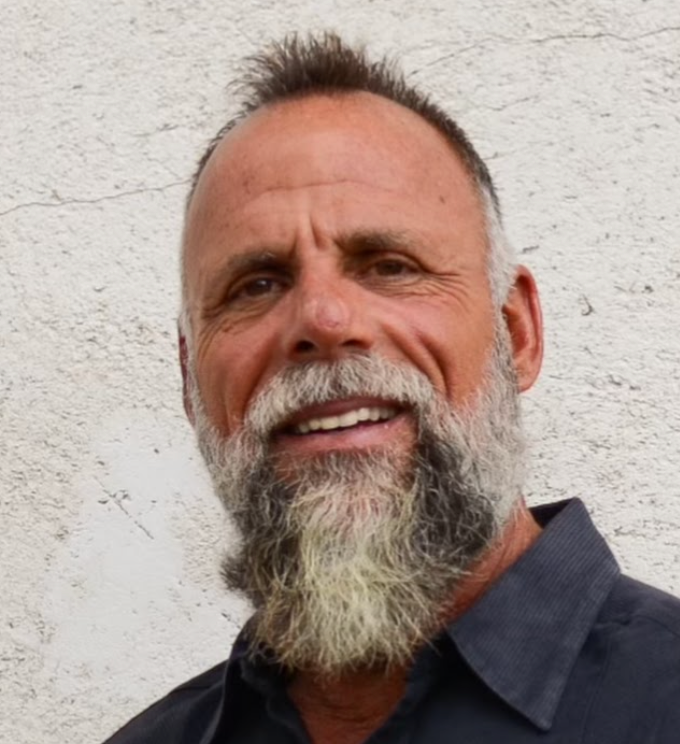
Brian Arnold was a professionally trained card shark. He made over 4 million dollars by age 24! He played the "peripheral edges" of the Mafia when they had BIG games to knock off. And..he also became suicidal. Brian was seconds away from pulling the trigger, and divine intervention stepped in.
He had a powerful spiritual experience, and was delivered “instantly” from his depression, darkness, hopelessness, and found his purpose for living here on planet earth. Brian has spent over 45 years of his life helping others battling depression, addictions, suicidal thoughts, and getting control of their thought life back!
Brian says, “you can’t solve a problem with the same mindset that’s creating it, that’s why Christ's mindset changes the whole game” and makes you a winner, not a victim of circumstance. He has shared his story with tens of thousands of people helping them turn their “mess” into a “MESS-AGE”...of hope, in a world of chaos, misery, confusion and dark oppression. #brianarnold #mafia #cardshark #suicide #depression #amazinggreats #christianpodcast
"Amazing Greats" is a library of interviews with highly successful people who have amazing career and life stories and who share how God has impacted their journey. Hosted by broadcaster Ric Hansen & produced by Klem Daniels. Available on Apple, Spotify, iHeart, Google and our YouTube Channel. Please help us grow our audience by "liking", "subscribing and "Sharing". Thanks so much.

BRIAN ARNOLD AT A GLANCE
Evangelist • Author • Speaker • Trainer • Former Professional Acrobat • Former Card Mechanic
Topics
Canadian wilderness • Acrobatics • Card shark • Mafia • Addiction • Suicide • Redemption • Jesus • Evangelism • From Darkness to Light • Kingdom of God
His Faith Journey
Roman Catholic upbringing → Wilderness childhood → Acrobat career → Card mechanic and Mafia world → Emptiness and suicidal despair → Encounter with Jesus → Evangelist → Kingdom Problem Solvers
This Episode Explores
Brian Arnold's childhood in northern Canada
His career as a professional acrobat
The injury that ended his acrobat career
His years as a card mechanic
His involvement with organized crime
Having wealth but feeling completely empty
His struggle with suicidal thoughts
The remarkable circumstances surrounding his conversion
His “From Darkness to Light” message
Why he left a million-dollar lifestyle
His calling as an evangelist
His approach to engaging people with the gospel
Questions Answered
Who is Brian Arnold?
What was Brian Arnold's childhood like?
How did Brian become a professional acrobat?
How did Brian become a card mechanic?
What was Brian Arnold's connection to the Mafia?
Why did Brian walk away from that life?
How did Brian Arnold come to faith in Jesus?
What does “From Darkness to Light” mean?
Why did Brian become an evangelist?
What is Kingdom Problem Solvers?
What is Brian Arnold's soul-winning school?
How does Brian use his T-shirt to share the gospel?
Podcast Transcript: Brian Arnold on From Darkness to Light, the Mob, Redemption & Evangelism
Amazing Greats with Ric Hansen
From the Canadian Wilderness to a Life of Faith
Ric Hansen:Hi, and welcome to Amazing Greats. What I love about Amazing Greats is hearing the stories and the different ways that folks have found their relationship with Jesus Christ, and hearing all about the process by which that happens.
A guy named Brian Arnold is our guest today, and Brian has a great story. He's a professional acrobat, a card shark, a successful business owner, author, speaker and trainer. He has lived what seems like five lifetimes.
Brian, you've got this amazing life story that we just have to tell the folks about. Let's start briefly with your early childhood. You were born in the wild in northern Canada, right?
Brian Arnold:Yes, sir. I'm adopted, and I was adopted within my own family. My auntie adopted me. My mother gave birth to me when she was about 17 or 18. This was back in 1950.
My father is an American, and I'm Canadian-born, but I've got blood from America too, so I love both countries and consider both of them my countries.
Ric Hansen:But you were really out in the sticks — way out in the wild, far from civilization.
Brian Arnold:Yes, I was. My father was a fur trader with the Cree Indians up in northern Canada. I'm a quarter Cree Indian myself.
We ran with dog teams in the wintertime, and in the summertime we had six big, heavy-duty canoes, almost like freighter canoes. My father bought fish from the Indians in the summertime and fur and fish in the winter.
We also had a mink ranch — what they called a tame mink ranch, although those mink would bite your finger off real quick. We had about 300 mink.
My father was a real entrepreneur. We had a little sawmill with a team of horses. The Cree Indians were very good workers. I remember my dad saying that you couldn't pay them on a weekend because if you paid them on Friday, they wouldn't show up for two weeks. You had to pay them on Monday.
My grandfather even gave me a baby bear, a little cub bear.
We lived in the bush. It was crazy. We were north of Meadow Lake, Saskatchewan, about 300 miles from the Northwest Territory border. We were way up there with absolutely no one around. We were the only ones who had a big three-ton truck for about a hundred miles.
It was very primitive.
Leaving School and Becoming an Acrobat
Ric Hansen:You didn't get a whole lot of formal education, but you were educated in some very focused areas as time went on. You became a card shark. How did you make that transition from being the son of a fur trader to becoming a card shark?
Brian Arnold:There was no school where I was, so my father eventually had to sell the trap lines and the fur-trading operation. My mother was given a quarter section of land closer to Meadow Lake, about 20 miles out.
I went to school there until grade eight. I was 16 years old and in grade eight. I had a lot of energy, and I was a pretty tough kid.
Being raised in the bush, I had my own trap line, my own horse, my own guns and traps. I was raised with the Indians, so I knew how to get around.
When I was starting grade nine, we got a new principal. One day I was sent out into the hallway, and the principal came along and asked what was going on.
He took me into his office. I thought he was going to give me a strap or something. Instead, he put his arm around me and started touching me in a way that was completely inappropriate.
I freaked out. I saw red, turned around and dropped him.
That was it for school for me. I quit.
I left home. I respected my mom and dad. They were loving adoptive parents. I was raised Roman Catholic, and they were good Roman Catholics.
We later adopted two more sons. One of them was a full-blooded Cree Indian, Jerry Arnold, who went on to oversee the accounting for the school system for the province of Saskatchewan.
I took off and became a professional acrobat with Hubert Castle International Triumph Service.
Ric Hansen:Rather than a movie, you'd better make it a miniseries. We could follow the life of Brian week after week.
Brian Arnold:It definitely could be.
I was 17 when I had a bad fall. I fell about 60 feet while training on the trapeze. I hit the net, bounced out of it and landed on a net peg. It snapped my hip and hurt me badly.
That ended my career.
It was an exciting career for me. I was headed toward being a star. We had a booking at Circus Circus in Las Vegas.
Then it all crashed. I'm 17 years old, just a punk kid, and suddenly my career was over.
I started drinking and partying and going wild.
I was in incredibly good condition. I was tough and wasn't afraid to fight. I'd been beaten up by the Indians and fought back.
I ended up with 31 fights and 31 knockouts — not in a boxing ring, but out on the street.
I had developed a reputation as a tough guy.
Becoming a Card Mechanic
When I turned 19, I went to work in bars. I was always drinking and hanging around bars, and 19 was the legal age.
I worked around the pool table and became a bit of a pool hustler.
One evening, two guys came in who were different from anybody I'd ever met. They were well dressed and sophisticated. They had money — more money than I'd ever seen in my life.
They were also connected to what I would call the dark side of life, the kingdom of darkness.
They invited me to an after-hours party. In the back room were a couple of millionaires who had been brought there by prostitutes. The women received a percentage of whatever the men lost in the poker games.
The two guys were card sharks.
One of the men came out and said, "Hey kid, how would you like to make a quick 500 bucks tonight?"
I asked what he wanted me to do.
He said, "We just want you to sit in the game. We're going to give you two finger signals. When we're dealing, watch for those signals because we need somebody to dump all the money on. We're going to take all the money from these guys and dump it on you."
We weren't talking about games for a couple hundred dollars. We were talking about $50,000, $100,000, $200,000 or even $500,000 at a time.
These guys had absolute control of the game.
I became known as "the Kid." There were six of us in North America at that time.
The two men I met, Pete and John, are dead now, so I can tell the story.
Eventually I started traveling with them.
I didn't want to know too much about what they were doing. I was there to protect them, collect money if necessary, and take care of things.
One night I got more involved. I threatened to chop the thumb off one guy and beat him badly.
Pete was the one you didn't go near. He was connected to the Mafia. These weren't exactly Mafia guys, but they were connected to the Mafia and were brought in to knock off big poker games.
If we flew into Chicago, New York, Las Vegas, Los Angeles or anywhere else, we were on the outskirts of that world.
If we won half a million dollars, the mobsters took $250,000 and we took $250,000. Eventually I got to split it three ways.
When Everything Began to Feel Empty
Ric Hansen:What an amazing flip-flop in life. You went from the rural areas of northern Saskatchewan into this whole world of prostitutes, card sharks and people connected to the mob.
Brian Arnold:It was wild. You couldn't make up a story like this.
I traveled with the mobsters for four and a half years, from 1969 to 1974.
The Mafia was strong back then. Money was flowing everywhere.
We traveled through Canada, the Yukon, Alaska, British Columbia and the United States.
The mobsters were actually great guys to me. They were made men, the real deal. I liked them and got along great with them. They had class and knew how to handle things.
But eventually I started asking myself, "Is this all there is to life?"
I had Learjets, Cadillacs, cars, money. I had even won gold mines. I had everything — wine, women and song.
But after four and a half years I started feeling empty inside.
I had no purpose anymore.
I didn't like the guy I saw looking back at me in the mirror. I had lost my soul. I'd lost myself.
I was disconnected from reality.
I had not been raised to be a thief. My dad was not a thief. He was a Roman Catholic and, as best he could, an upright man.
I began asking three major questions:
Who am I?How did I get here?What's my purpose for being here?
There had to be more to life than being a thief.
I'd been involved in stealing probably $40 million. Back then that was an enormous amount of money. I had plenty of cash as a 24-year-old kid.
I decided to go back to my roots.
Having Everything — and Nothing
I moved back to Meadow Lake and bought my mom and dad's farm. I paid cash for it.
I bought another 300 head of cattle and four more quarter sections of land. I had about nine quarter sections, 300 cattle, brand-new equipment and a new pickup.
I had everything paid for in cash.
I had the world by the tail.
But I had nothing.
I was dead inside.
All I wanted to do was kill myself.
I tried to be good, but Friday night would come and I'd go into town, get drunk, party and get into trouble.
I wasn't a gambler. I was a thief.
I was a card mechanic. I could take a deck of cards and deal anything I wanted, any way I wanted, and you'd never see it.
I was falling into depression.
One day I was sitting up on the barn after feeding my horses. I had six beautiful Arabian horses.
As I came down the ladder, I felt as though all these demons were around my head screaming, "Kill yourself. Kill yourself. You're no good for anything."
I'd already had two or three friends who had killed themselves.
I went to the garage where my .22 rifle was. I decided I was going to put it in my mouth and pull the trigger.
I reached for the garage door.
And at that exact moment, a car pulled into the yard.
I'd never seen the man before.
He asked, "Do you know where Joe Saklinka lives?"
I told him Joe lived about a mile down the road.
He said he'd already been down there twice.
I told him to go back and look again.
He left.
And that broke my train of thought.
I suddenly realized, "Wow. I almost killed myself."
You can get into a train of thought if you're not careful. The mind is very powerful.
I believe God sent that man.
The Divine Appointment
The following week, my mom and dad came out to the farm.
They knew I'd made a lot of money. They thought I was a gambler and was wild and crazy.
At that time I also had a drug problem. Before I got to the farm, spending $1,000 a day on cocaine with some friends wasn't unusual.
My parents invited me into town to go to church on Sunday and have lunch afterward.
I agreed.
Just before I was ready to leave, I discovered about 50 of my cows were out on the road. They had knocked over the gate.
I rounded them up, put them back inside and closed the gate.
It took about 15 minutes, which meant I was late.
I hate being late.
I drove into town and saw my mom and dad's cars parked at the Roman Catholic church.
I decided I'd just go to their house and have a coffee instead.
As I drove toward their house, I stopped at a stop sign beside a police station.
And walking around a bush was an old friend from grade eight.
I hadn't seen him in eight years.
His name was Richard Pliska.
He saw my new pickup and said, "Brian, what are you doing? I haven't seen you in years!"
I told him I'd bought the farm, paid cash, and had everything going great.
What a lie.
I was suicidal.
He asked what I was doing.
I told him I had been going to church but was late and was going to meet my parents for lunch.
He said, "You're right on time. We've got a Black preacher here from America, and he's a fireball."
I thought, "What's a Black guy from America doing in an Indian town in the middle of nowhere in Canada?"
I didn't realize it was a divine appointment.
Richard invited me in.
I said, "No, no, no. I'm Roman Catholic, and if you holy rollers get around me and start acting crazy, I'll punch the whole works."
But Richard was kind and encouraged me to come hear the preacher.
I finally agreed.
We walked into a little church with about 40 people. We sat near the front.
They began playing guitar and singing and clapping.
Then the preacher got up.
He was a powerhouse.
He preached, "You must be born again."
And I felt like he was talking directly to me.
Something was being stirred up inside me. My spirit was on fire.
I was thinking, "This is truth. What this guy is saying is the truth. I'm finally hearing the truth."
At the end of the meeting, he said, "If there's anybody here today who would like to accept Jesus Christ as your personal Savior and Lord, I want you to come up here to the front."
I didn't even look around.
I was so convicted that I was weeping and shouting inside.
I jumped up, stepped over the pew in front of me and walked up to that little Black preacher.
I put my finger right in his face and said:
"If this Jesus you're talking about can save a wretch like me, if He can do that, I'll pray this prayer right now and I will serve Him all the days of my life."
That was 49 years ago.
I've been preaching the gospel ever since.
From Darkness to Light
I've seen thousands upon thousands of people come to Christ.
I preached on Indian reservations across northern Canada and put out tens of thousands of Bibles because I spoke the Cree language.
I've preached in Ireland.
I've traveled all over.
Now I'm on podcasts going around the world, still sharing the gospel.
I have a T-shirt called From Darkness to Light.
It represents moving from the kingdom of darkness to the kingdom of light.
Darkness means ignorance and error.
When Jesus died on the cross, He said, "Forgive them, Lord, for they know not what they do."
They're living in darkness — ignorance and error.
On the kingdom-of-light side is knowledge, wisdom and understanding.
I wear this T-shirt every day, and it gives me a way to engage people.
People will ask, "What's that T-shirt all about?"
And I can share the gospel.
The T-shirt actually originated as a napkin presentation.
I ask people, "Which would you choose?"
Would you choose to live in darkness — ignorance, error, guilt from the past, worry about the future, anger, frustration, hatred, bitterness, resentment?
Or would you rather live in light — knowledge, wisdom, understanding, clarity, healing and deliverance from the power of darkness?
People always say, "I want to live over here in the light."
Then I ask, "Do you know how to get there?"
They say no.
I say, "It's very simple. You cross over."
God says, "I'll meet you at the cross."
That's where His Son shed His blood.
That's how simple it can be to share Christ with people.
If you simply wear a cross and say, "Jesus loves you," people may pull away.
But when I wear this T-shirt, people engage.
I walk into Walmart, grocery stores, offices or anywhere else, and people ask about it.
The other day I was walking down the street and asked a young fellow for directions.
He didn't know where the street was, but he said, "I really like your T-shirt."
I asked, "Do you know what it's about?"
And I shared it with him.
Bang! The door opened.
It's all about engagement.
Walking Away From the Old Life
At 49 years after coming to Jesus Christ, I threw my deck of cards in the garbage.
I walked away from a million dollars a year.
I sold the farm and began traveling around sharing the gospel.
I started my own carpet company.
In my first year, I led more than 300 people to the Lord while working in their homes — husbands, wives and children.
That's been the rest of my story.
I've been up. I've been down. I've been through some tough stuff.
I went through a marriage and divorce.
It wasn't all easy.
But I do know how to help people come out of darkness and come into the light and be delivered.
A Life of Evangelism
Ric Hansen:Brian, that is about as powerful a story as I've heard on the podcast.
Your whole story is a testament to the grace of God.
Brian Arnold:It was totally divine.
If it weren't for Him, there's no way I'd be alive today. I'd be dead in a ditch somewhere.
Ric Hansen:So day to day, what keeps you alive and thriving right now? Where are you in your life journey?
Brian Arnold:Right now I'm fully committed to evangelism.
I've just started a soul-winning school. It deals with the T-shirt and how to win souls.
I was called as an evangelist. I'm not a pastor. I do a lot of teaching, but I'm really a soul winner.
I'm an evangelist.
The Great Commission seems like the Great Omission in the church today. We're not doing the commission. We're omitting getting out and engaging people.
And it doesn't mean you have to walk down the back streets and talk to prostitutes.
It means engaging people at every level of society.
We need engagement.
The five-fold ministry includes apostles, prophets, evangelists, pastors and teachers for the perfecting of the saints for the work of the ministry.
It's the saints who are to do the work of the ministry, not just the pastor.
The pastor works with those we win and helps them grow.
As an evangelist, I train people at the grassroots level.
You only have 10 to 30 seconds to engage somebody.
That's all you've got.
You need to be prepared to engage people and pull them out of where they are.
That's what I teach.
I'm very refined at it because I learned how to connect with millionaires and people at every level of society while I was on the street with the Mafia.
I took what Satan meant for evil and turned it into something good.
Catch Them, Then Let God Clean Them
Ric Hansen:So the evangelist goes wide, and the pastor goes deep. The evangelist brings them to God, and then the pastor takes over and teaches them the Bible.
Brian Arnold:Exactly.
I say, "I catch them, he cleans them."
It's a good northern Saskatchewan story.
But it's only God who cleans them.
It's the Holy Spirit who cleanses us.
We need the Word of God. We need to be washed in the water of the Word.
That's what pastors and the five-fold ministry are there for.
But we are called to do the work of an evangelist.
That's why I'm starting this discipleship school.
It's a full one-year course. It's virtual.
I've also created three decks of cards with Scripture on them.
One is called Destiny — Where Are You Headed?
One is called Eternity — How You Can Get Saved.
And one is called Identity — Who You Are in Christ.
Each deck is designed to create engagement.
A family could sit around a table — a mother, father, six-year-old and 12-year-old — and play cards.
Each person reads the Scripture on the card.
Then you ask, "What does that mean to you?"
Now you're engaging.
Everything is about engagement.
You're engaging in Scripture.
You're engaging in the kingdom.
You're engaging in the kingdom of light.
Teaching the Kingdom of God
I've also created three wall hangings that can go into homes, offices, churches or businesses.
They're designed to engage people.
Someone comes over for dinner, sees it hanging on the wall and asks what it means.
Again, you've opened the door.
I've put all of these things together as a package.
I'm also going to be doing 52 podcasts and one- to three-minute daily teachings using the cards.
I'll explain the Scripture and talk about salvation, soul winning, mindset and putting on the mind of Christ.
We need to learn to look at life and the gospel the way God sees it, not simply the way we see it.
There's so much that needs to be taught in the Christian church about being a born-again kingdom citizen, a son, a saint, a kingdom citizen and an ambassador for the kingdom of God here on earth.
We need to surrender our will to God's will so that God's will can be manifested through us into the earth.
That's His message.
We're getting the message turned around and flying away instead of understanding that God wants His kingdom to come here.
He wants to manifest His kingdom into the earth through us.
That's what my soul-winning evangelism course is about.
A Final Word
Ric Hansen:Brian, you've been an inspiration.
We've tried to keep these podcasts around 30 or 40 minutes, and we've gotten your story and the passion you've shown us.
It has been fantastic.
Is there one place where somebody can go to find out more about the school and the other things you're involved in?
Brian Arnold:Yes. My ministry is called Kingdom Problem Solvers, because we solve problems with the kingdom.
For the short version, people can go to kpsolvers.com.
Most of the information is there.
I've got free videos, including one on the napkin presentation, which is the T-shirt presentation.
There are interviews and other resources there as well.
Hopefully we can get this interview on there and promote your podcast too.
Ric Hansen:Absolutely. We'd love that.
Brian Arnold:And when you do that, we want your link so we can link people to you as well.
I'm a team player.
Ric Hansen:You learned that with the mobsters.
Brian Arnold:You will be a team player, by golly!
Ric Hansen:Brian, this has been a pleasure. Thank you so much for your time, your talent and your energy. Keep it up. Keep doing what you're doing.
God bless you.
Brian Arnold:Thank you. It was an honor.
Ric Hansen:Well, thank you for taking a listen to Amazing Greats this week with Brian Arnold as our guest.
As we continue to explore these amazing life journeys, I want to thank you for jumping on the podcast and sharing them with friends and family.
Until next time, God bless.


Comments