
Author Rick Enloe: 31 Humorous faith lessons
Updated: Sep 12

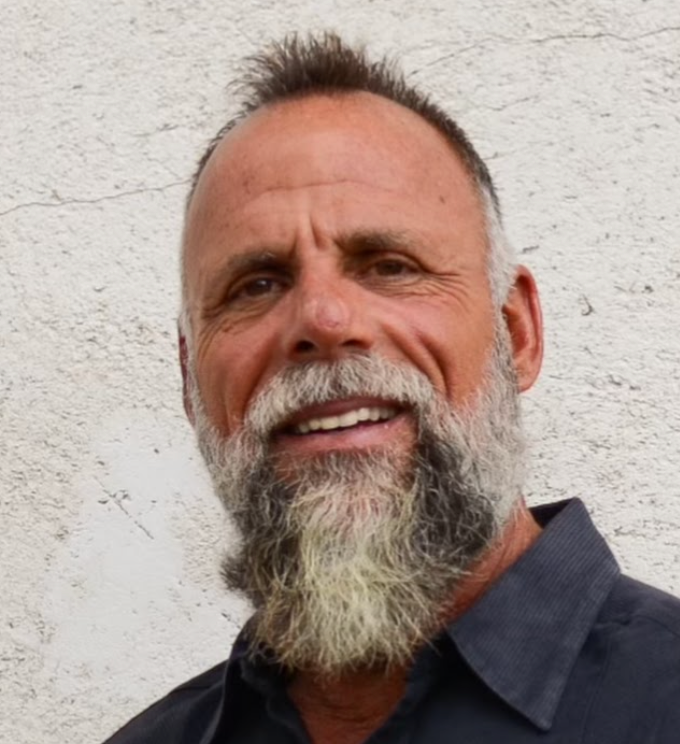
Here is the story of a small town boy, who among other things, toured 1100 high schools across the country, spent a year in the Neitherlands, hosted a talk radio show, helped found a thriving church 28 years ago and uses humor as a primary tool to introduce and share with people the love and grace of Jesus. Rick Enloe, author of the book, "Low Hanging Truth" is an awesome story teller who learned the importance of teaching through story telling from the master...Jesus himself. You'll get a glimpse of his book, his humor and wisdom as he shares his personal journey in this episode of Amazing Greats.
Listen right here, right now:
Watch right here, right now:
As a member of that thriving church, Harbor Christian Center, I have been blessed with his friendship, mentorship and his comedic, assessable and relatable teachings on many Sunday mornings.
Now, as he ponders writing a novel, as well as another book with more low hanging truths, and who knows, just maybe a one hour comedy special, I encourage you to spend these next few minutes getting to know, Rick Enloe.

RICK ENLOE AT A GLANCE
Pastor • Author • Storyteller • Humorist • Podcaster • Former Radio Talk-Show Host
Topics
Jesus • Faith • Storytelling • Humor • Pastoral ministry • Radio • Youth ministry • Gig Harbor • Life lessons • Cancer • Low Hanging Truth
His Faith Journey
Son of a pastor → Seeing his father’s transformation through Jesus → Youth pastor → High-school speaker → Radio host → Pastor in Gig Harbor → Author and storyteller → Facing cancer with faith and perspective
This Episode Explores
Rick Enloe’s unusual upbringing in tiny St. John, Washington
His father’s dramatic transformation through Jesus
Mentors who shaped Rick’s understanding of faith and love
Speaking to students at more than 1,100 high schools
His unusual God-directed sabbatical in the Netherlands
How Rick believes God communicates through Scripture, people and circumstances
Why storytelling is central to how people learn
The humor and life lessons behind Low Hanging Truth
His philosophy of keeping your chin up and moving forward
Finding perspective after a cancer diagnosis
Questions Answered
Who is Rick Enloe?
How did Rick Enloe become a pastor?
What influence did his father have on his faith?
Why did Rick Enloe speak at more than 1,100 high schools?
How did he end up living in the Netherlands?
How does Rick Enloe believe God speaks to him?
Why does Rick believe storytelling is so powerful?
What is Low Hanging Truth about?
Why did Rick Enloe write a humorous book?
What does “keep your chin up and keep moving” mean?
How has cancer changed Rick Enloe’s perspective on life?
Podcast Transcript: Rick Enloe on Stories, Wisdom, Humor, Faith & Living with Purpose
Amazing Greats with Ric Hansen
Meet Rick Enloe
Ric Hansen:Hi there, it's Ric Hansen on Amazing Greats, and here we go.
We're talking with the author of a book that shares 31 stories, 31 pearls of wisdom and tons of laughs. I know you're going to be inspired by my friend Rick Enloe as he shares his life, his wit and his wisdom on Amazing Greats.
We're talking with Rick Enloe—author, podcaster, spiritual counselor, pastor and news-talk-show host. You've done it all, my God.
Rick Enloe:Well, so far.
You know, one time somebody asked me for my résumé, and so I typed out all the stuff I'd done. They said, "You know what you're really good at? Former."
Because I was the former everything—former pastor, former talk-show host, former this, former that.
So I was like, "Okay, well, I guess that's what I'm going to do."
Ric Hansen:We're seeing with the former Richard.
Rick Enloe:Yeah, yeah, yeah. That's it.
How Ric and Rick Met
Ric Hansen:Let me first describe how you and I kind of connected, and in all transparency, where this is coming from in terms of our personal relationship.
I was a fallen-away Catholic. I'd been away from the church for a long time, and then stumbled into a church—which wasn't even a church. It was a boys and girls club in Gig Harbor.
On stage was this raucous band playing the greatest music I'd heard in a long while. It all had to do with Jesus.
I'm thinking, "Wow, this is not like the Catholic church that I used to go to."
Rick Enloe:A little different liturgy.
Ric Hansen:Different liturgy, same message maybe, but a different way to explain it.
Then when I saw up on the big screen, "No church experience required," I said, "Okay, this could be my home right here."
Then up on stage came this stand-up comic who was kind of a cross between a stand-up comic and a TED Talk. It was just amazing—all of this stuff about the Bible and Jesus, and it all made sense.
And so that is where you came into play, yourself, as well as Pastor Gino.
It was an amazing journey for me. We met in 2013. I think I got baptized in 2013, on September 22, by Gino.
So, yeah, there's how we know one another. And that brings us up to date today.
Enough about me. Let's talk about what you think about me!
Rick Enloe:No! Whoa, man. Let me just think about that.
No, this is great. I love your podcast, and thanks for having me on.
Growing Up in St. John
Ric Hansen:Perfect. This is so good.
Let's start with little Ricky Enloe from long ago. Fittingly, you were raised in a town called St. John.
Rick Enloe:Yeah, that's right.
I didn't really realize it at the time. It was just where we lived.
It's in Whitman County, in the eastern part of Washington State.
It's a very interesting story, the whole Whitmans, if you ever want to Google that up. They were missionaries who came and didn't really pull off the cross-cultural move too well and were slaughtered by the natives.
That's why we have Whitman College in Walla Walla. It's just upstate from that, where I lived in this little farming town out in the middle of nowhere.
We're going to show a picture right now. This is a picture of St. John in the Palouse.
Ric Hansen:That's a huge metropolitan area, it looks like.
Rick Enloe:Not a single stoplight.
In fact, when I was there, there were no street signs. Since then, they've decided to put in street signs named after the people who live on the street—Johnson Street, Smith Street.
But when I was there, it was just houses. No stop signs, no stoplights, just right through Main Street.
One of the things that was kind of funny about the town is that we had a six-hole golf course. So if you wanted to play 18, you had to do three laps.
And then we had a police officer who was actually the insurance agent, Elmer. He had an El Camino that he would put a battery-operated red light on the hood of—but only on Friday nights.
The town council apparently only wanted a Friday-night police officer in case of kids getting out of the football games and whatever.
One time I went blazing through town in my old car. Our cars in high school—we were in the muscle-car era. We had amazing cars.
His car was just an old beater. I thought, "Well, I guess I didn't get pulled over."
I got home that night, and my dad said, "Hey, you got a ticket."
Elmer had just gone to my dad's house, knocked on the door and said, "Rick, he was speeding through town. Here's a ticket."
So we had automated speed cameras, Elmer style!
It was quite a place to grow up.
But one of the things about it is that because I grew up in such a small spot, I decided, "Hey, someday I'd like to see how big the world is."
That added a lot of juice to some of those goals. I've kind of been zipped all around the world now.
My dad was also the volunteer pastor of this little church that we used to gather in on Sundays.
He really had a heart for folks who didn't fit into the religious scene because he'd been a guy who had been down and out as a younger guy.
I didn't even know about it, but when I was 16, I got a job in Yakima, which was a few hours away. Some guy recognized my last name and said, "Have you ever heard of this one guy named Mickey?"
I said, "Yeah, I've heard of him."
That was my dad.
He said, "Yeah, well, that guy's still famous around here for being a crazy person who was out of control and violent and ended up in jail and all this stuff. He was like a gangster."
I'm thinking, "Okay, that's not my dad."
When I got home, I asked my dad, "Hey, Dad, you know what this guy said?"
He got quiet and said, "Well, you never met that guy."
He said, "I met Jesus before you were born. And when they put me underwater, they raised me up to the guy that you know."
So he had a real heart for folks who had made a few mistakes. He realized that it wasn't over for him.
He kind of had that "no church experience required" vibe.
Ric Hansen:There was the birth of that idea, huh?
Rick Enloe:Yeah, kind of. I think Gino's the one who came up with that actual phrase, but I think the spirit of it was with my dad.
He also was somebody who could explain the Bible to people in layman's terms.
I think I kind of followed in his footsteps on that one.
Was Rick Destined to Be a Pastor?
Ric Hansen:So you were the son of a preacher man. Were you destined to be a pastor somewhere along the way?
Rick Enloe:Well, my mom said, "If you can do anything else, go for it," because she understood the 24/7 responsibility of it.
But it just kind of was a fit for me.
I've enjoyed it. I like being with people when they're going through maybe not the best day of their life.
At the same time, a lot of people share the best day of their life with us, too.
It's kind of up and down, feast or famine, but it's been a great experience.
I think my understanding of the Bible has been enhanced by so many people who have spoken into my understanding and taught me.
I just want to pass it along.
Mentors and the Power of Storytelling
Ric Hansen:Tell me, if you were to pick out one, maybe two people who were mentors of yours and really impactful in your Christian journey, who would those be?
Rick Enloe:Well, I already mentioned my dad.
But there's a guy—the first guy I ever worked for. I was a youth pastor, and he was the boss pastor, the grown-up guy.
He was just a wonderful human.
His whole theme, his major theme in all of life, was love.
Every sermon he ever taught was about love, and he was a super-inclusive kind of guy.
When I decided after six years that I wanted to do something different, I became the youth pastor for all the youth pastors in the state in a particular denomination.
That's when I started speaking in high schools.
I'd go and do kind of a stand-up routine in the high school.
What I found out is that high schools always have counselors. Most people think of them as academic counselors, but they're actually equipped to help students going through difficulties.
But hardly any of the students ever talk to them.
So I created a presentation that was funny at the high-school level.
I'd say, "Hey guys, let me tell you what the girls are thinking right now," and we'd go back and forth.
Then at the end I'd say, "But listen. Here we are, 3,000 of us in a room, but you can be a lonely person in a crowded place."
Some of you are pregnant and don't know what to do. Some of you are being mistreated and don't know what to do.
I'd encourage them to engage with the counseling available at the schools.
The school started sending me letters saying, "Man, it was like the quietest lunch hour in the entire year."
Then all the counselors were saying, "We found out about all these kids that needed help."
So I kind of had this idea of getting in front of the ambulance—instead of trying to help people who are already hurt.
I went to 1,100 high schools in the U.S.
10,000 Hours of Speaking
Ric Hansen:See, that was a part of your story I wasn't familiar with. How did that all come about?
Rick Enloe:The reason people say, "Man, you're pretty good at the TED-Talkie-sermon-speech-comedy thing," is because that's my 10,000 hours right there.
I cranked on it for a long time. And I enjoyed it.
Sometimes I'd do seven or eight all-school assemblies in a day.
Ric Hansen:Wow. How old were you at that point?
Rick Enloe:Probably late 20s, early 30s.
Ric Hansen:So you're a younger guy, you could relate to them well, and they could relate to you.
Rick Enloe:Yeah.
Then we had two boys, and I didn't want to miss out on them.
This was a super travel-intensive kind of endeavor, so I thought, "Wow."
It was one of those prayer kinds of concerns where I said, "Hey, I wonder what I could do."
That's when we had an opportunity to start this church, this community of faith in Gig Harbor.
Gino and I actually first pastored for three or four years in Seattle at a big old church that had its pipe organ and stained-glass windows—a real church.
It looked like it was out of the Middle Ages. It was really cool, very European and stately.
But it was like a church with no Christians.
Then we came to Gig Harbor, and we've been 30 years now with all Christians and no church.
Ric Hansen:You flip-flopped that.
Rick Enloe:Yeah, we did. I've never had the actual combo yet.
A God-Directed Sabbatical in the Netherlands
Ric Hansen:We're talking with author, storyteller and comedian Rick Enloe on Amazing Greats.
Briefly, on a trip to the Netherlands—to Holland—you spent a year or more there. What brought that about?
Rick Enloe:Just a year.
When I was a kid, I had these goofy ideas about what I'd do when I grew up.
One of them was that I thought 12 years of school was just too much.
I remember being a first grader and everybody saying, "You're going to do this for 12 years in a row."
I thought, "I'm only six. That's like two life sentences!"
So I said to myself, "When I grow up, I'm not going to have my kids do this. I'm going to have them go halfway and then take a year off."
When I got married, before we had kids, I told my wife, "Hey, I want to give our kids a sabbatical, like in middle school or whatever."
She said, "Yeah, sounds great."
I realized it probably wasn't realistic.
Then one day I had a radio show, a talk show from 9 to noon on CBS in Seattle.
A program director came in and said, "Man, you're doing great. I love your show."
The next day he said, "Hey, we need to talk."
Our station had been sold, and they were going to make it a country-western music station.
They said, "But I sent your tapes to Cincinnati and they love you. If you want to..."
You know how it is in radio. You have to be willing to move around a lot and keep going to different markets.
I thought, "Nah. My kids have their buddies in school."
So I came home, and my wife worked for US West Cellular back in the day, when cell phones were like bricks.
That same day they called her in and said, "You guys are all doing great, but we've just been purchased, and we're moving operations to Colorado. If you want to move to Colorado, there's a job for you."
I came home from work and said, "You can't believe it. My job is over."
She said, "Me too."
Seriously.
And I thought, "Well, Godsend, right?"
Then I looked at her and said, "Sabbatical."
We didn't just jump at it, but we thought, "Okay, maybe."
We put a sign in the front yard to see if anybody wanted to buy our house.
Somebody bought it.
We put a sign on the car to see if anybody wanted to buy that.
Somebody bought it.
I called a few people, and a friend who lived in the Netherlands said, "Come on over. I can use some help."
I taught at a small university there for one academic year.
It was pretty fun, and the kids were good sports about it.
When God Opens the Door
Ric Hansen:Did you find that, in your mind, was God speaking to you through all of that?
Rick Enloe:Totally.
I wasn't 100 percent sure that I wasn't just making this up. I had thought of it as a first grader, so I was thinking, "I don't know if it's a very developed or mature thought."
But I thought, "Let's just see how it unfolds."
Things started selling, and we were like, "Oh, well, okay. That's making things possible."
Then all of a sudden, I'm walking into the grocery store in Issaquah.
I park my car and get out, and this guy goes, "Hey!"
He's standing right by the front door.
I'm looking around, thinking, "Me?"
He waves me over and says, "Are you going to the Netherlands?"
I say, "Yeah, we're thinking about it."
He says, "You're going to help this guy? Are you going to go teach him?"
I said, "Yeah, he invited me to teach."
He said, "Well, he's a friend of mine. Do you guys need any financial support?"
I'm like, "Yes, please!"
We were doing this voluntarily. I wasn't hired. We were just going to use whatever we'd saved.
He said, "Come to my house Friday night."
I didn't even know where his house was.
I go to this big, huge house. He's got five or six other couples there.
He says, "Tell them what you're doing."
I explain it, and he says, "I know that guy. He's a good guy. Here's what I'm going to give you: Microsoft stock."
He asked for my brokerage account.
I'm looking over at Marv like, "You're saying there's something called a brokerage account?"
I didn't have one.
He said, "I'll help you."
Then he asked the other people what they were going to do.
I said, "Hey, just a second. If this were Marv and me, we'd have to go home and discuss it. So don't do anything yet. Just think about it and see what happens."
Anyway, those people ended up being huge underwriters for our whole thing.
At that point I knew, "Okay, something's up."
Ric Hansen:Yeah, yeah. That's cool.
How Does God Speak to Us?
Ric Hansen:How does God talk to you? Is it like speaking in a voice?
Rick Enloe:For me, I'm open to that.
Hey, one time a donkey talked, but I don't keep one at my house.
One phrase I borrowed from a guy once—I think it was my brother-in-law—was, "Coincidence to your benefit."
You think, "Oh, this is a coincidence," but boy, that's really to my benefit.
So I think, "Is that a coincidence?"
Well, maybe. But it's also really beneficial.
Another way is through friends—good friends like yourself.
You might say, "Hey, man, I've been thinking about you. I don't know if this sounds goofy, but I just got the idea that you might need this or that."
And I'm like, "Dude, that's exactly what I've been wondering about."
So I think it's people confirming things that you have questions about.
And, of course, I'm a big fan of slowing down the Bible.
I've never been a huge "read the Bible in a year" kind of guy.
It's kind of like somebody saying, "Read the phone book in a month."
It's like, "Okay. Or how about just look up the numbers of your friends?"
The Bible is a book that needs to be slowed down. You need to take it a little bit at a time, and you need to stare out the window a lot.
I think that's been helpful to me because I'll be wandering through something, and it will occur to me that an experience was an important lesson for me.
That's what my stories are like.
Low Hanging Truth: Short Stories for the Long Haul
Ric Hansen:You must have pondered them, too, because of the great recall.
I'm reading your book and saying, "Gosh, I don't remember all that good stuff in my past."
You must have an incredible memory to bring all that up.
Now that we're talking about the book, it's called Low Hanging Truth: Short Stories for the Long Haul.
It's 31 stories that are not only entertaining but have a great message.
Did you always have in mind that someday you were going to take the stuff that you know and put it in a book?
Rick Enloe:No, I don't think so.
But I always admired people who did, and I thought, "That seems like quite an endeavor."
I kind of tiptoed around it.
Then I got an invitation from Debbie Macomber, who's a famous author. She wrote the foreword in this book.
She and I go to church together, and she came up to me and said, "Hey, you're a good storyteller, but I don't know if you know how to write."
She said, "That's how I was when I first started. I was a storyteller, but I had to learn how to write."
She said, "I got this magazine. You want to do an article in the magazine? Every time a magazine comes out, it'll have one of your articles in it."
She said the best way to learn how to write is to have a deadline and keep working on it.
So I did that, and it was a helpful exercise. It gave me the discipline of writing.
Some of these stories came from that. I overhauled them and rewrote them for this particular audience.
I hope that when you read the book, you think, "Hey, what are some of my stories? And what did I learn from that?"
I'm going to get philosophical really quickly here.
Ric Hansen:I'd love that.
Rick Enloe:I went to graduate school and studied a lot about narrative communication, which is storytelling, because I believe that's what Jesus was all about.
He told stories.
Somebody would ask Him a question—"What do you think about this?"—and He'd say, "You know, there was a guy who had two sons."
He'd just tell a story.
The University of Washington doesn't have a graduate degree in how Jesus taught, but they do have one in narrative theory.
That's where my degree is.
My main guy was Walter Fisher. He believed that we as humans are actually homo narrans—storytelling creatures.
We often think of Homo sapiens, but he said we're storytelling creatures. We understand things when they're in story form.
I would sum it up this way:
We learn most from our own experience, but we learn those experiences more deeply if we document them.
All of us have experiences, but not all of us write them down and evaluate them.
What changed in me because of that? What did I learn? What was the takeaway?
When you do that kind of exercise, I think it's really helpful.
Ric Hansen:That's a great narrative about journaling, right?
The Role of Humor
Ric Hansen:That's exactly right. Take the time and jot it down so that you remember it.
Obviously, some of the stories you have are just from remembering them, but journaling is a great way to do that.
As Socrates once said, "The unexamined life is not worth living."
Taking these little bits and pieces and examining them and saying, "What did I get out of that?" really is a useful tool.
Rick Enloe is our guest on Amazing Greats, whose book, Low Hanging Truth, shares familiar life stories we can all relate to and learn from.
Rick Enloe:I wanted to try to write a book because I have this background in humor as a humorist.
I've read a lot of books that I think are funny. David Sedaris writes funny books. Jim Gaffigan has a couple of books that are funny. Tina Fey has a funny book.
I followed Garrison Keillor for a long time. I was raised on Steve Martin's albums. Bill Cosby—I had all his albums as a little kid. Now that's like, never mind.
But anyway, I just loved humor. I love comedy.
I used to watch the Red Skelton Show with my dad. I just always loved comedy. I loved Saturday Night Live.
I thought it would be fun if I wrote a book and told some stories with a little bit of laughter in there somewhere.
It's been fun because some of the responses I've gotten from the book have been that people just laughed out loud.
One guy told me he got the book and saved it for an airplane flight to Phoenix. He was laughing, and people were asking him, "What are you reading?"
I thought, "Dude, I should have given you about 10 of them so you could hand them out."
Rick Enloe as a Stand-Up Comic
Ric Hansen:Did you ever have thoughts of being a stand-up comic? Did you ever try that?
Rick Enloe:Yeah, in a second way.
I've done that a lot. I worked some clubs, but that wasn't as fun for me as doing a whole stand-up deal for college students.
Those are my favorite audiences because, with comedy, you go A, C, and then you wait a second, and the crowd goes B.
With some audiences, you go A, C, wait a second, and you have to tell them B.
But with college students, you go A, you don't even say C, and they've already filled it in.
They're just fun to perform in front of.
In fact, you know what I'm thinking about doing, Ric?
I'm thinking about doing a one-hour comedy special.
I'm thinking about just doing one, throwing it on YouTube, and seeing what happens.
How great would that be if your grandpa did a comedy special?
Ric Hansen:Clean comedy is difficult to find.
We did an interview on Amazing Greats with a guy named Jeff Allen, who does great humor.
You really have to be good at your craft to avoid slipping into that routine of foul language because it's hard work to really capture a crowd and take them somewhere.
Rick Enloe:I think when you get tired, the path of least resistance is just to say things that are shocking.
There's a lot of that.
I do think the whole Dry Bar Comedy scene finally figured that out—you go to places where people are so conservative they don't drink.
Although I don't really like a crowd like that as much as just slightly not Dry Bar.
Ric Hansen:A little loosey-goosey bar.
Rick Enloe:Yeah, just slightly.
Have you ever been to an auction? You think, "Could everyone please have a glass of wine before we start the bidding?"
That's the way to do it.
What Low Hanging Truth Is Really About
Ric Hansen:One thing about the book: when I bought it and got it on Kindle, because I wanted to read it really quickly before your launch party the other day, one thing surprised me.
Because you're my pastor, I thought it was going to be much more of a Christian preaching-and-teaching book.
Rick Enloe:They asked me, "Is it a Bible study?"
I'm like, "No."
I think when you get done reading this book, you think, "I feel like I kind of know the guy a little bit."
That's what the book's about.
Ric Hansen:Absolutely.
Rick Enloe:Since I am a follower of Christ, I talk about times when I prayed and things like that.
But I also have stories that are just about doing CPR on a guy who was choking on meatloaf.
One of my favorite titles is "Don't Be a Dicky."
I found this old mock turtleneck in my drawer and my kids had never seen one.
Ric Hansen:Leasing a car is like having a dickey, right?
Rick Enloe:You don't really own it.
It's not really the real thing.
I had a teenager say to me the other day, "The Dickies made a comeback."
I didn't know that, but I said, "All right."
There are a few chapters about people I've met and walked with.
One was a guy whose daughter died from leukemia when she was 19, and I shined his shoes because I didn't know what else to do.
I went to lunch with him before the book was published and said, "Hey, I wrote this. Would you mind reading it and letting me know if it's okay?"
It was a really cool moment where we kind of teared up. He was sitting there quietly reading it.
He looked up and said, "Yeah, man. Do it."
That was pretty cool.
Then there's the chapter about the guy at the grocery store who calls me "big guy."
Ric Hansen:Yeah.
Rick Enloe:I went to the grocery store and said to him, "Look, I didn't name you by name, but I wrote a chapter about you. I hope you have a good sense of humor."
When he called me "big guy," it was a term of endearment.
But what I heard was, "Hey, oversized human," or "Hey, morbidly obese man."
It made me think, "I probably shouldn't eat today," or "I wonder if my shirt could be used as a jib sail on a small schooner."
It was wrecking my trips to the grocery store because I thought, "Yeah, maybe I am too big."
But the story resolves pretty well because now I look forward to having him call me "big guy."
It's been really fun.
31 Stories, 31 Chapters
Ric Hansen:The whole book is filled with those kinds of stories.
Some of the ones our listeners will have an opportunity to hear about include your greeting-card sales, which was a great story.
Rick Enloe:Yeah. I had 35 boxes of cards I had to sell, and I learned a lot through that experience.
That's when I first ran into the "disappointment gap."
The surprise at the end was not such a big prize after all.
But what I did—I like sketching. I'm just a sketchy kind of guy.
I have this little sketchbook I run around with, and sometimes just to kill time I'll sketch things.
Even on long airplane flights, I'd sketch a guy in the seat in front of me—not well, not a great likeness, but I'd get the main idea.
Then underneath I'd write, "He was a lonely man who had traveled..."
I'd make up some story about the guy.
For every chapter, instead of just having "Chapter 22," I wanted to do a little sketch.
That was fun for me because I kind of illustrated the book as well.
Ric Hansen:I want you to do a podcast sketch for Amazing Greats so we can put that up in the podcast as well. Will you do that?
Rick Enloe:Yeah, absolutely.
Ric Hansen:You've got the coffee-shop story, the great story about your friend who was 90-plus years old, Edith.
You told the story about a kid named Kenny that was a fascinating little story as well.
What a great, heartwarming story that was.
Thirty-one stories, 31 chapters. Every one is packed with humor and wisdom, and it's so well written.
It's a joy and a pleasure to skip through and just enjoy.
Your wordcraft, the words that you used, were sometimes just amazing.
Rick Enloe:Well, thanks.
Keep Your Chin Up and Keep Moving
Rick Enloe:I happen to mention that it's entitled Advice for Those I Love.
I start off talking about a funny event that happened to me, but then I kind of get into this thing where I give advice.
At the very end, after I try to apply the advice, the advice is: keep your chin up and keep moving.
So, chin up, gear up, let's go.
You're going to face a lot of tough times, but let's go. Just keep moving.
I'm trying to help my kids and grandkids and my friends have that philosophy.
I learned it from other folks that I really looked up to.
At the very end, I talk about some of the hard times you can go through, but then I say, "Hey, but it's not all chin-downers for me."
Chin-downers are life's turnovers, but progress means ensuring more assists than turnovers.
It's fair to say I've experienced way more sweetness and grace than dismal, passionless endeavors.
And at the very end I say:
Even if you get diagnosed with stage-four cancer and all your plans go opaque, keep your chin up, put one foot in front of the other, and keep thinking: before long, we'll get through this and you won't believe what's next.
That's a reference to a diagnosis that came my way about a year ago.
Living Through a Cancer Diagnosis
Ric Hansen:That's the only time you mention it in the book, but I'd love to jump into that a little deeper.
I know it's fairly recent news for you. How do you navigate that emotionally and spiritually?
That would be a gift for me and for others to have you share that part of the story with us.
Rick Enloe:It was a surprise to me.
I've spent my whole life, like most of us have, walking with people through things.
But we're usually bedside, not in the bed.
There's a book called When Breath Becomes Air by Dr. Paul Kalanithi, who was a brain surgeon and then got cancer.
What he realized, as he documented in this fantastic book, was that even though he had been treating people who were very sick and trying to help them, he didn't really get what it was like to be sick.
I think that's been my experience so far.
It's been a real gift to understand more intimately what people have gone through.
We have a good friend who lives on our same island, Dr. Lane, who says that when you get diagnosed, it can be a kind of gift.
The truth is that all of us are heading to the other side eventually.
For some reason, we measure life in terms of longevity—in terms of length and time.
What if we thought about a life in terms of its impact? The things that a person was able to bring and take from their life, no matter how old they are.
The Bible is kind of clear on that kind of stuff.
There are people who have a lot of material wealth but are poor, Proverbs says that.
And I think there are also people who have lived shorter lives but have been fuller.
I feel like I've lived a few lives—a few lifetimes.
I've gotten to do so many things.
Ric Hansen:Well, God bless you.
Closing
Ric Hansen:I'll see you on Sunday.
Thank you so much for your time, Rick.
I love my time with my friend Rick Enloe and sharing this special guy with you.
And I hope you enjoyed it, too.
I guarantee you'll love his book. It's called Low Hanging Truth: Short Stories for the Long Haul.
It may make you laugh a bit, and for sure you'll ponder the wisdom of Mr. Enloe.
Maybe it'll help you reveal some of your own wisdom through your life experiences.
Thank you for joining us on Amazing Greats.
God bless.


Comments