
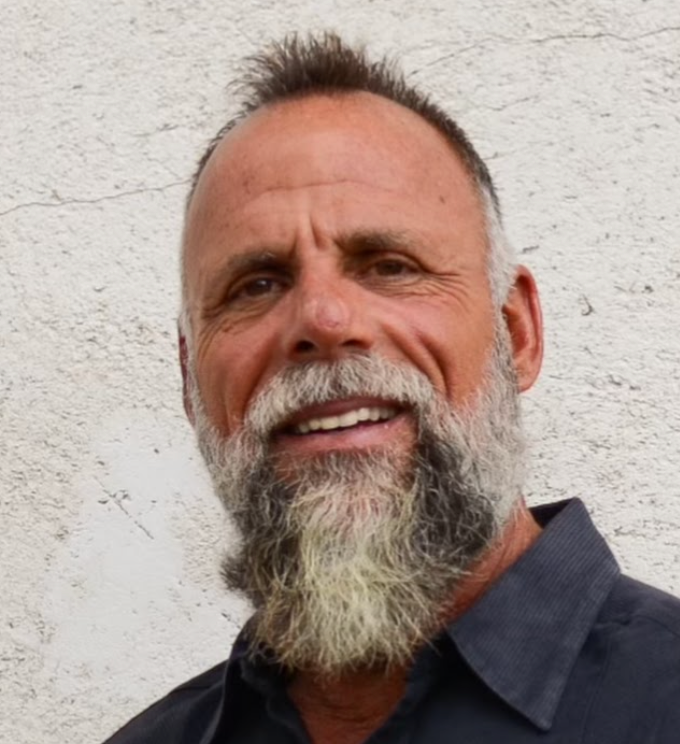
Sean Dunn: Jesus’ Miracles Online & via Text
Updated: Sep 24

It starts with a thirty second streaming video online, then live text conversations with compassionate volunteers and ultimately ends up in an amazing number of young people who have committed their lives to Christ. Hundreds of thousands of hurting teens, and young adults have found their way to a meaningful relationship with Jesus on that simple devise they check over 100 times per day....their phone! I am so exhilarated by what this man is doing through an organization he founded called Groundwire and JesusCares.com. As a social Christian in his youth group it was all about the friends and the social connection until one night after the group left the church and he stayed after. At age 14, Sean Dunn as a crazy kid, had a moment with Jesus that changed his life. After a clear message from God that night he wrote at the back of his King James Bible what he knew to be his calling; "Contending for a generation" : Evangelizing to young people. In this episode you will hear his story about how that became his passion. His "MISSION TO A MILLION" is not only his goal right now, you'll hear how he plans to reach that goal soon. Click here for a REAL-TIME look at a map of the number of conversations and commitments right now TODAY all over the country. Amazing! https://groundwirestaging.meteorapp.com/jesuscares-locations SHOW NOTES Check out Groundwire on line https://www.groundwire.net/ Also, take a look JesusCares.com https://www.jesuscares.com/ VOLUNTEER COACH ? If you feel you might be called to be a volunteer coach you can find out more and complete an application here https://www.groundwire.net/coaching There are no specific qualifications and Groundwire will provide training. PARTNER CHURCH ? If your church would like partner with Sean to welcome newly committed youths in your area and invite them into a welcoming, non-threatening church community you can find out more here. https://www.groundwire.net/add-my-church Buy his book on Amazon:


SEAN DUNN AT A GLANCE
Evangelist, youth-ministry leader, author, and founder/president of Groundwire and JesusCares.com, using digital media and live text conversations to reach younger generations with the Gospel.
Topics
Youth ministry · Evangelism · Groundwire · JesusCares.com · Digital ministry · Social media · Text messaging · Millennials · Gen Z · Discipleship · Church outreach · Calling
His Faith Journey
Young faith in Christ → calling at 14 to "contend for a generation" → youth ministry → evangelistic speaking → realizing traditional ministry wasn't reaching everyone → digital evangelism → Groundwire's text-based ministry.
This Episode Explores
Sean Dunn's calling to reach young people
Why traditional invitation-based ministry wasn't enough
Groundwire's "interruption" approach through digital media
How social media leads into live Gospel conversations
The role of volunteer coaches
Sean's story of the young woman who asked, "Do I matter?"
Groundwire's reported growth and commitment numbers
Connecting new believers with local churches
Why Sean believes younger generations need the church to "go where they are"
Sean's experience with unanswered prayer and personal loss
How churches and individuals can support Groundwire
Questions Answered
Who is Sean Dunn?
What is Groundwire?
What is JesusCares.com?
Why did Sean Dunn begin using digital media for evangelism?
How does Groundwire use social media?
How does the text-message coaching system work?
What happened when Rachel asked, "Do I matter?"
How does Groundwire connect new believers with churches?
What does it take to become a Groundwire coach?
How did Sean Dunn discover his calling at age 14?
How did Sean respond to unanswered prayer?
How can people support Groundwire?
Core Story
Sean Dunn describes a lifelong calling to reach young people with the Gospel, beginning with a defining spiritual experience at age 14. After years of speaking to large Christian audiences, he became convinced that traditional invitation-based ministry was reaching people who were already willing to listen. That realization led to Groundwire's strategy of going where young people already are—radio, television and eventually social media—where short videos lead into live text conversations with trained volunteers. Alongside the ministry's reported growth, Sean shares a deeply personal story of loss and unanswered prayer and describes choosing to continue trusting God through it.
Sean Dunn: Reaching a Generation Through Jesus, Social Media & Groundwire
Amazing Greats with Ric Hansen
From the Stage to the Smartphone
Ric Hansen:Hi there, it's Ric Hansen with another episode of the Amazing Greats podcast, featuring a guy whose life mission came at the age of 14.
Sean Dunn knew early on that he was called to help God lift up a generation of hurting and misunderstood young people with hope and inspiration. The use of social media, cell phones and messaging has become his instrument for reaching hundreds of thousands of Millennials and Gen Zers who have felt forgotten and marginalized—and helping them come to know that they matter and that someone cares.
On this week's Amazing Great, let's get going.
For our audience, I first want to say welcome. The big thing that we want to know about you is your youth ministry through something called Groundwire and JesusCares.com. You've been involved in youth ministry for decades, starting out as a youth minister. That's kind of your calling. So tell us what Groundwire is all about, and how JesusCares enters into that.
Sean Dunn:Well, I'm an evangelist. That's what God put me on the earth to do—to know Him, to love Him, to be His child, but also to proclaim His name, His truth, His Word.
My background is local church youth ministry. I served there, served denominationally. I started traveling full-time as a speaker and an author in 1997 and was the guy that was on the stage. You know, the bands could get them in the field; I got to tell them why they were there. I got to present the Gospel, and I loved it.
My ego was out of control because I was speaking to large crowds and just thought that I was pretty special.
What happened was I started to ask the question. I started to realize that even though I was speaking to 150,000 people every year, I was speaking to 150,000 that gave me permission. I was speaking to 150,000 that were seeking truth, 150,000 that probably believed a lot of the same things that I did already.
And even though many of them were making professions of faith or recommitments to Christ, I started to ask the question: How do you reach the ones that don't want to be in the same room with you?
Because as a true evangelist, I wanted the heathen. I didn't just want the good Christian sinner who just needed a reminder.
So really, that's where Groundwire came from.
We started to aggressively pursue them on this little device. Eighty-four percent of Millennials are never more than ten feet away from their phone. And they check their phone—this is a round number, but it's truly a statistic from a survey I read—a Millennial or Gen Zer checks their phone over a hundred times a day.
Ric Hansen:Man.
Sean Dunn:So we can't get them to come to church, but we can't get them to put down their phones. There's an opportunity there.
That's what we do. We market to them with messaging that speaks to them about the challenges that they're facing and invite them into a conversation about Christ.
"Interruption Instead of Invitation"
Ric Hansen:And I love the idea of—I think you called it "interruption instead of invitation." So you have these amazing stories that are video stories that you strategically place on streaming mediums.
Sean Dunn:We've tried it all, but social media is where we get the best bang for the buck.
And we do measure all of that, so we know how each commercial does on each platform and each city and all those things.
We strategically place them through paid marketing. We're not trusting the organic opportunities. We're actually paying money the same way that an alcohol distributor would or a new movie coming out. We get in front of them with these commercials.
Now, one of the keys, though, is a Millennial has a 12-second attention span. So we're not sharing three- and five-minute or even hour-long stories. We are sharing 15- and 30-second commercials that are intended to get behind their masks, show them that they've been kind of stuffed into this piece of their life, and ask them to come have a conversation with us about it.
Ric Hansen:I gotcha. That is intriguing, and there's so many things about that that are exciting.
This is like God doing miracles through your work here. I applaud you first for the concept, and I'm sure we're going to get into some statistics too about how many people you reach and what good is coming out of all that.
But first I want to jump into your personal story just a little bit. Where did you start? Are you a lifelong Christian, as I understand?
The Calling at Age 14
Sean Dunn:Well, young age. We're born loved by God, but not necessarily a child of God until we recognize our need for Jesus.
I gave my life to Christ at a young age. I grew up in Spokane, Washington.
I was 14 years old when I had one of those moments with the Lord that really shaped me.
At the time, my spiritual life was horizontal. It was all about my friends. I loved the social aspects of my church and my youth group.
One Sunday night I walked into the sanctuary with 40 of my best friends. We were passing notes and goofing around, and I'm sure some parent somewhere was whispering about me or smacking me in the top of the head and saying, "Knock it off."
But somewhere in the service, I don't know what happened, but it changed. It stopped being horizontal and it started being vertical.
Before I knew it, I was the only one in the sanctuary.
I just remember—I don't remember what the pastor preached on. I don't think it was an amazing, stirring sermon. All I remember is saying to the Lord, "God, here I am. If you want me, you can have me. Send me wherever."
I didn't say, "God, make me famous." I didn't say, "God, as long as you financially bless me."
I just said, "God, here I am."
And in that moment, I remember the Lord whispered—so it wasn't audible, but I remember it so clearly that I turned to the back of my Blue King James Bible and wrote a phrase that I'd never thought of before.
I'm convinced He might not agree with your theology or whatever, but I believe God still whispers.
And I wrote in the back of my Bible: "Contending for a generation."
It was in that moment I knew that my life's mission was to minister to young people and to pull as many as I can into that relationship with Christ.
From Youth Ministry to a New Model
Ric Hansen:We're talking with Sean Dunn, the president of Groundwire and JesusCares.com, a youth outreach mission.
You were a youth minister then at a very young age as well, right?
Sean Dunn:Yeah. I went to a Bible college at 18 years old.
The second week I was there, I went to a church. The senior pastor and his wife recognized I was from the college and came over and said, "Could we take you to lunch?"
At lunch they said, "We're in the process of hiring a youth pastor, but we're looking for somebody temporarily. Could we hire you?"
At the time I thought, "Wow, they recognized God's hand on my life."
Looking back, I'm thinking they were stupid. I was 18 years old, they didn't know me, they didn't interview me.
Thankfully, I didn't cause them any major problems.
But yeah, it was just God. God opened the door.
So I've been serving in local church ministry or in some form of youth ministry since I was 18.
"Go Where They Are"
Ric Hansen:So how did the concept of using the cell phone for the medium come about?
Sean Dunn:It was a series of wrestling matches.
Going back to when I was speaking to a lot of people, what happened was it was December, and I was adding up my stats. I'd spoken to 156,000 people that year.
I felt really good, patting myself on the back, thinking I'm pretty special.
And two days later, I'm deflated.
Two days later, I start reading a George Barna book, and all George Barna does is talk about church trends and culture trends, and he never does it in an encouraging way. You always leave feeling like you're playing for the losing team.
The very first paragraph said there were 33 million teenagers in the United States.
So two days before I was celebrating 156,000. Now I'm looking at 33 million.
It was like something just smacked me in the face where I realized this model of ministry will not meet this need.
There were several Scriptures that were just echoing in my heart during the time. One is, "He wants all men to come to a knowledge of the truth and be saved."
All men.
I've always been really strong in those words like "all" when Scripture says "all." I don't want to be partial.
I was literally deflated for three months. I was wrestling with the Lord saying, "God, I don't know how to do this. This doesn't work."
I recognized that I'm only influencing people that want to be influenced, who speak my language, who are willing to give me some time.
I recognized that my invitation model—I built a ministry around an invitation model: "Come where I am."
And God kept saying, "Go where they are."
And I said, "God, I don't know how."
God, I know how to get on a plane and go, but I don't know how to cross the cultural barrier that exists between people of faith and people with no faith, and people who are anti-faith.
So for three months, I was literally wrestling and praying differently, studying trends and saying, "God, I need You."
I actually prayed, "God, You're a creative genius, and I'm an idiot, and I really need some help here."
At the end of the three months, one more statistic set me on a different direction and changed the course of my ministry without me even knowing.
Most paradigms are shifted when it's not working.
What I was doing was working. I was speaking to people.
But God had a different plan.
The statistic was simply this: in 2002, 97% of the students in the nation listened to the radio at least five times a week.
And I thought, "I can't get 97% to walk into a church."
Ric Hansen:Yeah.
Sean Dunn:So I went to my board and I said, "Why do we keep asking them to come where we want them when we already know where they are?"
Our model didn't start on the small device.
We started in 2003 on radio. We added television in 2009. We started taking Jesus onto MTV, VH1 and Adult Swim. We started going aggressively there.
But our growth really began in 2017. In January 2017, we did two things.
I went to the board and I said, "We have to recognize that the younger generations consume media differently than we do."
They consume it on this small device.
They don't, if they have their own apartment, have cable. And when they get in the car, it's a playlist.
So we went 100% digital and we started to measure everything.
Those two things dramatically changed who we are and what we do.
Measuring the Impact
Ric Hansen:Yeah, and the radio and television model had to be expensive.
Sean Dunn:And a different model too.
Right now, in digital, I can tell you if our new commercial works within three days, paying $150. I can do $50 a day for three days and tell you if it's going to work.
When you have a new TV commercial, you don't know if it's working until you've spent $10,000.
So it's dramatically different, much more effective.
Bottom line, we were looking for impact. It ended up increasing our impact and dramatically improving our efficiencies as well.
Text Messaging and Live Conversations
Ric Hansen:The thing it took me a little bit to connect with is that we're talking about a cell phone as being the primary medium, but you're not talking on the phone.
I thought you were making calls to people or something with an 800 number, but it's not that at all. It's all about text messaging.
Sean Dunn:Let me clarify our model real quickly.
First thing we do is interruption. We do it with 12-, 15- and 30-second commercials that are Hollywood-produced, but they show up on social media devices.
TikTok, Facebook, Instagram and YouTube are the top four for us.
So we interrupt them.
Second thing we do is we offer them a conversation, but we communicate the Gospel.
What makes us the most unique is what you're talking about. Twenty-four hours a day, we have live volunteers who are there.
We have volunteers all over the world. Last year they gave over 70,000 volunteer hours to be available when someone wants to talk about Jesus.
And from there we bring them to a place of commitment.
We have tools to move them horizontally towards community and vertically towards Christ.
Let me tell a quick story.
A young lady named Rachel logs in and says, "Do I matter?"
It immediately caught my attention because it made me think about how many people do I meet every day who would ask the question, "Do I matter? Do you see me? Do you recognize that I'm in pain? Please tell me I'm not invisible to you."
Whether it's a waitress or even some of our kids sometimes or their friends, how many people would ask us that question?
"Do I matter?"
Again, it's not taking place on the phone. It's taking place all through text instant message.
The young lady is texting, but our volunteers, most of them do it through a computer because it's easier to manage.
The software is pretty robust.
She starts talking to her.
Because they have a 12-second attention span, we teach our coaches: Do not type in paragraphs. Type in leading sentences. Keep them engaged.
If you go away for two minutes to write this incredible book of truth to them, they aren't going to read your book of truth.
So the volunteer says, "You absolutely matter. You matter to me, you matter to people in your life. I'm sure there's people in your life that you matter to, but most importantly, you matter to God."
They think they want to come and talk on this level. We know we have to get to the spiritual level because that's really where their pain is. That's really where the solutions lie.
So, "You matter to God."
She started to share some little snippets of what Scripture says about us.
"You were created in His image. You are fearfully and wonderfully made. You're the apple of His eye. You're the crown of His creation. You're what's most precious to Him. He adores you."
As a matter of fact, "You matter to Him so much that He made a way so He could spend eternity with you."
And she went into the Gospel presentation.
This young lady was just eating it up. She was loving hearing this.
She matters to God.
At the end of the Gospel presentation, she prayed to receive Christ—all through text messages.
At the end of the conversation, the coach asked:
"So let me ask you. You came online and you asked, 'Do I matter?' Now that you know what God sees when He looks at you, do you matter?"
She started with a question mark and ended with all caps and three exclamation points.
She said, "I DO MATTER!!!"
So that's what's going on all day long.
It's an amazing group, an amazing team of volunteers that we have going.
I'm telling you, there is never a dull moment. There are always chats going on.
The Numbers Behind the Ministry
Ric Hansen:This is another episode of Amazing Greats with Sean Dunn, the president of Groundwire and JesusCares.com, which is a youth outreach mission.
There's a map—I don't know if it's available to the public—but my friend George Tolls turned me on to this map. It basically, in real time, shows how many conversations you're having with volunteers and how many people are actually committing themselves to Christ.
The numbers are astounding.
Tell us about that map. Tell us about the numbers, if you will. What's really happening now?
Sean Dunn:Before I do that, let me share that there are skeptics out there who don't believe our numbers.
Thankfully, we serve a God who can still blow minds, and I get that.
I was told by a friend of mine—and I'm glad that I have friends that are this aggressive with me—he said, "Sean, I don't believe you."
He said, "Your numbers are too good. I know how expensive it is to reach people with the Gospel in our nation. I know that churches struggle to reach Millennials and Gen Z."
He said, "You're telling me these ridiculous numbers. Don't come back and talk to me until you get your numbers validated. But if you get them validated, please come back and talk to me because I want to believe this."
So we went out and did some research.
There's one company that's very well respected in this space, and they do nonprofit evaluations.
So we have our numbers validated the last four years.
I could show those to you. They're proven.
But what we can't prove is what's going on in somebody's heart.
What we can prove is that this many people are raising their hand and saying, "Hey, I recognize I need a relationship with Jesus."
Our numbers, just kind of on the front end—the number of people who've come to faith—we've grown from 5,695 people coming to faith in 2016, which is 17 a day.
We went from 5,695 to 77 a day the next year, to 123 a day, to 230 a day.
And last year we saw 320 people every day come to Christ.
We saw 116,437 people come to Christ in the U.S.
So, amazing numbers.
And one of the other pieces of this that's really exciting: George Barna said that the average church in the U.S. sees one person a year come to Christ.
So we can celebrate God's doing something very unique, but then there's another piece to this.
Denominations and churches will tell you that it costs them over $35,000 to see one person come to Christ.
Southern Baptist North American Mission Board told me that in 2016, and it's been consistent across the board.
Actually, I read a statistic about two months ago—I forget who produced it, it was either Pew or somebody—that the church, the big-C Church in the U.S., cost them over a million dollars to see one person baptized.
Ric Hansen:Oh, gee. Man, oh man.
Sean Dunn:So last year, when our cost per commitment to Christ was $20.37, that's a pretty remarkable number.
What Happens After the Commitment?
Ric Hansen:That is a remarkable number.
Now, the question has to be asked: Do you have any clue as to fallout? You know, people that made the commitment to Christ, but then strayed and forgot about it the next morning or whatever?
Sean Dunn:It's harder to follow than what you do in a local church.
But we do have some numbers on the back end.
Our numbers are actually better than local church typically, meaning that the first six months of the year, 18% of the people who made a profession of faith gave us their cell phone number.
We said to them, "If you trust us, we won't sell it, we won't give it away. All we're going to do is send you content that helps you understand how to grow vertically towards Christ and horizontally towards community."
Eighteen percent gave us the most intimate piece of communication they have, and from that we're able to move them forward.
I was just on a three-hour call with a couple organizations that are working hard to figure out how do we take digital evangelism and measure it through the process.
Some of them have figured it out overseas. They haven't figured it out here, but we're working with them, and I believe we're going to see some breakthroughs even in that regard.
Connecting New Believers With Local Churches
Ric Hansen:I love the next piece of the model, which is the follow-up—the opportunity to connect them with a local church.
Tell us a little bit about how local churches are involved and how they can get involved.
Sean Dunn:First of all, you have to understand the mentality of the people that we're reaching.
They're not comfortable in a church. They've never been.
I know that's hard for some of us to believe.
When I was growing up, I had friends that were heathens, but they still knew what we did in church.
Young people today, many of them don't.
Some people would call them "post-Christian," but post-Christian says, "I don't go, but I know what they do."
Pre-Christian says, "I don't go, my mom didn't go, my grandma didn't go, I have no idea what they do in that building."
We have stories weekly that prove that.
Everything from, "Hey, Jesus is really interesting. Is there a book I could read about it?"
And the coach will say, "Well, have you ever heard of the Bible?"
And somebody in the U.S. says, "No, I haven't. I thought that just meant really important book, like the Bible for mechanics."
What you've got working is a culture that looks at the church like it's a country club.
We get asked all the time, "Do I have to call ahead and make a reservation to go?"
This was pre-pandemic.
So what we've tried to do in this model is reverse the model of local church attendance.
Local church attendance is attractional. It works for people like me and you. It doesn't work for people who find the American church irrelevant.
And I'm not saying the church is irrelevant, but the statistics say that 70% of American Millennials believe the local American church is irrelevant.
They don't see purpose in it.
We don't go to places that we don't see purpose in.
My analogy is: I haven't been to a laundromat since I bought a washing machine.
Because the fact that I think I can do it on my own removes the relevancy for that building for me.
The problem with Millennials and Gen Z is they're trying to live life on their own. They're trying to figure out their purpose on their own. They're trying to heal their wounds on their own. They're trying to figure out what they're going to do in relationships apart from God.
And therefore the church seems irrelevant to them.
So what we're trying to do is recognize that they value relationship.
When we have a new believer who gives us permission to hand out that information, we reach out to local churches, partner churches, and say:
"Hey, we have a single mom who's never been to church in her life. She just gave her life to Christ last night. She's 27 years old and she lives about 10 minutes from your church."
And that partner church says, "Great, I'm going to have one of the people in our moms' group reach out."
It's the intentionality of relationship that's actually getting them through the door.
The Need for More Churches and Coaches
Ric Hansen:Do you have churches virtually everywhere?
Sean Dunn:Not nearly enough.
We need more.
It's truly a challenge.
We're scrambling daily to find local churches that, for some reason, when we call a local church, they think we want their money, we want their pulpit, or we want their volunteers.
We're calling because we need to make this handoff to you.
There are people that need you in their area.
Ric Hansen:So what does a local church need to do to facilitate your needs?
Sean Dunn:Sign up and assign a person to take our call.
It doesn't need to be a pastor. It can be a secretary.
But when we call, they need to know that we're calling because we have 48 hours. That's the time frame that we've seen makes the most sense.
We've got 48 hours to make that handoff.
Ric Hansen:And is that handoff working for the most part in most areas of the country?
Sean Dunn:We're not able to measure that piece as well as we will be able to measure it in three months.
We just started a couple test markets.
We're able to measure it in some bigger cities where we have bigger populations of people, larger groups coming to faith, and a larger number of partner churches.
But as of right now, we're just really getting started where we're trying to measure that more intensely and effectively.
Ric Hansen:And how about coaches? Are you still in need of coaches? Is that an ongoing process?
Sean Dunn:Always.
We're adding 30 to 50 coaches a month, and it's not enough.
The traffic is so extreme. There's such great opportunity.
If you are the type of person listening who would enjoy this type of conversation, you might be a great coach.
If somebody walked up to you when you were killing time, you weren't in a hurry, you just had time—and somebody walked up, tapped you on the shoulder, and with brokenness in their eyes looks at you and says, "Does Jesus really care about me? Because sometimes it feels like He doesn't."
If you would love that conversation, you'd be a great coach.
Our marketing brings them to you.
It's like street witnessing. The difference is you don't have to start the conversation. They start it with you, which means the rejection factor drops significantly.
What Makes a Good Coach?
Ric Hansen:The fear of the typical coach is that I'd be rejected, or am I good at this? Maybe I don't think I'm qualified.
What qualifies a coach?
Sean Dunn:We have great training. We have great mentors that walk you through it.
The best coaches are compassionate.
They ask great questions. We'll teach you how to ask great questions.
One of the problems with the evangelical world is we want to tell everybody what they need to know before we've listened to them.
And the way we tell them makes them back away from us.
But if you ask them questions, it opens them up.
So we teach you how to do that.
You ask great questions, compassion.
You have to be willing to learn how to do it. You can't type paragraphs.
All you have to do is—if you can log in and take an email, you can understand the technology behind this.
Hope for Millennials and Gen Z
Ric Hansen:Are you optimistic about this new generation, the Millennials, the Gen Zs? What's your thought about that group of folks?
Sean Dunn:I'm optimistic about God.
God's a good God, and we are seeing people be rescued.
There are a lot of cultures very, very different.
They are broken, they are confused, they're anxious. They're not thinking about heaven; they're thinking about today.
The interesting thing is all the studies prove, and we've seen this, that the percentage of people in these younger generations that are serving God is smaller, but those that are are all in.
They want to change the world.
So that is why I'm encouraged.
They're not going to play games. Many of them aren't entitled, and they're not saying, "Hey, I need great jobs."
They're choosing lesser salaries with more meaning than higher salaries with less meaning.
So yes, I am encouraged.
It's a battle for them.
There is an absolute aggressive war going on for the younger generations.
The enemy is relentless. He is out to steal, kill and destroy.
Two quick questions, two quick stories.
There was a guy doing suicide tutorials on Disney Kids.
The enemy is aggressive.
I talked to a friend in Kansas City who said this to me:
"Sean, two days after my 13-year-old got his first smartphone, pornographers found him."
The enemy is aggressive, and we as the church have been passive.
And we can't afford to be.
The enemy is lying to them, stealing from them, and killing them and destroying them left and right.
And the church, here's one of the attitudes of the church I'd really like to challenge:
The church is saying, "If they have questions, they'll come find us."
And the culture's out there saying, "If you have anything worth sharing, you're going to come find me."
So neither one of us is crossing that barrier.
And we have to cross that barrier because the enemy is having a field day out there.
And the thing is, God is good and they recognize that He's good.
One of the amazing things about the younger generations is they haven't rejected Jesus.
Most of them have never been exposed to Him.
Lifting Up the Name of Jesus
Sean Dunn:Scripture says—and I'm taking this out of context—if you lift up Jesus, when the Son of Man is lifted up, He will draw men to Himself.
I realize I'm taking it out of context because He's talking about the way He was going to die on a cross.
It's true.
When we lift up the name of Jesus, people look at Him and say, "Man, that's pretty amazing. Love, joy, peace. He's offering me salvation and forgiveness. He's offering to heal my heart."
"Man, I want a relationship with Him."
Mission to a Million
Ric Hansen:I love it. You are so fired up, and you just fire everybody up.
Thank God for your work.
Tell us about the mission to a million. That's a mission that you're hoping to accomplish by next year, right?
Sean Dunn:Yeah.
I was sitting around with a friend of mine last year, and he asked me the question: "How many people have come to faith since Groundwire started?"
I said, "We're 26 years old at the time—24."
And I said, "I can't even answer that question."
What I can tell you is since we started measuring how many people have come to faith.
I took out my calculator and added it up.
We're growing 50 to 80 percent year over year.
At the time, I think it was—no, not "I think." It was 162,891 people.
And he said, "Do you think that we can get to a million?"
I started adding up the numbers and the growth rate.
And I said, "If we just stay on the same growth rate that we've been on, we'll see a million people come to Christ by the end of 2022."
So that's where we are.
We're about ready to top 400,000, and the goal—we'll probably end this year with about 500,000 commitments to Christ.
And at the run rate, we'll see 500,000 people come to faith next year.
So we'll top a million.
That's the next major milestone that we believe we'll hit.
A Personal Story of Unanswered Prayer
Ric Hansen:Absolutely great.
Thank you so much for that.
Looping back to the map, is that a link we can post and publish?
My friend George Tolls turned me on to this map, and it was really awe-inspiring for me to see that. Daily you can go day to day and see the exact number of phone messages and those who have committed to Christ.
I'll put it in the show notes here too.
I want to jump into a bit of your own personal Christian story, your own journey.
One of the things that we ask all of our guests is this:
Can you share with us a testimony to where God, in one particular case, really showed up and you knew that He was there and operating on your behalf?
An answer to prayer?
Sean Dunn:It's actually hard to choose because I feel like my whole life I'm just in this blurry state of, "Man, God's good."
I just live with this gratitude that's pretty ridiculous.
Ric Hansen:Even at the age of 14 when you got the calling, and then when you became much more aware of where and how to reach the people you're trying to reach based on your commitment and your calling—those are obvious moments from the outside looking in that we could see.
What about the flip side?
Prayer unanswered.
Something where you felt, "Gosh, where was God in this?"
Sean Dunn:Well, you're pushing me there, aren't you?
I had a wife leave me, and she chose other people other than me.
Incredibly painful.
I held on to that and asked God to restore that and couldn't believe that it would happen.
There was no biblical reason on my part for her to leave me.
And God did not answer that question.
I remember very clearly—I went home to visit my mom. We were married 20 years.
I remember laying in the guest bedroom. It was three in the morning, I couldn't sleep.
I remember listening to Casting Crowns' song "Praise You in the Storm."
And I just started to bawl because the initial lines of that song are about expecting God to reach out, wipe away the tears and step in and save the day.
It was a situation that was out of my control.
I couldn't change her heart. I could not win her back.
It was incredibly hard.
But God through that was incredibly good as well.
Ric Hansen:I appreciate you sharing that with us because I think we all go through the ups and the downs.
Part of what we're trying to do on this podcast is to share that it happens. It's part of life. It happens with everybody in every situation.
Sean Dunn:Remember too that whenever those things come, it's the enemy trying to prevent you from being the man or woman that God wanted you to be.
We've all seen it where the struggles in life make so many people just kind of give up on their faith.
I watched friends do that.
And I just decided, no, I'm not going to get bitter.
I'm going to hold on to God.
I believe I've preached that He's better than your worst circumstance.
I believe that, but I've got to live it now in this moment.
Books and the Changing Way Young People Consume Content
Ric Hansen:You also wrote some things.
One of the books I noticed was on Amazon that's available for sale. I think it was written a few years ago.
This one is called Board with God.
Sean Dunn:Yeah. I actually have nine books.
I haven't written anything since 2008.
It was kind of interesting. I was talking to a very well-known author, and we were talking.
I said, "I can write books. I just can't get anybody to buy them."
And he dug into my audience, which were young people, and he said, "They won't read."
He said, "You shouldn't write books. You should be putting content on video because that's how the younger generation consumes."
At the time I was kind of offended.
So yes, if you go on Amazon, you can actually find several of my books there for a penny.
Which actually hurts my heart a little bit.
Ric Hansen:But this one is actually a guide for adults, teachers, preachers?
Sean Dunn:Yeah. It's called Board with God: How to Help Your Students Embrace Their Faith.
So it is for parents, pastors, and grandparents as well.
How Can People Help?
Ric Hansen:Your next book, even though you've given it up, should be this next chapter—the social media and what you're doing right now.
It's an amazing story, and it's maybe not one that a Millennial will read, but mom and dad will read and churches will read.
I think it's just a great story to tell.
So how can we support you?
We've touched on a few of them—coaches, churches. How can we help out?
Sean Dunn:There are three primary things that I ask of people when I share with them.
Number one is to pray daily.
The reason I say that is there's so much spiritual warfare around the evangelistic space.
We do have a prayer team that gets weekly updates.
Second, there are people out there that would be very good at serving weekly.
The coaching volunteer team is an amazing opportunity to speak to, encourage and inspire people, and we need more.
We have to sometimes scale back our spend because our coaching team can't handle it. We're not growing quickly enough and we want to keep getting aggressive.
And the third thing is investment.
There are some people out there who would say, "You know what? I'd love to take responsibility and see a couple people come to faith."
I had a guy in Houston walk up to me and say, "Hey, I'm an entrepreneur."
He said, "I sold a business and I'm starting a new business. I used to give a lot of money and now I don't have a lot of money to give."
But he took two $20 bills and stuck them in my shirt pocket and said, "That's all I can do right now."
But he said, "Go give me two more."
Kind of an interesting thought.
Ric Hansen:Go give me two more. I like that.
Sean Dunn:There's actually a predictability to it that for every $20 we invest, we see somebody come to faith.
And if you're ever interested, you could go to Groundwire.net or, this might be an easier one to remember, JesusCares.com.
There's a pull-down button there that says "Get Involved," where you can learn about the coaching, the prayer, add your church, or look at the piece to potentially invest.
Becoming a Coach
Ric Hansen:What's the time commitment for a typical coach?
Sean Dunn:A typical coach gives us two hours a week.
Ric Hansen:Oh, so that's a piece of cake. That's easy.
Sean Dunn:However, I have 45 that give me that—they're online over 15 times a month.
Ric Hansen:Just because they love doing it.
It's not just a gift for the person who sees the commercial. It's got to be a huge gift to the person coaching as well.
Sean Dunn:Yeah.
I had a lady named Bev, and she's been my greatest recruitment tool because I've told her story everywhere I go.
I went over to her house and she hugged me and said, "Sean, you don't know what Groundwire meant to me."
She said, "I'm a shut-in. I have a mom with dementia. I have a husband with Parkinson's. I get out of the house three hours a week."
She said, "My favorite time of the day is when I put everybody to bed and I log in and I just get to talk to people about my Jesus."
I've had people come up to me and go, "I want to be Bev."
So it's very sweet.
I was sitting there in her home talking to her, and she shared with me the cards of the people—the prayer requests, the follow-up information and stuff.
She had five-by-seven cards with the follow-up information.
I'm sitting there flipping through them, and I saw this big stack.
I said, "What's this?"
And she said, "Well, those are the ones that the Lord's allowed me to introduce to Him so far."
I said, "How many?"
And she said, "188 so far."
Closing
Ric Hansen:Isn't that remarkable?
Wow, wow, wow, wow.
Well, you've been such a fantastic guest, and you're doing some phenomenal work. I'm going to continue to follow you.
And who knows, maybe I'll even sign up to be a coach. I don't know.
Love your time with us.
Thank you so much for sharing, and good luck with everything.
God bless you.
Sean Dunn:Appreciate it.
Blessings.
Ric Hansen:So if you want to find out more about Groundwire and JesusCares.com, if you're interested in becoming a coach or involving your church, all of the links are in the show notes here.
Thanks for listening and spreading the word about our podcast.
Share it with a friend, or hit like and subscribe.
Your support is appreciated.
God bless.


Comments