
Laughter: God’s Gift with Comedian Jeff Allen
Updated: Sep 15

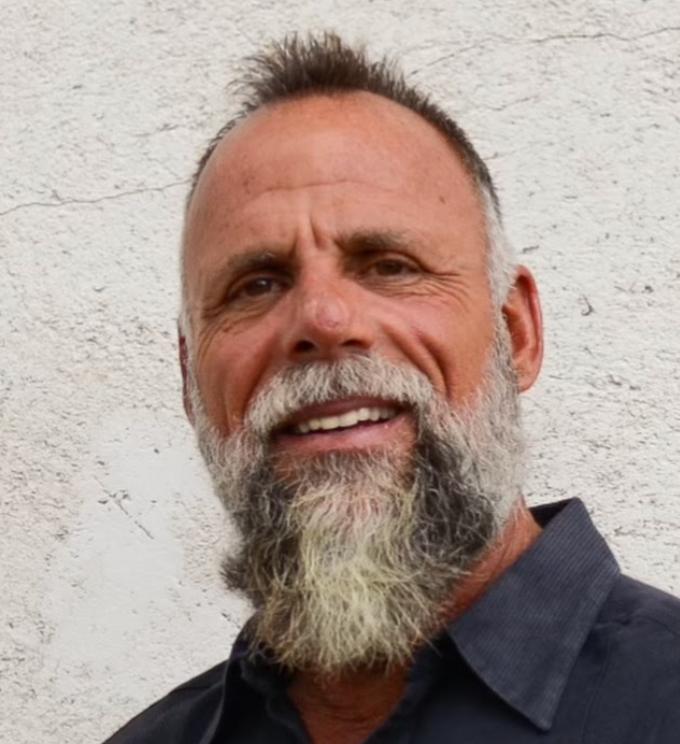
How does an angry, alcoholic, drug addicted comic "flip the script" and become one of the most talented "clean" comedians in America? Spoiler alert......God's fingerprints are all over this story.
Jeff Allen is one of the most sought after comedians, performing on stage, television, at corporate events and churches with his hilarious observational comedy. In the tradition of Cosby, Carlin, and Seinfeld, Jeff finds the humor in our everyday lives and leaves audiences doubled up in laughter. Marriage, children, careers...it's all the framework for his comedy routine.
His story begins with a life that would appear to be headed for a tragic tailspin and being a skeptic, finding God didn't seem remotely possible. But God does the impossible, and Jeff is proof of that. It didn't happen in an instant, in fact, it took several years, a few persistent angels and God's good grace for his reluctant breakthrough. #jeffallen #comedian #Drybar #cleancomedy #Christian #comedy #testimonials
Listen right here, right now:
Watch right here, right now:
In this Amazing Greats episode we are treated to his humor, his incredible turn-around story and an overview of his recently released memoir called "Are We There Yet". Take a listen and you'll learn to love this guy as he transparently shares his Jesus journey.

"Amazing Greats" is a library of interviews with highly successful people who have amazing career and life stories and who share how God has impacted their journey. Hosted by broadcaster Ric Hansen & produced by Klem Daniels. Available on Apple, Spotify, iHeart, Google and our YouTube Channel. Please help us grow our audience by "liking", "subscribing and "Sharing". Thanks so much.
JEFF ALLEN AT A GLANCE
Clean Comedian • Author • Storyteller • Addiction Recovery Advocate • Christian
Topics
Clean comedy • Addiction recovery • Alcoholism • Drug addiction • Marriage • Fatherhood • Faith • Atheism • Nihilism • Redemption • Purpose • Are We There Yet?
His Faith Journey
Angry comic → Alcoholism and drug addiction → Nihilism and spiritual searching → Bible tapes and Ecclesiastes → Encounter with Jesus → Marriage restoration → Fatherhood transformed → Christian comedian and storyteller
This Episode Explores
How Jeff Allen became a clean comedian
His early years as an angry, addicted comic
Alcoholism, cocaine addiction and getting sober
Why Jeff described himself as a nihilist
His search for meaning through self-help and Buddhism
How Phil Glasgow introduced him to the Bible
Why Ecclesiastes became pivotal in his faith journey
How becoming a Christian changed his marriage and family
The painful story behind Are We There Yet?
Jeff's transformation as a husband and father
The five questions he uses to examine his life
Why Jeff defines his identity first as a child of God
Questions Answered
Who is Jeff Allen?
Why is Jeff Allen known as a clean comedian?
When did Jeff Allen start doing comedy?
What happened during Jeff Allen's years of addiction?
Was Jeff Allen an atheist?
What did Jeff Allen mean by calling himself a nihilist?
How did Jeff Allen discover the Bible?
Why is Ecclesiastes important to Jeff Allen?
How did Jeff Allen become a Christian?
How did Jeff's faith affect his marriage?
What is Are We There Yet? about?
How does Jeff Allen define his identity and purpose?
What are the five questions Jeff Allen uses to evaluate his life?
What does Jeff Allen believe about finding meaning and hope?
Podcast Transcript: Jeff Allen on Comedy, Addiction, Faith, Marriage & Redemption
Amazing Greats with Ric Hansen
From Angry Comic to Clean Comedy
Ric Hansen:Good afternoon, morning, wherever you are, audience, and hello to my guest. It's great to have Dr. Dave Jones on our website today and on our podcast—
Actually, today we're talking with comedian Jeff Allen, who is in his fifth decade as a working comedian.
You may have seen Jeff on America's Got Talent, Dry Bar Comedy, HBO, Amazon Prime, PureFlix, Comedy Central, VH1, Showtime, TBN, CBN and numerous other television networks. He's heard regularly on SiriusXM, Pandora and Spotify, and he's performed for our troops on aircraft carriers and ships in the Indian Ocean.
He's also one of the biggest comedy sensations on Dry Bar Comedy, where his videos have surpassed 300 million views.
Jeff has produced a sitcom pilot for Castle Rock Television, appeared in Apostles of Comedy, and has written a new book called Are We There Yet?
Today we're talking with clean comedian Jeff Allen.
Jeff, you're known as a clean comedian—maybe one of the best-known clean comedians in the country right now. So what is clean comedy anyway?
Jeff Allen:I have no idea. It's like Christian music. I guess the notes are the same. I never realized they were different.
I started cleaning up my show when my kid got caught in fourth grade cussing at his teacher. My wife and I got called into the school, and they told us what he'd said. I said, "I'd love to look you in the eye and tell you I have no idea where that child heard that kind of language."
But the truth was, that's the way we talked around the house.
Driving home, my wife said, "That's a reflection on us, and it's not very attractive on a fourth grader. So we need to clean up."
I started paying my children a quarter for every bad word that came out of my mouth. That's pretty much how I funded their college.
It was interesting because my son said, "Well, I didn't mean it."
I said, "So what you're telling me is you have no control over what comes out of your mouth? Something pops in your head and it just has to come out?"
He said, "Yeah."
I said, "So if that was a six-foot-four, 255-pound linebacker, you would have said the same thing?"
He said, "Probably not."
And I said, "So you have control when it comes to self-preservation."
I took those words home and realized, I do have control. I just have to be conscious and aware of it.
Then it spilled over into my act because I'm a storyteller. I wondered if I could do what I do by taking out the language.
It was a fun process. I got really into words. I bought an SAT book and started playing with words. I even wrote a routine around the word "acquiescence."
I realized it made me much better at what I do.
When I got into the church market years later, I realized church people are used to listening to someone talk for 45 minutes without throwing beer bottles at them. They're also used to hearing metaphors and pictures painted with words. The Bible is very descriptive.
So it was a good fit.
And now, because of my faith, it's appropriate.
The Angry Young Comic
Ric Hansen:Let's start back when you were a young comic. There was a different Jeff Allen back then.
Jeff Allen:I wouldn't say dirty. I was just angry.
Ric Hansen:So you're a new Jeff Allen. There was this other Jeff Allen from long ago that went away and has been replaced by this all-new Jeff Allen we know today.
Let's go back to the dark side of your book, Are We There Yet? The book starts out pretty dark because your life was pretty dark back then.
What was going on with you as a 20-year-old?
Jeff Allen:At 20, all I wanted to do was party.
When the Illinois lottery came in, I was around that age, 20 or 21, and I told my friends, "If I win the lottery, I'm buying a silo full of cocaine."
That pretty much says everything about where my ambition lay.
When I started comedy in 1978, there were a couple of clubs in Chicago, but by 1980 the country exploded with comedy clubs.
I had two years to put together maybe 10 or 15 minutes of material, and I was able to hit the road 50 weeks a year.
There were more clubs than comedians who could fill the spots. It was a good time to learn the craft.
I don't think I could do it today, based on what I've seen and how much stage time young comedians can get.
I was awful when I started. Just awful. It took me a long time to develop the rhythm and timing that I have now.
Learning How to Be a Comedian
Ric Hansen:Did you have a feeling back then that you really liked telling jokes and making people laugh?
Jeff Allen:What's interesting is that when I started, I didn't know comics wrote things down.
I just started talking about my day, and I was bombing miserably.
There were nights I had terrible stage fright. The first three months I did it, the MCs couldn't leave the room because they didn't know if I was going to do five seconds or five minutes.
I'd walk up some nights, draw a blank, say, "I gotta go," and run off the stage.
Then I saw a guy writing in a notebook.
I said, "What are you doing?"
He said, "I'm getting my set ready."
I said, "You prepare this stuff?"
He said, "You don't?"
I said, "No."
He said, "Well, that explains a lot."
The first routine I ever got big laughs with involved my Volkswagen Beetle.
I had to park it on a hill because I couldn't afford to put a starter in it. I would roll it down the hill, pop the clutch and go.
One night it broke down on my way to a show. I had to run the last mile and a half to the club to get there in time.
I ran through the door, hit the stage and started talking about what a piece of crap this Volkswagen was.
The defrost system, because I lived in Chicago, was basically your breath and a rag.
I said, "If you're lucky enough to get the heater burning, it'll burn every hair off your right ankle. It's like driving with a blowtorch on the floorboard."
The horn didn't work either.
I hit it with angst. I hit it with anger. It just flowed out of me.
And halfway through I realized, They're laughing.
I walked off that night thinking, well, comedy is truth, for one. There has to be a kernel of truth in it somewhere.
And then there's angst.
And anger.
Boy, that's what I really tapped into.
Especially after getting married, I got really angry.
Then I quit drinking, and that took the cap off everything.
Club owners—even female club owners—wouldn't hire me because of the way I talked about my wife.
They'd tell my agent, "We like him, but I can't have him in here anymore, the way he talks about his wife."
It wasn't even so much dirty as it was that the attitude was vicious.
Alcohol, Drugs and Nihilism
Ric Hansen:In those early days, you were an alcoholic and a drug addict.
Jeff Allen:Oh, yeah. I tried to get sober at 25, but I was still doing cocaine at the AA meetings.
That's not a winning formula for sobriety.
I made about a year without alcohol, but I was still using cocaine and was just miserable.
I knew if I ever went back to a 12-step program, I'd stay.
It was five years later, when I was 30—I had just turned 31—that I got sober.
Ric Hansen:And you were an atheist at that point too?
Jeff Allen:Oh my gosh, yeah. I was a full-blown nihilist.
That was beyond atheism for me.
I lived what that worldview brought. I got to a point where nothing mattered. Nothing had any meaning to me at all.
I tried to find meaning in my marriage, my family, my career, but I couldn't see how any of it mattered.
I was confused.
I wasn't an educated atheist. I certainly didn't have answers for anybody.
Christians would come to me with pamphlets, and I'd crumble them up and throw them in their faces.
I was an angry, intimidating guy.
I was six-foot-two, scowling all the time.
I used to drink at a bar in Chicago every night, by myself. At some point I noticed that people would come in, not know each other, and within 10 or 15 minutes they'd be having conversations.
Nobody ever talked to me.
The bartender said, "You just look like you don't want to be talked to."
Ric Hansen:The air about you.
Jeff Allen:Yeah.
I met a guy who ultimately put the Bible in my hands. We were chatting on the fairway. He was a salesman.
He said, "You need to smile more."
I said, "Why?"
He said, "It's just kind of scary at times."
So I would go home and try to work on smiling in the mirror.
It was the strangest thing in the world.
Tammy and the Story Behind Are We There Yet?
Ric Hansen:Your wife Tammy is a key part of this whole story. Did she get a chance to edit the book before it went to publication?
Jeff Allen:We went through the last draft together.
I told her, "You need to be okay with my version of what we went through."
This was when we were about 31 to 39—an eight-year period.
The reason I wrote the book was for millennials. I wanted millennials who were looking at the materialistic worldview they'd been given for decades to ask themselves: How do you feel? Where are you at? Is it feeding you the way you thought it would?
And if not, there's another answer.
Tammy read the first two chapters and came to me and said, "I can't read anymore. We were horrible people."
I said, "That's the beauty of the story."
Andy Andrews, who wrote the foreword, really nailed it. He said, in effect, don't give up on the couple in the first part of the story. Hang in there, because eventually you meet the redeemed Jeff and Tammy.
Ric Hansen:Every time you tell that story now, is it like ripping the band-aid off the wound?
Jeff Allen:No. It's 30-some years ago.
Tammy pushed me for 10 years to write it. I kept saying, "It'll happen in God's time."
Had I written it six years earlier, before the Dry Bar phenomenon, it would have been different.
Dry Bar changed my life. It gave me a platform with millions of people seeing my comedy, and they responded amazingly.
The Story of the "Affair"
Jeff Allen:We spent three days and about 40 hours going through every line of the book.
One thing Tammy was adamant about was when I talked about her getting involved with another man.
The first chapter ends with her in California with another man while we're living in Arizona, and I called it an affair.
Tammy said, "Take that word out."
I asked why.
She said women would read the word "affair" and assume there was something romantic going on.
There wasn't.
She just wanted someone to be nice to her and not look at her with that scowl on his face.
She told me, "Jeff, you have no idea how many days and weeks you looked at me with contempt."
I couldn't hide it.
I learned in therapy that most human beings tend to seek externally what they feel internally—to justify it and validate it.
If you're full of contempt, anger and self-loathing, you're going to look for reasons to justify it.
I pointed at her.
Then I got involved in politics, and that was really easy. You can blame an entire political party for all the misery in your life, and it may make you feel good for a while, but it does nothing to heal the contempt and self-loathing.
Marriage, Expectations and Misery
Ric Hansen:You and Tammy got married young.
Jeff Allen:I proposed to her at Cleveland Hopkins Airport at the baggage claim after a red-eye flight.
It was an impulse.
If there's a young man listening to this, I don't recommend it.
I had no ring and no plan.
I'm not a planner. I tend to run by instinct.
When I was reading Buddhism, I remember the idea that your desires cause your misery.
My final chapter of Buddhism was that I couldn't get rid of my desire to get rid of my desires.
Ric Hansen:There's something to that.
Jeff Allen:I used to say my level of misery was directly proportional to the difference between my expectations and the reality of my life.
That's a good gauge for misery.
So I usually ask, what are your expectations?
If they're unreasonable, you're going to be miserable.
I love golf, but if I felt I should be a touring professional, I'd be a miserable human being.
It's better to put things in perspective.
The Search for Meaning
Ric Hansen:You went through a search for meaning that included self-help books, Buddhism and other things, but they didn't satisfy.
Tell us about that period.
Jeff Allen:I don't want to say it was vacuous and empty. There were times I felt fulfilled.
But looking back, I believe what I had was a spiritual thirst.
I believe 100 percent that we are spiritual beings temporarily housed in a body of flesh.
I'd read something or see something or hear something, and it was like being in the desert. You get a handful of water, bring it to your lips, and it quenches you for a moment. Then you're parched again.
That's what the search was for me.
It was almost as if God said, "I'm going to let you go down these paths."
I was very skeptical.
The Bible was the last thing I wanted to look at.
I opened it in hotel rooms, but I didn't understand it.
I really believe that without the Holy Spirit, the Bible is just a book. But when you have that encounter, it becomes something entirely different.
Jesus said He would send the Counselor, the Holy Spirit.
To me, that explains what I experience now as a Christian: the old nature that doesn't leave fighting with the new conscience.
The First Signs of Change
Jeff Allen:My father introduced me to Playboy when I was 12.
In our marriage, Tammy actually gave me a subscription to Playboy for Christmas one year.
That's where we were as a couple.
Then one day I got on my knees and said to Jesus, "I'm yours. I'm yours. I can't be a husband. I can't be a father. I can barely make it through as a comic. I'm done. Take me and do what you will."
The next day I went to buy the new Playboy.
For the first time in my life, I had a guilty conscience about it.
I was standing at the mini-mart, and it was as if an audible voice was saying, "You can't do this."
It was so foreign to me.
I walked out.
I didn't know what it was.
Later I read a verse that made me wonder if that was what I was experiencing.
Then our car broke down.
Normally that would have been an invitation for me to get angry.
But instead I looked at my son and said, "I saw a gas station about a mile back. Why don't you walk with me?"
Tammy looked at me and said, "That's it?"
They had all been bracing themselves for the coming storm.
I said, "I don't know why I know this, but mechanics pray too."
That wasn't a road-to-Damascus moment, but intellectually it told me something was changing.
Tammy saw the change too.
It took her a few weeks before she started coming to church with us.
Phil Glasgow and the Bible Tapes
Jeff Allen:My friend Phil Glasgow put the Bible in my hands.
He sent me Bible tapes and other materials, and we'd talk.
At the end of every conversation he'd ask, "How are you and Tammy doing?"
I'd say, "Not too good, Phil."
We weren't.
At one point we were 10 minutes from divorce court. We were going to file papers, and Tammy changed her mind.
We'd met young, married quickly and had children before we really knew each other.
It was a recipe for disaster.
Phil never pressured me.
He sent me tapes and a Bible.
Every couple of weeks I'd get a manila envelope with two tapes in it.
I'd throw them on top of the refrigerator.
Eventually they were all over the house.
For a year and a half, I never opened one.
Then Tammy took the kids for the summer.
I knew she wasn't coming back.
She gathered up all the tapes and threw them on the floor.
I said, "Just leave them there. I'll listen when you're gone."
A couple of days later, I walked by them and started arguing with myself.
I thought, "There's nothing in there for you."
But I eventually opened one.
It was Ecclesiastes.
It starts with the idea that everything is meaningless.
Is there a better book of the Bible for a nihilist to hear?
My heart leapt.
I thought, "God, that's so true. It's meaningless."
Then Solomon says the eyes never get enough of seeing and the ears never get enough of hearing.
I looked around at my video library and audio library and thought about our culture constantly saying, "Buy more. Eat more. Listen more. Do more."
It resonated with me.
The first sermon I heard was essentially this: life without God has no meaning. Without meaning, there's no purpose. Without purpose, you're spiritually dead.
I ripped open every envelope looking for more Ecclesiastes tapes.
To this day, it's my favorite book in the Bible because of its honesty.
Most Christians don't like it. They think it's cynical.
If I were king of the world, I'd make every incoming high school freshman study Ecclesiastes and have graduating seniors take a refresher before going to college.
Seven or Eight Years of Searching
Ric Hansen:That period of searching wasn't just a weekend or a week. Was it seven years or so?
Jeff Allen:Seven or eight years.
If God had sat me down when I walked into Alcoholics Anonymous and said, "This is what I'm going to put you and your wife through for the next seven or eight years, but at the end you're going to know Jesus and have a peace and understanding of the universe you couldn't imagine," I would have never signed on.
There's no way.
The AA program taught me one day at a time.
You look around and see people who are peaceful, content and happy, and their stories are the same as yours.
You go, "I almost killed myself with booze and drugs. I couldn't imagine a day without it."
And there's somebody sitting there with 20 years of sobriety, happy as a clam.
You don't have to make it alone.
You can lean on us.
That taught me something important:
Nobody does life alone.
Coming to Faith in Jesus
Ric Hansen:Was there a pivotal moment when you finally said, "I guess I believe in Jesus"?
Jeff Allen:Ecclesiastes got me into the Bible, and I dove into it with both feet.
I was listening to Bible tapes in the car. I listened to about a year and a half of tapes in two months.
I didn't have the TV on. I just had those tapes playing.
I eventually got a chance to meet Tommy Nelson in Denton, Texas.
I was like a fanboy.
Later I was at Phil's house, and after lunch he said, "When I met you, God put it on my heart that you were looking for something. Have you found it?"
All I could think to say was, "If Jesus is not who He claimed to be, then Solomon was right."
I wasn't suicidal, but I understood the spiritual death thing.
There was no life left in me.
So I got on my knees and said, "I'm yours. I don't even know what that means."
When I told Tammy I was a born-again Christian, she asked, "What does that mean?"
I said, "I don't know. I heard it in church one day."
Over time, I came to understand spiritual rebirth and the Holy Spirit through living it.
We've had some profound moments over the years where the only explanation I can give is that they were divine.
Tammy's Transformation
Jeff Allen:It took Tammy only a few weeks to begin coming around.
She had been married to me for seven years, and every six months I'd tell her, "It's going to be different, babe. I got it now."
She'd just think, "Okay, Jeff."
When she saw that I wasn't blowing up anymore, that I was asking about her life and her day, something changed.
I had told her I'd leave her alone.
I had gotten downwind from myself.
Every man has to ask the question:
Would I be married to me?
Becoming the Father I Wanted to Be
Jeff Allen:Stephen Covey wrote about imagining your obituary.
What do you want your children, your wife and the people closest to you to say at your funeral?
My first line was:
"I want my children to say he always had time for us."
And I broke down and sobbed.
That was such a lie.
Even when I was home, I wasn't home. My head was filled with things.
I told my children, "Be quiet. Stop bothering me."
Anybody our age who was a parent can hear Cats in the Cradle and not sob.
I'd hear it on the road and be driving through the middle of nowhere and just sobbing in the car.
Knowing what I was doing as a father was painful.
But things have changed.
Last summer we had all four grandkids visiting. They were between six and ten years old.
They were running laps around the living room and kitchen, being chased by the dogs.
Tammy walked over, kissed me on the top of the head and said, "My, how things have changed."
And I said, "Yeah. Isn't that noise wonderful?"
It breaks my heart thinking about how many times I told my beautiful children to be quiet.
Advice for His Sons
Ric Hansen:You had some great advice for your sons at their weddings. Could you share that?
Jeff Allen:I sat them down and told them, "I put things in you when you were too young to remember. Believe me, they're in there."
"Your wife will draw them out of you."
"There will come a point where you'll behave in a way that you think is unbecoming to who you think you are."
"It doesn't define you, but it's in you."
"And if you want to come and talk to me, that would be great."
My oldest son went to Iraq and came back with PTSD and TBI. His marriage was in trouble.
We went to my four-year-old granddaughter's dance recital, and afterward we came out to the parking garage.
My son was in the process of ripping the door off his minivan.
He's a big guy—an ox.
His beautiful wife never said a word. She let him go.
When he finally stopped, he was embarrassed and full of shame.
His wife walked over and said, "Aaron, why don't you go sit down and get your breath, and we'll get the door on and go home."
It still chokes me up.
I told Tammy, "Praise God for giving him that woman."
Because most wives might say, "Stop doing what you're doing. You're making an ass out of yourself."
That only escalates the anger.
And I know that because Tammy has told me for 37 years, "If you would just let me blow up, it has nothing to do with you."
I don't need a witness.
I can vent about the Chicago Bears all by myself.
Finding Purpose
Ric Hansen:You've found purpose. What do you consider your purpose, and what advice would you give someone trying to find theirs?
Jeff Allen:Everything I'm doing today, I was doing when I was miserable.
I was a comedian then.
I was married to Tammy.
I had children.
So what changed?
In the book I pose five questions that I need to visit at least once a month.
The first is:
What defines me?
Most men would say their vocation.
But if your vocation defines you, what happens if you lose it?
Today, I'm a child of God first and foremost.
I'm His son.
I was born and raised by Jack and Arlene, but I'm God's son now.
From that, I'm a husband to Tammy, a father to Aaron and Ryan, a grandfather to Evelyn, Vivian, Lydia and Caden, and then I'm a comedian.
Those five things get shifted in order.
When I get on the road and suddenly all I think I am is a comedian, things get out of whack.
The second question is:
What do I value?
My values have changed.
Today I value integrity over everything else.
To me, integrity means integrating how you live with what you believe.
The third question is:
What are your expectations?
We talked about that earlier.
It's important to understand whether your expectations are connected to reality.
The fourth question is:
What voices do you listen to?
We live in a noisy culture.
I'm a firm believer in garbage in, garbage out.
Pay attention to the voices you listen to.
And the fifth question is:
Where does your hope lie?
If your hope lies in a politician or a state institution, I don't know how you have peace because those things are constantly in flux.
If your hope is in something external or earthly, it's going to change.
I love the idea that in order for something finite to have meaning, it has to be attached to something infinite and fixed.
I believe that's God.
I cling to the words of the Bible that tell me this is not the end.
I'm a long way from sainthood, but it is my goal to pass on a name to my children that isn't "the town drunk," because I was the town drunk at one point.
I want lots of people at my funeral.
I want people who respect me enough that they'll pick me up and drop me in the dirt.
Final Thoughts
Ric Hansen:How can our Amazing Greats audience support you?
Obviously, buy the book.
Jeff Allen:Buy the book. That would be wonderful.
Ric Hansen:And buy the audio version too and read along with you.
I love the audiobook because I really got a feel for who you are. I've watched a lot of your YouTube videos and interviews, and you're just such a fun, funny example of how to live a life.
Thank you.
Jeff Allen:Thank you. That's a compliment. Thank you very much.
Ric Hansen:What a great guy. Hilarious Jeff Allen.
His clean comedy is his specialty, and you can find it just about everywhere.
Thanks for listening to another inspiring story of a life changed through the grace of God.
I encourage you to grab his book or the audio version of Are We There Yet?
His comedy is available through Dry Bar Comedy, SiriusXM and YouTube.
This is Amazing Greats.
Thanks for making us part of your podcast favorites.
And thanks to Clem Daniels, our producer.


Comments