
Father Harry: Odyssey of a rock and roll priest !
Updated: Sep 28

America's Rock and Roll Priest; Father Harry, and the God Squad radio shows have been listened to by hundreds of thousands of radio listeners on the ABC Radio Network nationwide. That, plus television shows, and a decade on Armed Forces radio make Father Harry the most listened to priest in history. After 57 years on the airwaves of America he has some amazing stories to tell. In this episode we'll hear some of them!
For Father Harry’s 28 Minute TV Mass go to www.FatherHarry.org
For Father Harry’s book “I’ll Never Tell: Odyssey of a Rock and Roll Priest”

FATHER HARRY AT A GLANCE
Catholic priest, longtime radio and television personality, and creator of Father Harry and the God Squad
Topics
Father Harry · Catholic priesthood · God Squad · Top 40 radio · faith and media · Armed Forces Radio · KFRC · ABC Radio · Dr. Don Rose · Merv Griffin · Paul Harvey · Rush Limbaugh · vocation · prayer · Pope Francis · cancer · ministry
His Faith Journey
Childhood faith → calling to priesthood → seminary and Rome → ordained in 1964 → decades of media ministry → prayer and service → cancer and deeper dependence on faith → continuing ministry after retirement
This Episode Explores
How Father Harry became a Catholic priest
The creation of the God Squad in 1968
Using popular Top 40 music to communicate spiritual messages
Why radio became a larger ministry than the classroom
His 20 years with Armed Forces Radio
His friendship with legendary DJ Dr. Don Rose
The trip to Lourdes and Dr. Don's experience there
Working with ABC Radio alongside Paul Harvey and Rush Limbaugh
Advice Merv Griffin gave Father Harry about being a priest in entertainment
The spiritual challenges of priestly celibacy
Father Harry's views on Pope Francis and mercy
His battle with colon cancer and how faith sustained him
Why people he encountered became the greatest highlights of his faith journey
Questions Answered
Who is Father Harry?
What was the God Squad?
How did Father Harry get into radio?
How did he combine Top 40 music with faith?
How long did Father Harry work for Armed Forces Radio?
Who was Dr. Don Rose?
What happened when Father Harry and Dr. Don went to Lourdes?
How did Father Harry become connected with ABC Radio?
What advice did Merv Griffin give Father Harry?
Why did Father Harry become a priest?
How does Father Harry describe his prayer life?
What was Father Harry's greatest faith challenge?
How did cancer affect his faith?
Core Story
Father Harry built an unusual media ministry by combining his Catholic priesthood with the language and music of popular radio. From the God Squad and KFRC to Armed Forces Radio and ABC Radio, he reached large audiences without wanting to be confined to a narrowly religious audience. Behind the colorful career was a lifelong commitment to prayer, helping people, and meeting people where they were. Even through questions about priesthood, celibacy, suffering, cancer, and unanswered prayer, Father Harry describes faith as something that continues to shape how he lives and serves.
Podcast Transcript: Father Harry — The God Squad and a Rock & Roll Priest
Amazing Greats with Ric Hansen
Welcome to the Amazing Greats Podcast, where we have a unique opportunity to talk with people you know from movies, music, sports, books, or politics. It's a real and raw conversation about their life, their career, and how faith has played a role in it. No preaching or teaching, and no church experience is required.
Today, join your host, a radio veteran for over 30 years from Seattle. Here's Ric Hansen. Buckle up, and here we go.
Meeting Father Harry
Ric Hansen:Hey, thank you, Joe Michael.
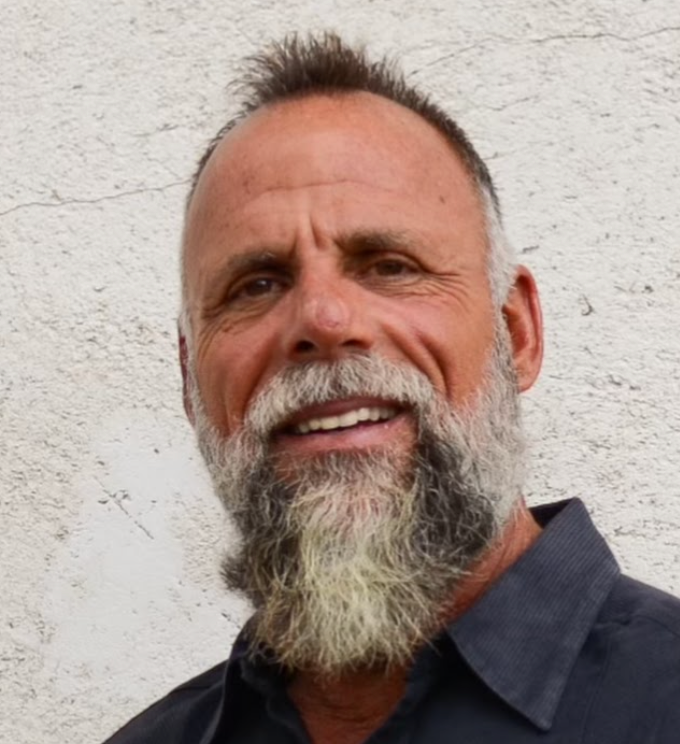
Ric Hansen here, and I have the distinct privilege today of spending some one-on-one time with Father Harry. Some may know him as Father Harry of the God Squad. He was on TV and radio for many decades.
Father Harry has this amazing ability to tell some wonderful stories, and he's been doing it most of his life. And now we get to hear some of those stories here on the Amazing Greats Podcast.
So welcome, Father Harry.
Father Harry:Well, thank you, Rick. And when you said I've been telling stories, I do try to tell the truth.
You know the difference between a lie and the truth. The truth starts, "Once upon a time," and a lie says, "You've got to believe this."
From Small-Town Missouri to Rome
Ric Hansen:Back to the beginning. You were described as a precocious child who came from a big family in a small town in southern Missouri along the Mississippi River.
You were born Harry George Schlitt. You're a natural athlete, a thespian, and an all-around good guy.
And in a remarkable twist of fate, you found yourself transported from rural America on a full scholarship to Rome, where you were ordained a priest. This was back in 1964.
So, as a young and charismatic priest, you started out your ministry in the pulpit, but you quickly moved to the airwaves of America.
Your first broadcast gig was as a disc jockey on an AM station in the Ozarks, and then to Chicago's legendary WLS television. You were on FM stations in Las Vegas, and then every leading radio station in San Francisco, and 20 years on the Armed Forces Radio and Television Network, and ultimately the ABC Radio Network as Father Harry and the God Squad.
You've written thousands of radio scripts and television monologues and more sermons than you can count.
Father Harry arguably has touched more lives in the media than any other Catholic priest. A bold statement.
He's now retired as a Monsignor, Monsignor Schlitt, from the Archdiocese of San Francisco after 57 years of priesthood.
Retired, yes, but not really. Because Father Harry wrote his tell-all book called I'll Never Tell: An Odyssey of a Rock and Roll Priest, and he continues his media work on television doing Sunday Mass every Sunday.
What a great story that is.
So tell us. You were Father Harry and the God Squad. Now, how in the world did that come about back in the early days of your career?
The Birth of the God Squad
Father Harry:Well, the God Squad came, Rick, from—you remember the television show The Mod Squad?
It was in the late '60s, and I was on a radio station, KICK, Kickapoo Broadcasting Company, where 5,000 watts sounded like 50,000.
At that time I called myself the "Mass Media Minister," with much more music in my message, moving my mouth to motivate you for more of I'll Never Tell. That was the name of the show.
There was a disc jockey there named Dick Jackson, and he started calling me the God Squad after The Mod Squad.
So I had it chartered and tried to get all the legal things on it, but you can't really have copyright on the word "God." And as a priest, it seemed pretty silly.
Once the God Squad went out, there were motorcycle groups, teenage clubs in high schools, and all kinds of people using the God Squad.
And fine, you know, it worked. I just kept using it myself, and it worked for me.
I began that in 1968 at this KICK station in Springfield, Missouri.
Then a guy who worked for ABC—and Pepsi-Cola was his account—got stuck in Springfield on Ozark Airlines. The plane went down, and he heard me on the radio.
He called and said, "Father Harry, can I talk to you?"
So I talked to him a little bit on the air, and then he came by to see me.
A week later, I was in a board meeting in New York City with the owner of Pepsi-Cola, whose name was Joan Crawford, and they wanted to make me the Pepsi priest. All I had to do was go around the schools and colleges and say, "You've got a lot to live, and Pepsi's got a lot to give."
That was their slogan at that time.
Ric Hansen:Yeah, I remember.
Father Harry:So that's how the show got popular pretty much in the late '60s.
Turning Top 40 Music Into a Spiritual Message
Ric Hansen:I became aware of you when I was a rock-and-roll DJ at a radio station in Seattle called KJR, which was kind of the equivalent of KFRC.
Everybody in radio knew that legendary radio station in San Francisco, and that's where I first heard Father Harry and the God Squad in a very unique way.
A lot of people, when they think of religion and media, jump right to televangelists or somebody who's a faith healer.
But you were none of that.
You were reaching out to a young audience on a Top 40 radio station with an interesting message.
I thought what I'd do is play you one of the episodes from your KFRC days. Then, now that people will be up to speed on exactly what you did there, we can talk a little bit about that.
Radio Spot:KFRC presents Father Harry of the God Squad.
Remember when jokes were funny? Or funny strange? You didn't know whether to laugh or feel sorry.
Are some of your friends like that? Strange, I mean. What is behind the mystery of this live encounter with a weirdo stranger?
I found the word xenophobia—fear of strangers.
Remember, we're loved. Only you can prevent strangers from making friends, making life easier for everybody.
Radio Announcer:Father Harry of the God Squad. Father Harry of the Archdiocesan Communications Center, San Francisco. Public service presentation.
Father Harry:There you are.
So, Rick, I have to tell you, I was not able to hear it on my end.
Ric Hansen:Oh, you weren't? Okay.
Father Harry:Here's the big question that I would say to all the teenagers: Rick, what was it really about?
Ric Hansen:Oh, what was that show really about?
Father Harry:What was the spot about?
Ric Hansen:It was talking about weirdos and xenophobia.
Father Harry:Uh-oh.
Ric Hansen:Yeah, and the song behind it.
So the cool thing that you created was taking a secular Top 40 song and applying some meaning to it—some spiritual meaning to it.
That was kind of your whole shtick, right?
Father Harry:Yeah. It was extracting two or three words or a phrase out of a popular song and using the background music as well.
When I started on the radio, I started telling stories, and the disc jockeys would say to me, "Your stories are good, but this is a music station. We need to keep with the music format."
So one of the guys took the time to teach me how, at that time, we used to cut the tape.
Ric Hansen:Yeah, actually—snip, snip.
Father Harry:Yeah, snip, snip, and put it in.
You know, now everything is digital, so it's real easy to do now. But when I started, you had to snip and then put a piece of tape on there and insert it into your spot.
Anyway, the guys really helped me by influencing me to put the music into my stories.
So that's when it really took off.
A Ministry That Could Reach Thousands
Ric Hansen:Tell me, was there some kind of divine intervention that may have occurred?
Was this a flash of realization that this would be a great thing to do? Or was it something that grew out of a variety of things?
How did you feel like—I guess the word is called—how were you called to produce a show like this?
Father Harry:Well, I was teaching in a high school and I was a guidance counselor.
I was teaching religion in a Catholic high school and also Latin. I had maybe four classes of 25 or 30 kids in a class.
I was popular with the kids, and I went out and spoke at a public high school. One of the girls in the audience came and told her dad, who was the general manager of the radio station.
She said, "This Father Harry is really good. The kids love him. Why don't you have him do something on the radio?"
So that's when I began.
And when I got more popular, I realized that teaching in a classroom to a hundred kids a day, I could go on the radio and talk to thousands of kids.
Ric Hansen:Yeah.
Father Harry:And in Springfield, Missouri, there were five Bible colleges.
The biggest one was one of the major Assemblies of God institutions there. They had produced a whole bunch of televangelists.
So, working on the radio live, I would get these kids who had studied Scripture for about a month, and they were telling me what all this meant in the Bible.
I had studied it for eight years, and I realized how much I didn't know.
That's all I knew. I knew that she had to speak several languages and be able to get inside the words and what they call in German geschichtlich, which means understanding the milieu and the culture at the time when it was written.
But I loved talking to those kids because you could never get angry at them. When you disagreed, you couldn't say, "Oh, you don't understand. You're stupid."
You couldn't do any of that.
You just had to let them emote, and they were on fire. They wanted to be ministers, and they felt the Scriptures as much as I knew I didn't know about the Scriptures.
Anyway, that's just a little example of how I felt that this was going to be a real ministry for me, working on the radio, because I could reach so many more people than I could just teaching those classes.
Ric Hansen:And the message was so relevant. When you can tie it in with something they're already familiar with, what a great combination to share the gospel.
The Music Library
Father Harry:I even have now maybe four or five radio stations—I don't even know where they are—but I've still been sending out these spots.
I said this to these different guys, and you know, the music's old and all of that.
He said, "Yeah, but we're getting response because a lot of young people haven't heard that song or this song."
There's so much music now that doesn't have the lyric that you can really understand.
Simon and Garfunkel were the poets of music like that.
Kenny Rogers—when they sang a song, you knew what they were talking about.
I really got drummed out of the core of popular music.
Well, first disco. When that came along, that ruined the lyrics. They were the same for about six or eight minutes.
Ric Hansen:What kind of a backlog do you have of those shows that you're still sending out from time to time?
Do you have how many in the bag to draw from?
Father Harry:Well, I used to do a hundred spots a year, and that would be 25 for every season: spring, summer, winter, fall.
There would be four CDs, so you could get a year's worth by just getting the four CDs. They'd each have 25 spots.
Billboard Personality of the Year
Ric Hansen:So during all of this, you were in your late 20s, early 30s-ish. You were still a young man for the most part during that period of time.
And you actually were named Billboard magazine's Personality of the Year at one point.
Do you remember when that was and what kind of an honor it was?
Father Harry:It came from—I had started—there was a disc jockey named Bill Stewart, who was retired, and he was much older than me.
He had a thing called Music in the Air, and he hired me to do a show for TWA.
TWA—Trans World Airlines.
Ric Hansen:Okay.
Father Harry:Father Harry and the God Squad.
It was a powerful tool at that time. There was no video on the airplanes, so people listened.
You could talk about going away from home, going on a trip, meeting your loved one, saying goodbye.
There were so many beautiful themes and so much great music that you could play.
The program was an hour called Love Notes for Listeners, and I guess I played seven or eight recordings and talked a little bit in between them.
That became very popular.
Bill Stewart had been nominated for the Billboard Award, and he introduced me to Billboard. That's how that award came about.
Twenty Years on Armed Forces Radio
Father Harry:I was working for Armed Forces Radio, and I had the number-one show for 18 out of the 20 years that I worked for them.
The competition was in the religious category, but most of the competition were preachers.
I geared my show with music to the 18-to-35 group.
I used to ask the commanders, "What do you want me to talk about?"
And they said, "Just tell them not to lie, not to cheat, and not to steal."
A lot of kids join the military to get out of the ghetto and to get away from home, and they didn't know that it was wrong to lie if you could get away with it.
They didn't know if you got in somebody else's locker and stole something, you'd get beat up.
But that was it. It wasn't wrong if you got away with it.
So the command—I kept it very simple.
I didn't do a—you know, someone said, "Well, how can you be in the religious category if you didn't do Scripture?"
I said, "Well, I did Scripture, but I didn't talk or read the Gospel and then quote Corinthians and all of this."
I let the music do that for me.
Anyway, those basic things about stealing and lying and cheating were what I geared my show on.
Ric Hansen:Was that like an hour-long show?
Father Harry:Yeah, it was an hour long.
They put it on long-play discs, and when I finally retired, they were sending it by satellite.
But I collected those 33 LPs. You remember those, Rick? If you have ten of them, they can be pretty heavy.
So I had almost a thousand of those.
Ric Hansen:Oh my goodness.
Father Harry:I had a couple of fundraising dinners, and I put them on the table as—you know, instead of a napkin, I used my records.
Then people took them home as souvenirs or garbage or whatever.
Anyway, I still have a few, just for nostalgia.
Father Harry and Dr. Don Rose
Ric Hansen:So your time at KFRC—you worked a couple of stations in San Francisco, but KFRC was maybe the most vibrant, nationally known radio station.
You became friends through your association with that radio station with the morning man, who, as a radio guy, I'm sure a lot of people on the West Coast remember.
His name was Dr. Don Rose.
He did the morning show at KFRC and was a legend. Everybody knew Dr. Don Rose.
At one point, you and he went to France. It was kind of a promotion, right? To the healing waters.
Tell the story.
He had a bad leg, right? Let's start with that. He walked with a crutch or a cane.
Father Harry:Yeah. He had fallen in Philadelphia while working there, and they did surgery on him and ruined his knee.
In one leg, he could not bend the leg. He had no bend at the knee. It was stiff.
Because of that, he would slip and fall a lot.
He slipped on a plum outside KFRC one morning getting into his limo, and that really set him back. They were going to amputate his leg.
So he had heard about Lourdes, which is in France.
Bernadette Soubirous was the little girl associated with Lourdes, and there have been reports of cures there over the years.
He wanted to go there.
I said, "Well, you know, I'm really not much on miracles, Don."
But he said, "No, no. I believe that something could happen."
So his family and I went to the TV station. I was doing something at KRON TV then, and I said, "Why don't you guys follow us over and video it?"
Because they wanted to get Don on television. He was, as you said, popular all over the country.
In fact, at that time, I think he was the highest-paid radio personality in the country.
Everybody wanted him to endorse their product.
Anyway, we went over there and did the show.
He felt a white light. He felt something amazing.
Ric Hansen:So just a quick pause.
For people who don't know, these are known as the healing waters. People go from all over the world to Lourdes.
Father Harry:It's Lourdes, and as you said, millions go there.
They go into the water and take a bath, say a prayer, and come out.
He felt this overwhelming, warm feeling.
Because Don was a very emotional guy, and I'm not, I said, "Okay, Don. Yeah, yeah."
So he hands me his crutch and says, "I don't need this anymore."
Then we got back, and of course KRON aired it on Christmas Eve at nine o'clock in the evening, prime time.
Don was on the golf course with a club, putting on the green at the conclusion of the show.
Then he won his lawsuit for his bad surgery in Philadelphia on his knee and got several hundred thousand dollars.
He bought a boat.
He's originally from Nebraska, and he got a big sailboat, a 38-foot—I'm a little off on the name.
Anyway, the next venture is he wants to sail to Hawaii.
So he names the boat First Class Miracle.
A year later, six of us got on that boat. We went 17 days, nine hours, and five minutes from San Francisco down here at the wharf, and we landed in Hawaii.
Man, it was quite an adventure.
He said he took me along for insurance in case the weather was bad or we got into pirates.
But Dr. Don had a wonderful life. He raised a wonderful family.
I still keep up with him and his wife, Kay.
Ric Hansen:Very cool. And he's been gone for a while now, several years, right?
Father Harry:Ten years, maybe a little longer.
ABC Radio, Paul Harvey and Rush Limbaugh
Ric Hansen:You mentioned Armed Forces Radio, and the show on Armed Forces Radio is called Love on the Rock.
One of the big breakthroughs for Father Harry and the God Squad was when ABC Radio Network picked up your show.
Was that around 1983?
Father Harry:Yeah, 1983 or '84.
I was actually living in New York at that time, so I got to know all those people fairly well, and they were a great support.
They signed three of us on the same day.
The first one was a real radio giant named Paul Harvey.
Ric Hansen:Oh, I remember him.
Father Harry:Paul Harvey.
The second one was a young upstart, a conservative Republican from Missouri as well. He's still on the air.
What is his name?
Ah, it'll come to me in a second.
And then the third one was me.
I was the only one who didn't get paid.
These other guys made a ton of money.
Rush Limbaugh.
Ric Hansen:Oh, that really was the third guy? Oh my goodness.
Father Harry:He was a youngster from Sacramento then, and they made him a star.
Ric Hansen:And you did your show pro bono?
Father Harry:Pro bono.
But it gave me a lot of speaking engagements and opportunities to go into colleges and schools and talk to young people.
Ric Hansen:So at that point, that was your first national kind of exposure, right?
You were on radio stations wherever ABC Network was. They could run—and many times did run—the show.
Father Harry:Yeah, right.
Ric Hansen:Was that patterned after the KFRC kind of show? Was it a 60-second spot?
Father Harry:It was those spots.
I recorded them in a studio in New York that was very popular with many big stars.
The Beatles recorded there at one time.
I would go in there to do my little show in the back studio, and I'd look out and see people that I saw on television.
I'd say, "I know that guy," or, "I've heard that woman sing before."
"Oh, that's Diahann Carroll."
Or different people like that.
I can't even remember the names, but it was exciting for me.
The Rap Experiment
Ric Hansen:There was a time—you mentioned you'd kind of alluded to your bowing out when rap music came out—but you did do a rap song, didn't you?
Father Harry:I did a whole album.
I did a CD.
I thought this was something that was going to be popular, and because I only thought I had a good voice—I could sing, but I can't sing like a professional.
But I can talk, and I had all these lyrics.
I can't do any of them for you now, but I had this CD I called IWW: Information, Wind, and Water.
The reason is my dad, when I was a little kid, I worked for him. He owned a garage.
A guy would bring an old broken-down car in there and say to my dad, "Fix her up."
Then my dad would tell him what needed to be done, and he'd say, "That's too expensive," and he'd push it out.
So my dad called those people IWWs.
They just wanted information—free information—what was wrong with their car. Then they'd tell you how they could fix it themselves if they had time.
So there was the information, then the wind, you know, the blowhard, and then they'd go over to his water cooler and drink all his cold water and leave.
Ric Hansen:That's great.
Father Harry:Information, Wind, and Water. That was the title of it.
It wasn't very successful, but I learned a lot doing it.
Bill Graham and Merv Griffin
Ric Hansen:There are a couple of other names that came up in your book.
Over the period of time that you were in the media, there are some great stories.
One of the people you met was Bill Graham.
I have to say, this is not Billy Graham. This is Bill Graham, who was probably the biggest rock-concert promoter in the world at that time.
Father Harry:Yeah.
Historically, he's still up there.
The name that he had—entertainers would come off the wall to be part of his team.
If he signed you to do a concert or something, it was going to be a success.
He was very good.
He listened to Dr. Don a lot, and he heard me on the radio, so he knew who I was.
To go into his office and see all those gold records and pictures of him with groups like Journey and REO Speedwagon and so many great music groups that were successful because of him—it was something.
He was very Jewish and used to make a big deal out of it.
"You know, I'm Jewish," he'd tell me.
I'd say, "Well, I'm Catholic."
And he said, "Well, we can still work together on this."
Ric Hansen:And how about Merv Griffin?
Father Harry:Oh, Merv gave me the best advice in the world.
Merv was a true friend.
When I came to California in 1972, I stopped and I had been on this television show in Chicago, so a lot of people knew me.
Merv knew me and wanted me to come and visit with him. He said, "You might want to be on the show."
So I drove from Missouri to Las Vegas, where I met him again, and then I came to Los Angeles.
I wanted the job to warm up his audience.
I wanted to make a few bucks so that when I came to San Francisco, the group I was working with, I could say, "Look, here's $10,000. I'm coming into the group and I want to show my good faith."
So I asked him if I could warm up his audience.
At that time, I thought I was pretty funny.
And I wasn't a professional.
He sat me down and said, "Harry, I get about two or three calls a week from professional comedians. Rickles, Joey Bishop, Steve Martin, all of these people. They all want to do what you want to do."
And he said, "They're all professionals. None of them can do what you do."
He said, "You are a priest."
He said, "You can take bread and wine and make the body and blood of Christ, you can hear people's confessions and forgive sins. Now, why in the hell would you want to stand up there and make jokes? Because you're not a professional."
I wasn't hurt, but I thought, "Well, that's pretty good advice."
And I took it to heart.
I think it's in my book as well.
I'm telling that story because Merv became one of the richest people in show business because he owned all of those game shows.
Ric Hansen:Yeah, a lot of people know him as a show host himself, which he was, but he masterminded all of those game shows back in the day.
Father Harry:He had a producer named Murphy who was a really good friend, and another friend he had who worked with him was Arthur Treacher.
Do you remember that name?
He was a big British comedian and stand-up guy.
Anyway, he was funny.
There are a few stories. I don't need to go into that.
The Calling to Become a Priest
Ric Hansen:Let's jump back to the beginning.
I think not only do you have a really wild and interesting career in media, but I think a lot of people have questions about the concept of becoming a Catholic priest.
How do you make that decision?
Is it a call? Is it literally a calling where you're called to do this?
I'm interested in how all that came about because you were a young man at that point.
Father Harry:After 57 years, I would do it all over again.
But when I was 10, I saw a movie about a missionary working in Africa, and he was helping people.
It so impressed me that I thought, "Helping people is a good way to live your life."
I kept that in the back of my mind.
As I got to be 13 or 14, in the eighth grade around there, I told them that I'd like to be a priest.
They said, "Why?"
I said, "Because I really want to help people."
And a priest told me, "The best thing about it is you never have to go to work because work always comes to you."
As a priest, you know, the knock on the door:
"Father, can I talk to you?"
"Father, will you do this or that?"
You don't even ever have to retire.
As you said at the beginning, I'm still working.
I see a lot of people for counseling.
The main reason—I was obviously too young to know what it would entail.
But at 14, I went off to the seminary.
Four years of high school, four years of college, four years of theology in Rome, and then another two or three years for a master's degree in education.
I was a guidance counselor.
I never finished the communications degree.
But in all of those years, it was the simple thing of praying and asking God to help you one way or another.
I've still got a strong prayer life.
I love not to spend hours and hours and hours, but I love to pray. I love to meditate. It keeps me balanced.
And I love people.
When you can help people out, especially now that there is so much suffering going on, it's just really, really important to me.
I noticed that you asked me in one of your letters about when I first met Jesus.
Raised in a Catholic home, we prayed, we said prayers, we went to church.
But I never really met Jesus, so to speak, until I was in the second grade.
There was a religious woman named Sister Mary Christie, and she said, "When you take the bread and communion, this is really God, and you say, 'My Lord and my God.'"
I still do that after all these years.
I'm coming up to 82, and that is where I met Jesus.
I didn't shake his hand, or we didn't go out for a Kool-Aid or anything, but I really felt that God was going to be part of my personality and godliness was going to be something that I'd be interested in.
When I went off to school, one spiritual director told me—I said, "How do I know I've got a vocation, a calling?"
And he said, "As long as we don't throw you out, you'll be okay."
Prayer and Reaching a General Audience
Ric Hansen:Do you still consider your prayer life to be a continuing communication with Jesus?
Father Harry:I do, but I don't use the word Jesus very much, even in my meditation and my prayer.
I use God.
I've been working all those years in radio, especially with Armed Forces Radio. You couldn't, if you said Jesus, you were a Christian.
I had followers from all kinds of faith denominations.
Even today, for the last ten years, I've given the invocation and the benediction at the Academy of Art University.
Eighty percent of their students come from the Third World or from Asia and the Pacific Rim, and they're not Christian.
They have different ways of celebrating their belief and their faith.
So I have to be very careful using the word Jesus.
I learned that working on the radio.
I didn't want to be earmarked way back in those years in Springfield with those Bible colleges.
They would have meetings that they called Jesus conventions or something like that, and they would invite me to speak.
One time I went and the host was Pat Boone.
Some of your audience won't know who Pat Boone is. They wouldn't even know who Debbie Boone is, but that's his daughter.
Ric Hansen:That's true.
Father Harry:Pat Boone had these white shoes, and he was a wonderful, wonderful man.
After I spoke, he said to this group—there were probably a thousand kids there, young adults—"Let's go. It was at the Howard Johnson Motel. Let's go down to the pool and baptize Father Harry so we can be reborn again."
And, you know, it was like they were going to haul me off to the pool and dump me.
I said to Pat, "Oh, you know, I've already been baptized, and I think it took."
I kind of waved to everybody, walked off the back of the stage, got in my car, and went home.
Evangel College.
But, you know, I'm getting off the track.
If you're going to be a good one, you're going to have a general audience, which I never wanted to be tagged as, "Here's the Jesus guy," or, "Here's a Catholic. He doesn't accept anything else."
I wanted to be a man for all seasons.
I knew I could never be what St. Paul says, you know, he's going to be part of everybody's life.
It's impossible.
But at least you could take a stab at it if you're going to be on the public airwaves.
Ordination, Vatican II and Celibacy
Ric Hansen:When you were ordained in Rome, one of the things I got a kick out of in the book was what you thought.
You were totally convinced that with the progression of the Catholic Church, you would be able to marry as a priest.
You were convinced that was going to be a part of it down the line, right?
Father Harry:Right.
Boy, was I wrong.
There was a council called the Ecumenical Council, and it was all during the time when I was a student in Rome.
The bishops from all over the world put together these documents.
They changed the language where we could read Scripture.
We used to read the Scriptures at Mass in Latin, and now it's English.
The Mass, our formal worship, is now in English.
Many of us who were students at that time thought, if they could change the liturgy or the way our worship is done, surely they're going to invite priests to be married.
I always thought that five minutes after I died, they'd come up and say, "Oh, St. Peter was married."
Yeah, of course everybody can be married.
What's the problem? It's in the Scriptures.
He went and cured his mother-in-law.
There's no—it’s only a tradition. We can break tradition.
But that, again, will happen about when they put the lid down on my coffin.
Ric Hansen:Celibacy is a challenge in your profession and sometimes a roadblock for otherwise very spiritual and Christian folks who just don't go there because they don't want to make that celibacy pledge.
Were there times in your life that there were second thoughts about that?
Father Harry:Yeah.
About every time I'd see a pretty girl walk down the street, I'd have a second, third, and fourth thought.
No, I think I have to give credit to people who were my spiritual directors and guiding me and saying, "Don't look upon this as a temptation for bad or evil. Look upon it as a challenge for your own personal growth in spirituality."
You've made a sacrifice. Look upon this as a spiritual sacrifice.
And it's not, "Oh man, I'm this virgin type."
That's not virtue at all.
That's pride coming out in a different form.
It's false humility.
So I had to deal with that, and I had to deal with some relationships I had with women.
At one time I was a handsome young man, and I attracted people.
Then I had to make decisions along the way.
Again, I think people who came into my life—prayer partners and others—would influence me.
I never really had to say, "Okay, I'm going to give this up because I want to be married."
A lot of my classmates that I studied with in Rome did.
They're married today.
When we have our reunions every five years, five or six guys bring their wives, and they were in the same class, the same boat I was in Rome.
Father Harry on Pope Francis
Ric Hansen:Toward the end of the book, too, speaking about loosening and changing things along the way in the Catholic faith, you spoke very highly of Pope Francis.
You really seemed to like him a lot.
Tell us about Pope Francis.
Father Harry:I'm big on mercy, and he has used that phrase during his papacy more than any other Pope.
Mercy has to do a lot with feeling, and mostly with forgiveness and acceptance of the poor and those who've not had the same kind of feeling.
Just as you've probably noticed, when he was on an airplane one time on one of his trips, one of the reporters asked him about gay Catholics.
He said, "We have to reach out to everybody."
And he said he'd be the last one to condemn someone because who knows all the exact reasons why a person chooses—or, in most cases, they don't choose. The chemistry is there, and that's who they are because that's who they are.
You can't go in and make somebody else out of someone.
In the general population and our general thinking, these are all human beings just like we are, like I am.
Pope Francis wanted to reach out to that group.
He wanted to reach out to many, many others because he would be known as a merciful leader, a merciful Pope.
Whereas some of the others would be known for keeping the laws, not making any changes, doing things exactly the way they did them years and years and years ago.
So that tradition is stronger.
The Future of the Priesthood
Ric Hansen:Didn't he just recently name, for the first time, an African cardinal? Is that what I heard?
Father Harry:Well, he's African American.
We've had a lot of African cardinals, but this was African American.
This was a USA-born-and-bred—I think in Belleville, Illinois, but that's probably not correct.
Ric Hansen:Do you think it would be Francis that would—because he's on the liberal side, and the other, I guess, would be considered more conservative.
Is this the Pope that's going to liberalize marriage, do you think?
Father Harry:Well, he hinted to that because in his own country, Argentina, there are missionaries who work back in the jungles and out of reach of reporters and newspapers.
And particularly in Africa, a person who is African and celibate is not regarded as a full human being in some tribes and some groups.
So it's not a spiritual gift among them as it would be, as I had said to you earlier.
Celibacy is a spiritual gift that you follow, and in most cases you make the sacrifice.
Among some cultures, if you're not able to father a child or you don't have a relationship with a woman, there's something wrong with you that way.
So I don't think he'll do that because he's, well, I think he's 87 or 89.
It'll probably be a Pope who comes from Africa or some other country, rather than Europe or the United States or Australia.
It'd have to be somebody from South America, maybe somebody who has seen how these guys work in the missions and how it would be so helpful if they had a partner.
The Greatest Highlight of His Faith Journey
Ric Hansen:Most of our guests on this Amazing Greats Podcast tend to be people with secular lives but have a very interesting spiritual story.
You're the flip of that.
You're known for your spiritual life, but have a very interesting secular story.
So I have just a couple of final questions for you.
Can you share with us your greatest highlight of your faith journey?
What would you say the greatest highlight of your faith journey might be?
Father Harry:Let's see.
I think it's the people that have come into my life.
We all live, I think—at least most of us live—by good example.
Or you see something in someone else that you say, "I'd like to be like that guy."
Or, "I'd like to have the patience that woman has with her children in my own life, with people that I have to deal with."
I think finding and being around people who give off and reflect the image of godliness has been the most important part of my faith journey.
His Biggest Faith Challenge
Ric Hansen:What about your biggest challenge along the way in terms of your faith journey?
Father Harry:Yeah, I think eight years ago I had fourth-degree colon cancer.
They basically said, "This—you may not make it."
So they did surgery, and the doctor who did the surgery said, "You're going to be all right. I got it all."
Then I had to go to a specialist, an oncologist, and he said, "Oh no, no, we didn't get it all. You're going to have to do six months of chemotherapy."
During that time I was sick most of the time.
Every third week you have to go in and have this put in your veins, and then I had to carry around a canister of it.
I went in on Monday, got it through a port in my neck, and I carried a can around until Thursday.
It's basically poison. You're being poisoned slowly.
Then you get ten days, not quite two weeks, to recover, and then you go back and do it again.
Six months of that is really tough.
But I met a lot of people.
And again, in the hospital and in the surroundings, if you meet someone who doesn't have faith, you say, "How do they get through these things?"
The Russians said religion is the opiate, the drug of the people.
You could look on it that way.
But I always look, because of my faith, and say, "Even if I die, I feel like I'm going to go to heaven. I'm going to be rewarded for the work that I've done, for the ministry that I've been involved in."
So it's not such a bad deal.
But the challenge is to look upon people that don't have that.
They can collect Mercedes and big houses, and is that all there is?
I don't think that's it.
As the guy told me one time, there was an atheist in the funeral home laid out in the coffin, all dressed up and no place to go.
That's atheist, Rick.
Atheist, no place to go.
Ric Hansen:I love it.
There's a story about—I think he would have been great as a warm-up guy for the Merv Griffin show, if you ask me.
"Where Are You, God?"
Father Harry:Here's a good story for you.
This Jewish rabbi in the concentration camps, when they were exterminating the Jewish people, every Saturday he would come to the service and say:
"Oh God, Master of the universe, here we are."
And then the week after that, there'd be less and less because more were being exterminated.
Finally, to make the joke or the story short, he says:
"Okay, God, Master of the universe, here I am."
Then there's a pause, and he says:
"But where are you? God, where are you?"
A lot of people during this time of suffering with COVID are saying that same thing.
"Where is God?"
And I've been praying.
So you'd ask me about a challenge in my faith or my prayers being answered.
Well, they're not being answered according to the way I want them answered.
But that's not going to stop me from praying and from living my life the way I do.
Because I know God is there.
The Books
Ric Hansen:Fantastic.
I really appreciate the time we spent together.
It has just been a pleasure.
We want to talk about the book because you have a book on hand to show us there.
He tells it all in the I'll Never Tell book, and the subtitle is An Odyssey of a Rock and Roll Priest.
It's available on Amazon.
I got it on Kindle, which was very good.
Now, did I read somewhere where you're either thinking about or have designs on a second book?
Father Harry:It's already written.
It's called I'll Never Know.
I-N-K.
I'll Never Know.
The second book is I'll Never Know, and it's about the people who've influenced my life.
I don't know what's happened to them.
I haven't followed them up all the way, but they're people who come in and out of your life.
So the INK book is actually finished.
But my editor, Cindy Arch, came down with breast cancer about six months ago.
Ric Hansen:Oh no.
Father Harry:She's been taking chemotherapy, and the drugs have made it very difficult for her to concentrate and to work.
We hoped to have it out by Christmas, but the publisher said, "Now we'll never get it out by then. It's too late."
It'll need another month of editing.
I'll have to edit after she finishes.
I'll have to approve her edits.
But it'll be there.
Sunday Mass Online
Ric Hansen:And you're also—you do Mass every Sunday and Christmas.
Father Harry:Every Sunday.
Ric Hansen:Find that.
Father Harry:If you look on the website, it says you can go to FatherHarry.org.
You'll see a red banner. Press that, and you can get my Sunday Mass.
24/7, 365, wherever you are, if you have the Internet—whether it's a smartphone, an iPad, or one of these desktop machines.
I have viewers all over the country.
The Mass is 28 minutes.
Specifically, there's no music, no choir.
It's very simple because I've learned in the last 30 years that if you're going to minister to people in hospitals, elder-care centers, prisons, you don't want to go on and on and on.
They fall asleep.
If they're in hospitals, they're hurting.
They want to see the Mass, hear the Scriptures, have a little word about the Scriptures, and that's it.
So I've kept it to 28 minutes.
A Surprise Connection to Michael Pritchard
Ric Hansen:Very cool.
And on social media, is there any place? Are you on Facebook or do you have any social media?
Father Harry:I'm starting with a comedian named Michael Pritchard, who is actually—I interviewed him about 30 years ago.
He beat out Robin Williams in the comedy competition here in San Francisco, and we've become very close friends.
He works mostly in law enforcement now.
He goes around and works with the FBI, but he doesn't do movies.
He would be a great one for this show.
I'll see him about every other week, and I'll introduce you to him someday.
Ric Hansen:That'd be great.
What's his name again?
Father Harry:His name is Michael Pritchard, P-R-I-T-C-H-A-R-D.
He played in the TV series Taxi, which is an old show.
He goes around talking to colleges and youth groups and schools, and he's done the voices for Ewoks and—I don't know, I'm not familiar with Star Wars, you know, those little munchkin-type things.
He's done all the voices for that.
He's very funny and a real solid Christian person.
Ric Hansen:Perfect.
Well, thank you so much for your time.
Thank you for being with us.
I'm looking forward to airing this and having people hear your story.
Thank you, Father Harry. I appreciate it.
Father Harry:Thank you.
And the next time I see you, I want you to grow some hair.
Just kidding.
God bless.

i remember hearin him on my favoritr radio station.😁