
Sports writer John Strege: Soundbites for Jesus
Updated: Sep 12

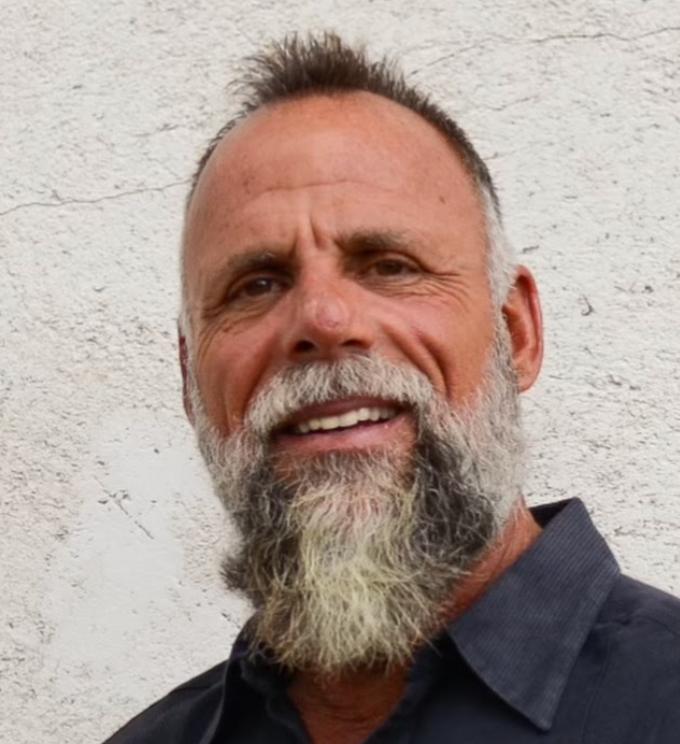
There are few people who have had more experience capturing the world of sports in the written word. Particularly baseball and golf. John Strege spent over 40 years sharing the highest and lowest moments in sports and everything in-between. His one-on-one connection with sports stars and celebrities give him a unique frame of reference and has offered him a distinctive opportunity to share some of the most amazing stories in his new book, "In the BIG INNING...Where faith meets sports: A Christian sportswriter's perspective".
In this episode of Amazing Greats you'll hear John share his stores and insight about Tiger Woods and his family, Vin Scully, Tommy Laporta, Tim Tebow, Muhammad Ali, Bobby Richardson, and ESPN's Chris Mortensen....and many many more.
Listen right here:
Watch right here:
But maybe the most amazing part of John's story is he and his wife's trail blazing adoption of the worlds very first frozen embryo. Their now 28 year old daughter, Hanna, became the first ever Snowflake adoption. You'll hear the challenges and triumphs all right here on episode 61. Don't miss it. Buy the book and enjoy the stories and awesome writing of one of the best ever journalists: John Strege.
JOHN STREGE AT A GLANCE
Veteran Sportswriter • Author • Golf & Baseball Writer • Christian Storyteller
Topics
Faith • Sports • Golf • Baseball • Tiger Woods • Tim Tebow • Vin Scully • Christian athletes • Frozen embryo adoption • Journalism • In the Big Inning
His Faith Journey
Christian upbringing → Lutheran education → Faith becomes less active in college and early career → Marriage to a Christian woman → Renewed commitment to church and faith → Christian perspective woven into sports journalism
This Episode Explores
John Strege's 40+ years covering sports
His encounters with Muhammad Ali and Vin Scully
His long relationship with Tiger Woods and his family
Playing golf with Tiger Woods and Earl Woods
Growing up in a Christian family in Everett, Washington
How marriage helped renew his commitment to faith
The remarkable story of his daughter Hannah's frozen embryo adoption
Christian athletes including Tim Tebow, Scottie Scheffler and others
Why social media gives athletes new opportunities to share their faith
Stories of faith from In the Big Inning
John Strege's friendship with Chris Mortensen
Faith, journalism and working in secular media
Questions Answered
Who is John Strege?
What did John Strege write about Tiger Woods?
How did John Strege know Tiger Woods?
What was John Strege's relationship with Vin Scully?
What happened when John Strege met Muhammad Ali?
How did John Strege become a Christian?
What is the story of Hannah's frozen embryo adoption?
Who are some prominent Christian athletes?
Why does John Strege admire Tim Tebow?
How can athletes use social media to share their faith?
What is In the Big Inning about?
What does John Strege believe about faith and sports?
Podcast Transcript: John Strege on Faith, Sports, Tiger Woods, Tim Tebow & a Life in the Press Box
Amazing Greats with Ric Hansen
Meet John Strege
Ric Hansen:Hi there, this is Ric Hansen on Amazing Greats. Thanks for joining us today. What a great interview we've got with John Strege, the author of eight books, two of them New York Times bestsellers: Tiger, a biography of Tiger Woods, and 18 Holes with Bing: Golf, Life and Lessons with Dad, co-authored by Bing Crosby's son Nathaniel.
Another book, When War Played Through: Golf During World War II, won the United States Golf Association's Herbert Warren Wind Book Award in 2005.
John worked for the Los Angeles Times and the Orange County Register before joining Golf Digest in 1997. He's a lifetime honorary member of the Baseball Writers Association of America and is a member of the Golf Writers Association of America.
And now he's the author of a new book, In the Big Inning: Where Faith Meets Sports: A Christian Sportswriter's Perspective.
John Strege is a legendary sports writer who has spent more than 40 years covering sports and following Jesus. He's got a lot of baseball in his background, a lot of golf in his background, and he's intertwined all of that in his personal life with his Christian journey.
There's so much to unpack. It is fascinating to talk to this man who's seen so many things and been around so many great athletes.
Let's start with this: You played recreational golf with Tiger Woods and his dad many times. You've played golf with Kevin Costner, Dinah Shore and Bobby Hatfield of The Righteous Brothers. You played tennis with Arthur Ashe, had an encounter with Muhammad Ali in a storage room behind a department store, and you've had an interesting relationship with Tommy Lasorda. You were friends with Vin Scully.
Your life is just like a storybook.
John Strege:Good grief, Ric. Well, I've been blessed. There's nothing else I could have done for a living. I figured that out a long time ago. I loved writing and I loved sports, so I was able to make a career out of it.
I couldn't fix anything. I couldn't sell anything. So, again, I think the good Lord was looking out for me.
From Local Newspapers to the Dodgers
Ric Hansen:Was that intimidating, at least at first, to be surrounded by the best of the best?
John Strege:Yeah. I got into it in high school, just for the local newspaper. When I started college, I started at the Los Angeles Times, just doing all the grunt work and writing prep roundups and stuff.
So I was around it, and you do get comfortable with it. They didn't have a full-time position for me at the Los Angeles Times. When I got hired by the Orange County Register, they immediately put me on the Dodgers beat.
That was a little intimidating at first, but you get used to it pretty quickly.
The Muhammad Ali Levitation Story
Ric Hansen:I want to jump to the Muhammad Ali story. I don't think this has been told much, and it's such an odd little thing. I think I read it in Golf Digest in your retirement piece. It talked about him levitating.
How did that come about?
John Strege:I was writing columns for the Orange County Register, and Ali was promoting a new line of cologne. He was appearing at a mall in San Diego and then was coming up to Orange County the next day.
I thought, "I'll go down and see him and write a column to promote his appearance in Orange County."
I waited until he took a break, and his people invited me back to a storage room just to give him a 15-minute break.
And he decided to levitate for me.
It's sleight of foot, as I call it. He's actually standing on one foot, but the way he does it, it looks like he's raising himself a couple of inches in the air.
He was always a showman. Always.
That's a great memory, though.
John Strege and Vin Scully
Ric Hansen:You had a special relationship with Vin Scully, maybe the most renowned baseball play-by-play guy in history. Tell us about Vin Scully.
John Strege:I spent three years full-time covering the Dodgers. You're traveling with them, and back in those days we actually traveled on a Dodger plane, so you get to know everybody.
Vin was a world-class Christian man. I can't speak highly enough of him. I've never heard anybody say a bad thing about him. Just a wonderful person.
I would still cover some games when I wasn't on the beat full-time. I remember, I think it was 2015, maybe. I don't remember the exact year, but my daughter wanted to go to a baseball game. By then she was about 15 years old.
I said, "I'll get us tickets to the Dodgers game."
I've got a lifetime Baseball Writers Association pass, so I can get into the press box anywhere. I decided I better go up and say hi to Scully one last time.
I visited with him for a few minutes between innings in his booth.
The guy was just the best.
Golf With Dinah Shore and Kevin Costner
Ric Hansen:And then golf with Dinah Shore and Kevin Costner. You must be a pretty good golfer. Tell me about your golf game.
John Strege:It's almost nonexistent now. I could play fairly well back, and by fairly well I mean maybe an eight handicap at the best.
But I started covering golf in 1985, and you're invited to programs and things like that. You're going to great spots — Palm Springs, Pebble Beach — and you often try to get around a golf in before you go to work at a PGA Tour event.
So it was fun.
How John Strege Connected With Tiger Woods
Ric Hansen:What a gig.
One of the books that you wrote was the biography of Tiger Woods. You've known the guy since he was about 14 years old, right? You knew him and the whole family. How did you connect with him at that early age?
John Strege:I'd started covering golf in 1985. I was aware of him. In 1985, he was probably nine or ten years old at that point, so you're not writing about him.
But when he was about 14, he really was dominating junior golf in Southern California. It was obvious he was going to be a pretty good player.
I started introducing myself to the family. Fourteen-year-olds don't have much to say, so I started working mom and dad a little bit to try to get more information.
I ended up having a friendship with both of them. They had my wife and me over for dinner once.
I'd go see Tiger once he started playing in the nationals, started winning U.S. Junior Amateur — he won three in a row — and U.S. Amateur three in a row.
I'd go over to the house in advance of his playing in the Masters or the U.S. Open or another U.S. Amateur and interview him a little bit and get quotes on how his game was going and what he was looking forward to.
That's sort of how it came about.
Then in 1996, he won his third U.S. Amateur in a row. He's the biggest story in golf, and he's just turning pro.
I get a call from a New York literary agent. She had called the New York Times writer to say, "Are you interested in doing a Tiger book?"
The Times writer, Larry Dorman, who's one of my best friends to this day, said, "No, I'm not the guy to do it. I don't have enough information or time. But here's the guy you should do it."
So she called me, and we put together a proposal pretty quickly.
The book came out about 10 days after Tiger won the Masters by 12 shots in 1997. The timing was perfect.
Again, I think the good Lord was looking out for me.
Playing Golf With Tiger Woods
Ric Hansen:No kidding. You're out on the golf course with Tiger Woods and you're playing recreational golf with him. Is he giving you tips?
John Strege:I didn't even ask him for any.
I played several times with his father. Tiger was coming home for Christmas vacation for his sophomore year at Stanford, and I wanted to get a round in with him before he turned pro. I figured I'd never have a chance to play golf with him again.
So I set it up, and it was delightful. Eighteen holes, just a lot of fun.
Ric Hansen:Was he intense, or was he out there just having a good time?
John Strege:He hadn't touched a golf club in two weeks because of finals at Stanford. He'd get out there just playing with choppers like myself, and yet if he hit a bad shot, he'd get angry.
I'm thinking, "We're just out here trying to have fun."
But he took everything about golf seriously. We talked walking down the fairways, but when it was time to hit a shot, if he didn't hit it the way he wanted to, he was angry.
Tiger Woods and Faith
Ric Hansen:So you're a solid Christian and have been for a long time. Tiger was raised Buddhist. Was there ever any topic of conversation about religion with him?
John Strege:No, I never did.
I might have talked to his dad about it. I think his dad was raised Baptist, but I don't think he was a practicing Baptist, at least at that stage.
So no, I did not have an opportunity to talk to him about it.
Growing Up in a Christian Family
Ric Hansen:This is Ric Hansen here with John Strege, as he shares his fascinating career and faith with us on Amazing Greats.
Your Christian start was early. You were born into a Christian family. Tell us a little about the origins of your Christian story.
John Strege:I was born up in your neck of the woods. I was born in Everett, Washington.
My dad came from a German family where everybody was Lutheran. I was baptized about a month after birth, in April of 1952, at Emmanuel Lutheran in Everett.
My dad got transferred a lot, so I wound up moving around the country. But my parents always sacrificed to send myself and my two brothers to Lutheran schools from kindergarten through eighth grade.
That was the foundation.
They probably would have sent us to a Christian high school, except we were in Whittier, California, at that time and there wasn't one close enough to send us.
I owe it all to my parents. It starts with them setting the example.
When Faith Became His Own
Ric Hansen:With a lot of people, it starts out with that foundation. Was there a time along the way that their religion became your religion, where you really felt a connection with Jesus?
John Strege:Yeah, almost from the outset.
But I have to admit there was a period when I was 18 and on my own going to college. I wasn't going to church every Sunday. Even starting my career, I would still go to church, but not every Sunday.
It had kind of fallen off, which I'm ashamed to say. I wish it hadn't, but that's okay.
I ended up marrying a wonderful Christian woman, and that brought me right back into it.
We've had a great relationship with a bunch of pastors over the years, and we go to church every Sunday and every Wednesday during Lent.
Ric Hansen:That's a tough thing to do as a sports writer because so many sports consume your Sundays. But you found a way to make it to church.
John Strege:Yeah. Once we got married, unless I was out of town covering something on Sundays, which happened quite often, we went every Sunday.
And God bless my wife. Our daughter goes to church every Sunday with us.
The Story of Hannah: The World's First Frozen Embryo Adoption
Ric Hansen:Such an amazing career. Were there times along the journey that you really felt divinely inspired to make a decision or move in a certain way? Did God speak to you along the way?
John Strege:Probably jumping ahead in the interview, but when we had our daughter — and I don't know if you want the whole story — we were having trouble conceiving.
It turned out my wife had premature ovarian failure, and she was devastated, as I was.
She blurted out to the doctor, "Do you have embryos, frozen embryos that we can adopt?"
So our daughter became the first adopted frozen embryo in the world.
But to get to that point, we wanted to make sure everything was right with God. We consulted leaders in the Lutheran Church–Missouri Synod, a couple of pastors we knew, one of whom was the founder of Concordia University Irvine, one of our friends, and Dr. James Dobson.
We did our research, and they all came back with the same answer: Yes. If the families with these frozen embryos are not going back to get them, they should be adopted because life begins at conception.
I had a lot of pastor friends anyway, but I've got so many now just through that.
Ric Hansen:And to re-emphasize, you were the first to do an adoption of a frozen embryo.
John Strege:Correct.
Ric Hansen:And so you were trailblazers in that regard. Hannah was born nine months later, I'm assuming, or somewhere around there?
John Strege:Well, it took a while.
We had to do our research, and then we had this great Christian man who ran Nightlight Christian Adoptions, whom we had known 15 or 20 years earlier.
He was running a Christian adoption agency. We asked him, "What about adopting frozen embryos?"
He didn't hesitate. He said, "Yeah, we've got to do that, because otherwise they're not going to have a chance."
And he took the ball and ran with it.
But it took a couple of years before we got to the point where we had to find somebody who was willing to surrender their embryos to us.
That's where Focus on the Family really came in to help.
Hannah is now 25. She went to Biola University in Southern California and then got her master's in social work from Baylor. She just graduated last fall, passed her licensing in Colorado and Texas, and is looking for a job now.
I believe she's at a job interview right now.
Ric Hansen:Wow. What a story!
Writing the Story of Hannah
Ric Hansen:All of these other stories — your life is like a crazy, crazy book.
In fact, you've written what, seven books or something like that?
John Strege:Eight books now.
Ric Hansen:Eight books. And so a little piece of your life is revealed in each one of those. One is dedicated to the story of Hannah, correct?
John Strege:Yes.
We had file cabinets full of information and newspaper clippings and research on frozen embryos and all this.
I wanted to put it in a form for Hannah so she knew her entire story, from how this unfolded.
Nightlight Christian Adoptions, which we used to adopt the frozen embryos, started having people sign up who were interested in adopting frozen embryos.
They had a choice of one or two books to read as part of their counseling, and one of them was my book.
I pray that it's helped a lot of couples understand how this unfolded.
Faith in the World of Sports
Ric Hansen:There are so many Christian stories in your book. I'm sure we're going to get to a couple of them.
In today's world, who stands out as the most influential Christian athlete who's playing today?
John Strege:My first thought was Tim Tebow, but he's no longer playing.
You know, it varies by sport. Scottie Scheffler, the number-one-ranked golfer in the world, is great at naturally mentioning his faith, not forcing it on anybody, just very comfortable doing it.
I'm trying to think of several people in football. Russell Wilson has been a strong Christian. Steph Curry.
They occasionally make mistakes on the basketball court and get criticized: "You're supposed to be a Christian."
But we're all sinners, so you've got to cut them some slack.
I love these athletes who are willing to speak out.
As I wrote in the book, In the Big Inning: Where Faith Meets Sports: A Christian Sportswriter's Perspective, I try to really emphasize that in this day and age there are so many opportunities via social media for Christian athletes to witness in a sound bite.
It could be six seconds just thanking your Lord and Savior Jesus Christ and then moving on to the interview. Or tweeting.
I think it's very important.
There are a lot of them out there. C.J. Stroud, the Houston quarterback, is just one of the all-time strong Christians.
Ric Hansen:Brock Purdy.
John Strege:Yep.
Why Athletes Are So Open About Their Faith
Ric Hansen:We do Amazing Greats with musicians, actors, athletes, authors and businessmen.
It seems to me like the most outspoken of those various careers are the athletes. They don't feel any hesitation in sharing their beliefs.
Is there a reason you think that's the case?
John Strege:I think they see other athletes comfortably doing it before they decide to do it, and they realize that we're all called to spread the word.
It started with probably people like Tebow, who was totally unafraid of expressing his love for the Savior.
So many others followed suit and said, "Yeah, this is what we're called to do. Go out and make disciples of all nations."
Tim Tebow is kind of a trailblazer in that regard.
Ric Hansen:I would say, yeah, phenomenal. Even to this day.
Night to Shine — I think you mentioned that to me in an email — is such a beautiful profession of love for the Lord and acknowledging these kids, these special-needs kids.
John Strege:These are people who need to be saved too.
John Strege and Tim Tebow
Ric Hansen:I've been involved with Night to Shine here in our area. I was a former radio DJ and have a company that does mobile DJ entertainment.
When I was first approached about the idea — actually, I saw Tim Tebow explaining what it was and saw videos of what it was — it was just amazing to me.
But I had no idea how intricate it is. Tim Tebow's foundation sent me a 94-page manual on how to run Night to Shine.
We have 27 volunteers who are leaders and about 430 volunteers altogether. It's a huge deal.
And now Tim is also doing a really wonderful thing with fighting sex trafficking.
John Strege:Yes.
Ric Hansen:That's kind of his new mission, his new initiative. He's making big waves there as well.
So do you know Tim? Have you interacted with him?
John Strege:I've never interacted with him, but I've defended him a lot.
When the "Tebowing" thing started, because he would kneel after a game, he was doing that in high school when there was nobody there. He wasn't doing it for show.
It was an authentic, quick prayer.
So he's been one of my favorite athletes since he started playing college football.
Stories From In the Big Inning
Ric Hansen:Who else in your new book, In the Big Inning: Where Faith Meets Sports: A Christian Sportswriter's Perspective, did you touch on?
John Strege:There are several baseball stories in there.
I think you'd mentioned Tommy Lasorda. I'd like to think he's in heaven now, and I mentioned that in there.
I didn't get along with him at all. I acknowledge he didn't like me, and I didn't like him.
He was raised Catholic, went to a Catholic grade school, and I think he tried to go to Mass every Sunday, whether they were on the road or not.
So I'd like to think someday I'll see him in heaven.
I talked to Bobby Richardson, a Yankee second baseman from those great '50s and '60s Yankee dynasty teams. Devout Christian.
I talked to him recently for the book, but the story goes back to when he had been working on Mickey Mantle, trying to get him to go to church and convert him.
I'll never forget this line he said.
I asked him, "Why'd you work so hard?"
He eventually brought Mantle around to faith at the end of Mantle's life.
Richardson said, "I want to spend eternity in heaven with my friend."
That's why I spent so much time working on him.
I'm going, how good is that?
Bobby Richardson
Ric Hansen:I had an occasion to meet Bobby Richardson after he'd written a book. I just happened to be in Charlotte and went to the Billy Graham Library.
Bobby Richardson was there promoting his book.
What a gentleman, and what a wonderful Christian human being.
John Strege:Yeah.
The Story That Didn't Make the Book: Chris Mortensen
Ric Hansen:You share some stories in the book, lots of them. I would highly encourage anybody, even if you're not a Christian, even if you're not a sports fanatic, this book is just a great testimony to goodness and to the miracles that God is involved with on a day-to-day basis in the real lives of real sports stars.
It's really a great book.
But what I wanted to know is, was there a story that didn't make the cut? Is there a story about a Christian athlete that you wanted to tell, but there wasn't room or you didn't have enough information?
John Strege:I'm glad you asked that question.
I thought about Chris Mortensen, the ESPN NFL legend. Really a world-class guy and great communicator.
I've known him for almost 50 years. He was not a Christian back then when I first met him.
I was covering preps for the Los Angeles Times. He was covering preps for the South Bay Daily Breeze. We were single.
We moved on to covering the Dodgers for competing newspapers, and he became one of my best friends, and he was until his death.
I thought about including him in there, but I finished the book last fall. I'd been in touch with him all the time, and he had the cancer, throat cancer.
I wasn't sure he was doing well, and I didn't want to put any more pressure on him. So I excluded that story.
But he married a wonderful Christian woman who started taking him to church.
This was when he was at the Atlanta Journal-Constitution. He'd just go along. He wasn't too interested.
But it was Sunday after Sunday, and she would play Dr. Dobson's radio show and David Jeremiah's radio show. It was always going on, and it planted a seed.
One day in church, they did the altar call where anybody who wanted to could come up.
As he told the story a couple of times, he felt almost like somebody pushed him up. He just got out of his seat and went up.
And he did that.
He got an ovation from the crowd in church because his wife had gotten a prayer group together that was praying for Mort to accept Jesus as his Lord and Savior.
I love that story.
Being a Christian Sports Writer in a Secular World
Ric Hansen:That is a great story.
You were a sports writer, a Christian sports writer, and didn't unashamedly hide the fact that you were a Christian. But you wrote for secular papers and secular publications.
Was there ever a conflict between your Christianity and your employer?
John Strege:No, I don't think so.
Going back to Hannah, I started working at Golf Digest in 1997. Hannah came along in '98, and then we got involved in the whole embryonic stem-cell research controversy.
It was a big controversy.
Golf Digest was owned by the New York Times at that time.
My wife was going to testify in Congress, I think this was 2002, against using these embryos for research, because if you use them for research, it destroys the embryo and it's destroying life.
It was controversial.
I didn't tell Golf Digest what I was doing. I just asked for a couple of days off. I thought this would fly under the radar.
My wife testified. It didn't fly under the radar.
It was page one in every newspaper.
The New York Times — and again, we were owned by the New York Times at the time — had a picture of me holding Hannah, sitting behind my wife, Marlene, while she was testifying.
I thought, "Uh-oh. Am I going to get some grief?"
Nobody said anything.
I applaud them for it. They might have been talking about me behind my back. I don't know.
These people were great to me. So no issues.
Social Media and Sharing Faith
Ric Hansen:We mentioned briefly the whole social media change that occurred during your career.
When you started out, it was all about the written word. Newspapers had circulations that were incredible.
Then things changed as social media became a thing.
How do you view social media today?
John Strege:First of all, I've referred to Twitter, now called X, as a sewer.
There's so much bad stuff, but it can be used for good stuff too. So you try your best to counter all the bad stuff.
And there are a lot of Christian athletes who do so and do so very well.
I wish it wasn't a sewer, but it can be awful at times.
Ric Hansen:It's a double-edged sword. If you focus on the negative, there's plenty of it there.
But as you said in your book, social media also set the athletes free to share their faith with their fans.
A lot of times secular TV and secular radio will exclude those comments about their faith, whereas in social media they don't have that opportunity to be edited out.
John Strege:Right. Or the live TV interview.
There was an NBC interview recently where an athlete — I can't remember who — was a football player and mentioned Jesus Christ at the start of a live post-round interview.
NBC put it on Twitter, but they cut out the Christian part.
It's just so typical.
But again, I love these athletes.
I can't remember the quarterback from Alabama who is a strong Christian, went to the Heisman Trophy ceremony, and the first words out of his mouth were thanking the Lord Jesus Christ.
It was live television, and it took about five seconds.
I don't think anybody was offended, but it was a great opportunity to witness.
Life After Retirement
Ric Hansen:So are you actively doing anything? What keeps you busy these days?
John Strege:I still help out Golf Digest when they need it. They probably need it more than I care to do it in retirement, but it keeps my hand in it.
Oftentimes it'll be doing some editing on Friday or Saturday, whatever golf tournaments are being played.
But I appreciate the opportunity to continue to do it, that they think enough of me that they allow me to continue to help out and occasionally write some stories.
Christian Golfers to Watch
Ric Hansen:So besides Scottie Scheffler, are there other golfers that you can recall who have a strong Christian belief and are upfront about it?
John Strege:Yeah, there are quite a few.
One of the people I'm most impressed with is the LPGA rookie Rose Zhang, who won — and she might have been the most heralded amateur woman player ever.
She's devoutly Christian and unafraid to talk about it or mention it.
Great golf swing. She's going to be a superstar. She just turned pro last summer.
On the PGA Tour, they do have a Bible study every week. I think it's like Tuesday night, and they get a good group of people who attend it.
Baseball Chapel
Ric Hansen:How about the Bible studies in the locker rooms at baseball? The Dodgers — do they have a full-time chaplain?
John Strege:Well, I wouldn't say full-time, but they do have what's called Baseball Chapel.
Every baseball minor-league and major-league team probably has a Baseball Chapel because they're working on Sundays. A local pastor might come in and do a Bible study.
There are a lot of players who attend it too.
What's Next for John Strege?
Ric Hansen:Do you have more books in you?
John Strege:I'd love to.
I'm trying to think of an idea.
When I was doing all those other books — not the latest one, In the Big Inning, but the other books — I was working a full-time job while I was writing them.
I thought, "Man, I'd like to write a book where I'm not working a full-time job and can just do the book."
So, yeah, if I can come up with an idea, I will continue to do it.
Ric Hansen:Well, God will put that on your heart as time goes on, I'm sure.
He's probably giving you a break right now.
John Strege:Probably, yes.
Retirement on His Own Terms
Ric Hansen:So you've been officially retired since when?
John Strege:Summer of 2020.
I'm 71 now, but I wanted to make sure I got out on my own terms.
As you mentioned earlier, publications started laying people off right and left, and I really wanted to get out on my own terms.
We were in a position that I could retire.
John Strege's Life Verses
Ric Hansen:Is there a Scripture verse that you kind of cling to for your life and journey?
John Strege:John 3:16, obviously, would be one of them.
The other one would be — and it goes back to our daughter — Jeremiah 1:5: "Before I formed you in the womb, I knew you."
That just perfectly describes an embryo.
My wife is really good at speaking to people, doing radio shows, promoting that — not just embryo adoption, but the fact is these are human beings. They need a chance.
I applaud her for that.
Closing
Ric Hansen:Well, thank you so much for your time.
The book is, like I say, such an easy, fluid read. It was entertaining, it was inspirational, and you have a gift for using words.
You're a great storyteller.
John Strege:I appreciate that.
I'm more comfortable writing the words than speaking them. I'm not necessarily great on television or anything, but I've loved the written word forever.
I appreciate the comment.
Ric Hansen:You're welcome, and thank you so much for being with us.
And to Marlene and to Hannah, give them our best, and God bless you and them.
Thank you for the time. I really appreciate it, John.
John Strege:I enjoyed talking with you. And thank you for all the work you do.
Ric Hansen:Whoa. If that is not an amazing story, I don't know what is.
A Christian sports writer in a secular world who shares his high-profile career hobnobbing with the best athletes in the world and embraces his faith through it all.
John Strege.
Get linked up with him and his new book, In the Big Inning.
And share this podcast with a friend. Give us a review if you will, and join us again next time on Amazing Greats.
God bless.


Comments