
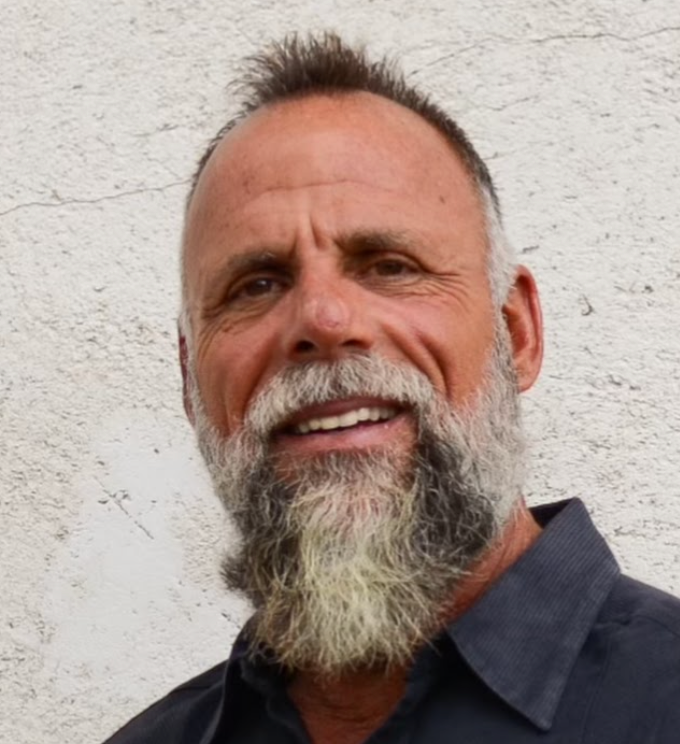
Fighter pilot turned Business Coach-Ed Rush
Updated: Sep 23

He grew up in a family of achievers. So it was no surprise when he achieved top level performance in the Marines as a fighter pilot and instructor. Pivoting from the military to a successful entrepreneur career helped to crystalize his simple but powerful tools for success that he now has shared with millions of people as a best selling author, speaker and coach. In episode 20 of the Amazing Greats podcast you'll get to know Ed Rush. You'll learn some of his philosophies, tactics and techniques that have helped guide him. When it really gets interesting is when he ties spirituality to business. Not only are they compatible, they are absolutely inseparable. His core belief is that when we partner with God, amazing things get done.
Our host this week, Klem Daniels has been to one of Ed's live events, and has read his books, so he gets right to the heart of what makes Ed Rush tick. Enjoy this fascinating one-on-one conversation.
To learn more about Ed Rush go to: www.EdRush.com
To order his books:
Or follow his podcast "Ed Talks", available wherever you get your podcasts. They are short and powerful !


Former F-18 Top Gun fighter pilot, Marine combat veteran, entrepreneur, speaker, coach, consultant and bestselling Christian author.
Topics
F-18 fighter pilot · Marine Corps · Iraq · Leadership · Entrepreneurship · Speed · Business · Faith · God · Mindset · Communication · The 21-Day Miracle
His Faith Journey
Christian upbringing → faith in Jesus at age eight → Marine Corps and combat → entrepreneurship and speaking → integrating biblical faith with business and purpose → teaching others to hear from God and pursue their calling.
This Episode Explores
Ed Rush's unusual story of failing kindergarten
Growing up around championship-level athletes and coaches
Why he joined the Marine Corps and became an F-18 pilot
His first combat experience in Iraq
How fighter-pilot training shaped his approach to business
Why Ed believes speed and action matter more than endless planning
The hidden struggles behind his outwardly positive personality
His approach to faith, business and hearing from God
His books The 21-Day Miracle and Warrior
His desire to use his gifts to influence business, people and culture
Questions Answered
Why did Ed Rush fail kindergarten?
What did Ed learn from successful people?
Why did Ed Rush join the Marine Corps?
How did he become an F-18 fighter pilot?
What was Ed's first combat mission in Iraq like?
How did military experience shape his business philosophy?
Why does Ed Rush emphasize speed and taking action?
How does Ed describe the relationship between belief, action and results?
How did Ed become a Christian?
How does Ed connect faith with entrepreneurship?
What is The 21-Day Miracle about?
What is Warrior about?
Core Story
Ed Rush's life moved from championship sports and a surprising failure in kindergarten to the Marine Corps, F-18 fighter aviation, combat in Iraq, entrepreneurship, speaking and Christian ministry. The discipline and decision-making he learned as a fighter pilot became central to his business philosophy: act quickly, learn from results and adjust along the way. At the center of it all is his Christian faith and his conviction that what people believe shapes how they act and ultimately the results they experience.
Ed Rush: From Top Gun Fighter Pilot to Faith, Business & the 21-Day Miracle
Amazing Greats with Ric Hansen
From Fighter Pilot to Entrepreneur
Ric Hansen: Hi there, it's Ric Hansen, and this is episode number 20 of the Amazing Greats Podcast—awesome life stories from people you know from books and movies and music and sports and business.
Today, our Amazing Greats guest host is Klem Daniels. Thanks to our mentor and friend George Tolls for lining up today's guest.
In fact, I'm going to use George's exact words of introduction:
"After two tours and 50 combat missions in Iraq, Ed Rush returned to civilian life. And with his resume of bronco-busting an F-18 jet, how many careers might be waiting for him back home on LinkedIn?
But by translating his high-altitude track record into the white-knuckle demands of corporate and entrepreneurial life, he's excelled at speaking and writing and delivering a message that will change the world.
He's a five-time number-one bestselling author and Amazon's number-one business author."
Well, what would you expect from a Marine, right?
Here's the Ed Rush story. Klem, take it away.
Klem Daniels: Thank you, Ric.
Today our guest is a guiding light, a beacon of inspiration, a former F-18 Top Gun fighter pilot, five-time number-one bestselling author, host of a podcast, Ed Talks Live, a coach and consultant to many companies, celebrities, and people like you and me.
He's helping you be better in business, be better human beings, be better at marketing—you can always do that—and also helping you expand your life, take control, and have fun.
I welcome to Amazing Greats, Mr. Ed Rush Jr.
Ed Rush: Man, I finally made it on this show, Klem. Thank you. It's an honor to be here, dude.
I've been down in my basement since five o'clock this morning doing push-ups and pounding coffee, ready for our interviews. So I'm ready to go, man. We're going to put the afterburners in—well, it wasn't really five, by the way. It was more like seven.
But I do have a three-year-old, so she's my alarm clock in the morning.
I'm ready to put the throttles up at afterburner and get this thing off the runway. Let's do it, man.
Failing Kindergarten—and Learning From Successful People
Klem Daniels: All righty. Well, we have a lot to talk about because, well, you're kind of an interesting person. You've got a few irons in the fire.
Let's go back. Okay, let's start at the beginning, I suppose.
You flunk kindergarten. Come on.
Ed Rush: Yeah, I failed kindergarten.
I always tell people that because when I go speak, I've—I teach on communication, persuasion, productivity, how to grow your business, money-making, marketing. Those are the topics that I often speak about.
My target market that I speak to most are entrepreneurs, speakers, authors, coaches, consultants, experts, people who run small businesses and want to change the world.
A lot of times I'll give a strategy, and my strategies, frankly, are very simple. They have to be because I'm a very simple person, frankly.
I'm not an engineer. I didn't study complicated math. In fact, people think because I flew in a fighter aircraft that I needed to be really good at math.
And I always tell people, to fly a fighter like the F-18, you really only need to know three sentences.
I can teach you the sentences, and they go like this:
When you push the stick forward, the houses get bigger.
When you pull the stick back, the houses get smaller.
And when you push that little red button on the stick, all the houses go away.
That's literally all you need to know about flying the F-18.
And so it's not a complicated thing. And my success principles aren't complicated either.
But often I'll get off stage, Klem, and someone will come up to me and they'll go, "Well, sure, that's easy for you to say. You're the fighter-pilot guy."
So now I tell the story about when I failed kindergarten.
This is not a made-up story. This is true. I truly failed at the very first grade you can fail.
And kindergarten isn't hard. I've now had three of my four kids successfully graduate from kindergarten. My first daughter graduated kindergarten with honors, which was hysterical for me.
But this isn't complicated subject matter. We're talking about stacking blocks, not eating the glue.
And I somehow failed that.
I learned really early on in life that I was going to have to take a new approach to becoming successful at what I wanted to do.
So I made a rule for myself really early on in life, and it's a rule that I still live by today.
That rule goes like this:
I find successful people and I do what they do, and then I don't do what they don't do.
Then I find unsuccessful people and I just flip it. I do what they don't do, and I don't do what they do.
It is fundamentally one of the simplest things I could ever teach, but one of the most profound if you follow the direction that you want to go.
For example, right now I've got some clients and friends and mentors who are nine-figure-type people. These are folks who are worth $100 million-plus, very successful people, written New York Times bestselling books, own thousand-acre ranches someplace in the United States.
These are the people that I look up to or would like to be.
And I look carefully and closely: How do they think? How do they act? How do they treat their family? How do they manage their time and their day? How do they look at money and investing money? Where do they allocate their assets?
Not that they're perfect because nobody's perfect.
But what I find is, if I look at successful people and begin to pattern my way of life and thinking after them, I'll be successful too.
That has been a fundamental principle that worked for me.
So, yeah, going back to the kindergarten story, I love telling that story because it just shows people, "Hey, this is a real strategy implemented by a real person."
By the way, the rest of the story: I did graduate finally from kindergarten the second time.
I actually made it all the way through college, which is amazing to think about.
I graduated from a pretty good school. I was married down in Virginia. I was on a baseball scholarship. I left my senior year, went into the Marine Corps, ended up doing quite well in the airplane, ended up as a Top Gun student and graduate and instructor in our weapons program.
Growing Up Around Excellence
Klem Daniels: Before we get into that, Ed, let me stop you right there.
Let's talk about going back to what you just said about kindergarten and that whole story around that, and being influenced by those people that are highly successful and picking up their traits.
You had two members in your family that were doing that to you every single day, right?
Your dad was a nationally recognized football coach and NBA official, was head of the officials for several years, and is now coaching football still.
Your mom was three-time national college champion in basketball. She won three national championships, and she's also inducted into the Hall of Fame.
I mean, the pressure.
Ed Rush: Well, you know, it's interesting because I don't look back on there being pressure.
I have a friend of mine whose name is Joe Maddon. He's the manager of the California Angels baseball team, and he used to be the Cubs manager when they won the World Series.
Joe has a phrase that he tells his players: "Never let the pressure exceed the pleasure."
In other words, it should always be more pleasurable than it should be pressurable.
And I have to say, my life largely has been like that.
I was literally born in the middle of a national championship run in my mom's basketball team.
In 1972, she won her first national championship as a basketball coach of this little tiny Catholic school in Pennsylvania. She was pregnant with me.
And then, as I was only about five months old, she won her second national championship.
So I give myself all the credit for the championships, frankly. I think it was me coming along that turned the corner on that.
But it's interesting growing up in that environment.
I grew up on team buses with extraordinarily successful teams.
I'm talking about a women's basketball team in the 1970s—which, by the way, women's basketball was like unheard of in the '70s—a women's basketball team that would get 20,000 fans to their game.
And then an hour afterwards, there would be a men's game that would have about a thousand people at it.
That's how unbelievable this movement was in Pennsylvania around my mom.
It was called Immaculata College, this tiny little Catholic school out in the boondocks outside of Philadelphia.
And my dad was in professional sports as a referee.
So I grew up, frankly, around excellence.
I mean, I would go to basketball games at age five and shake hands with people like Julius Erving, Dr. J, and think nothing of it.
I would hang out with the sons during the game and then shake hands with Dr. J afterwards and say, "Good game," and then go home.
It literally never crossed my mind to get an autograph.
I was just around people like that.
So I was really blessed to be able to see success in action—not only with my parents. My parents were phenomenal, not only parents but people and also leaders in their respective niches.
But I was able to see excellence and see what it looked like to be at the top of your game.
It was natural for me to move into something like flying fighter jets, where I could have the opportunity to really excel in that way too.
Why Ed Rush Joined the Marine Corps
Klem Daniels: I'm Klem Daniels, and you're listening to Amazing Greats.
My guest is Ed Rush, five-time bestselling author, internationally recognized speaker and advisor.
Let's get back to the interview with Ed Rush.
I think if I were in your shoes, I'd maybe join the military just to get away from that, because the bar was set so high and you would never be able to please them. You know what I mean?
How did you get in the military and why?
Ed Rush: Yeah, it's interesting.
I joined the Marine Corps on a whim.
And to be fair, my parents were very good leaders as parents.
I think I put more pressure on myself than they did, frankly.
They'd been around sports enough to know success and failure. They were nervous during my football and baseball games, but I for sure put a lot more pressure on me than they ever did.
And I'm thankful that they led me the way that they did.
So my last year in college as a baseball player, I had a whim.
I just had a whim.
I went and talked to a Marine recruiter, and the Marine recruiter looked at me and said, "Have you ever thought about flying airplanes?"
Now, I've always wanted to fly airplanes.
I flew an airplane when I was 11 years old with this old, crusty pilot who let me take control of the airplane and fly.
And I was hooked.
Then the movie Top Gun came out when I was in high school, and I thought to myself, "Oh, that ruins it. Everyone's going to want to do this now."
I guess I was wrong. Not everyone.
But when I was 21 or 22, I met a Marine recruiter. He said, "Would you like to fly airplanes?"
And I said, "Well, yeah, I'd love to fly airplanes."
There's a very specific and little-known program in the Marine Corps called PLC, where they can give you a guarantee that you're going to go to flight school.
I'd never heard of that before.
He said, "Well, if you can pass this test, I can guarantee that you'll go to flight school."
I thought, well, shoot, I'll study for the test.
And I did, and I passed the test, and I did quite well on that test.
Next thing you know, I'm at Marine Corps boot camp, which at the time felt like a dumb decision.
I'm in the middle of my junior year, between my junior and senior year, in a 10-week boot camp with a Marine drill instructor yelling at me.
Marine boot camp is no joke.
But I ended up in the Marine Corps.
My parents, by the way, had no idea what I was doing.
Nobody in my family had served in the military—nobody—except for my grandmother's brother, essentially my great-uncle, who flew fighters in World War II.
He took off in North Africa in 1942 and was never seen again.
So the only experience in my family of a military person was Uncle George, who passed away in an airplane.
And now this idiot is wanting to go fly airplanes again.
Didn't he ever learn our family's lesson?
Nobody was happy about that.
My parents and grandparents cried at my commissioning ceremony.
And the gunnery sergeant who was there looked at me and said, "You know, I just love seeing those tears of joy on behalf of the family."
I said, "Hey, Gunny, those are not tears of joy, just so you know. They think I'm about to die."
They all thought, "He's dead."
And I didn't die.
So there. Even though I was in combat in Iraq, I came home in one piece, thank God.
The First Combat Mission in Iraq
Klem Daniels: Tell me about how you felt on your first flight.
Ed Rush: My first mission in Iraq?
Yeah. First of all, nothing can prepare you for being in a place where people shoot at you.
I know some of your viewers and listeners have been in fights. I know some of you maybe even got shot at before.
When the first rocket hits, something changes inside of you.
When I was in Iraq the first time, I was sitting inside of a planning area, and I heard this noise that is so ingrained in my memory that I can hear it exactly the way that I heard it before.
It was an inbound rocket attack at our base in Iraq.
We've got all these seasoned pilots. I'm in my second day in Iraq, and everybody dives underneath the tables.
And Captain Rush is sitting there like, "Hey, where'd everybody go?"
I'm sitting in my chair.
Everybody's—someone down here is like, "You might want to get down."
I'm like, "Why?"
And he goes, "It's a rocket attack, idiot."
So I dove under the table, which is a wooden table, so it's not really going to help you that much.
As those rockets hit, they didn't hit our compound, but they hit fairly close.
I'll never forget the feeling.
I was so pissed.
I'm like, "Somebody's shooting at me! Somebody's shooting at me!"
That feeling is unbelievable.
Now, as far as I know, I was not shot at during any of my combat missions.
And I say "as far as I know" because a lot of times people are shooting at airplanes and you can't see it, and they never get to you anyway.
I flew 50, a little over 50, combat hours in Iraq.
But the first takeoff is probably the most interesting.
You're in this massively loaded airplane. It's full of gas—about 14,000 pounds of fuel. You've got two tanks full of gas, you've got rockets on one side and bombs on the other side, and you've got guns and rounds in the middle of the airplane.
So you're quite a heavy airplane.
It's not the screaming F-18 that you see coming back in because those are very light.
What you do is, we have this huge runway—14,000 feet.
Iraq is a very, very hot place. "Very, very, very" doesn't even capture it. It's like very, very, very times 12 hot.
And so it makes it more difficult for an airplane to get off the ground just because the air is a lot lighter.
We would start at the end of the runway, go full afterburner, start to accelerate.
After about two or three thousand feet, the front end of the airplane would come off. About another thousand feet, the back end of the airplane would come off.
Normally you just take off directly into the air, put the gear up, the flaps up, and start to go in the direction that you're going.
But in Iraq, what you do is you stay about five feet over the runway.
So you actually take off and then you level off, and you literally stay—you can see the lines on the runway. You're so close.
You literally fly five to ten feet over the runway in full afterburner until you get to about 450, maybe 500 knots, which is about 600 miles an hour.
It's fast.
The reason you do that is because if you just take off normally, you're essentially an easy target for somebody with a shoulder-mounted system.
You don't have enough airspeed really to maneuver.
But if you stay low, they can't really see you.
Then, at that point, when you have 400 or 500 miles an hour, 600 miles an hour, you literally pull your airplane directly up into the sky and fly as quickly to 10,000 feet as you can.
10,000 feet was a particularly safe altitude in Iraq.
Most of the weapon systems that could come against us were small arms, triple-A and infrared-launched, shoulder-mounted systems.
Some can go above 10,000, but that's about an altitude at which you're pretty safe.
So we would fly really low, really fast, pull the nose completely up, straight up.
At that point I would literally look over my shoulder, right and left, to make sure that I wasn't getting shot at, climb through 10,000 feet, join up with my wingman, and then the rest of the flight, frankly, was pretty easy, except for coming in to land.
In fact, the rest of the flight was so easy that I would oftentimes, in the middle of the flight—two or three hours—open up a Red Bull and sip a Red Bull in the middle of the night while I was watching out for our friendly convoys.
So there wasn't a lot of action for a fighter pilot in 2003–2004 Iraq, except for the random rocket attack.
The 21-Day Miracle and the Speed Principle
Klem Daniels: So in your book, The 21-Day Miracle, there's that whole story told in length.
It's in reference to part of that 21-day process. Three days in the Marines, you at one point were contemplating taking your toe into a brick wall to get out of it and be honorably discharged, so to say.
And when you were also in training for flight, that was pretty intense as well.
And then, of course, the first flight that you had in combat in Iraq—it was like none other that you ever had.
The process of changing yourself and developing and growing and the mindset—this is what you are so good at talking about.
It also is part of your consulting and your marketing training.
The 21-Day Miracle, I think, is a fabulous book that really gets into detail about this.
Ed Rush: Thank you, by the way.
Very few interviews do people know the book as well as you do, Klem, so thank you for taking the time to understand the material.
My viewpoint is really simple.
We've been told pretty much our whole life that in the race between the tortoise and the hare, the tortoise wins because, as we were told growing up, slow and steady wins the race.
And then I became a fighter pilot.
And I realized, nope, slow and steady doesn't win that race—not in an airplane.
Then I became an entrepreneur and an author and a speaker and a coach and a consultant and a parent.
And then I realized slow and steady doesn't win that race either.
In fact, slow and steady doesn't win any race.
We have a garden sitting out the window that I'm looking at at my office, and we have rabbits that come into the garden.
The other day, my son said, "Hey, Dad, I got a rabbit cornered in the garden."
The moment he said that, I saw this rabbit jump through the fence and run down my driveway at about a thousand miles an hour.
Because rabbits are very fast.
If I took that rabbit and put that rabbit next to an actual turtle and gave it a finish line, no matter how near or far that finish line was, a hundred times out of a hundred, that rabbit would win that race.
One hundred times out of a hundred.
For some reason, we let people tell us this story about this tortoise that sounds fun, but it's not true.
What is true is speed wins.
Speed wins as an entrepreneur, as a conscious-minded, connected person, as a person who wants to see the world change, as a speaker, author, coach, consultant, business owner, parent, friend.
Speed wins.
My clients who spend a lot of time thinking and planning and scheming but never taking action never see a result because by the time you take action, the target's moved.
Now you're shooting at a target that's not there.
So my approach to business is what a lot of people would call an MVP—minimum viable product.
If I'm looking at going into a new marketplace or launching a new product or creating a book or creating a message, I will put something out there almost immediately on that topic and see what the response is.
For example, right now, Klem, I'm working on my sixth book.
One of the things I'm going to do with my sixth book is I'm actually going to do a two-day event before I write my sixth book.
The reason I'm going to do that is because I already know the content. I already know what I'm going to teach.
It's a totally new topic—not new, but a fun, fun and a little bit different topic.
If I go for two days and deliver, and I've got great events with the folks that follow me, we have a lot of fun. They get me and I get them, and those are good events.
But here's what I know:
If I make a point, sometimes you think your points are amazing and they're not.
And sometimes you think something isn't even that interesting, and people go wild.
So as I'm teaching this, I'm looking at the audience reaction.
If I say something and then the crowd goes crazy, I'm like, "Oh, that's a really good one. I like that one. That's good."
Now I might say something else, and people might look at me like I just grew an asparagus out of my forehead.
Then I have to explain it again.
Then I have to explain it again.
I realize, "Oh, maybe that's not a point that I want to have in this book."
So my point on that is: I'm looking at how quickly can I get something amazing into the market.
If I do a two-day event and teach it for a little while, I can turn that into content really quickly, write my book and get it out, and know for sure that the content of the book is going to be something that people are going to react to.
On the other side, a lot of people sit around for three years thinking about this book.
Finally, they write the book.
But by the time they write the book, the market has shifted so completely that people aren't interested in that topic anymore.
And if you did the ready-fire-aim, fire-aim, fire-aim approach, you would have adjusted to that on the way.
The Big Pivot and the Struggle Behind the Optimism
Klem Daniels: I attended one of your seminars, The Big Pivot.
I thought the concept—and first of all, the title—is right on because we were going into some pretty heavy COVID moments.
In fact, it was quite brave of you, I thought, to do that then with live people.
Ed Rush: Yeah, and we did a live event in June 2020.
Klem Daniels: Would you do that today?
Ed Rush: Heck yeah, I would have done it today.
Klem Daniels: I hope no one got ill from it.
It looked like everyone was separated and spaced out, and you were certainly aware of and taking precautions.
I watched it from home, and it was really fun—a three-day seminar that was just full of energy.
You are just an incredible, well, as everyone has seen so far, you're a raw-rocket kind of guy.
Have you always been a raw-rocket kind of guy, or is this something that you developed as part of your style and your personality?
Ed Rush: Oh, I think I've always been like that.
I will tell you, though, Klem, and it's important for me to say this: What you see on the outside doesn't always reflect the struggle that's on the inside.
For example, I'm having a great day.
I'm in the middle of a promotion right now. My friend Brian Tracy, who's a big-time speaker and author, has written 91 books, and I are getting together to work on a product together.
We're launching something next week called Top Gun Speaker, and he's promoting it to his list of 500,000 people.
So it's kind of a fun week to see all the sales come in and new customers. And we have a webinar coming up that's really big.
Klem Daniels: He's a former Marine Corps F-18 pilot, and at the height of his career, he was the number-one instructor in the Marine Corps for one-against-one dogfighting.
Today he's helping individuals and companies around the world as a professional speaker.
In other words, it's not a hobby.
Now back to the conversation with Ed Rush on Amazing Greats.
Ed Rush: This morning, Zoom—my entire Zoom account went down.
There were several hundred people who tried to register for the Zoom thing that didn't go through.
First of all, I was frustrated. Anytime something doesn't work for you, it's frustrating.
And the second thing I said—and I said this to a friend of mine—I said, "Am I jinxed or something or cursed? Is there some reason why bad things always seem to happen to me?"
Now, just so you know, that was total baloney. It's a lie, right?
I'm not jinxed or cursed or bad. The good things happen, you know what I'm saying?
But sometimes enough things happen where you're like, "What the heck?"
I told my wife at breakfast I was very frustrated, and my team was working on it. It wasn't their fault, it wasn't my fault, nobody's fault.
And I told my wife, "It's going to work out. And even if it doesn't work out, it's going to work out."
That's been my philosophy.
Now, I will tell you, it took me about an hour this morning to get myself mentally back into a positive space where I was operating.
So externally, I've always been very positive, encouraging, and I have a generally optimistic outlook on life and the world.
Internally, though, there's always this battle.
I always encourage entrepreneurs to understand that everyone's experiencing this battle—that negative self-talk, that feeling of unworthiness sometimes that entrepreneurs feel.
Sometimes entrepreneurs feel very alone. You don't know who to turn to for advice. You feel unresourceful sometimes. You're not sure, "How do I even get this done?"
That's normal.
Those are normal feelings.
And the only mistake you can make as an entrepreneur is to go inside and keep all those feelings inside of you.
If you truly feel alone, the best way to not feel alone is to be connected.
If you feel resourceless, the best way to solve that is to connect with people who have resources for you, like in a mastermind group or an event like the one you went to.
And so, yeah, in general, I've been pretty positive in life in general, but oftentimes it doesn't reflect the internal struggle that goes on.
I've been very transparent with my followers and my list about that internal struggle.
For example, during COVID, I was transparent about the fact that it was hard to watch our country go through what we went through.
And it's hard to watch the division where there shouldn't be division.
There are people who have been friends for 20 years, and now they're not friends anymore because one person believes one thing about vaccines and another person believes another thing.
I'm like, you know, those belief systems shouldn't separate us.
Our love for each other and community should be enough that we could disagree, but we can disagree as friends.
And I have some of my best friends—I disagree completely, 100%, on almost every political issue, and we still can have a beer together.
We can still honor each other as individuals and human beings.
And the crazy thing about it is I've been friends with some of those people long enough that I've kind of changed my mind on some things, and they've changed their mind on some things.
We've become more compassionate toward each other, but we've also gotten better at our viewpoints.
Because the truth is, the hard right, hard left, they're wrong, they're both wrong.
And it's not even in the middle sometimes. It's a solution way the heck out in the—I don't know where.
My point, though, is our ability as entrepreneurs to share not only the external but the internal is really important.
And I know that's really helped me.
It helped me today. It helped me today a lot.
Ed Rush's Vision for Public Service
Klem Daniels: Yeah, I think your relationships, though—your long-term relationships—are those that may differ from how you think and have convinced you in other ways to maybe adjust some of your own thoughts.
That's that window that we are looking for from politics, I believe, in Washington.
We want those that would cross the aisle, that would have the beer, that would close the room and just work it out and not come out until they accomplish something.
And we're lacking that tremendously right now.
The reason I bring that up is because I understand one of your goals is to become president of the United States.
Ed Rush: Yeah, yeah, yeah.
Not even a goal. That's what's going on.
I tell people it's not something I want to do. That's something I'm going to do.
Someday I will work in the White House, hopefully for eight years, and then whoever was working with me there can do it for another eight years.
And just so you know, as you're listening to this, I'm not a Republican, and I'm not a Democrat. I am neither of those.
I chose quite some time ago that I wasn't—I realized that I was letting my opinions be formed by a group of people that I didn't know.
So all of a sudden, I'm like, "Wait, I'm supposed to believe that because the whole everybody else believes it?"
So I decided to look at each issue independently and decide on my own what I wanted to decide.
And so, yeah, I'm not even in the middle. I'm not anywhere. I'm not on the line because I don't believe in two dimensions.
That's like another whole podcast all by itself.
But I do believe we are, as a country, better than we've been acting.
I think the reason we act the way we do right now is—if you go into a home where the parents are constantly yelling at each other, there's one thing I can guarantee you: the kids are going to be yelling at each other too.
Because the children are only going to take their instruction from what the parents do.
If I go into a home and the kids are yelling at each other all day, yeah, it's a pretty good bet the parents also have been yelling at each other all day.
Well, part of the issue in our country is our leadership, who are supposed to be acting like adults, are acting like children.
And when your leaders act like children, you can't expect the children to act like adults.
There are some major issues on the streets of our country, and there are really big issues in a lot of the states.
And the reason why is we have poor leaders.
And the reason we have poor leaders is because we don't elect people based on integrity anymore.
We elect people based on the issue.
So we look at our issues and we go, "All right, who's going to be the person who takes this issue?"
And the truth is, your issue comes up in Washington maybe one out of every thousand discussions.
So what happens in Afghanistan, or what happens in Iraq, or what happens with the taxation code, or what happens with private property, or what happens with personal liberties or freedoms, or what happens with medical freedom or not freedom—those discussions—the next thing we're going to talk about as a country, we didn't talk about in the election because we don't know what the next thing's going to be.
Exactly.
And so instead of picking people on your issue, pick people of integrity. Pick people with a proven track record.
And, by the way, integrity is nothing more than doing what you say you're going to do.
That's simple, right?
And let me tell you, I don't care what side you're on, there is not a single president that we've had in the last 40 years that didn't say they were going to do something and then not do it.
And not just the one now, because the one now did that too.
But the one before that, and the one before that, and the one before that, because they've learned that we have very short memories.
So, man, I could talk about this for a while, but that's about it.
My vision is really to bring the country back together.
Let me just put it that way.
Faith, Belief and Following Jesus
Klem Daniels: Well, you're going to need a lot of faith and a lot of people with faith in you.
Let's talk about faith and what it turned for you toward Christianity.
Since this is all about Amazing Greats and the sense of a higher power, wouldn't that influence you?
When did you become a Christian and a follower?
Ed Rush: Yeah, everything in my life is formed by faith, much like everything in everyone's life is formed by faith.
What you believe becomes the thing that you do, and the thing that you do becomes the result in your life.
I'm going to talk about spiritual faith in just a moment, but I wanted to set that foundation.
It's really important as we go into this discussion for you to understand that there is a way that you believe right now as you're listening to our show today, and the result that you're having in your life is a direct result of the way you believe.
If you're not making as much money as you want to, if you're not impacting as many people as you want to, if you're not having the kind of relationships that you want to, it all comes back to your result.
The result comes back to a way of acting, and a way of acting goes to a way of believing.
And that does come into spirituality. It comes into how you view yourself and how you view God.
There are six core areas that I teach people to properly correlate their viewpoint and their view of the world.
For example, how you view God is really important. How you view yourself is really important. How you view money is really important. How you view purpose is really important. How you view your time is really important.
Those are the calibration points that affect a result.
I've been a believer in God since I was eight.
My dad, who is a basketball referee, was introduced to Christianity and to Jesus by a guy named George Tolls, a longtime friend and mentor of mine.
He's in his 90s now, still just an incredibly influential person up in Seattle.
My dad came and said, "Look, this is the gospel. Jesus died for your sins and you're a sinner."
And I was eight, and I didn't have a problem understanding that concept, frankly.
He said, "But you get this free pass when you believe in Him."
And I was totally on board.
I believe in the Bible as it's written.
I believe in the historical Jesus.
Sometimes people give this mythical-teacher business. I'm like, there are a lot of people who were eyewitnesses of this guy.
I believe He did what He said He was going to do.
I believe it because I read it, but I believe it because I've seen it with my own life and my own walk.
I teach my entrepreneurs how to approach spirituality from an entrepreneurial perspective.
I have people, Klem, who come to my events fully knowing that I talk about spirituality, who show up as atheists.
Throughout the course of the event, they'll walk up to me with two pages of notes.
I do this little exercise in my events where I teach people how to hear from God. I call it, "How to ask God questions about your business and get answers."
I'll have atheists walk up to me with two pages of notes, and they go, "I have two pages of notes from God this morning. How do you explain that?"
And I say, "Well, you're the atheist. You explain it."
I will just tell you, I've encouraged and seen a lot of people who—
Interestingly enough, the one that I just mentioned, this woman, every Friday she spends an hour.
This is a person who considers herself an atheist, by the way, which is kind of funny.
She spends an hour every Friday talking with God.
I said, "Francine, I think you pray more than most Christians I know. An hour a week, man. Come on."
So, you know, what someone calls themselves and what they are based on their actions are very different.
And God is very patient with people too, which is kind of fun.
My spirituality has formed my view of the world.
And I will tell you that most philosophically based belief systems get it wrong, and most religiously based belief systems get it wrong.
Let me explain what I mean in 45 seconds or less.
The world of philosophy says there's this universe, and you're pretty much God, and your job is to just realize that you're God and take hold of that.
But the religious side goes like this: You're just a wretch of a person. You're awful. God's really good, and somehow He loves you, but you know as well as I do, not that much.
Both of those viewpoints are tragically wrong, and both of those belief systems will lead to an action that gets you the wrong result.
If you believe that you are—I've heard Christians say this all the time—"I am just a sinner saved by grace."
That doesn't show up in the Bible anywhere. He never says you're just a sinner. That doesn't happen anywhere.
God says, "You're like a bride to me." You're like, "I am like my friend."
Those are the kinds of ways that God communicates to you.
So this belief system is wrong, this other belief system is wrong.
What's true is we are on this earth to co-create, to co-partner, to partner with God to get great things done.
I have experience sometimes where God comes alongside and I say to God, "What do you want for me?"
And He says to me, "Well, what do you want for you?"
And He's interested in the answer to the question because God understands you.
There's a verse in Psalm 37:4, I believe, that says, "Delight yourself in the Lord, and He will give you the desires of your heart."
Here's the thing about that: When you delight in God, the desires of your heart become His desires.
Your desires and His become the same thing.
You don't know if you thought of it first or He thought of it first because you both thought of it.
That's partnering with God.
Maybe you want to get a piece of land and turn it into something amazing.
Maybe you want to grow a business that helps millions of people.
Maybe you want to write a book that changes the world.
Maybe you want to sit up on stages and share a message of inspiration.
Maybe you want to be an amazing parent.
Maybe you want to help other people be amazing parents.
Maybe you want to see poverty go away in Africa.
Maybe you want to see poverty go away in Seattle.
Maybe you have a vision to do that.
Well, maybe that vision was planted there in the very beginning of your life by God.
He put it there and it's grown into a little seed.
And now you say, "This is what I want to do."
And when you say, "This is what I want to do," it sounds super selfish until you realize that your desires have just become God's desires—or what really happened is God's desires became your desires.
You can't tell the difference between the two.
And so when you meet a person who's really alive, you meet a person who's so in line with the Spirit of God that they can't tell who came up with the idea first.
And let me tell you, if it's God's will, it's God's bill.
So if you're struggling financially, when you line up in that place, you wait and see the resources come your way because God knows how to fund His projects.
He's a pretty good investor.
Your job, and this is one of the things I do at my events, is to find yourself in alignment with that direction—the place that that river's going—jump into it and flow.
The place that I found that is myself as in biblical Christianity.
But, like I said, people come to my events from all walks of life and experience the change because, like gravity, the law of gravity works no matter what.
The way that I teach this stuff, when you implement it, like gravity—you jump off a building, you're going to fall no matter what you believe.
No matter whether you believe in gravity or not.
And this system that I teach essentially operates like a law because it's how God created the world.
Belief, Action and Results
Klem Daniels: I'm Klem Daniels, and you're listening to Amazing Greats.
My guest is Ed Rush, five-time bestselling author, internationally recognized speaker and advisor.
Let's get back to the interview with Ed Rush.
Fun stuff, huh?
In a sense, you're a bit of a preacher, aren't you?
The fact that you have the same skills to spread the word of the gospel, you have the same skills to express those thoughts, and you have the same skills to put action to it with great results.
Ed Rush: Yeah, it really comes down to those three things, right?
What you believe turns into what you do. What you do turns into the result that you have in your life.
I always tell people, if what you have right now is not what you want, go backwards to what you believe.
It's always there. It's always, always there.
It's interesting, Klem.
I've worked with hundreds of thousands of entrepreneurs, obviously, at my events, but I've worked one-on-one with almost 500 coaching members.
I think it's 470, roughly, one-on-one coaching members.
If I'm talking to you one-on-one, I can tell within about 10 minutes where the barrier is on the belief side—how you see yourself, how you see your business, how you see money.
Usually we can get through that in 10 or 20 minutes.
Next thing you know, you're on your way to success.
That's why I always tell people: If you're struggling, if you're hitting a wall, go find somebody who can get you through that wall.
Because people can do that.
Klem Daniels: And that goes way back to your readings as a child, the early days of being around all these successful people.
You didn't know it, but you were absorbing then. You were watching what they were doing as successful people and how they got there.
Ed Rush: Yeah.
If your belief system is "we always win," you're going to win.
You're going to win a lot of games because—or you're going to win at life. You're going to be able to—
It's not that you don't have obstacles.
It's not like Zoom's never going to go down for you and you're going to lose a hundred people trying to register for your event or whatever.
Remember what I said, Klem.
It's going to be okay, and even if it's not okay, it's going to be okay.
Easy to say, easier said than done, but I did it this morning.
Ed Rush's Books: Warrior and The 21-Day Miracle
Klem Daniels: We're heading toward the end of our time slot here.
Your last book was The Warrior: Understanding the Furious Love of the God Who Fights for You.
I've not read that book yet. Can you tell us a little bit about it?
Ed Rush: Yes.
First of all, if you're interested in reading my writing—and you should because it's pretty good, and I'm biased, but that doesn't mean it's not true—if you want to start someplace, start at my latest book, which is The 21-Day Miracle.
It's a fun, fast book, and you'll get a good result from the book.
Now, if you go back six years before The 21-Day Miracle, there's a book that I wrote called Warrior.
It's a Christian book. The subtitle is Understanding the Furious Love of the God Who Fights for You.
In that book, I basically go through the Christian Gospels—Matthew, Mark, Luke and John—and then Acts, and finally Revelation, and show you the six stages of becoming a warrior.
I show you how God fought His battles and how you ought to fight your battles too.
I'll just tell you fully transparently, it's a really good book. It's a fun book.
The 21-Day Miracle is funny and you will laugh.
Warrior is not quite the same.
I changed a lot in six years and became a lot more lighthearted in my communication.
So I always recommend The 21-Day Miracle first because you'll get a lot more of my personality.
Warrior is a lot more serious because that's kind of how I was back then.
Klem Daniels: Yeah, I think The 21-Day Miracle does represent you for sure.
Ed Rush: It's funny because I have people who email me and they're like, "I just read The 21-Day Miracle. I'm going to go read all your books."
And half the time I'm like, "No, don't do that. Just be happy with the one you read."
But it just goes to show.
I teach entrepreneurs, right?
I always tell people, "You know what? It took me four books to get to the really good one."
I liked my first four books, but they're nothing like—
Klem Daniels: Sure. It's a progression.
And this is where you are right now, so that's great.
Life Behind the Camera
Klem Daniels: I have this—over your left shoulder, it looks like an F-18 that is flying upside down.
I also see an F-18, I'm assuming that is also upside down on your T-shirt.
Ed Rush: Yes, because I was inverted.
This is a line from Top Gun.
I just wore this today because Top Gun 2 is coming out soon, and I thought I'd respect the brand.
For those of you listening to this on audio, you should watch one of my videos on YouTube.
I've got a lot of stuff.
American flag behind me, my flight jacket, my flight helmet. I've got a tail hook back there, my old license plate for my Corvette, which is Deuteronomy 8:18, which is worth looking up.
Over this shoulder, I've got this American Eagle thing that one of my good friends and subscribers sent to me.
So there's a lot of fun stuff sitting behind me.
But we were talking about The 21-Day Miracle.
By the way, the website is edrushbook.com.
So if you just type in Ed Rush and then the word "book," which is basically the easiest website in the world to remember—even if you're on an elliptical right now, you can remember Ed Rush Book.
Go there.
Not only will you get the least expensive version of my book, but you also get a free membership site that I usually sell—or would normally sell—for about $97.
I'm going to give you that for free because you listened to the show.
And that's my gift to you.
And just encourage you to keep listening to this amazing show.
These guys are doing an amazing job. They're working hard to put good content in front of you.
So that's my gift to you.
Klem Daniels: Well, thank you, Ed.
Ed Rush—maybe one day president—
Oh, no, I didn't say maybe. For sure.
President of the United States of America.
God bless you, Ed.
It's such a pleasure having you today on Amazing Greats.
Ed Rush: Yeah, buddy. God bless.
Klem Daniels: Thank you.
Ric Hansen: Wow, another amazing story.
Thanks for spending some time with us here.
And if you like this episode, please hit like and share it with your family and friends.
Thanks to our guest host, Klem Daniels, to Ed Rush, and to George Tolls.
And until next time, God bless you.


Comments